Showing posts with label sports. Show all posts

Monday, February 02, 2026

It's Super Bowl Week. What's the Game Plan?

It's Super Bowl Week. While a large part of world attention will focus on the game, the commercials and the halftime show, I've posted articles here almost every year since 2007 that show a role athletes can take beyond the charity causes they already support.

In 2024 I used this image from the NFL Awards show in this article, with a headline of "Multiplying Good - Map the Network".  The goal of the article was to encourage one or more data researchers to create a library of EVERY pro sports athlete, and the causes they support.  Make it searchable by city, by sport, by cause, by team, etc.  Use visualizations like Kumu.io and Gephi to help people use this information.


In March 2025 I included the graphic below in this article, showing an example of how networks can be mapped.


In this section and this section you can find many more articles about mapping networks using tools like Kumu.io and NodeXL. Find more ideas in this section.

In January 2026 I wrote an article titled "Making Philanthropy Work Better" and introduced Project 990, which is mining data of all nonprofit 990s reports and mapping the information. 

Since the 1990s I've been trying to influence what visible people do to support youth and youth serving programs in all high poverty areas of the cities where they play sports, or where they grew up.  

In the mid 1990s the Tutor/Mentor Connection created the map below, showing high poverty areas of Chicago and locations of non-school, volunteer-based tutor/mentor programs.  It was signed by 11 pro athletes during a weekend golf event, to indicate their support of the idea of athletes "adopting neighborhoods", not just single programs.  I've share this often, such as in this 2024 article


If you search "Super Bowl" on this blog you'll find many articles where I've shared ideas similar to these.  In 2007 I wrote "Go Bears! The Super Bowl of Life". In that I wrote:

While many athletes have foundations and do great things to help their communities, there's no strategy that I know of that enlists athletes and coaches in an effort to use their celebrity visibility to draw attention to a social cause, and to draw volunteers and donors to specific neighborhoods throughout a city.

For instance, on the Super Bowl broadcast Terry Bradshaw, a former star quarterback, and current TV broadcaster, made an appeal for viewers to stay involved in helping survivors of Hurricane Katrina. The TV footage focused at New Orleans and the Lower 9th Ward, but I heard him end a phrase with "and the other areas".

If someone created a map of the area that had been destroyed by the Hurricane, it would be possible to enlist athletes from many sports to adopt different communities, or zip codes, in the entire area. Then, whenever that athlete were to have a TV opportunity, he/she could draw attention to his zip code, as part of an effort to keep attention on the entire area of destruction. As the season moves from Basketball to baseball to football and back to hockey and basketball, different stars, in different cities, would have many opportunities to focus attention, and draw resources to the various parts of the entire geographic area where volunteers, donors, and all sorts of help will be needed for many years.

In the same way, I want to enlist athletes to focus attention on the high poverty neighborhoods of big cities. Instead of just talking about the Boys and Girls Clubs, or Big Brothers, Big Sisters, or other highly visible charities, we need to focus attention regularly on every neighborhood where kids need help, and the organizations in those neighborhoods who are providing help. 

This is a strategy I hope athletes will adopt. If you read this, and you know a Bear, or a Bull, or a college coach, or even a high school coach, who might want to be a champion of this idea, please pass this on.

While I've shared these ideas for many years I still have not found any photos of a pro football or basketball player standing in front of a map like I do in this 1990s photo, urging people to support youth programs in EVERY high poverty neighborhood, not just the few high profile programs in a few places.

I still have found no athlete or team supporting the "Adopt a Neighborhood" strategy that I outlined.

So as you watch this year's game, I hope you'll share this idea with high school and college coaches, and with any athlete you know.  Think of these articles as a "playbook" that coaches and players can study to see how they can do better next year than they did this year.

That's a habit that could make a quantum difference in the lives of millions of people.

The best time to have started this was 30 years ago. The next best is now, in 2026 when the technology available to build big databases and visualize the information is now available.

Thanks for reading.  Enjoy the game!

Connect with me on LinkedIn, Facebook, Instagram, BlueSky, Twitter and Mastodon (see links here).

And, if you value what I'm sharing, please visit this page and help fund the Tutor/Mentor Institute, LLC. 

Monday, July 28, 2025

Athletes doing good. What's the game plan?

I have used this graphic since the 1990s to visualize a role athletes and celebrities might take to support the growth of on-going, volunteer-based, tutor, mentor and learning programs in every high poverty area of the cities where they play, or where they grew up.  You can find it in this article.

Another graphic that I've used since the late 2000s is one showing two teams on a football field, along with fans, owners and media in the stands surrounding the field.  This graphic aims to motivate sports supporters to become youth development supporters, too. See it in this article.


In February 2024 as I watched the National Football League's (NFL) Man of the Year Award ceremony, I began to wonder if anyone was creating lists showing all of the good deeds athletes were doing, and sorting that by geography, and by cause. I wondered if anyone was using concept maps to show this information.   I shared those thoughts in this article and in this article.

I was reminded of this again a few weeks ago while watching the Major League Baseball (MLB) All Star Game, which profiled many players doing good deeds in their communities.   Below is a graphic from the home page of the MLB Together website.


Since no one has responded to my posts about sports involvement in support of youth tutor, mentor programs, I decided to search the Internet and see what I could find.

In less than an hour I found 16 websites that showed causes MLB and NFL athletes support.  What these show is that there is a massive amount of sports-related marketing of charitable causes.  And that some websites are doing some interesting work in aggregating and sharing this information.

Some of those are listed below:

My Cause My Cleats - this is an official NFL event and the website shows what causes players from each team are supporting - https://www.nfl.com/causes/my-cause-my-cleats/2024/

My Cause. My Cleats - Philadelphia Eagles - https://www.nfl.com/causes/my-cause-my-cleats/2024/eagles  They have this for every NFL team.

NFL charities Inspire Change campaign - https://www.nfl.com/causes/inspire-change/    This site shows Education, Economic Advancement, Police-Community Relations, and Criminal Justice Reform as the issues they support.

Athletes for a Causes - https://auprosports.com/athlete-causes/  This site has a list of causes, with a drop-down menu showing athletes who support each cause.

MLB Together - https://www.mlb.com/mlb-together

MLB Charities - https://mlbcharities.auctions.mlb.com/

MLB Players Trust Charity Auctions - https://mlbcharities.auctions.mlb.com/  The left side of this site lists teams and shows player involvement.

MLB Players Trust - supports player initiatives -  https://www.trust.mlbplayers.com/

Baseball charities - https://probaseballinsider.com/baseball-charities/  This site has list of player foundations and shows geographic area of focus for each. 

Big League Impacthttps://bigleagueimpact.org/players/  This site features a few players and has a lists of players involved in past years. On this page causes are shown, with a list of charities that benefitted. 

MLB Together - list of causes https://auprosports.com/athlete-causes/  There is a list of teams/causes on this site

Stores about sports marketing

Causes players support - https://nielsensports.com/sports-fans-are-looking-to-sports-leagues-and-athletes-to-support-social-causes/

Exploring charitable work of MLB players - https://sportstars.blog/real-mvps-exploring-charitable-work-of-mlb-players/

Sports media - https://www.sportpositive.org/reports/


I posted this list on this page in the Tutor/Mentor library.

It's not the Tutor/Mentor Institute, LLC's intention to be the most comprehensive resource for athletes and celebrities supporting causes. Instead, I seek to point to websites that are aggregating and/or mapping this type of information. If you feel your site should be on this list please introduce yourself to Dan Bassill on LinkedIn, BlueSky, Twitter and/or Facebook.  I'd be happy to add your link to this list and feature it in future blog articles. 

What's missing?  The maps.  

The links I've aggregated show that many athletes are doing important work.  However, I only found one site (Inspire Change) with any type of map showing all the places athletes support, or of the causes athletes support in specific places.   

The map below is from an article I posted in 2017 following a "Sports and Violence in Chicago" series of articles in Chicago papers.  The article focused on Orr High School's basketball team, so I mapped the location of the high school and showed non-school tutor/mentor programs in the same area. 


In my article I emphasized the need to provide support to all of the existing tutor/mentor and learning programs in the area, for many years, and to help new ones grow where more are needed. I showed a map-based tutor/mentor program locator that my organization built in the 2000s to help people do this analysis and find individual programs in specific areas.   

View this visual essay to see the layers of information that were built into the program locator (which is now only available as an archive). Imagine being able to create a map showing athletes and/or foundations that supported youth programs in specific places.  If someone were aggregating and sharing the data, that might be possible.

Below is another graphic that I've used since the 1990s.  It shows that violence-prevention and youth development should be part of one long-term strategy, that reaches kids in early years before they get involved with negative habits, but also provides support to those same youth if they become part of the 16-34 age group of "out of school, no job, often gang involved" youth.   I used it in this article


There are hundreds of articles on this blog with similar graphics, posted for the same purpose. 

When I post a story, a few people might see it, and maybe one or two will share it.  If the same story is posted by a professional athlete, thousands will see it, many will share it, and some will get involved in solutions.  What if every college and professional athlete were the "you" in this graphic?


In the late 2000s we had several professional football players involved with the tutor/mentor program I was leading.  They came to the program site and talked to the kids and were speakers at conferences I organized. That was good for our program, and the people who met them at our conferences, but did little to support other programs in Chicago. 

So I created a visual essay showing a goal of athletes supporting entire neighborhoods of programs, while they also support favored single programs.


I'm sharing these because I want the ideas to be adopted, duplicated and improve upon, by athletes and teams in every sport, throughout the world.  The primary challenge nonprofit organizations face of attracting attention and retaining donors can be greatly reduced if high-profile people are connecting those they influence with lists of youth programs in neighborhoods and/or cities that they adopt.

Such videos and social media posts could be featured on team websites and during special events, like All-Star games and championships. 

If you click on the map at the top of the page and enlarge it, you'll see this text in the lower left corner, showing how the "Adopt-a-Neighborhood Program" would work.


Imagine star athletes getting awards and bragging about all the ways they drew attention and resources to tutor, mentor, learning and workforce development programs in the neighborhood they had adopted.  Imagine this information being collected and aggregated and made available as "game plans" that other athletes could use to "win" recognition in future years.

That never happened, but it's not too late for someone to see this idea and make it a reality.  PS. while you're thinking about this, take a look at the "Business School Connection" idea posted on the Tutor/Mentor wiki. 

Combine these two ideas and grow them over a 10 to 20 year period and see how much impact that has on reducing violence while providing opportunities. 

Furthermore, this may influence donors to support researchers to do a systematic process of collecting, sorting, categorizing and mapping this information, providing a wealth of knowledge, a game plan, and play books, that the world can use to help those who need extra help for a long time.

Thanks for reading. Think of this article as a "coaches clinic".  Use the ideas to build and sustain long-term strategies that help reduce poverty by providing paths to opportunity.

Connect with me on LinkedIn, BlueSky, Mastodon, Facebook, Instagram or Twitter to share links to the work you're doing.  See my social media links on this page.

Finally, if these ideas appeal to you, consider making a contribution to help me keep doing this work.  click here.

Wednesday, March 12, 2025

Mapping ideas, information and networks

Last week I found two visualizations that really excited me. They were created using Kumu.io software.

The first was this presentation, showing the 2023 Women's World Cup teams and players, created by Morgan Wills.  I show one of the views below.

Morgan writes, "This visualization allows for an interactive exploration of players in the FIFA 2023 Women's World Cup. Who were the top ranked? Who was in what position on what squad? What is the distribution of ages? Who were the strongest passers, and can we see that according to position? The buttons on the map of players allow you to explore all these things and more for all players in the 2023 World Cup!"

The second presentation, created by Deniz Cem Önduygu, explores the History of Western Philosophy. He wrote in this explanation, "I concluded that there should be a global and systematic way to see all the agreement (similarity, expansion) and disagreement (contrast, refutation) relationships between philosophers and their ideas."


Deniz had been collecting this information for more than 10 years before he discovered Kumu.io as a way to share it. 

Open both presentations and explore the way information is shared.  These are powerful examples of tools like Kumu.io.

For a long time I've been troubled by one thought. How do I connect the people I know, and have interacted with often over the past 30 years, with each other?

I was introduced to social network analysis tools in the late 2000s through the work of Valdis Krebs. He spoke at our Tutor/Mentor conference in 2009 and then donated his Org.net software. In 2010 he did a workshop for three interns who had volunteered to help me. This Ning group was set up to support their work. This blog was one outcome. It shows participation in the 2009-10 Tutor/Mentor Conferences and is an example of what I hoped would be done on an on-going basis. 

In 2011 I did some network analysis work myself, using tools that looked at my LinkedIn and Facebook groups. This presentation shows maps created in that process, like the one above that shows my Facebook network. Connecting people across these clusters with each other has been my goal for a long time.

So I've had a long commitment to network analysis as a way to help people understand who was in my network and help them connect with each other. But I've never had the money to hire anyone to do this work consistently and I've not had the time to learn and do it myself.

That does not mean I've not used concept maps for a long time to visualize information I've been collecting and sharing.  Below is a map of my library.  It's one of many concept maps that I've created using cMapTools that you can view on this page


So how do I motivate some visual scientists to spend time converting my concept maps to interactive formats like Kumu, then recording them on YouTube so more people see and use them?

Maybe this is a possibility.

In February 2024 I wrote this article, after watching the annual National Football League "Honors" show.  

As I looked at the many posts about athletes supporting mentoring, and the NFL Honors videos showing athletes supporting many different efforts in their communities, I wondered if anyone had tried to create a web library, and/or concept map, building lists of athletes/celebrities from every sport, focused on specific issues.

I wrote, "Why collect this? To learn from each other and improve work being done.

This should be a no-brainer for sports professionals. Coaches are constantly learning from each other. They have libraries of film that they study to spur innovation and constant improvement."

7-26-2025 update - I started a list of sports philanthropy websites in the Tutor/Mentor Institute, LLC library.  Find it here.  These show that there already is a certain level of aggregation.  They also show the type of websites I'd like to find and add to the list.

In my preparation for writing this article I reviewed many articles that I posted in past years.  I found many great examples of network mapping and use of Kumu, as well as how I had been trying to collect and share information for the past 30 years.  Rather than list all of these in this article, I created the concept map shown below to point to some of those resources.

If you explore this map you'll find many examples of using KUMU to support network building and systems thinking.  You'll also see the influence of others, such as Gene Bellinger, who I met around 2011 in a LinkedIn Systems Thinking group.   If you dig through articles I've posted on this blog since 2005 you'll find many more.

What if someone (s) like Deniz Cem Önduygu or Morgan Wills adopted my library and archives and created visualizations to help people find and use the information they contain?  The History of Western Philosophy project is an example of how information in libraries can be shared.  Other projects, such as the work of Morgan Willis, show how people in networks can be identified. That's the first step in building connections.  Interns from various colleges did this type of work for me between 2005 and 2015, but not as on-going, long-term projects.

9-29-2025 update - Here's an example of using KUMU to map winners of the International Network of Social Network Analysis awards winners.  Imagine seeing a similar map showing causes supported by professional athletes, and/or, winners of professional sports awards over a period of years. 

11-7-2025 update - here's an example of using KUMU to map connections within a university.  https://micelio.uca.edu.sv/home  I'd love to find something like this for every Chicago area university. Chris Warren, our NU Public Service Fellow, created such a map, using CMapTools back in 2009. See it here.

11-17-2025 update
 - Take a look at the Global Futures Society's Network Map, built using KUMU - https://kumu.io/gfs/gfs-mapping#gfs-map

12-6-2025 update - This Child Care Systems map is another example of using KUMU.  What's unique about this map is that descriptions are built right into the map.  Click here to read the KUMU article on LinkedIn. Explore at this link.

3-13-2026 update - This Kumu article shows how Kumu was used to create visual evidence maps that help reveal patterns across the field of digital health.  click here

What if a major donor put up the money to establish a Tutor/Mentor Connection study program at one or more universities, where students learned to do this type of visualization work and the on-going communication needed to motivate more people to view the information and use it.

That's why I write articles like this.

Thanks for reading. I hope you'll share this in your networks and connect with me on LinkedIn, Facebook, Instagram, BlueSky, Twitter and other platforms (see links here).

And, I invite you to visit this page and help fund the Tutor/Mentor Institute, LLC. 

Sunday, February 09, 2025

Super Bowl. Today and Past Articles.

Today's the Super Bowl game. I'm rooting for Philadelphia, since that's where my dad was born and where I have many family members.  For the first time in 50 years I won't be watching the game on TV. I don't want to see images of the current President and his billionaire friends plastered on the TV throughout the game.  I'll listen on the radio.

I started this blog in 2005. The first time I wrote about the Super Bowl game was in January 2007.


Here's some of what I wrote: 

"As I watched this game, I saw men who would be great spokespersons for tutoring/mentoring. For many years I've wanted to get sports groups involved with the Tutor/Mentor Connection. Many athletes come out of poverty neighborhoods, and most have befitted from having many mentors and coaches in their lives.

While many athletes have foundations and do great things to help their communities, there's no strategy that I know of that enlists athletes and coaches in an effort to use their celebrity visibility to draw attention to a social cause, and to draw volunteers and donors to specific neighborhoods throughout a city.

For instance, on the Super Bowl broadcast Terry Bradshaw, a former star quarterback, and current TV broadcaster, made an appeal for viewers to stay involved in helping survivors of Hurricane Katrina. The TV footage focused at New Orleans and the Lower 9th Ward, but I heard him end a phrase with "and the other areas".

If someone created a map of the area that had been destroyed by the Hurricane, it would be possible to enlist athletes from many sports to adopt different communities, or zip codes, in the entire area. Then, whenever that athlete were to have a TV opportunity, he/she could draw attention to his zip code, as part of an effort to keep attention on the entire area of destruction. As the season moves from Basketball to baseball to football and back to hockey and basketball, different stars, in different cities, would have many opportunities to focus attention, and draw resources to the various parts of the entire geographic area where volunteers, donors, and all sorts of help will be needed for many years.

In the same way, I want to enlist athletes to focus attention on the high poverty neighborhoods of big cities. Instead of just talking about the Boys and Girls Clubs, or Big Brothers, Big Sisters, or other highly visible charities, we need to focus attention regularly on every neighborhood where kids need help, and the organizations in those neighborhoods who are providing help.

This is a strategy I hope athletes will adopt. If you read this, and you know a Bear, or a Bull, or a college coach, or even a high school coach, who might want to be a champion of this idea, please pass this on.

This is a team game too, just like football. We'll get to the Super Bowl of life if we can get more people to help us."

I've been using the graphic of a team on a football field in many of my Super Bowl and sports-related articles since then.  I encourage you to browse posts at this link and see what I've been writing.

Imagine seeing professional and college athletes standing in front of a map showing high poverty areas in the city where they play, or where they grew up, calling on people from business, philanthropy, faith groups and other sectors to help comprehensive, long-term, volunteer-based tutor, mentor and learning programs grow in dozens of places.

I think many could be creating their own versions of my graphics and articles, and communicating the ideas better.  Because of their visibility as a celebrity, I'm sure more people will take time to look at what they share.

If you think this is a good idea, please share it with your network.  Connect with me on BlueSky, LinkedIn and other on-line spaces (see links here) and share your own strategies.  

And, if you like what I'm sharing, please visit this page and make a contribution to help me pay the bills. 

Thank you!   Go Eagles!

Saturday, February 24, 2024

Athletes Adopt-A-Neighborhood Vision

I've been digitizing my files over the past couple of years and the big questions are "Who will look at these?" and "Who will take ownership, preserve, share and teach from these after I die?"  

One answer to the first question is "ME".  In looking at conversations and vision statements from the past I remind myself of what I've been trying to do and gain new ways of sharing messages that too few ever saw in the past.

Here's an example.  

In the 1990s a group of retired professional athletes was trying to set up a social enterprise where they would raise money by selling branded apparel and use that money to fund causes they supported. 

I told them of my vision of athletes using their visibility to draw attention and resources to youth tutor, mentor and learning programs in every high poverty area of Chicago. During one meeting they told me they were holding a golf outing and that other athletes would be participating.  I asked them if they would present my Adopt-a-Neighborhood idea and have athletes sign their name on a map showing high poverty areas of Chicago, to indicate their support for the concept.  

They did. That map is shown below.


The map was signed by Carlton Fisk, Tim Fisher, Steve Avery, Darryl Ingram, Jim Miller, Robyn Earl, Jason Herter, Otis Wilson, "J Peterman" - Sinfield, George Foster and Emery Morehead.  As noted on the map, signing this indicated support for the concept, but not a commitment to "adopt" a neighborhood and participate in the program. 

I've shared this graphic in several of my sports-focused blog articles, but without a lot of background information.  Today as I was looking at my digital library I saw this map and opened this PDF, created in 2011, which provides more detail on what I was hoping the Adopt-A-Neighborhood program would become.

Unfortunately, the group of athletes who had approached me never got their business off the ground and no one has ever provided the leadership and money to make this Adopt-a-Neighborhood idea a reality.

What if?  What if it had been adopted by a local sports team and if a year-end event for the past 20 years had featured high profile athletes and celebrities boasting about what they did to draw volunteers and donors to tutor/mentor programs in the neighborhood they had adopted.  What if there were a library, like my T/MI Theater page, showing athletes describing what they had done to support their adopted neighborhood for the previous year?

I think there would be a lot more comprehensive, long-term, mentor-rich youth programs spread throughout Chicago and other cities, and more kids would now be adults talking of how these programs had helped them through school and into jobs and adult lives.


I keep posting information about persistent poverty in America that shows the need to expand networks of support for youth and families in these places, so as we head further into 2024 and beyond, there's still a need for athletes and celebrities in every major city to adopt this idea.

I keep sharing ideas of what athletes and celebrities can do beyond what they already are doing.

So I encourage you to share this "Adopt-a-Neighborhood" idea.  Start a conversation. There are plenty of athletes and celebrities doing great work, yet I don't see any with a map saying "great work needs to reach every high poverty area of my city" and "I can't do it all myself."

Maybe one or two will adopt this as their "game plan" for making the world a better place.


I'm on social media so please connect with me on Twitter (X), Facebook, LinkedIn, Instagram, Mastodon, BlueSky and/or Threads. See links here.

My Fund T/MI page is at this link.  If you value what I'm sharing please make a contribution to support my efforts. 

PS: I've not found an answer yet for the second question I started this article with.  

Monday, February 12, 2024

Multiplying Good - Map the Network

Over the past few months and years I've seen many posts on social media, showing a professional athlete's support for mentoring. During last week's Super Bowl I saw players from each NFL team nominated for the 2023 Walter Payton NFL Man of the Year Award, given for outstanding community service. You can see them here.


It's great to see the generous, community-focused, work these people are doing. 

As I watched the NFL Honors program I posted this Tweet.
It shows a map of Chicago with high poverty areas indicated.  It was signed in the mid 1990s by eleven retired professional athletes to indicate their support of an "Adopt-a-Neighborhood" idea that I began promoting in the 1990s.   

As I looked at the many posts about athletes supporting mentoring, and the NFL Honors videos showing athletes supporting many different efforts in their communities I wondered if anyone had tried to create a web library, and/or concept map, building lists of athletes/celebrities from every sport, focused on specific issues.

Below are two examples of what I am thinking about.

This concept map shows organizations in Chicago who serve as intermediaries, supporting multiple youth-serving organizations who provide specific types of support, such as STEM, Arts, tutoring and/or mentoring.  Under each node is a link to the organization's website. 


This next concept map shows issues that affect people in every community, both affluent and economically challenged. Note that in the lower left corner I show the UN Sustainable Development Goals (SDGs) graphic. That shows issues many athletes/celebrities already support. 

Now, what if someone were creating a map like the first one above, showing athletes and celebrities in each major city, and/or the foundations they support.  For instance addiction and drug abuse is on my map and it affects rich and poor people, in some similar ways, but in many different ways.  Many athletes have adopted addition as their cause.  A map like the one above would show all of those.

A map like the one below would have links to web libraries, or other concept maps, that aggregated this information from every city across the country.

Here's a page from my library, showing links to websites with information about Black history.  This could be a list of athletes/celebrities who focus on addiction and drug abuse, or self esteem, or mentoring, or any of the many different issues shown on my concept map and the SDGs map.  It could be focused on a single city, or nationally and internationally.  


And below, is a concept map showing the categories of homework and learning resources that I host in the library.  


The nodes on this map could be the same as the ones in the Race-Poverty map I show above. The links would point to other concept maps showing athletes/celebrities in different cities who support that cause, and to web libraries that contain lists of websites with the same information.

Why collect this?  To learn from each other and improve work being done.

This should be a no-brainer for sports professionals. Coaches are constantly learning from each other. They have libraries of film that they study to spur innovation and constant improvement.

Why can't something like this support what athletes and celebrities do to help create a better world?


Who could be doing this work?  

This could be a project of students in any school, starting in middle school and continuing to PhD work at a local university.  

I've posted articles in the past about universities adopting the Tutor/Mentor Connection strategy, which is based on this type of information gathering and sharing. 

I hope you'll read some of these and that local sports stars will also take a look. Maybe the NFL, NBA, WNBA or another sports business will provide the funds for this research and will host it on websites where they honor athletes for the good work they do.

Maybe an award will go to those doing the best work of aggregating and sharing this information.

5-1-2024 update - here's an example of aggregating and mapping information about athletes.  This is a map showing where NHL players were born. 

8-7-2024 update - in this article I show some other tools for mapping networks. 

3-8-2025 update - here's an example of how network mapping might be used.  This looks at the 2023 NIFA Woman's World Cup teams. 

7-26-2025 update - I started a list of sports philanthropy websites in the Tutor/Mentor Institute, LLC library.  Find it here.  These show that there already is a certain level of aggregation.  They also show the type of websites I'd like to find and add to the list.

Like the idea? Share it.  

Skim through articles I've posted in the past about the role athletes and celebrities could be taking, beyond the good work they already do.

Connect with me on social media and let's talk about ways we can use information to support problem solving.  You can find links to my social media platforms on this page.

If you value the ideas and information I'm sharing, please make a contribution and help Fund the Tutor/Mentor Institute, LLC


Sunday, February 12, 2023

Super Bowl, Tutoring and Mentoring

Today's the big football game. It will be watched by millions of people from around the world.  I hope a few of those from every city will find, and read, this and other articles I've posted on this blog since 2005.

My friend Brian Banks, who posts on LinkedIn, sent me an article about a virtual tutoring company called Paper.  I read the article, visited the website and added it to this collection in my library.  

I led a volunteer-based tutor/mentor program in Chicago from 1975 to 2011 (joined as a volunteer in 1973).  I created the Tutor/Mentor Connection in 1993 to try to make this type of program available to more kids in high poverty areas.  

Two things stood out in the article about Paper.  

1) the $40 cost per student is paid by the school, not the family, but there are still many schools that cannot afford this cost.  (I did not find cost information on the website, such as how long the $40 fee applies. Is it for a full school year? A shorter time frame?)

2) according to the article "the biggest hurdle is 'awareness'.  If students don't know the service exists, the district buys it, and it sits on a shelf. It's not good for Paper and it's not good for the school, or the students. So building that awareness is the number one most critical thing."

Below is a graphic I've shared often on this post.  


The map in the lower left corner shows high poverty areas of Chicago. As kids grow up different events in their lives influence their learning, and their motivations to learn. This could be lack of reinforcement at home, traumatic events such as shootings, or deaths from health issues. It could be a growing awareness of poverty and racism as the youth moves from middle school to high school. It could be the change in adult support as they move from elementary school, to middle school, then high school. It could be the influence of street gangs, in their own family, and/or in their neighborhood.

These affect each youth differently, at different times.  

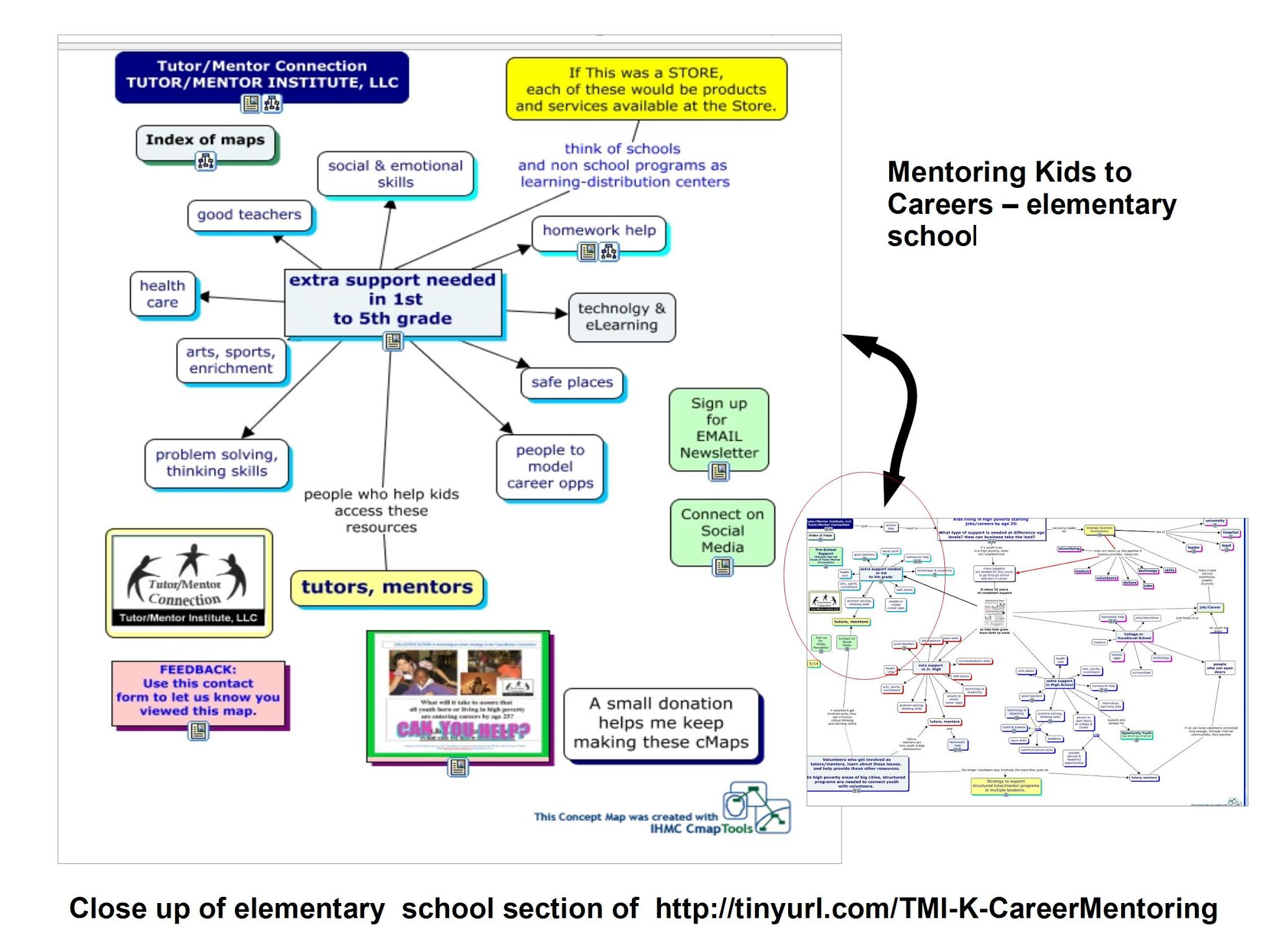
Open the concept map shown below and look closely at the supports kids need at each grade level as they move through school and into jobs and careers. 

I've not found a similar map for Chicago or any other city.  Nor have I found an analysis showing on a school-by-school basis, which of these supports are available.  However, at each level homework help and good teachers are needed. Thus a virtual learning option like Paper could be really valuable...if it was available, and if they knew about it.

This is where organized, non-school, volunteer-based tutor/mentor programs can make a difference.


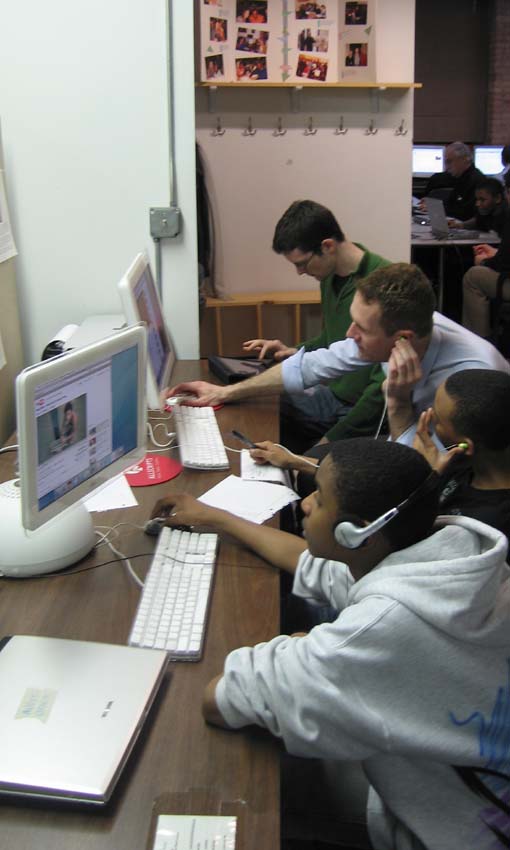
In the programs I led kids came to our site once a week throughout the school year, where they met with a primary one-on-one tutor/mentor, and connected with a variety of other volunteers and learning experiences.  View some of the yearbooks to see the range of activities and volunteers.  

Many students continued for multiple years, often with the same volunteers.  Staff and program leaders provided additional continuity.  

I would have loved to have had access to a learning tool like Paper.  Our volunteers could have coached kids to use it, when they needed extra help, solving part of the awareness problem.

In addition, since our volunteers came from many different companies in the Chicago region, and often from families with significant wealth, they could have helped raise funds for schools to afford services like Paper.

Take another look at the concept map shown above and consider the role volunteers can take to help draw needed resources to schools and families. 

A few days ago I posted an article that included a 2013 map showing participation in an Education, Technology and learning MOOC.  


On Friday evening I participated in a ZOOM reunion with a few of those people, who've stayed connected for the past 10 years. This was posted on Twitter following the gathering.
When I look at a participation map like the ETMOOC map I'm thinking of all the people, from so many different places, who are gathering to talk about ways to help kids.

Imagine a similar map showing Super Bowl viewers.  What would it take for hundreds, or thousands, of people in every city to be looking at information and sharing ideas for building mentor-rich, birth-to-work support systems for kids in every high poverty area, including virtual tutoring resources like Paper offers? 

Below is an animation that illustrates a role athletes could take on a regular basis to mobilize fans and owners to support constantly improving youth programs in high poverty areas.


This animation, and other videos in my library, could be re-produced in many ways, with hundreds of different athletes, celebrities, etc. giving the message.

I hope you'll think of these ideas as you watch the Super Bowl and reflect on it in coming days and weeks.  


Thanks for reading. Enjoy the game.  My family has roots in Philadelphia, so I'm rooting for the Eagles!

Connect with me on Twitter, LinkedIn, Instagram, Mastodon and/or Facebook.

Help me pay the bills!  Check out the Fund T/MI page

Sunday, September 11, 2022

Football and great teams.

College football started a couple of weeks ago, but to me, it's the kick-off of the NFL season that signals the real beginning of the fall sports season. 

My team, the Chicago Bears, have new leadership and many new players. They are still trying to put a winning team on the field.  That requires involvement of ownership. coaches, fans, investors, players and all of the high school and college feeder programs around the country. They all play a role.

I've been using this graphic since the late 1990s t
o visualize the need to support kids in high poverty areas with school and non-school hours programs, that offer many types of support for many years.

Such programs are needed in every zip code.

Thus, as we enter another football season, I want to draw your attention to the infrastructure that is needed to build great teams. Then I want to ask you to think of ways volunteers in business, civic and alumni groups, sports, entertainment and faith groups, etc. can take on roles of fans and team owners to build and sustain great tutor/mentor programs in every high poverty area of Chicago and other cities.

Below is a graphic I've been trying to develop for many years.


The team on the field consists of youth and volunteers who are connected via the efforts of the staff and leaders of organized tutoring, mentoring and learning programs. Youth in poverty face many obstacles, thus the defensive line in this graphic represents some of those barriers. However, organized tutor/mentor programs in high poverty neighborhoods also face many challenges.


Unless we as a city can overcome these challenges
(visualized in this concept map) there will be too few great tutor/mentor programs in the many Chicago area neighborhoods where they are needed. Or in neighborhoods of other cities where NFL, NBA and other pro sports teams operate.

In my football field graphic, the fans in the stands are people who work in business, attend faith services weekly, attend local colleges, etc. These are the people who support great sports teams by their attendance, by watching on TV, or listening on the radio. They support sport teams, and sponsors, by the way they purchase sports apparel, and the way they talk about their teams on a daily basis. These are people who could be volunteering time, talent and dollars to support tutor/mentor programs.

In the sky-boxes are team owners, boosters, investors and others who pay millions of dollars to make great teams available...at the professional level, and at the major college level. Unless we find investors like this to support the growth of great tutor/mentor teams in more places, there will be too few, and there will be few who have long-term commitments to building great teams.

This next graphic shows the role of intermediaries. The articles I write and graphics I create are limited by the talent I have to do this work. The number of people who see these is limited by my own lack of personal visibility and advertising dollars. Thus, if we want more great teams we need more people doing what I do, taking on an intermediary role to help connect people they know with ideas and with programs where they can help implement these ideas.


I send out a monthly email newsletter, with graphics like these, and with links to different sections of my web library. This section points to almost 200 Chicago area youth serving organizations who need support from fans and owners to be world class at what they do.

The goal is that people use the information I'm aggregating to expand the range of ideas they have to support actions they take to help great tutor/mentor teams be available in more places. Volunteers from different places could help create a better design for this newsletter, could write articles, and could create their own versions to circulate this information to their own network of family, friends, co-workers, etc. 

Since most of my library points to Chicago youth programs, every city needs someone duplicating my efforts and building their own library of local programs, maps and research.  

Below is an animation that illustrates a role athletes could take on a regular basis to mobilize fans and owners to support constantly improving youth programs in high poverty areas.


This animation, and other videos in my library, could be re-produced in many ways, with hundreds of different athletes, celebrities, etc. giving the message.

This isn't something that happens once a year, like the Super Bowl, or NBA AllStar game, or every 2 years like an Olympics. But if it is given the same attention, the result will be better support of hundreds, or thousands of different youth serving organizations operating in Chicago and other cities.

And ultimately, that will provide more of the support youth need to move through school and into adult lives and careers.

I'm on Twitter @tutormentorteam, which is where I'll be commenting during weekly football games and as I attend webinars focused on understanding and reducing poverty, racism and inequality.  I do that every day. 

 I've been sharing these ideas for many years. Here's a late 1990s article from Crain's Chicago Business, describing what I've been trying to do. 

Join me. Follow me. Share your own game plan in blogs like mine. Feel free to use my articles for your own game plan and play book. As you share your own strategies, I and others will borrow from you.

Thanks for reading. Let's go out and help great youth tutor/mentor programs grow in more places.

Saturday, February 12, 2022

Super Bowl. Olympics. What's Involved?

Like almost everyone else around the country I'm going to be watching the Super Bowl football game tomorrow.  Many are also watching the Winter Olympics. 

Thus, I want to draw your attention to the infrastructure that is needed to build great teams.
Then I want to ask you to think of ways volunteers in business, civic and alumni groups, sports, entertainment and faith groups, etc. can take on roles of fans and team owners to build and sustain great tutor/mentor programs in every high poverty area of Chicago and other cities.

Below is a graphic I've been trying to develop for many years.


The team on the field consists of youth and volunteers who are connected via the efforts of the staff and leaders of organized tutoring, mentoring and learning programs. Youth in poverty face many obstacles, thus the defensive line in this graphic represents some of those obstacles. However, organized tutor/mentor programs in high poverty neighborhoods also face many challenges.


Unless we as a city can overcome these challenges
(visualized in this concept map) there will be too few great tutor/mentor programs in the many Chicago area neighborhoods where they are needed. Or in neighborhoods of other cities where NFL, NBA and other pro sports teams operate.

In this graphic, the fans in the stands are people who work in business, attend faith services weekly, attend local colleges, etc. These are the people who support great sports teams by their attendance, by watching on TV, or listening on the radio. They support sport teams, and sponsors, by the way they purchase sports apparel, and the way they talk about their teams on a daily basis. These are people who could be volunteering time, talent and dollars to support tutor/mentor programs.

In the sky-boxes are team owners, boosters, investors and others who pay millions of dollars to make great teams available...at the professional level, and at the major college level. Unless we find investors like this to support the growth of great tutor/mentor teams in more places, there will be too few, and there will be few who have long-term commitments to building great teams.

This next graphic shows the role of intermediaries. The articles I write and graphics I create are limited by the talent I have to do this work. The number of people who see these is limited by my own lack of personal visibility and advertising dollars. Thus, if we want more great teams we need more people doing what I do, taking on an intermediary role to help connect people they know with ideas and with programs where they can help implement these ideas.


I send out a monthly email newsletter, with graphics like these, and with links to different sections of my web library. This section points to almost 200 Chicago area youth serving organizations who need support from fans and owners to be world class at what they do.

The goal is that people use the information I'm aggregating to expand the range of ideas they have to support actions they take to help great tutor/mentor teams be available in more places. Volunteers from different places could help create a better design for this newsletter, could write articles, and could create their own versions to circulate this information to their own network of family, friends, co-workers, etc. 

Since most of my library points to Chicago youth programs, every city needs someone duplicating my efforts and building their own library of local programs, maps and research.  

Below is an animation that illustrates a role athletes could take on a regular basis to mobilize fans and owners to support constantly improving youth programs in high poverty areas.


This animation, and other videos in my library, could be re-produced in many ways, with hundreds of different athletes, celebrities, etc. giving the message.

This isn't something that happens once a year, like the Super Bowl, or NBA AllStar game, or every 2 years like an Olympics. But if it is given the same attention, the result will be better support of hundreds, or thousands of different youth serving organizations operating in Chicago and other cities.

And ultimately, that will provide more of the support youth need to move through school and into adult lives and careers.

I'm on Twitter @tutormentorteam, which is where I'll be commenting during tomorrow's Super Bowl, and every day after that.  Join me. Follow me. Share your own game plan in blogs like mine. Feel free to use my articles for your own game plan and play book. As you share your own strategies, I and others will borrow from you.

Thanks for reading. Let's go out and help great youth tutor/mentor programs grow in more places.