Showing posts with label enough. Show all posts

Thursday, October 16, 2025

After the March, Do the Planning

On Saturday, October 18th, millions of people across the USA, and the world, will be out in the streets marching to protest against the rapid destruction of our freedoms, democracy, and the rise of fascism in the world.  This link shows where you can become part of one of these "NO Kings" protests. 

They are saying "Enough is Enough!"

After the march, do the learning.  If you browse through this blog you'll see my focus is on using an "information-based problem solving" strategy to build and sustain mentor-rich non-school programs that reach K-12 kids in high poverty areas with long-term support.

I've tried to engage others in this effort for over 30 years.  Every time a negative news story appeared in a Chicago paper, I said "Enough is Enough".  In the late 2000s I listed steps anyone could take. The animation below was created a few years later by an intern from South Korea.  Take a look.


This animation was done by one of my interns after reading this article.

If we want to stop this violence against Democracy, we have to act now, and keep acting to solve this problem for many years. We have to think spatially, that is, look at the entire city and suburbs, our state, other states, and other countries, not just one neighborhood.

At the same time, we need to act locally, because none of us has the time, or the resources to help each of the kids in the entire Chicago region who live in neighborhoods where poverty is the root cause of the violence.

Here are some ways to remind yourself. Think of ENOUGH, is ENOUGH

E – educate yourself – most of us do not live in high poverty neighborhoods, so we only understand the root causes of senseless shootings from what we read in newspapers. We also only read negative news in the media, so we’re not really well informed on where these events are taking place most frequently. Finally, while there is a perception that there are plenty of youth programs, we really don’t have a good understanding of the distribution of different types of youth programs, to different age groups, in different zip codes. The only way this will change is if each of us pledges to spend one hour a week reading books, articles and web reports, that illustrate the root causes of these shootings, or of poor performance in schools. Through our learning we can draw ideas that we use in our own actions. We can also begin to contribute information that other people use to support their own decision making.

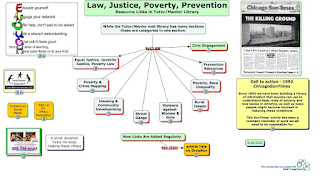
To help with your learning about race, poverty and inequality in America browse the different sections of the Tutor/Mentor library, shown on this concept map


It's really important to understand what drives people to vote for Trump and his enablers.  Many of the articles and websites that I point to from this concept map, provide information that will help you better understand the the problems we face.   A similar library could be created to aggregate research and articles that help us better understand what fuels support for Trump and other fascists leaders. 

Another library that is needed would be one aggregating information about immigration, and showing ways to create a legal path for people from different countries to enter the USA and seek a brighter future.  

If you host either of these libraries share a link in the comments and I'll add it to my own library.

N – engage your network – find ways to draw others who you know into this shared understanding. Recognize people who volunteer time and talent, or who help kids through the programs they operate. If you are a business leader, or a church leader, engage your corporation or your congregation. You can use your web site, advertising, point of purchase materials, etc. to point to web sites that show all of the agencies in the city who do tutoring/mentoring, such as www.tutormentorexchange.net. If you do this weekly, year after year, your friends, coworkers and customers will become involved in solving this problem with you.


This concept map shows another section of my library.  The links point to resources on collaboration, community building, innovation, knowledge management, etc.  These are skills many should learn, in order to build and sustain the coalitions needed to not only remove Trump and his enablers, but to address the root causes and social injustices that fuel voter ager and disengagement.

O – offer help, don’t wait to be asked. As you build your understanding of where poverty is most concentrated, and what social services are in those areas, choose a neighborhood, and reach out with offers of time, as a volunteer, talent, help build a web site, do the accounting, or offer Public relations services, and dollars, if the web site of an organization shows they do good work, you don’t need to ask for a proposal of how they would spend your donation, you need to send them a donation so they can keep doing that good work.

Apply the same practices to help political leaders mobilize voters, then stay accountable to them once they are elected.

U – build a shared understanding. Form groups of peers to share reading and learning assignments, just as you meet every Sunday to read passages of scripture and build the group’s understanding of the Word of God. Use the many different resources of the T/MC Links library as the starting point for your search for wisdom, and understanding.

In the concept map shown above you'll find one node pointing to concept maps that show political engagement resources.  When/IF we defeat Trump and regain control of the House, Senate, White House and Supreme Court, we need a complete revision of how people are elected and how they represent the people who voted for them, not the people who have given them tons of money. Here's one of those concept maps.

G – give until it feels good – people who generously donate time and dollars to causes they believe in feel good about their giving. If we’re going to surround kids living in poverty dominated neighborhoods with extra learning and adult mentoring networks, donors will need to give more than random contributions of time, dollars and talent.  

Political campaigns are expensive. Pick a few candidates and support them.  I do my political giving through a website hosted by Charles Gaba.  

H – form habits of learning, and pass these on to your kids. Imagine how much more successful teachers were if youth came to school every day asking questions about where to find information, or how to understand information they had researched on the Internet the previous day? We can model that habit if we build it into our own activity. Keep a chart where you can document actions you take each week to same sure that this time ENOUGH, really means ENOUGH.

If you document actions, you can review what you’ve done at the end of each month, and each year, and begin to see a growing mountain of actions you have taken to solve this problem. Some of these will be actions that got other people involved, so that the good work you do is multiplying because of the good work others are also doing.

Through this process you help build this shared understanding, which will lead to better public policy. Without this habit of learning, and without learning to use the Internet to find good ideas from people in all parts of the world, we won’t be able to problem solve as well as we need to, and we won’t be able to teach this habit to our kids.


I plan on being at the No Kings protest in Arlington Heights, Il.  I'll bring my folding chair, my oxygen tank, and my sign.  

But, I'll also be on LinkedIn, BlueSky, Twitter, Facebook, Mastodon and Instagram.  I hope you'll connect with me.

Finally, if you're able, visit this page and make a contribution to help fund my work. 

Monday, March 25, 2024

Learn more about Poverty in America

Last May I posted an article with the headline, "Poverty in America. Why so Much?"   I pointed to a presentation by Matt Desmond, and encouraged readers to watch it.

Today on Twitter (X) Matt Desmond shared a slide presentation that people can use as a study guide to understand poverty and take actions to reduce it.  Here's the website where you can download the presentation. 

Below is a slide from the PDF version. (scroll down to bottom of home page to find "Teaching Resources".


There are a lot of slides, with great visualizations, and each chapter has questions that can be used to stimulate discussion in learning groups.  

The only thing missing from this is a chapter on social capital and ways volunteer involvement in on-going tutor/mentor programs can increase the number of people motivated to spend time reading Desmond's book and sharing these slides with their network.

6-30-2025 -  visit the Othering and Belonging website and listen to a discussion of a new book titled "Structural Racism", by Stephen Menendian.   Visit this page and read a paper titled "The Roots of Structural Racism Project".  Scroll down to the bottom to see an extensive additional reading list.

8-7-2025 - view this video about "Structural Racism", by Stepen Menendian - click here

Below is a concept map that shows the birth-to-work timeline.  If you view this in context of Menendian's book about "Structural Racism" one my frame the conversation about making these learning opportunities equally available to all kids, which would require different strategies for different places.  


Look at the text box in the lower left corner, showing the role volunteers in tutor/mentor programs might take.  Desmond's book mostly focuses on policy and what voters can do to reduce poverty. I'd like to see a chapter showing the support that needs to be made available, at each grade level, to every youth living in a high poverty area, and what policy, philanthropy and business involvement can do to make these supports available in more places. 

Here's another concept map showing growth of volunteers who are well-supported in on-going volunteer-based tutor, mentor and learning programs. 


I show this graphic in this blog article. I also show how interns created to animated versions of this graphic more than 14  years ago.  It takes an intentional effort for leaders in volunteer-based programs to educate volunteers on this issue. It take consistent, flexible funding from donors for programs to hire and retain staff who do this well, and to make long-term, mentor-rich programs available in more places.

It takes network-building, like I keep repeating with this graphic.  


Unless more people become personally involved, and get friends, family, co-workers and their professional networks involved, and stay involved for decades, we'll still see "poverty books" 20 years from now, with little change from today, or 30 years ago.

This is EASTER week. Millions around the world will be celebrating.   


I've posted EASTER week articles almost every year. Here's one from 2018 which has a link to a PDF presentation with the maps shown above.  


I've been preaching this message for 30 years.  This blog and my website could be additional resources to people trying to understand the issues and solve such a complex problem.

However, too few have ever seen what I'm writing. You can change that if you share my blog articles and create your own versions to communicate these ideas.

Imagine a strategy in faith communities that engaged their congregations in an on-going study of poverty, using resources such as Matt Desmond's study guide and book.  What if they created maps showing which of their congregations had such study groups in place?  

I found Matt Desmond's post on Twitter (X). That's why I still use the platform. I'm also using many others. Find the links on this page.

Thanks for reading this article.  If you want to help me continue this work, please visit this page and make a contribution.  

Tuesday, December 12, 2023

These "Calls to Action" Need New Energy

Yesterday I took a look at the first newsletter sent in June 1993 by the new organization I and six other volunteers had created in late 1992.  The message below was included.

This was the first page.

You can open and read the PDF at this link.  I put a President's Message in my newsletters in each issue from 1993 through 2002. After that I put the message in email newsletters and starting in 2005, in this blog.   In this issue I started by saying "There are kids all over Chicago who don't have anyone taking an interest in them. Cabrini Connections is changing that."

The headline of the newsletter was "Do the Right Thing!".  

I was prompted to form Cabrini Connections, and the Tutor/Mentor Connection in October 1992, following the shooting death of 7-year old Dantrel Davis in Cabrini Green, the neighborhood served by the tutor/mentor program I had led from 1975 to September 1992.

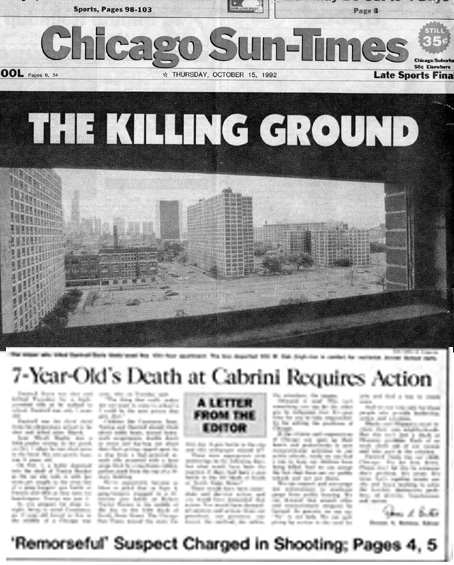
The Chicago SunTimes front page said "7-Year Old's Death at Cabrini Requires Action"

Sadly, I've seen editorials like that in Chicago media often over the past 30 years. I've seen a lot of action, and a lot of money spent, but nothing strategic and on-going that would reach kids in all high poverty areas and do more to help them through school and into adult lives.

I put this 1993 Chicago SunTimes article and graphic in this 2015 article


Here's another from the same article


The 1993 SunTimes article concludes "While Chicago has “had all these sincere people making good efforts, one group working on poverty, one on education reform, one on community policing, these problems are too interwoven and too immense. The city needs all anti-poverty efforts “at the same table”.

Here's something more recent:

I included this in an April 2023 article with the headline "Crime and Violence in Chicago - Not New".  If you take time to scroll through the media articles on this blog, you'll find dozens of similar stories.

Below are two graphic you'll find in many articles, showing the need to build a distribution of youth tutor, mentor and learning programs in every high poverty area of the city, with non-school locations where kids and volunteers can meet regularly.  


Here's another graphic with the same idea


A citywide strategy needs to recruit and support teams of leaders who support individual programs, neighborhoods full of programs and a city full of programs.  Such a strategy needs to be part of a "learning organization" where everyone involved is constantly learning from the work being done by others, so they innovate improvement from year-to-year, rather than constantly starting over.  And such a strategy has to be supported by business, philanthropy, politics and every other sector, so their is a distribution of resources to fund every part of this ecosystem.

Such a "learning organization" is supported by libraries and websites such as the one I host at http://www.tutormentorexchange.net 


I've been sharing these ideas for over 30 years, since launching the Tutor/Mentor Connection in 1993.  However, now I'm turning 77 and don't know how many more years I have left to do this.

Thus, new leaders who share this vision need to step forward and take ownership, preferably by putting my archives in a university structure where the articles and PDF essays are curriculum that students learn from in preparation for leading this strategy during their adult lives.

I've posted several articles in the "A New T/MC" collection that will give you an idea of what is needed. I hope you'll read these, share them, or encourage others to do the reading and sharing.


In the short term, please consider a contribution to help me pay the bills and keep sharing these ideas in 2024.

You can contribute to my 77th birthday campaign - click here

Or to the Fund T/MI campaign - click here


Thank you for reading and sharing. 
 

Wednesday, May 31, 2023

Poverty In America. Why So Much?

In early May I watched a presentation hosted by the Urban Institute, featuring Matt Desmond, author of a new book titled "Poverty in America".  Open this link to view the video of the presentation


In a follow up email the Urban Institute summarized some of the key points of the webinar.  They wrote:

While no one policy is a silver bullet, Desmond suggests keeping these ideas in mind:
Then, on May 21, an opinion article in Politico, by Sheryll Cashin, a law professor at Georgetown University and author of several books on racial justice and American democracy, provided an in-depth analysis in an article titled: America’s Poverty Is Built by Design: How did the U.S. become a land of economic extremes with the rich getting richer while the working poor grind it out? Deliberately.

I added links to Matt Desmond's website to the Tutor/Mentor Library. You can find them here, and here.

I and six other volunteers created Cabrini Connections (a site-based tutor/mentor program) and the Tutor/Mentor Connection in November 1992 following the shooting death of a 7-year old boy, in the Cabrini-Green area of Chicago.  I've used this front-page story from the October 1992 Chicago Sun-Times as a reminder and motivation every year since then.

In the summary above Desmond is quoted as saying "individual actions can build political will for larger changes"

This is not a new problem. However, it's a problem that our leaders can't stay focused on every day, because there are so many other problems.

That's why I think it's important for another level of leaders to emerge, who are totally focused on building a better community understanding, and response, to the problems and solutions.

I've been issuing this invitation for the past 25 years, since we formed Cabrini Connections, Tutor/Mentor Connection, in the weeks following the shooting of Dantrell Davis in Chicago back in October 1992. I keep the front page of this Chicago SunTimes story in my office, as a reminder of my responsibility.

I've developed my own actions steps, and posted them on this blog in the past. Here they are again:

If we want to stop this violence, we have to act now, and keep acting to solve this problem for many years. We have to think spatially, that is, look at the entire city and suburban problem, not just one neighborhood. At the same time, we need to act locally, because none of us has the time, or the resources to help each of the kids in the entire Chicago region who live in neighborhoods where poverty is the root cause of the violence.

This animation was done by one of my interns after reading this article.

Here are some ways to remind yourself. Think of ENOUGH, is ENOUGH

E – educate yourself – most of us do not live in high poverty neighborhoods, so we only understand the root causes of senseless shootings from what we read in newspapers. We also only read negative news in the media, so we’re not really well informed on where these events are taking place most frequently. Finally, while there is a perception that there are plenty of youth programs, we really don’t have a good understanding of the distribution of different types of youth programs, to different age groups, in different zip codes. The only way this will change is if each of us pledges to spend one hour a week reading books, articles and web reports, that illustrate the root causes of these shootings, or of poor performance in schools. Through our learning we can draw ideas that we use in our own actions. We can also begin to contribute information that other people use to support their own decision making.

To help with your learning about race, poverty and inequality in America browse the different sections of the Tutor/Mentor library, shown on this concept map


N – engage your network – find ways to draw others who you know into this shared understanding. Recognize people who volunteer time and talent, or who help kids through the programs they operate. If you are a business leader, or a church leader, engage your corporation or your congregation. You can use your web site, advertising, point of purchase materials, etc. to point to web sites that show all of the agencies in the city who do tutoring/mentoring, such as www.tutormentorexchange.net. If you do this weekly, year after year, your friends, coworkers and customers will become involved in solving this problem with you.

O – offer help, don’t wait to be asked. As you build your understanding of where poverty is most concentrated, and what social services are in those areas, choose a neighborhood, and reach out with offers of time, as a volunteer, talent, help build a web site, do the accounting, or offer Public relations services, and dollars, if the web site of an organization shows they do good work, you don’t need to ask for a proposal of how they would spend your donation, you need to send them a donation so they can keep doing that good work

U – build a shared understanding. Form groups of peers to share reading and learning assignments, just as you meet every Sunday to read passages of scripture and build the group’s understanding of the Word of God. Use the many different resources of the T/MC Links library as the starting point for your search for wisdom, and understanding.

G – give until it feels good – people who generously donate time and dollars to causes they believe in feel good about their giving. If we’re going to surround kids living in poverty dominated neighborhoods with extra learning and adult mentoring networks, donors will need to give more than random contributions of time, dollars and talent.  

H – form habits of learning, and pass these on to your kids. Imagine how much more successful teachers were if youth came to school every day asking questions about where to find information, or how to understand information they had researched on the Internet the previous day? We can model that habit if we build it into our own activity. Keep a chart where you can document actions you take each week to same sure that this time ENOUGH, really means ENOUGH.

If you document actions, you can review what you’ve done at the end of each month, and each year, and begin to see a growing mountain of actions you have taken to solve this problem. Some of these will be actions that got other people involved, so that the good work you do is multiplying because of the good work others are also doing.

Through this process you help build this shared understanding, which will lead to better public policy. Without this habit of learning, and without learning to use the Internet to find good ideas from people in all parts of the world, we won’t be able to problem solve as well as we need to, and we won’t be able to teach this habit to our kids.


Share this post and the links I point to. Start discussions in your own circles of influence. Be the  YOU in the graphic shown above.

If we do this, we’ll not only reduce the root causes of youth on youth violence, we’ll also address one of the growing issues facing America in a global economy. We will begin to create a nation of learners, problem solvers, creative thinkers and innovators, who use learning and information as the basis of creating opportunity and keeping America great.

Read Leadership ideas here and here

6-30-2025 update - Visit the Othering & Belonging Institute and listen to a discussion of a new book titled "Structural Racism".  

Thanks for reading and sharing this article.

Find me on Twitter, Instagram, Mastodon, LinkedIn and Facebook (see links here).

If you want to help support my efforts please visit this page and send a small contribution to help Fund the Tutor/Mentor Institute, LLC. 


Tuesday, April 19, 2022

April Newsletter. What if....

I sent out my monthly newsletter today.  You can read it here.  


I've been sending out a newsletter, in print or email version, since forming the Tutor/Mentor Connection in Chicago in 1993.

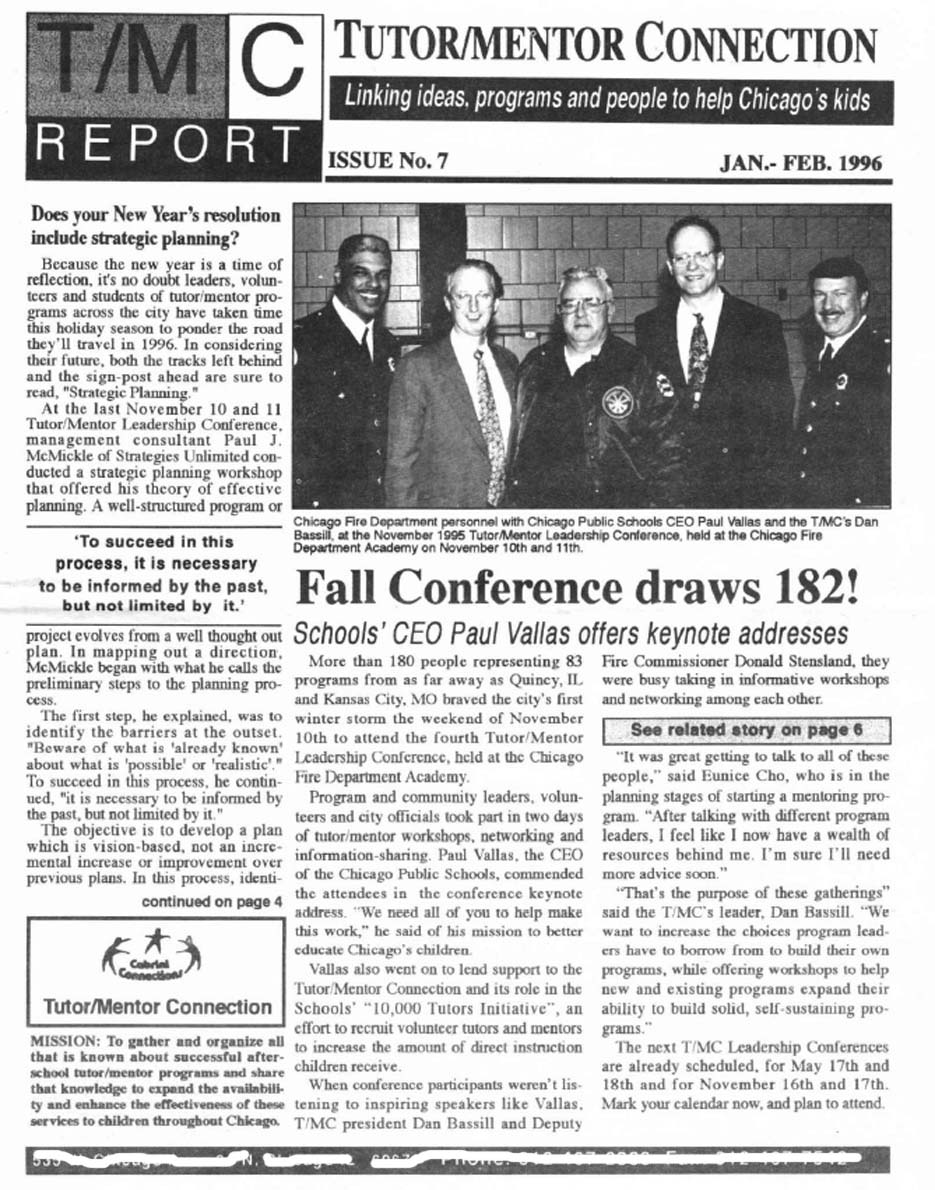
At the right you can see the first page of the Jan/Feb 1996 newsletter, featuring a photo of Chicago Public Schools CEO Paul Vallas and leaders of the Chicago Fire Department.  This was taken at the November 1995 Tutor/Mentor Conference, held at the Fire Department Academy.  Vallas was the keynote speaker. 

Below is a photo of former President Barack Obama, from 1999 when he was a speaker at another Tutor/Mentor Conference held in Chicago.  See it on page 5 of this newsletter

You can find archives of past newsletters on this page.  

Here's another Chicago leader. When Arne Duncan was CEO of Chicago Public Schools he gave small grants to support the Tutor/Mentor Connection and spoke at the volunteer recruitment campaign kickoff in 2001. You can see this image in a 2016 blog article I wrote. 

If you search for Arne Duncan, Barack Obama or Paul Vallas on this blog you'll find many articles where I've pointed to them. 

There's a common theme. I point to information people can use to help build and sustain volunteer-based tutor/mentor programs in high poverty areas of Chicago.  I point to research showing where and why such programs are needed.  I point to articles showing how current fund raising practices don't do enough to support long-term programs.  And I encourage people to use the information. Or if they pointed to maps the way I've done in more than 250 articles.

Below are recent Tweets featuring Obama, Duncan and Vallas.

Now imagine how much more they might have accomplished over the past 25 years if they had been the authors of the newsletters I wrote, and the articles on this and the MappingforJustice blog.  Of if they had consistently read the articles and then encouraged people they influence to also read them and apply the ideas.

Would more people have been investing in programs reaching K-12 youth in high poverty neighborhoods, helping kids through school and into jobs and careers?


Would more people "who can help" be responding to their appeals, and reaching out to offer time, talent and dollars to support school and non-school youth tutor, mentor, learning and jobs programs in every high poverty area of Chicago?  Would this strategy have been duplicated in other cities and countries?


We will never know because they did not take that role, nor has anyone else of influence, celebrity status and power.  

Well, it's never too late. Start now. Maybe in 2040 we'll see less poverty and violence, less structural racism and inequality, because of what our leaders, and others, do consistently, every week, for the next 20 years.  

This blog will remain available, either at this address, or in the Internet archive

The www.tutormentorexchange.net will also remain available via the Internet archive

Thanks for reading. Please share. And let's connect on Twitter, Facebook, Instagram and LinkedIn.  


Monday, December 30, 2019

Enough is Enough. Do the Planning. Build the Network.

It's time for New Year's Resolutions. I resolve to continue sharing ideas and encouraging others to use information available through the Tutor/Mentor Institute, LLC website.  I hope others read some of what I share and that you'll spend some time thinking about how your actions might lead to a world with less need to send men and women to fight on foreign soil, or to fight in our own streets and neighborhoods.

I created this Enough is Enough message in 2007. It shows actions people can take to help solve problems we face locally and globally.  The video below is from this 2007 blog article.


I repeated the ENOUGH message again in this 2008 article. Then again in this 2010 article.  Again in this 2012 article.

Again in 2015 article.

Chicago Sun-Times 1992
Again with this 2016 article.

Now as we head into 2020 and a new decade.

Anyone who looks at a media story like this can dig up one of these "Enough is Enough" articles and share it with friends, family, co-workers, faith network, college and more.

Until more people take these steps we'll keep seeing these stories.

Resolve to spend some time weekly in 2020 to take a look and share with others.

teams needed in many places

The primary purpose of the information I'm sharing continues to be to help teams of people grow in thousands of places. Such teams will use their time, talent and dollars to help long-term, mentor-rich non-school programs grow in every high poverty location in Chicago, it's suburbs, and other cities.  These programs will seek to constantly learn from each other, in efforts to help kids move through school and into adult lives.


put yourself in the blue box 
You can use this concept map to frame your commitment. Just put your photo and/or company logo in the blue box at the top. The rest can remain the same, since it shows a commitment, and set of actions, to help youth in poverty move through school and into adult lives. 

I started the Tutor/Mentor Connection in 1993 and launched it in January 1994--- 25 years ago!  I created Tutor/Mentor Institute, LLC in 2011 to provide a structure in which I could continue to keep the T/MC available.  I continue to seek contributions from others to  help fund my efforts.

If you can make a 2019 contribution, please click here and use the PayPal button. 

Tuesday, September 11, 2018

#Never Forget

This being the anniversary of the 9/11 terror attacks, my Twitter feed is full of powerful, emotional, and motivating posts. Some use the #NeverForget tag. Not all focus on the 9/11 tragedy. Some focus on other tragedies, including US interventions around the world that have resulted in the loss of life and unimaginable suffering of millions of people. 

We are not alone in our suffering and our memories.  I encourage you to click on the link and scroll through some of the comments.

ChicagoSunTimes 10-1992
This Chicago SunTimes front page, from October 1992, is my own #NeverForget message. As with many other times before then, and since then, the editorial writers were eloquent in saying "it's everyone's responsibility" to solve this problem.

Unfortunately, that never was sustained.  Other than a few days, to a year, of editorial indignation, these headlines did little to bring people together, develop solutions to complex problems, and generate an on-going flow of talent and dollars into every high poverty neighborhood, and to all of the organizations needing those resources to help kids and families overcome poverty.

Furthermore, few news stories about urban violence, or poorly performing schools, pointed readers to a library of articles that showed the institutional racism that has existed in America since before the Declaration of Independence, and which has continued up until today.

View map
In one section of the Tutor/Mentor web library, which I show in this concept map, I point to many articles that point out these injustices.

Thus, when I say #Never Forget, I'm reminding you of Dantrell Davis and calling on you to do your homework to learn more about the problems we face and more about ways you can use your time, talent, dollars, votes and voice to bring about solutions.


Here's one more reminder, from today's ChicagoSunTimes.  It's a story of three innocent people killed by gun violence in Chicago.  If you click on the image and enlarge it you can see that I drew a red line around the last paragraphs of the story, then wrote that text in the yellow highlighted box.  It's a quote from the father of one of these three victims. He said,

"This has been going on for 20 or 30 years, and has been evolving. The teens and young adults caught up in the cycle of violence need additional funding for education and jobs programs to get them off the streets.”

“I haven't seen anyone with that kind of leadership. I don't have a lot of hope."


Share this with others.
I've been trying to draw people to a growing information library that people could use to build and sustain these types of  youth development, tutor, mentor and jobs programs. Too few have seen these stories or chosen to respond.

Share my articles with people you know and you become part of the solution.

Visit my FUND ME page, and make a contribution, and you help me continue to keep the memory of Dantrell Davis and others like him alive through my on-going efforts.

Scroll through articles I wrote during the second week of September,  in past years, to see other ways I've remembered this tragedy.

Sunday, May 28, 2017

Enough is Enough. Do the Planning. Build the Network.

Hope everyone is enjoying this Memorial Day. I also hope you'll spend some time thinking about how your actions might lead to a world with less need to send men and women to fight on foriegn soil, or to fight in our own streets and neighborhoods.


I created this Enough is Enough message in 2007. The video above is from this 2007 blog article.

I repeated it again in this 2008 article. Then again in this 2010 article.  Again in this 2012 article.

Again in 2015 article.

Chicago Sun-Times 1992
Again with this 2016 article.

Anyone who looks at a media story like this can dig up one of these "Enough is Enough" articles and share it with friends, family, co-workers, faith network, college and more.

Until more people take these steps we'll keep seeing these stories.

Sunday, January 01, 2017

Reducing Violence, Poverty in Chicago. What's the Plan?

Both of Chicago's major newspapers ended the year with front page stories about violence in Chicago on their front pages.

This image is from an article I posted in November 2015. If you browse this blog for past articles tagged "planning", "leadership", "media", etc. you'll find ideas I've been sharing for over 20 years.


Had leaders in Chicago embraced and supported those ideas since 1994 I wonder what the level of violence and inequality would be in the city today?

The ENOUGH graphic at the right is from a June 2012 article titled "Stopping Violence. Do the Planning", which focuses on the learning that is essential for development and commitment to a comprehensive, regional wide strategy supported by people in business, faith groups, politics, media, etc.

At the core of my strategies is the use of maps to focus attention on all of the high poverty neighborhoods in Chicago and the suburbs, and on existing non-school, tutoring, mentoring and learning programs already operating.  With an on-line map platform such as the Tutor/Mentor Program Locator which I have been developing since 2008, people can zoom into sections of the city, and use maps as part of a community building effort, enlisting all of the businesses, faith groups, colleges, hospitals, etc. within the map area as supporters of programs that help youth through school and into careers.


Below is a map I created in early 2016 showing non-school tutor, mentor and/or learning programs in the Chicago region. View the map here


I don't give endorsements of one program or another as the best. Instead, I say, “look at the map to see where these programs are needed, based on poverty, violence, poorly performing schools, etc.”

Then pick a neighborhood to make a long-term commitment to help. Once you've done that look at the programs that operate in that neighborhood, using their web site to help you understand who they are, what they do and how you can help them.

Some programs have great web sites and show great work. Other programs don't have great web sites, or don't show comprehensive plans for what they do to help kids.  I created this PDF shoppers guide presentation to show some of the things I would like to see on program web sites to help volunteers, donors and parents choose which programs to support, or to find ideas for helping neighborhood programs constantly improve. 

If you've adopted that neighborhood, your job is to 

a) help good programs get better; 
b) help not-so-good programs become good programs; and 
c) help new programs form in places where no programs are located, or where specialized types of service are still needed.

If enough people take this role, adopting each of the high poverty Chicago and suburban zip codes where kids and families need extra help, there soon will be great programs in more places doing more to help kids have networks of support, safe places in the non-school hours, places for enrichment and extra learning, and places that offer hope and help more kids move safely through school and into careers.

This will not happen over night, or in one year, or even three or four years. However, in 20 years will we still see the same year end news reports showing violence in Chicago and calling for a "master plan"?  Or will we see 20 years of growth in how the city and the region help those who need help the most?

Make this your New Year's Commitment. This  year. Next year. The following year. In 10 years.

Saturday, August 27, 2016

#EnoughisEnough Stop the Violence!

Another senseless act of violence in Chicago took the life of a young woman, this time the cousin of NBA basketball star Dwyane Wade.  Over night Wade Tweeted a call to end the violence, using the hashtag #EnoughisEnough.

I've been using this phrase for nearly 10 years, to show steps of involvement that anyone can take.  Here's an article written just two weeks ago, that is titled "Stop the Violence. Where are the Leaders?"

I started the Tutor/Mentor Connection (T/MC) in Chicago in 1993 with the goal of helping non-school tutoring, mentoring and learning programs grow in high poverty neighborhoods of Chicago, as an alternative to the negative influences available to youth in high poverty neighborhoods.

I've reached out to athletes to take a role in "building great teams" to support youth, with graphics like the one below.
This graphic is included in this 2014 article titled "Build Great Youth Teams in Every Neighborhood - Role of Intermediaries".  It's one of several articles showing roles athletes and coaches can take, which you can find in this set of articles,

There's a lot of information here. It's not something you can master in just one session. Yet, athletes like Wade, our Olympians, pro baseball and football players, all know that to be great you spend lots and lots of time practicing and building your skills.

That's why they should focus on motivating fans to spend their own time, talent and dollars, learning ways to be strategic and consistently involved, and motivating them to stay involved for many years.

I started sharing these strategies 23 years ago. Had anyone accepted this leadership role at that time, maybe things would be different now in 2016 Chicago.

#EnoughisEnough - share this with athletes, leaders and celebrities.  I'd be happy to serve as a coach.

It's not too late to start changing the future.

#EnoughisEnough Stop the Violence!

Another senseless act of violence in Chicago took the life of a young woman, this time the cousin of NBA basketball star Dwyane Wade.  Over night Wade Tweeted a call to end the violence, using the hashtag #EnoughisEnough.

I've been using this phrase for nearly 10 years, to show steps of involvement that anyone can take.  Here's an article written just two weeks ago, that is titled "Stop the Violence. Where are the Leaders?"

I started the Tutor/Mentor Connection (T/MC) in Chicago in 1993 with the goal of helping non-school tutoring, mentoring and learning programs grow in high poverty neighborhoods of Chicago, as an alternative to the negative influences available to youth in high poverty neighborhoods.

I've reached out to athletes to take a role in "building great teams" to support youth, with graphics like the one below.
This graphic is included in this 2014 article titled "Build Great Youth Teams in Every Neighborhood - Role of Intermediaries".  It's one of several articles showing roles athletes and coaches can take, which you can find in this set of articles,

There's a lot of information here. It's not something you can master in just one session. Yet, athletes like Wade, our Olympians, pro baseball and football players, all know that to be great you spend lots and lots of time practicing and building your skills.

That's why they should focus on motivating fans to spend their own time, talent and dollars, learning ways to be strategic and consistently involved, and motivating them to stay involved for many years.

I started sharing these strategies 23 years ago. Had anyone accepted this leadership role at that time, maybe things would be different now in 2016 Chicago.

#EnoughisEnough - share this with athletes, leaders and celebrities.  I'd be happy to serve as a coach.

It's not too late to start changing the future.

Friday, June 29, 2012

Stopping Violence - Do the Planning

I wrote this article several years ago following a shooting that received front page media attention. I've repeated is a few times, most recently in July 2010. Since violence and murder are getting editorial attention again, I'd like to re-post it.

Once again a horrific act has moved violence to the front page of Chicago's Sun Times newspaper, with the headline "ENOUGH IS ENOUGH".

In the article Chicago Police Supt. Jody Weis is quoted saying “So I say, enough is enough. We are coming for you. We will find you, and we will bring you to justice.”

The article also quotes St. Sabina’s pastor, the Rev. Michael Pfleger, who said "it’s not enough to pray, not enough to lower flags every time an officer is killed."

How many times must we read the same headlines? How do we move beyond the prayers, marches and flag-lowering, to the research, planning, brainstorming and action steps that are needed?

On Thursday, October 08, 2009, Arne Duncan was quoted as saying, "This is the time to look in our collective mirror and ask whether we like what we see or whether we can do better together."

This is not a new problem. However, it's a problem that our leaders can't stay focused on every day, because there are so many other problems.

That's why I think it's important for another level of leaders to emerge, who are totally focused on building a better community understanding, and response, to the problems and solutions.

I've been issuing this invitation for the past 17 years, since we formed Cabrini Connections, Tutor/Mentor Connection, in the weeks following the shooting of Dantrell Davis in Chicago back in October 1992. I keep the front page of this Chicago SunTimes story in my office, as a reminder of my responsibility.

I've developed my own actions steps, and posted them on this blog in the past. Here they are again:

If we want to stop this violence, we have to act now, and keep acting to solve this problem for many years. We have to think spatially, that is, look at the entire city and suburban problem, not just one neighborhood. At the same time, we need to act locally, because none of us has the time, or the resources to help each of the kids in the entire Chicago region who live in neighborhoods where poverty is the root cause of the violence.

This animation was done by one of my interns after reading this article.

Here are some ways to remind yourself. Think of ENOUGH, is ENOUGH

E – educate yourself – most of us do not live in high poverty neighborhoods, so we only understand the root causes of senseless shootings from what we read in newspapers. We also only read negative news in the media, so we’re not really well informed on where these events are taking place most frequently. Finally, while there is a perception that there are plenty of youth programs, we really don’t have a good understanding of the distribution of different types of youth programs, to different age groups, in different zip codes. The only way this will change is if each of us pledges to spend one hour a week reading books, articles and web reports, that illustrate the root causes of these shootings, or of poor performance in schools. Through our learning we can draw ideas that we use in our own actions. We can also begin to contribute information that other people use to support their own decision making.

N – engage your network – find ways to draw others who you know into this shared understanding. Recognize people who volunteer time and talent, or who help kids through the programs they operate. If you are a business leader, or a church leader, engage your corporation or your congregation. You can use your web site, advertising, point of purchase materials, etc. to point to web sites that show all of the agencies in the city who do tutoring/mentoring, such as www.tutormentorexchange.net. If you do this weekly, year after year, your friends, coworkers and customers will become involved in solving this problem with you.

O – offer help, don’t wait to be asked. As you build your understanding of where poverty is most concentrated, and what social services are in those areas, choose a neighborhood, and reach out with offers of time, as a volunteer, talent, help build a web site, do the accounting, or offer Public relations services, and dollars, if the web site of an organization shows they do good work, you don’t need to ask for a proposal of how they would spend your donation, you need to send them a donation so they can keep doing that good work

U – build a shared understanding. Form groups of peers to share reading and learning assignments, just as you meet every Sunday to read passages of scripture and build the group’s understanding of the Word of God. Use the many different resources of the T/MC Links library as the starting point for your search for wisdom, and understanding.

G – give until it feels good – people who generously donate time and dollars to causes they believe in feel good about their giving. If we’re going surround kids living in poverty dominated neighborhoods with extra learning and adult mentoring networks, donors will need to give more than random contributions of time, dollars and talent.  

H – form habits of learning, and pass these on to your kids. Imagine how much more successful teachers were if youth came to school every day asking questions about where to find information, or how to understand information they had researched on the Internet the previous day? We can model that habit if we build it into our own activity. Keep a chart where you can document actions you take each week to same sure that this time ENOUGH, really means ENOUGH.

If you document actions, you can review what you’ve done at the end of each month, and each year, and begin to see a growing mountain of actions you have taken to solve this problem. Some of these will be actions that got other people involved, so that the good work you do is multiplying because of the good work others are also doing.

Through this process you help build this shared understanding, which will lead to better public policy. Without this habit of learning, and without learning to use the Internet to find good ideas from people in all parts of the world, we won’t be able to problem solve as well as we need to, and we won’t be able to teach this habit to our kids.

If we do this, we’ll not only reduce the root causes of youth on youth violence, we’ll also address one of the growing issues facing America in a global economy. We will begin to create a nation of learners, problem solvers, creative thinkers and innovators, who use learning and information as the basis of creating opportunity and keeping America great.

Read Leadership ideas here and here

Here are other articles I've written on this topic in the past few years.