Showing posts with label vision. Show all posts

Thursday, August 06, 2026

What if CEOs in every sector took these roles?

Between 1973 and 1990 I held various roles in the retail advertising department of the Montgomery Ward Corporate Headquarters in Chicago. I learned how functional teams worked daily to support more than 400 retail stores in 40 states, while my advertising team worked to draw customers to those stores. All of these roles were needed.

When I formed the Tutor/Mentor Connection in 1993 these strategies shaped my thinking. There are hundreds of youth-serving programs in big cities like Chicago. They all need to be great, or getting there with constant investments of time, talent, learning and dollars.

I've two sections on the http://www.tutormentorexchange.net website where I share many resources that elevate this thinking and are intended to provide ammunition for leaders in business, sports, healthcare, higher education, religion, media and other sectors to use their own resources to help on-going volunteer-based tutor/mentor programs reach k-12 youth in every high poverty area of Chicago (While I piloted these ideas in Chicago they apply to anyplace in the world with large concentrations of segregated poverty). 

This is the Leadership Strategies page


This is the Business Involvement page


Many companies spend billions of dollars on research and development (R&D) so they stay competitive in their markets or capitalize on new opportunities. How many spend even a few thousand dollars a year researching reasons for being strategically involved in youth tutoring/mentoring programs? Think about that as you read the articles I share on my website.

How can we stimulate this learning? What role could universities, even high schools, take?

A few months ago I included the graphic below in this article showing how billionaires could fund programs at universities that build a pipeline of leaders and supporters who would help make volunteer-based tutor, mentor and learning programs available in more places.


Imagine if someone provided the endowment for the ideas I've been sharing for over 30 years to become curriculum that educated a new generation of leaders to think differently about how they support social benefit organizations.  

Contact me. I'd love to help you train your AI to build a curriculum drawing from my collections.

I'm on LinkedIn, Facebook, Instagram, Twitter, BlueSky, Mastodon and post at Substack.com and Medium.  I urge you to connect with me in these places and share your own strategies.

Finally, I depend on a few donors to help me pay the bills. Please visit this page and make a contribution if you can help.

Tuesday, July 07, 2026

What's Needed in an on-line Tutor/Mentor Program Locator?

This week I posted a new article on Substack.com that shows how I've been using GIG maps since 1993. I hope you'll read it. click here


I pointed to articles on the MappingforJustice blog, such as this one, that show examples of how I've used maps, and how others are doing similar work. 

And, I encouraged universities, and others, to borrow from my history  and build their own platform to support youth-serving programs in their community, and to help them reach more K-12 kids in every high poverty area.  

So what is involved.  Take a look at this concept map.

From left to right I show

a) boundary layers - city, zip code, community area, state and federal legislative districts, etc.

b) indicators layers - poverty, violence, poorly performing schools, etc.

c) programs - while I focus on tutor/mentor programs, this could also show arts/science, or other types of services which need to be located close to consumers, meaning many are needed throughout the city.  The programs layer can be sorted by age group served, type of program, time of day

sample map
d) this shows the goal of the program locator, and the Tutor/Mentor Connection/ Institute, LLC.  We want to help leaders use this to build support for existing programs and help new ones form where needed.  At the right is an example of a map view that can be created using the program locator, then adding additional annotation using Power Point

e) assets layers - in this section you can find sub sections for banks,  hospitals, universities, faith groups, drug stores, and insurance companies, with offices/branches in different locations throughout the city. 

sample map
Using this information a map of a small section of the city can be created that shows indicators of need, existing programs and assets who share the geography, and thus should be expected to support programs that help kids in that area.

Ideally an updated version of the Program Locator would find ways to pull data on assets from resource files on the Internet, making this a continually updated feature.

Two features were never built into the program locator.

a) I wanted to be able to connect data from indicators into a form that program leaders (or donors) could use to determine the need for tutor/mentor programs in specific neighborhoods.  Imagine clicking on a community area and getting a form showing number of kids; level of poverty, locations of existing programs, age group, type of program, etc. A program would just fill in their program information on the form and get a printed document to send to a donor.  View this PDF to see how a map might show the number of kids in a community area. 

b) I wanted to create another layer that could be used to raise money for programs shown on the map, and to track donations to do an analysis showing the different levels of funding going to different neighborhoods.  I describe what I have in mind on this page of my planning wiki.

In another concept map I've been sharing links to platforms that collect and map data, shown all the places in the country where people need extra help.


Most of these show where help is needed, but don't host a directory of organizations who are trying to solve those problems.  And, if a service needs to be close in order for people to participate, many such organizations would be needed in big cities like Chicago.

And they all compete with each other for scarce funding.

If you live in one of the cities where there are pockets of concentrated poverty and your newspaper headlines are showing "bad news" happening,  why not reach out to technologists in your community or at your local university.  Show them how I've been using maps and the Program Locator that was built in 2008. 

Encourage them to build a similar resource for your community.

If you'd like my help, just reach out on LinkedIn.

That's just one place where you can find me. Visit this page to see my social media links.

And, if you want to help me pay the bills, visit this page. 

Tuesday, June 30, 2026

Tutor/Mentor Learning Network - What is it?

I shared the two visual essays shown below in a new article on Substack.com.  I hope you'll take time to view it and dig into the essays.

The first shows how I've been collecting and sharing information for the past 30+ years, via the Tutor/Mentor Connection (1993-present) and the Tutor/Mentor Institute, LLC (2011-present).  This slide shows how I link to other organizations that represent specific areas of expertise.


My goal is not to have links to "everything" on my website, but to point to other websites who aggregated information about specific topics, or specific groups of organizations.

Open the PDF at this link. 


The second essay shows more of what the Tutor/Mentor Connection has been building since 1993.  I call it a "capacity-building" network.

Note the "mentoring to careers" graphic in the first image and the map of Chicago in the second. Both have photos of kids and volunteers who were part of the programs I led.  These signal an intention to help similar programs grow in every high poverty neighborhood of Chicago and other places.

While many intermediaries collect and share information, I’ve found few who host a list of programs that do similar work, then constantly try to draw attention, volunteers and donors to EACH of these places. That’s what makes the Tutor/Mentor Connection unique, and difficult to understand.

Click here to view the visual essay.

While I've piloted this work since 1993, via a small non-profit (until 2011), I've constantly reached out to convince colleges and universities to adopt the strategy, as a teaching tool, and for their own self-interests.   The second visual essay shows roles students could take.  Many articles on this blog do the same.


This is becoming a much more urgent concern.  I'm 79 and in the early stages of a lung disease that will ultimately end my life.  This blog and the sites it points to are just one entry point into what started for me in 1973 when I became a volunteer in the Tutoring Program hosted by employees at the Montgomery Ward Headquarters in Chicago.  

I studied history in College then spent three years in U.S. Army Intelligence. Both taught me to look for best-available information to support my efforts to constantly improve my work in retail advertising at Wards and my volunteer-role as a tutor, then leader, of the program at Wards.

Through the Tutor/Mentor Connection (1993-present) and Tutor/Mentor Institute, LLC (2011-present) I've been sharing this library with others in Chicago and throughout the world!

These visual essays show much of what I've been doing.  

If you have been blessed with great wealth, and you care about helping solve complex, long-term problems, please consider making a gift to a university, focused on building a Tutor/Mentor Connection-type program, including taking ownership of my archives, websites, blogs and all the work I've been doing.

I'd love to connect on ZOOM with anyone who is interested in helping make this happen.

These photos show me in 1973 with Leo Hall and in 2014 as he celebrated his 50th birthday. We're still connected in 2026.  It's one of many reasons I keep trying to help mentor-rich programs grow in more places.

Thanks for reading.  Connect with me on LinkedIn, Facebook, Instagram, Twitter, BlueSky and/or Mastodon.  See links here.

Finally, I don't charge people to use these ideas and resources, but there is a cost to me to keep doing this work.  Visit this page if you'd like to help me pay the bills.

Monday, October 06, 2025

Celebrating 60 years - Tutoring Chicago

 A few months ago I was invited to be part of the 60th Anniversary Celebration of Tutoring Chicago, which started in 1965 as the Montgomery Ward/Cabrini-Green Tutoring Program.  I joined as a volunteer tutor in 1973, during my first year of starting a retail advertising career at the Montgomery Ward Corporate Headquarters in Chicago.  I joined the volunteer leadership committee in 1974 and became the program's volunteer leader in 1975. I held that role through 1990 when we converted the program to a non profit, called "Cabrini Green Tutoring Program, Inc."  I led it until October 1992 then left because of disagreements with the volunteers on the Board of Directors, who I had recruited to their roles.

That led me to form a second program, helping kids who aged out of the first program after 6th grade get continued tutor, mentor and learning support through high school. That also led to me forming the Tutor/Mentor Connection in 1993 to help our program, and every other tutor/mentor program in Chicago, get more consistent media attention and a more consistent flow of operating dollars.

The original program is now Tutoring Chicago. I was asked to share my thoughts and this video is a portion of them. 


For those who are interested here are the questions from Tutoring Chicago and answers that I shared with them prior to doing the video interview. 

In many articles on this blog I've shown the vision driving my daily work.  Below are portions of an article I wrote in 2017 under the headline of "Go Forth and Multiply."

---- begin 2017 article ---

I led a volunteer based tutor/mentor program in Chicago from 1975 till 2011 and have collected a load of endorsements and paper archives. I've been digitizing these and last week converted a 22x26" Thank You, Dan! card from 1989-90, signed by students and volunteers.  Click on the graphic at the left and you can see a few comments.

I put the entire card into a PDF and uploaded it to SlideShare. You can view it below. Use your zoom button to enlarge and see all the signatures and comments.  One of the joys of having led these programs is the enthusiasm and positive feed back that I've received.  However, that has to lead to more than just "thank you cards".  Read more after you view this.


I created the Tutor/Mentor Connection in 1993 (and the Tutor/Mentor Institute, LLC in 2011) to help mentor-rich non-school programs grow in every high poverty neighborhood of Chicago and since then have created a huge library and hundreds of articles and strategy presentations that are tools others could use to help with this strategy.


In the four-part strategy that we developed in 1993, step 1 focuses on collecting information, such as the database of Chicago tutor and mentor organizations. However, step 2 and step 3 focus on increasing the number of people who are using this information.

Since I never had many dollars for advertising, and I'm not a celebrity or part of a wealthy family, or politically connected, this strategy has always depended on others carrying the ideas I launch on this blog and my web sites forward to their own friends, family and co-workers.

This graphic illustrates how ideas I share can be shared by people who read them, with others who will read them and then pass them on to even greater numbers of people. I included this in a 2011 article, and in many others.

I was thinking about this last week during a Twitter chat with educators from around the world and the I began to think of this graphic as a form of fireworks.

Posting an idea, like this article, is like lighting the fuse on a fireworks rocket. As it explodes it creates a constellation of stars, which represents people who are exposed to the message.

Some of these also explode, creating another burst of stars, representing the message reaching a new network of people. Often there's a third, and a fourth blast, meaning the ideas are reaching more and more people.

Think of my Tweets and articles as a daily blast of exploding ideas.  

Below is an example of what I hope happens every day:


Since 1975 several thousand youth and adults have been part of tutor/mentor programs I've led. Some have provided endorsements and "thank you, Dan" messages, like those you can see above.

However, so far, too few are passing on the ideas I share and taking actions that result in more and better volunteer-based tutor, mentor and learning programs reaching k-12 youth in every high poverty neighborhood of Chicago and other cities.

In addition, too few are providing talent and dollars to help me continue this work, or to help me pass this entire library and mission on to a younger, more talented generation of leaders.  I saw a tweet this morning with a quote saying "the best time to plant a tree was 20 years ago. The next best time is now"  I re-tweeted it with this message.


Had a few leaders helped me "plant the Tutor/Mentor Connection tree" in early 1990s, and helped me continue to nurture it for the past 24 years, I feel Chicago would have a much denser network of mentor-rich programs helping kids in poverty, and many more people taking active roles to share these ideas, get more people involved, and build sustainable and on-going flows of talent and dollars to every high poverty neighborhood of Chicago and other cities.  Many might be able to show "thank you" cards from alumni students and volunteers on their own web sites similar to mine.

If this interests  you, read the  "do-over" articles I posted last spring.  

--- end 2017 article ---

Thanks for reading and thank you to everyone who has helped Tutoring Chicago grow for the past 60 years, as well as those who help other volunteer-based tutor, mentor and learning programs in Chicago and other places.

The challenges of operating these programs have always been great. In these days of political turmoil and destructive actions from the leadership in Washington, DC, it is even more difficult to attract consistent attention for these programs, which makes it more difficult for them to attract the resources they need to operate, and constantly improve.

I'll be 79 in December and will continue to end my blog articles with a call to help me find one or more universities and/or institutions to take ownership of my archives and my vision, and lead it for the next 20 to 40 years!

Connect with me on LinkedIn, BlueSky, Facebook, Twitter, Instagram, Substack and other platforms. Share your own ideas and strategies. Borrow mine and share them in your own community. 

And visit this page and  use the PayPal button to send me some financial support.


Sunday, May 18, 2025

Mapping Strategy. Ideas. Libraries.

I saw the visualization below last week. It was created using Kumu.io, which I've written about before. In the different nodes it shows places where students from many universities can do volunteer service in organizations working to help refugee, immigrant and LGBTIQ communities. I liked it because of the way it organizes and shares information.


Open the graphic at this link. In the center are three nodes showing the Columbia Global Emerging Scholars Fellowship, the Harvard Refugee Fieldwork Program and the Refugee Rights Clinic.  Click on the icon with any node on the map and you'll find information about that organization or resource. It's a fantastic way to share information and connect networks of people who focus on related issues.

I've been trying to harness ways to do this since I started leading a tutor/mentor program in the 1970s. Initially, I used type-written newsletters and a copy machine and distributed my information by hand to volunteers and students attending weekly tutor/mentor sessions, or by letters to corporate leaders and supporters.  

By 1993 when we formed the Tutor/Mentor Connection I had an extensive library, but it was only available to people who came to my program offices in Chicago, where we held weekly tutor/mentor sessions. It wasn't until around 1998 when our first website was created, that I found a way to share this with a wider audience in Chicago, and the world.


This graphic was used on the home page of the first Tutor/Mentor Connection website and I've used the hub/spoke graphic for the past 28 years since then. The spokes represent the different types of information found on the website.  These linked to internal pages with lists of information and links to external websites.  I've tried to animate it, or make it interactive, like the Kumu maps I've pointed to, but not with consistent success.

Below are some examples of what I've been trying to share and ways I've been able to do it.

The goal: Open this link to view the map shown below. 


This shows a goal of helping kids born or living in high poverty areas move through school and into jobs and starting careers by their mid 20s.  In the middle is the concept map shown below, witch outlines the 4-part strategy needed to achieve the goal.

Open the concept map at this link. Or, visit this blog article to see a description of the content of this map.

Below is a short video that describes the four-part strategy. 


Below is a graphic from a presentation created by Mina Song, an intern from South Korea, who created a five-part overview of the Tutor/Mentor Connection and its 4-part strategy.  Find the links to this and the other four Prezi slide shows on this page. 


Here's an earlier visualization, showing the goal and four-part strategy, created by in 2008 by one intern, then updated in 2009 by Alan Yoo, another intern from South Korea. The voice over is by Bradley Troast, our Northwestern University Public Interest Fellow. Since all of this was created with Flash Animation, I created and narrated this video a few years ago.


The Kumu map demonstrates one way to share information.  The other maps and videos show ways I've been able to do this with the help of many interns and volunteers.

I share this with one goal in mind.


I created this graphic in 2016 for this blog article and I've used it often since then. It shows my goal of helping teams of multi-talented people form and build, then sustain, constantly improving, volunteer-based youth tutor, mentor and learning programs that reach kids in all areas of persistent poverty and help them through school and into jobs and a life free of poverty.

The Kumu map illustrates how one team of people is visualizing ideas. My maps and videos show how I and interns working with me have visualized ideas, strategy and available resources.

Today's blog article shows how I continue to seek others who will duplicate my work, do it better, and spread it to more people in more places.

I invite you to share this with others so that teams WILL FORM in cities across the world, creating their own versions of my maps, graphics and blog articles, which they share with the same goals.


This is more important than ever. With the current administration burning books, deleting history from government websites, and cutting funding for many education, youth serving and social benefit programs, leaders are scrambling to find resources.

Non-profit and social benefit organizations are COMPETING against each other, harder than even before.

Why not devote some time, energy and creativity to working collectively to change how donors, volunteers, media and policy-makers support all programs in this sector, so that everyone has a more consistent flow of resources, not just a few?

Thanks for reading.  If you're sharing similar ideas, please connect with me on Instagram, Facebook, LinkedIn, BlueSky and Twitter.  

I depend on contributions to fund the work I do. Please visit this page and help. 


Saturday, March 29, 2025

April 1st. No joke this year.

I often look at articles I wrote in the past for inspiration. Today I looked at an article I wrote on March 31, 2019.  I'm posting the full article below.  It's still relevant.

However, some things have changed since then.

First, the day after I wrote my 2019 article I was hit by a car and suffered a fractured leg and shoulder. I was in a wheel chair for the next 4 months. 

Covid-19 had not yet hit. That came a year later. In April 2020 after the lock-downs began, I wrote this article.  We're still suffering from Covid and now face new epidemics with a Federal government that is cutting research and has an anti-vaccine stance. 

Kamala Harris and Tim Walz did not win the November 2024 election so this article that I wrote about Governor Walz's interest in mapping probably does not apply to anyone in the new administration. 

In 2023 I wrote this article about information-based problem solving. I don't expect anyone in the current administration to apply this thinking but those looking to save our democracy, and our planet, sure could use these ideas.  

So, here's what I wrote on March 31, 2019:

Monday is April 1, which for many, means it's a day of practical jokes.  For me, it's a new week, of a new month, and new opportunities.

Here's the goal:


While the planning for the Tutor/Mentor Connection in Chicago was done 1993 it was launched in January 1994 with a survey to identify every non-school, volunteer-based tutor/mentor program in Chicago.  Using maps we began to plot their location, in an effort to determine what neighborhoods were well served, and which needed more programs.

We published the list of programs in a printed directory in the 1990s and on the internet since 2004, along with a growing library of links to web sites that provided information about where and why these programs were needed, and how to build great non profits, to support great youth programs.

For the past 25 years every week has started with efforts to draw attention to this information, and motivate leaders in every sector, to take roles in building and sustaining constantly improving programs, which work to help kids succeed in school, stay safe in non-school hours, and move toward high school graduation, post high school education, then jobs and careers.

The graphic at the top of this page was used in this article.  It's one of more than 1,000 posted on this blog since 2005.

I want you to read them all, and use the ideas to do more to help kids living in poverty.

That's no April Fools joke.

Of course, I don't expect anyone to do this in a day, but it could be done over a year, or two.  Maybe not by many people, but hopefully by a few who will adopt the strategy and intermediary role I've piloted for the past 25 years so that more people try to make this happen.

Tipping Point-role of universities

Actually, I doubt that many will make an effort to read even a few of my past articles, let alone all of them. That's why I've tried to enlist teachers in high schools and colleges, to make this part of a learning curriculum, that youth start looking at when they are in middle school, and are still looking at as they finish college. I posted this article with that goal last week.

Do you think that's a joke?  Kids as young as one or two years old are reading Bible stories. Many do this for their entire lives. Why can't we enlist people in reading material that helps them create a better life for people who are alive now, rather than in an afterlife?

If the type of learning I've described were happening some would be well prepared to be leaders of mentor-rich youth programs while many others would be prepared to take on the critically important role of building the resource flow and supply chains, that enable programs to grow from good, to great, and then to stay great for many years.

I've been trying to make this vision come true for over 20 years, but so far no one has embraced it. Maybe people think I'm just joking.  Like every day is April 1st.

SunTimes, Oct 15, 1998
Except, it's not a joke. Every week we read about some kids being shot in Chicago. At the right is the front page of the Chicago SunTimes, from October 15, 1992.  This was when I was in the process of forming Cabrini Connections and the Tutor/Mentor Connection.

The headline of "7-Year Old's Death in Cabrini Requires Action" has been a constant reminder of the commitment I made then and continue to try to keep in 2019.

It's a commitment that many need to make, and keep.

I hope you'll think about this as you enjoy your week.

--- end 2019 article ---

Much has changed since 2019 and some problems seem much more urgent now than building systems of support for kids living in high poverty areas. 


I included this graphic in a 2022 article with the headline "Kids not living in high poverty need mentors, too."  

If we don't build systems that help all kids become learners, creative-problem solvers and active leaders, we're doomed to giving our country, and our future, to a small group of ultra wealthy who want to take us back to the dark ages when monarchs ruled by decree and most people had few rights. 

In my 2019 article I wrote, "Kids as young as one or two years old are reading Bible stories. Many do this for their entire lives."  Sadly, this is one reason we have something called PROJECT 2025 and why millions of America have joined a cult that elected the current President and resulted in his selling of America to the highest bidder. 

Information-based problem solving is intended to provide ideas to support your efforts to solve problems like this. Finding the time and motivation to dig into this is just one more problem. 

Thanks for reading.  The problems we face are no April Fools Day joke.

If you appreciate what I'm writing, please visit this page and make a contribution. 

Wednesday, February 19, 2025

Focus part of your attention on kids in high poverty areas

The last few months have dramatically changed the focus of most Americans, as the new administration in Washington, DC is rapidly dismantling the Federal government and the many services and protections it offers, while also destroying long-term alliances with foreign governments.  Most of my social media is dominated with this issue.

Yet, in this section of the Tutor/Mentor library I point to articles like this, focusing on wealth inequality in America, or this blog, which focuses on breaking the cycle of poverty in America.  Another article describes "How the racial wealth gap has evolved -- and why it persists".   Many articles on this blog focus on these issues. Just open the tabs at the left and scroll through past articles. 

Many of the articles in my library are from 10 to 20 years ago. They demonstrate that the problems we face now are deeply rooted, and still need solutions. 

Helping kids to careers
The issue I've been focusing on is helping kids born or living in high poverty areas move through school and into adult lives with jobs and careers, and support networks, that enable them to live and raise their own children where ever they want.  The graphic at the right shows to teens who were part of the tutor/mentor program I led in the 1990s. One is shown at the lower right. She's now Director of Support Services for Housing Opportunities for Women.  I'm still connected to both of these teens, and many others, nearly 30 years after we first met.

My goal is that more youth from high poverty areas have similar support systems.

I've created a library of concept maps over the past 20 years that visualize commitments, strategies and resources, with this one showing that helping kids to careers means providing a wide range of needed supports at each age level as they move from first grade through high school, college/vocational training into jobs.

View Mentoring Kids to Careers cMap

In the bottom left part of this cMap I show the role that volunteer tutors, mentors, coaches, etc. take, as "extra adults" to help kids access these resources and as a form of "bridging social capital" that provides expanded networks and opportunities for kids living in neighborhoods defined by concentrated poverty.

Building such systems of support and making them consistently available for 20 to 30 years in thousands of locations will require a huge commitment of public will, something this country has little history of success in generating.

This is a graphic that I've used often over the past 25 years to show that the outcomes we all want for kids requires work done at the bottom of this pyramid.  You can find this graphic in this PDF.

Below I've created some images that focus in on different elements of this graphic.  The ideas apply in building systems of support for inner city youth, and for solving any other complex problem.

At the bottom of the pyramid is the knowledge that we draw upon to propose solutions to problems.   While we each have our own personal experiences, and some have studied an issue for their entire lives, most don't have a broad reference base that they draw upon to support where and how they get involved.  Building a knowledge base that supports the decisions of others who need to be involved in solutions to problems is an essential first step. Keeping this up-to-date is an on-going challenge.

That knowledge base is the web library and directory of non-school tutor and mentor programs that I've been building since the early 1990s. Initially I did this to support youth, volunteers and leaders in the tutor/mentor programs I led in Chicago from 1975 to 1992. As I formed the Tutor/Mentor Connection in 1993 I began to share this information more consistently with others throughout Chicago.  The knowledge collection role is Step 1 of the 4-part strategy we created in 1993.  

Competing for attention.  Drawing users to library.  Building and sustaining a library of information and ideas is one thing.  Creating daily advertising and public education that draws a growing number of learners and users to the information is a very different challenge.

Most youth serving organizations don't have powerful marketing teams working to draw attention and resources to them on an on-going basis. Innovating ways that more people take roles in building public awareness and draw viewers to information in the library has been a priority of the T/MC since it was formed. This is Step 2 of the 4-part strategy.

I find too few conversations that focus on this step.  With the Internet we have a growing "Crisis of Attention", which is described in this article.  With the White House and Federal government now run by an unelected immigrant billionaire and a convicted felon, getting attention on social media for youth development issues is more difficult than ever before, especially when one has no money for advertising (that's me). 

I keep looking for conversations where people are thinking about challenges of competing for people's attention in an environment where so many others have far more resources.  I've written many articles focused on "creating attention". Take time to read through them.


Building the network. Part of my web library focuses on "who needs to be involved" which includes a directory of non-school tutor and mentor programs in Chicago and around the country and a data base and collection of more than 2000 links that point to others who are involved in some way in efforts to help kids move through school and into jobs and careers.

Getting representatives of these organizations and resource providers together to learn, share, build relationships and innovate shared solutions to problems is what I focus on in this stage of the pyramid.  Unless people in business, philanthropy, faith groups, media, politics, etc. are coming together on an on-going basis, for face-to-face and on-line learning, it will be difficult to create and sustain collaborations that help build and sustain high quality youth supports in all the places where they are most needed. I tried to do this through the Tutor/Mentor Leadership and Networking Conferences that I help in Chicago from 1994 to 2015.  

In this blog article I show that a "village" of people with different talents and networks needs to be involved helping every tutor/mentor program grow, as well as helping many programs grow in specific neighborhoods and entire cities.    This is part of Step 3 in the four-part strategy.

These first three steps need to be happening on an on-going basis, reaching people throughout Chicago, Illinois and the world. However, they are just the start.

Better information, read and understood by more people, creates a better understanding of what types of youth support programs have the best chance of having a positive impact on youth and volunteers. Better information also helps people understand the challenges involved, which are many.

This needs to lead to actions that support programs in more places. If more of the stakeholders, including resource providers, are looking at this information, they can develop a set of actions that generate a flow of on-going resources (talent, dollars, ideas, technology, etc) into every high poverty neighborhood, to every tutor and mentor program operating in those neighborhoods.

T/MC map created in 2008
It is essential that maps be used to support this process. With a map leaders can focus on all areas of a city where kids need extra help. At the same time, neighborhood groups can focus on their part of the city. Many groups need to be doing this.  With a map we can add overlays that show indicators of need, existing youth tutor/mentor and learning resources, and assets (business, hospitals, faith groups, universities, etc) who could be helping youth programs grow in different areas....because they are also invested in these areas!

I think this is the weakest link in this process. Most programs compete with others for scarce resources. Most foundations use requests-for-proposals and competitive grants and competitions to decide who gets funded. There are only a few winners and many losers. Often prizes and grants are one-time gifts, not repeated from year-to-year.  No business could grow to be great on this type of funding stream. Yet, I see few leaders using maps to show a need to draw resources to all poverty neighborhoods, and to all of the organizations working in these areas.  Few cities have a map based leadership effort, intended to help great programs grow in every part of the city. 

However, if we could solve this problem....

A better flow of needed resources to youth serving organizations (Step 4 in 4-part strategy) leads to more and better programs serving k-12 youth in more of the places where they are needed.  I can't tell you how often people ask about "outcomes" without talking about the work needed to build well-organized, mentor-rich non-school programs.

This leads to the final graphic.

It can take several years for a business to become profitable, or for a youth-serving organization to build the team of staff, leaders, volunteers, parents and youth that makes it a "great" program.  

However, that's only the start. If a youth enters a great program in first grade, or 7th grade, it will still take 12 years for the first grader and six years for the 7th grader, just to finish high school!  It will take four to six more years for that young person to move on into adult lives and roles, and to jobs and careers that enable him/her to raise their own kids outside of the negative influences of high poverty.

Long-term; many places
I used this birth-to-work arrow in many other articles, such as this one, which is a discussion of the costs involved in a program intended to create jobs for 32,000 young men in a few Chicago neighborhoods.

I created this 'race-poverty' concept map to illustrate the many other factors that influence life outcomes for kids born or living in high poverty areas.  


Here's the challenge. As a nation we're not very good at keeping the focus (and flow of resources) on problems and solutions to the time it takes to actually begin to solve the problem.  While this 1993 Chicago SunTimes article includes a map, very few leaders in 2017 are using maps to emphasize all of the places where kids, families and schools need help to aid youth as they move through school and into adult lives. Read more.   Read this article about "building public will".

I started this article with this graphic, and pointing to this presentation from my collection of visual essays.

Poverty is a complex problem, requiring many different types of resources in the same place at the same time.  If we want more youth to stay in school, be safe in non-school hours, graduate from high school and move on to jobs, careers and adult responsibilities, we need to do the work shown at the bottom of this pyramid.

Moving into spring 2025 the challenges are much greater.  While the nation still deals with a lingering Covid19 pandemic, bird flu, floods, hurricanes, wildfires, etc. We now face massive layoffs of government workers and drastic reductions of Federal funding of programs that help keep us safe and help those who need extra help get that help.  These are just a few of the problems that I see as I scroll my social media feeds each day.  

In my own work I've never been able to get enough people together for an on-going basis, just to talk about ways we create and share the knowledge I've been collecting with more potential users. From 2009 till now, I created lists on Twitter with accounts of many organizations in the Tutor/Mentor library, but very few of these are using social media to connect with each other, or discuss issues I address in articles like this. I'm now trying to build a similar network on BlueSky and Mastodon. 

If you're interested in learning more I urge you to read more about what I've been trying to do in this Tutor/Mentor Learning Network presentation.  The please read these articles about establishing a Tutor/Mentor Connection at one or more universities. 

I invite others to create and share their own versions of my articles, to build Tutor/Mentor Connection-based strategies in your own communities.  I'd love to help you while I'm still able.

You can find me on any of these social media platforms.  I'm available for an on-line conversation on a daily basis.

We need everyone's help.


Can you help me do this work? Visit my FUND T/MI page and add your support.  Thank you.

Tuesday, December 31, 2024

Into the new year

America lost a hero this week with the death of former president Jimmy Carter. 

I heard President Carter speak in June 2008 when I attended the National Conference on Volunteerism and Service in Atlanta.  His purpose, and the purpose of The Jimmy and Rosalynn Carter Partnership Foundation (JRCPF), was (and still is) to encourage the growth of campus-community partnerships and student-led community service learning.  

I wrote two blog articles in 2008 in the weeks after hearing Jimmy Carter and I've mixed them together in the message I'm sharing today.

President Carter talked about the gaps between rich and poor, and then demonstrated what he is doing to close this gap by providing awards to three university-community engagement projects.  

He said "the greatest challenge we face is the gap between rich and poor." And, "We have the best institutions of higher education in the world, yet many are surrounded by slums."

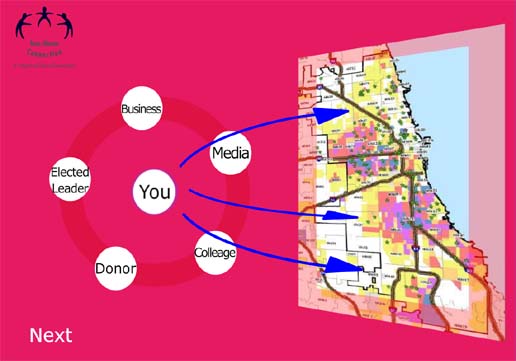
I created the graphic below as I attended workshops focused on business and university engagement. It includes a map of the Chicago region, showing areas where poverty is concentrated and were youth, families and schools need more help.


In 2008 I'd already spent 14 years trying to reverse the traditional two-way process of how nonprofits obtain resources from people who already have a self interest in wanting these nonprofits to be successful in their missions. We'll never have great social benefit programs in a majority of the places where they are needed based on the current system of competitive allocation.

Yet, if we can engage the talent of volunteers and leaders to serve in intermediary roles, we can do more to connect people who can help with places where help is needed.

I put these and similar charts on the T/MC web site with a goal that they are used by groups of people in universities, churches, businesses, etc. who want to become more strategic, and more engaged, in the ways they use their talent, time and resources to help end poverty in Chicago, and other cities around the world.    

I wrote a second article after hearing President Jimmy Carter say "We have some of the best institutions of higher education in the world. Yet many of them are surrounded by slums."

I included this map showing locations of colleges and universities in the Chicago region,  with overlays showing where poverty was most concentrated and where poorly performing schools (based on 2007 Illinois State Board of Education) were located.

Its aim is to help students, faculty and alumni from each university create tutor/mentor support groups that adopt the mission and strategy of the Tutor/Mentor Connection (led by Tutor/Mentor Institute, LLC since 2011) in their own efforts to help volunteer-based tutor/mentor programs grow in the areas around the college or university.

Thus, if you're at Northwestern, or Loyola, you could have a great impact on the growth of programs in the North part of Chicago and in Evanston. While if you're at the University of Chicago, you could have an impact in helping tutor/mentor programs grow throughout the South Side where our maps show so much poverty and too few tutor/mentor programs.

If you're at Dominican University in Oak Park, you could be supporting programs in Austin and on the West side of Chicago. If you're at the University of Illinois at Chicago, you could also be supporting the entire West side. And, if you're a downtown campus, with students and alumni living in all parts of the region, you could use these maps, to develop engagement strategies throughout the region, using the expressways as routes to connect with programs in different neighborhoods.

You could have a page on your website showing how your students were collecting and sharing information about what tutor/mentor programs in your part of the city were doing, and what universities in other parts of Chicago, and in other cities, were doing to help youth in high poverty areas of their cities. You could even be hosting conferences and online forums to share this information. View this intern blog to see examples of what's possible. 

As you look at these maps, use the Zip Code Map and Chicago Programs Links, to find contact information for organizations that provide various forms of volunteer-based tutoring and/or mentoring. You can narrow your search by type of program and age group served by using the Program Locator database (which was built in 2004, but is now only available as an archive).

You'll find that some programs are very well organized. Some are small, and may not be so well organized. Some places just offer homework help. Some offer a rich learning environment and connect youth to a wide network of adults and opportunities.

However, the goal is not to pick and choose between different levels of program quality. It's to help develop great volunteer-based tutoring/mentoring and extended learning programs in every zip code with high poverty. That may mean helping a small program grow. It also means helping the best programs continue to sustain their work.

It means we need to build a distribution of manpower, talent, operating dollars and technology into every poverty neighborhood, not just a few with high profile leaders.

The Tutor/Mentor Connection was created in 1993 and has been led by Tutor/Mentor Institute, LLC since 2011. It's aim is to share information so that teams in universities begin to develop their own ideal of what mix of services and what type of program structure is best, and that they begin to take on a responsibility for helping such programs grow in the area around the university, with a goal that elementary school kids they work with today can be college freshmen in 6 to 12 years, and college alumni who support the university, and its neighborhood tutor/mentor programs, 15 to 20 years from now.

Read this "Tipping  Point" article to see a description of this vision. click here


The result of such leadership can be that instead of wealthy alumni donating $20 million for research at an area university, these same alumni might begin to divide that money into annual grants of $40,000 to $80,000 that would provide operating support to volunteer-based tutor/mentor programs in the area around the university, using the web site of the organization, and the recommendations of the university, to determine which groups to support. It also means that thousands other donors will contribute their own time, talent and dollars to support the on-going efforts of programs in different parts of the city and suburbs.

That was a long term vision when I wrote this in 2008. It's still just a vision.

It requires many leaders in many organizations and communities. This is why I think some of this leadership should be anchored in universities who have long term commitments to their neighborhoods and the city of Chicago. Through these universities we can engage other teams of volunteers, from hospitals, businesses, civic and social organizations. (I'll write about the role of hospitals, faith groups and businesses in a different article.)

This is not something you can wait for the other college or university to take ownership of. It's a form of leadership and engagement that a student, alumni, professor or administrator can launch from their own blog or web site.

We even created a template of a strategic plan that you might use to start your thinking. We've created a Business School Connection to show how students from the business schools of our major universities could use the skills they are learning to mobilize volunteers and donors for area tutor/mentor programs.

Since 2008 I've created other visual essays to encourage universities to create on-campus Tutor/Mentor Connection strategies.  See them in these articles.

As you read the paper this week about another shooting in Chicago, or about some leader promising new hope for America, I hope you'll look in the mirror and say, "Solutions to America's problems start with me."  That's what Jimmy Carter did. 


Thank you for reading and sharing my blog articles.  I hope you'll connect with me on social media (see links here) and help build an on-line community of people who discuss and share these ideas. 

And thank you to those who made 2024 contributions to help fund the Tutor/Mentor Institute, LLC.  If you did not contribute this year, please make a donation in the coming months.  Visit this page for details.