Showing posts sorted by relevance for query 9/11. Sort by date Show all posts

Friday, September 11, 2015

Remembering 9/11

I was on the Kennedy Expressway, driving to my office at the Montgomery Ward corporate headquarters in Chicago, and listening to morning news radio, when the first report came in of an airplane crashing into a building in New York City. This was unbelievable. Hard to comprehend. As I continued my drive to work, the second airplane hit the second building. No one knew what this was, or what to expect.

When I got to my office I turned on my radio and computer to get more news and throughout the morning and the rest of the day I, and millions of others, watched this tragedy unfold.

In August this year I spent a weekend in New York City and visited the 9/11 Memorial The reflecting pools, surrounded by granite with the names of 9/11 victims, is a sobering reminder of that day of infamy.

Today. I looked back through this blog, which I started writing in 2005, to see how I'd remembered 9/11 in the years since 2005. Unsurprising to me, was that most of my articles written between the first and second weeks of September each year focused on school opening and tutor/mentor programs looking for volunteers and donors. None focused specifically on 9/11. Many focused on incidents of violence reported in Chicago papers, with commentary that showed that kids living in urban war zones live under levels of stress that negatively affects their performance in school.

Even as I listened and watched the 9/11 tragedy unfold in 2001, I was doing the work needed to help tutor/mentor programs in Chicago be available to kids in more of the city's high poverty neighborhoods, and to find the volunteers and dollars my own organization, like so many others, needed to continue its work for another year.

Like many, 9/11 has had a cascading flow of negative impact on myself, and the work I've been doing, in the years since 2001. Today as we remember how nearly 3,000 American's were killed, we're also remembering how thousands of American men and women have died or suffered life changing injuries and mental illness resulting in the wars that were launched after 9/11 to fight terrorism around the world. Millions of people in Iraq and Afghanistan have also died as a result of American response to 9/11.

As we remember America's disaster, we're seeing another unfold, with nearly 4 million people who have lost homes, loved ones, and almost all personal belongings, struggle to find a home in Europe, America or somewhere out of the war zones of the Middle East.

Much of what's happening now can be traced back to America's attack on Iraq, which in turn, can be traced back to terrorist attacks on 9/11 and earlier..which can be traced back to ....

This is still an unfolding story with no certain ending in sight.

I think the best way to honor the past is to give huge amounts of time, talent, wealth and other resources to help shape a better future. That can be by supporting youth and volunteers in organized tutor/mentor programs in Chicago and other urban areas, or by focusing similar amounts of time, talent and wealth on other issues that challenge world peace, environmental security and quality of life. The ENOUGH graphic was created by an intern several years ago, to show a learning process that anyone can adopt, to become part of a solution to one or more of the complex problems we face.

Start each day by looking at a checklist of things you might do, and end the day by looking at the same list, and making a mental check showing what you did.


Monday, September 11, 2006

Remembering 9/11 - How much sacrifice is enough?

Today people in the USA and friends from around the world are pausing for a few moments to remember the lives lost in the 9/11 tragedy and in the war on terrorism that has taken place sense then.

Last week we were pausing to remember the Katrina tragedy.

Those of us at Cabrini Connections and the Tutor/Mentor Connection add our prayers of hope and remembrance to the families of those directly affected by these events. However, we would like to go a step further.

We'd like to ask everyone to dig a bit deeper and to find a little more time to try to understand the poverty in the world that is a breeding ground for these events. While nature caused the Hurricane, it was poverty that gave us the images of desperate people in New Orleans.

While it is a small group of fanatics fanning the fire of terrorism, it is poverty that provides recruits for these fanatics.

Thus, it's poverty we need to understand and deal with.

In this context, the next question is "how much time, talent and treasure" should one be expected to commit to this war on poverty? In the speeches that will be given today we'll honor those who gave the ultimate sacrifice. The number of dead will be totaled. In the background will be the number of families and children changed forever because a parent was lost in 9/11 or killed or severely wounded in the years since then.

When we think of this as 100% sacrifice, how do our own daily commitments of time, talent and treasure stack up? I'm not in a position to say what the appropriate level of giving should be. However, I can look in my own mirror every night and feel good about my own efforts.

I'd like to find a way that more people were looking in the mirror every night and doing more than just staring at a pretty face!!

Tonight we'll hold our first orientation for the volunteers who will become tutors/mentors in the 2006-07 Cabrini Connections program. As I talk to them I'll be starting them on a journey that is intended to stretch their involvement beyond two hours a week with one of our teens, to a commitment that draws the heart, body and spirit of a growing number into the efforts it takes to end poverty by helping kids move through school and into jobs/careers.

We promise our kids "we'll do everything we can" to assure that you're starting a job/career by age 25. "Everything" is a lot. It's unconditional effort. It recognizes the potential of unleashing the talent of our volunteers, their friends and families, the people they work with, and the people they pray with or go to football games with, in efforts to end poverty and provide hope.

Our efforts to unleash and focus more of the talents and time of our students, alumni and volunteers are the best memorial to 9/11 that I feel we can offer.

Saturday, September 11, 2021

20 years ago - what have we learned?

Today is the 20th year since the tragic 9/11/2001 attack on the American people. I was on the Kennedy Expressway that morning, headed to my office in Chicago, when the first reports came in on the radio. When I got to my office I turned on the computer and followed events the rest of the day. One of my Board members worked for Aon Corporation and around mid-day I emailed and asked if he knew anyone there. He replied, "We have an entire office there. I have many friends."

Twitter has been full of memorials and I posted a few Tweets pointing to articles I've written on this blog since 2005.

and this earlier in the week I posted this The timeline shows work I had been doing prior to Sept 11, 2001 and work I've continued to do since then.  one post I saw was by Nicholas Kristof, a writer for the New York Times. Kristoff wrote, "If only we had tackled America's child poverty as seriously as we confronted Al Qaeda. If only we had fought addiction the way we fought Saddam. If only we had bolstered American education the way we bolstered our military."

That's what I've tried to influence for 25 years, before, and after, 9/11.  Now that we're out of Afghanistan, and not spending all that money on that war, can we spend the money to do the things Kristof argued for?


Friday, September 02, 2011

Ten Years Ago -Just Prior to 9/11


10 years ago I was preparing to go to Illinois Wesleyan to receive an honorary PhD recognizing my work connecting youth and volunteers. This photo is from that ceremony. Minor Myers, jr., President of IWU in the 1990s was one of my strongest supporters. He wrote in one note, "You've done this so well it strikes me you could provide a service to other major cities. This is first class work."

At the same time, I’d just been appointed to the Illinois Commission on Volunteering and Community Service by Governor George Ryan. His wife was the honorary chairperson for the annual Chicago area August/September Tutor/Mentor Volunteer Recruitment Campaign that we had organized since 1995. This photo is from a press conference where Paul Vallas, CEO of Chicago Public Schools also showed his support.

In 1999 I had received the Good As Gold Award from Publisher’s Clearing House on a Dec. 31 national telecast of the Montel Williams TV Show. We had received other awards prior to this and we've received other awards and recognition since.

Even though the stock market had begun to plunge and we had lost our major sponsor, the Montgomery Ward Corporation, things looked good for Cabrini Connections and the Tutor/Mentor Connection.

That was 10 years ago. Only a week later came the 9/11 attack on America and the beginning of a decade of struggles for us and millions of others around the world. Last December I wrote a series of blog articles and created this PDF report showing how we had continued to build connections between youth and volunteers and expand our network of tutor/mentor programs despite severe financial challenges.

Then in April the Board of Directors of Cabrini Connections voted to no longer support the combined strategy of a local program and a global strategy. Read announcement. I was given ownership of the ideas and assets of the Tutor/Mentor Connection and resigned my role as President and CEO in late July.

Since then I’ve formed Tutor/Mentor Institute LLC with the goal of continuing to support the work of the Tutor/Mentor Connection in Chicago while helping similar groups form in other cities. This concept map shows this strategy and points to some of the people I’m reaching out to as well as the talent I will need over the next 10 years to have the impact I wrote about in this article http://tutormentor.blogspot.com/2009/09/no-i-did-not-win-macarthur-award-but.html

The world has changed since ten years ago but the courage of some people who want to create a better world has only been strengthened. Through the Internet the networks of people who share ideas and learn from each other has grown dramatically, as have the tools for collective action.

This photo shows a montage of people who have been part of the Tutor/Mentor Connection and Cabrini Connections in the past. This video illustrates how networks can be mapped to show constellations of people and groups focusing on common goals.

With luck, faith, and an abundance of optimism I intend to recognize 9/11 the way I did when the original attack took place 10 years ago. I’ll be sitting at my computer trying to connect people and ideas that might prevent such terrorism in the first place while keeping my ear to the events taking place and praying for the survival of those who have been so terribly impacted by the man-made and natural disasters of the past 10 years.

I own much to my own family for my ability to do this work. My daughter was born the year I first launched the tutoring program at Wards as a non profit. My son was born in 1997. They have grown up while I've been spending countless hours trying to help "other people's kids". My wife has carried much of the load on the family front. I hope they realize when they are older how what I do is intended to create a better future for them, not just of "other people's kids".

Wednesday, September 11, 2024

Remembering 9/11 - How much sacrifice is enough?

Today people in the USA and friends from around the world are pausing for a few moments to remember the lives lost in the 9/11 tragedy and in the 24-year war on terrorism that has taken place sense then.

I add my prayers of hope and remembrance to the families of those directly, and indirectly, affected by these events. 

However, I would like to go a step further.

I'd like to ask everyone to dig a bit deeper and to find a little more time to try to understand the poverty in the world that is a breeding ground for these events. While nature causes hurricanes, earthquakes, wildfires and floods, it is poverty that gives us the images of desperate people in affected areas.

While it is a small group of fanatics fanning the fire of terrorism, it is poverty that provides recruits for these fanatics.

Thus, it's poverty we need to understand and deal with.

While the US focuses on the tragedy unfolding in different parts of the world, I keep thinking of what will be needed for decades to help people in these areas recover from these disasters.

Since 2005 I've written a few articles following natural disasters. They all have the same pace. Urgent need and huge attention and outpouring of help as the tragedy unfolds.  Few using maps, so many areas where help is needed get little attention. In the years following one tragedy another happens and attention goes to a new crisis. Keeping attention and resources flowing five, 10 and 15 years after the tragedy is almost impossible.

That same flow of attention follows urban violence.

I've been reducing my paper trail and am scanning some of my news stories into my computer. Added this one from 1993, which is a letter to the editor written to the Chicago Tribune by Florence Cox, President of the Chicago Board of Education

I highlighted one section where she says:
"We must begin to realize that the needs of Chicago-area children are not being met, and in neglecting those needs, we neglect our own future as a prosperous and safe city."


Here's another article with some quotes from other stories, showing how difficult it is for this nation to focus on complex problems that require long-term attention and resources to be solved.

The headline is, "Action, not apologies, would help."

When I started the Tutor/Mentor Connection in 1993 one of four strategies was to generate more consistent attention to issues of poverty, violence, inequality, etc. drawing needed support to all of the non-school tutor/mentor programs operating in the Chicago region. I started using maps to show where they were most needed and where existing programs are located.  

I found another set of notes, with quotes I'd written down during speeches given during the 1997 President's Summit for America's Future, held in Philadelphia, PA.  I was there as a delegate from Chicago and as a Teaching Example exhibitor.

It starts with a quote from President Bill Clinton, saying, "This is the start of an era of big citizenship. The really important work will begin after my talk's over".  Click on the image to enlarge it and read the other quotes.

In the letter to the editor and in the Summit speeches, leaders are calling on Americans to become involved in solving complex problems.  The problem is, they have not made this call for people's involvement every day since then, and they have not pointed to web libraries and directories showing information people need to learn from, and lists of existing programs who need their help.

That's still a problem.

As I listened to Vice President Kamala Harris end last night's debate, I heard the same call for involvement.  I hope people look back 20 years from now and see this as a tipping point in how we solve problems in the world. 

I've tried to model what needs to be done, by my own actions and those of the Tutor/Mentor Connect ion (1993-present) and Tutor/Mentor Institute, LLC (2011-present).  I've had limited resources to do this, but continue with what I have.

Look at articles in the history, archive, about TMI sections at the left, to see what I've been trying to do.  

I keep hoping to find others who will help me...and will help provide the consistent attention needed to support people and organizations working with kids in all places where they are needed. I invite disaster recovery leaders, anti poverty leaders, education and workforce development leaders, and others, to borrow ideas from my archives and my library and apply them in their own work.

In this context, the next question is "how much time, talent and treasure" should one be expected to commit to this war on poverty? In the speeches that will be given today we'll honor those who gave the ultimate sacrifice. The number of dead will be totaled. In the background will be the number of families and children changed forever because a parent was lost in 9/11 or killed or severely wounded in the years since then.

When we think of this as 100% sacrifice, how do our own daily commitments of time, talent and treasure stack up? I'm not in a position to say what the appropriate level of giving should be. However, I can look in my own mirror every night and feel good about my own efforts.

I'd like to find a way that more people were looking in the mirror every night and doing more than just staring at a pretty face!!

This week and next week volunteer-based tutor/mentor programs will be holding orientations and training sessions for the volunteers who will become tutors/mentors in the 2024-25 school year.  I hope this will be starting them on a journey that is intended to stretch their involvement beyond two hours a week with one youth, to a commitment that draws the heart, body and spirit of a growing number into the efforts it takes to end poverty by helping kids move through school and into jobs/careers, and ending some of the harms that I point to in this section of the Tutor/Mentor library.

In the program I led from 1993 to 2011 we promised our kids "we'll do everything we can" to assure that you're starting a job/career by age 25. "Everything" is a lot. It's unconditional effort. It recognizes the potential of unleashing the talent of our volunteers, their friends and families, the people they work with, and the people they pray with or go to football games with, in efforts to end poverty and provide hope.

I'm now seeing stories on Facebook from some of these kids showing their college degrees and the journey of their own kids through school.  The year-to-year evidence could not show this result, but our ability to keep kids coming back each year through high school, was a prediction.

Visit this section of my library and find links to Chicago youth programs. Visit their websites. Look at their social media posts. Learn what they do, then decide how, and how much, you want to help them. Don't wait for a proposal, or to be asked.  Take the lead. Reach out to them.

Our efforts to unleash and focus more of the talents and time of our students, alumni and volunteers are the best memorial to 9/11 that I feel we can offer.

Thanks for reading.  Please connect with me on social media and share my posts so more people get t his information.

And, if you're able, send a contribution to help fund this work. Visit this page

Thursday, October 23, 2025

Imagining a different future

In 2023, in this article, my #CLMOOC friend, Kevin Hodgson, wrote about Google's AI platform, called Bard.

This prompted me to ask, "Has anyone asked ChatGPT to write about what the future would have looked like if Al Gore had been elected President of the U.S. in 2000?"

Image created using Scribble Diffusion

I decided to see how Google's Bard works, and posted a set of questions.  Rather than point you to a Google doc where I've saved the responses I'm posting them below.  If you don't like the questions I asked, or the responses, then post your own questions and share the answers you get!

-- begin Bard questions and responses -- 

I asked Bard to write a story predicting what the world would be like today if Al Gore had won the 2000 US Presidential election.  

Bard --  If Al Gore had won the 2000 US Presidential election, the world would be a very different place today. Gore was a strong advocate for environmental protection, and he would have taken a much more aggressive approach to climate change than George W. Bush. He would have also been more likely to sign the Kyoto Protocol, an international agreement to reduce greenhouse gas emissions.

In addition, Gore was a strong supporter of education and healthcare. He would have increased funding for both of these important areas, and he would have made college more affordable for students.

Gore was also a more experienced politician than Bush. He had served as Vice President for eight years, and he had a deep understanding of the issues facing the country.

If Gore had been elected, the United States would have been a more progressive country. We would have been a leader in the fight against climate change, and we would have made significant progress in improving education and healthcare.

Of course, it is impossible to say for sure what would have happened if Gore had won the election. However, it is clear that the world would be a different place today if he had been elected.

Here are some specific examples of how the world might be different today if Al Gore had won the 2000 election:

  • The United States would have ratified the Kyoto Protocol, an international agreement to reduce greenhouse gas emissions. This would have helped to slow the pace of climate change and mitigate its effects.
  • Gore would have been more likely to invest in renewable energy sources, such as solar and wind power. This would have helped to reduce our reliance on fossil fuels and make our country more energy independent.
  • Gore would have been more likely to expand access to healthcare. He would have supported the creation of a public option for health insurance and made it easier for people to afford coverage.
  • Gore would have been more likely to invest in education. He would have supported increased funding for public schools and made college more affordable for students.
  • Gore would have been more likely to take a diplomatic approach to foreign policy. He would have been less likely to invade Iraq and Afghanistan, and he would have worked to build relationships with other countries.
Overall, the world would be a better place today if Al Gore had won the 2000 election. He was a more experienced and progressive politician than George W. Bush, and he would have made the United States a more just and sustainable country.

I then asked, "How would he have responded differently to the 9/11 terrorist attack? Would he have invaded Iraq? How would the world look now if he had not invaded Iraq?"

Bard -- Al Gore would have responded differently to the 9/11 terrorist attack than George W. Bush did. He would have focused on building international cooperation to fight terrorism, rather than invading Iraq. He would have also been more likely to invest in homeland security and intelligence gathering.

It is unlikely that Al Gore would have invaded Iraq if he had been president in 2003. He was skeptical of the Bush administration's claims that Iraq had weapons of mass destruction, and he believed that the invasion would be a costly and unnecessary war.

If Al Gore had not invaded Iraq, the world would be a very different place today. The war in Iraq has been a major source of instability in the Middle East, and it has led to the deaths of hundreds of thousands of people. The war has also cost the United States trillions of dollars.

Without the war in Iraq, the United States would have been able to focus on other priorities, such as fighting terrorism and improving the economy. The world would also be a safer place, as there would be no ongoing conflict in Iraq.

Here are some specific examples of how the world might be different today if Al Gore had not invaded Iraq:
  • The United States would have been able to focus on other priorities, such as fighting terrorism and improving the economy.
  • The world would be a safer place, as there would be no ongoing conflict in Iraq.
  • The United States would not have spent trillions of dollars on the war.
  • The United States would not have lost the lives of hundreds of thousands of soldiers.
  • The United States would not have damaged its reputation in the world.
Overall, the world would be a better place today if Al Gore had not invaded Iraq. He would have made the United States a safer and more prosperous country.

I then asked, "If Al Gore had been elected president would we have the same level of polarization as we have today? Would Donald Trump have been elected President in 2016?"   

Bard -- It is impossible to say for sure whether political polarization would be as severe today if Al Gore had been elected president in 2000. However, it is likely that the level of polarization would be lower.

Gore was a more moderate politician than George W. Bush, and he was more likely to reach across the aisle and work with Democrats. He would have also been less likely to engage in the kind of inflammatory rhetoric that has contributed to polarization in recent years.

It is also possible that Donald Trump would not have been elected president in 2016 if Al Gore had been president in 2000. Gore would have been a stronger incumbent, and he would have been more likely to unite the country after the 9/11 attacks.

Of course, it is also possible that polarization would have continued to grow even if Al Gore had been president. The factors that are driving polarization are complex and multifaceted, and they are not easily controlled by any one person.

However, it is clear that Al Gore would have been a different kind of president than George W. Bush. He would have been more moderate, more willing to compromise, and more likely to unite the country. These qualities would have made him a more effective president, and they would have helped to reduce polarization in the United States.

Finally, I asked,  "If Al Gore had been elected in 2000, and re-elected in 2008, would Barack Obama ever have been elected President? Would Joe Biden have been elected vice-president, then President in 2020?"   

Bard -- It is impossible to say for sure whether Barack Obama would have ever been elected president if Al Gore had been elected in 2000 and re-elected in 2008. However, it is likely that Obama would have faced a much more difficult path to the presidency if Gore had been in office.

Gore was a popular and well-respected politician, and he would have been a strong incumbent. He would have also been able to draw on the support of the Democratic Party establishment. Obama, on the other hand, was a relatively unknown and inexperienced politician. He would have had to overcome a lot of obstacles to win the presidency.

It is also possible that Joe Biden would not have been elected vice president or president if Al Gore had been in office. Biden was a close ally of Gore, and he would have been less likely to run for office if Gore had been president.

Of course, it is also possible that Obama and Biden would have still been elected president and vice president, even if Gore had been in office. The political landscape is complex and unpredictable, and it is impossible to know for sure what would have happened.

However, it is clear that Al Gore would have been a different kind of president than George W. Bush. He would have been more moderate, more willing to compromise, and more likely to unite the country. These qualities would have made him a more effective president, and they would have made it more difficult for Obama and Biden to win the presidency.

---- end Bard questions --- 
 
What would your questions have been? I asked my questions on Bard. How would ChatGPT have answered?  Could this be turned into a short story using an AI tool like TinyStorie?  

One response stood out to me, which was,  "Gore was also a more experienced politician than Bush. He had served as Vice President for eight years, and he had a deep understanding of the issues facing the country."   On a national level this is probably true, but Bush had been Governor of Texas, and his father had been President. His political skills should have been better. 

I asked these questions in 2023, not knowing that Trump would be re-elected in 2024 and prove to be more chaotic and destructive than in his first term.  Maybe AI can provide some paths out of the disaster we seem to be heading toward.  Have you asked? Where are you posting your responses? 


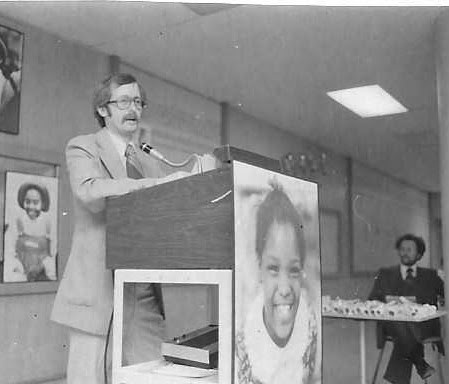
At the left is a photo of me addressing students and volunteers at one of our year-end graduation ceremonies, for the tutor/mentor program I led from 1975 to 1992. 

We did not have the Internet or Artificial Intelligence then. Desk top computers were just emerging. But I was asking our students and volunteers to imagine all they could do to assure that each student finished high school and went on to college, jobs and careers.  

Imagine if they had been able to use Bard, or ChatGPT to ask "What are all the things we need to know and do to assure that all kids born of living in a high poverty area today were starting a job and career by their mid 20s?"    

That's still a question we need to be asking today.  

Thanks for reading. Enjoy your week.  Please connect with me on Twitter, Facebook, Instagram, LinkedIn and Mastodon (find links here).

If you can spare a dime, visit this page and make a contribution to help fund the Tutor/Mentor Institute, LLC and the work I'm doing. 


Monday, May 15, 2023

Asking Artificial Intelligence to Predict Different Future

 In my posts over the past couple of months I've pointed to the #ETMOOC2 group which is learning about Artificial Intelligence and tools like ChatGPT.  Members are testing new tools and sharing ideas in a variety of platforms.  One writer that I keep pointing to is Kevin Hodgson, who shares ideas on his blog. Today, in this article, he wrote about a tool called TinyStorie, which can be used to write short children's stories.

Last week, in this article, he wrote about Google's AI platform, called Bard.

Last week on Twitter someone wrote about ChatGPT and I asked, "Has anyone asked ChatGPT to write about what the future would have looked like if Al Gore had been elected President of the U.S. in 2000?"

Image created using Scribble Diffusion

Today, I decided to see how Google's Bard works, and posted a set of questions.  Rather than point you to a Google doc where I've saved the responses I'm posting them below.  If you don't like the questions I asked, or the responses, then post your own questions and share the answers you get!

--- begin Bard questions and responses --- 

I asked Bard to write a story predicting what the world would be like today if Al Gore had won the 2000 US Presidential election.  

 If Al Gore had won the 2000 US Presidential election, the world would be a very different place today. Gore was a strong advocate for environmental protection, and he would have taken a much more aggressive approach to climate change than George W. Bush. He would have also been more likely to sign the Kyoto Protocol, an international agreement to reduce greenhouse gas emissions.

In addition, Gore was a strong supporter of education and healthcare. He would have increased funding for both of these important areas, and he would have made college more affordable for students.

Gore was also a more experienced politician than Bush. He had served as Vice President for eight years, and he had a deep understanding of the issues facing the country.

If Gore had been elected, the United States would have been a more progressive country. We would have been a leader in the fight against climate change, and we would have made significant progress in improving education and healthcare.

Of course, it is impossible to say for sure what would have happened if Gore had won the election. However, it is clear that the world would be a different place today if he had been elected.

Here are some specific examples of how the world might be different today if Al Gore had won the 2000 election:

  • The United States would have ratified the Kyoto Protocol, an international agreement to reduce greenhouse gas emissions. This would have helped to slow the pace of climate change and mitigate its effects.
  • Gore would have been more likely to invest in renewable energy sources, such as solar and wind power. This would have helped to reduce our reliance on fossil fuels and make our country more energy independent.
  • Gore would have been more likely to expand access to healthcare. He would have supported the creation of a public option for health insurance and made it easier for people to afford coverage.
  • Gore would have been more likely to invest in education. He would have supported increased funding for public schools and made college more affordable for students.
  • Gore would have been more likely to take a diplomatic approach to foreign policy. He would have been less likely to invade Iraq and Afghanistan, and he would have worked to build relationships with other countries.

Overall, the world would be a better place today if Al Gore had won the 2000 election. He was a more experienced and progressive politician than George W. Bush, and he would have made the United States a more just and sustainable country.

I then asked, "How would he have responded differently to the 9/11 terrorist attack? Would he have invaded Iraq? How would the world look now if he had not invaded Iraq?"

Al Gore would have responded differently to the 9/11 terrorist attack than George W. Bush did. He would have focused on building international cooperation to fight terrorism, rather than invading Iraq. He would have also been more likely to invest in homeland security and intelligence gathering.

It is unlikely that Al Gore would have invaded Iraq if he had been president in 2003. He was skeptical of the Bush administration's claims that Iraq had weapons of mass destruction, and he believed that the invasion would be a costly and unnecessary war.

If Al Gore had not invaded Iraq, the world would be a very different place today. The war in Iraq has been a major source of instability in the Middle East, and it has led to the deaths of hundreds of thousands of people. The war has also cost the United States trillions of dollars.

Without the war in Iraq, the United States would have been able to focus on other priorities, such as fighting terrorism and improving the economy. The world would also be a safer place, as there would be no ongoing conflict in Iraq.

Here are some specific examples of how the world might be different today if Al Gore had not invaded Iraq:
  • The United States would have been able to focus on other priorities, such as fighting terrorism and improving the economy.
  • The world would be a safer place, as there would be no ongoing conflict in Iraq.
  • The United States would not have spent trillions of dollars on the war.
  • The United States would not have lost the lives of hundreds of thousands of soldiers.
  • The United States would not have damaged its reputation in the world.

Overall, the world would be a better place today if Al Gore had not invaded Iraq. He would have made the United States a safer and more prosperous country.

I then asked, "If Al Gore had been elected president would we have the same level of polarization as we have today? Would Donald Trump have been elected President in 2016?"   

It is impossible to say for sure whether political polarization would be as severe today if Al Gore had been elected president in 2000. However, it is likely that the level of polarization would be lower.

Gore was a more moderate politician than George W. Bush, and he was more likely to reach across the aisle and work with Democrats. He would have also been less likely to engage in the kind of inflammatory rhetoric that has contributed to polarization in recent years.

It is also possible that Donald Trump would not have been elected president in 2016 if Al Gore had been president in 2000. Gore would have been a stronger incumbent, and he would have been more likely to unite the country after the 9/11 attacks.

Of course, it is also possible that polarization would have continued to grow even if Al Gore had been president. The factors that are driving polarization are complex and multifaceted, and they are not easily controlled by any one person.

However, it is clear that Al Gore would have been a different kind of president than George W. Bush. He would have been more moderate, more willing to compromise, and more likely to unite the country. These qualities would have made him a more effective president, and they would have helped to reduce polarization in the United States.

Finally, I asked,  "If Al Gore had been elected in 2000, and re-elected in 2008, would Barack Obama ever have been elected President? Would Joe Biden have been elected vice-president, then President in 2020?"   

It is impossible to say for sure whether Barack Obama would have ever been elected president if Al Gore had been elected in 2000 and re-elected in 2008. However, it is likely that Obama would have faced a much more difficult path to the presidency if Gore had been in office.

Gore was a popular and well-respected politician, and he would have been a strong incumbent. He would have also been able to draw on the support of the Democratic Party establishment. Obama, on the other hand, was a relatively unknown and inexperienced politician. He would have had to overcome a lot of obstacles to win the presidency.

It is also possible that Joe Biden would not have been elected vice president or president if Al Gore had been in office. Biden was a close ally of Gore, and he would have been less likely to run for office if Gore had been president.

Of course, it is also possible that Obama and Biden would have still been elected president and vice president, even if Gore had been in office. The political landscape is complex and unpredictable, and it is impossible to know for sure what would have happened.

However, it is clear that Al Gore would have been a different kind of president than George W. Bush. He would have been more moderate, more willing to compromise, and more likely to unite the country. These qualities would have made him a more effective president, and they would have made it more difficult for Obama and Biden to win the presidency.

---- end Bard questions --- 
 
What would your questions have been? I asked Bard. How would ChatGPT have answered?  Could this be turned into a short story using an AI tool like TinyStorie?  

One response stood out to me, which was,  "Gore was also a more experienced politician than Bush. He had served as Vice President for eight years, and he had a deep understanding of the issues facing the country."   On a national level this is probably true, but Bush had been Governor of Texas, and his father had been President. His political skills should have been better. 


At the left is a photo of me addressing students and volunteers at one of our year-end graduation ceremonies, for the tutor/mentor program I led from 1975 to 1992. 

We did not have the Internet or Artificial Intelligence then. Desk top computers were just emerging. But I was asking our students and volunteers to imagine all they could do to assure that each student finished high school and went on to college, jobs and careers.  

Imagine if they had been able to use Bard, or ChatGPT to ask "What are all the things we need to know and do to assure that all kids born of living in a high poverty area today were starting a job and career by their mid 20s?"    

That's still a question we need to be asking today.  

Last week on Twitter Kevin Hodgson posted this 
I encourage you to visit the conversation and add your own thoughts.

Thanks for reading. Enjoy your week.  Please connect with me on Twitter, Facebook, Instagram, LinkedIn and Mastodon (find links here).

If you can spare a dime, visit this page and make a contribution to help fund the Tutor/Mentor Institute, LLC and the work I'm doing. 


Wednesday, September 08, 2010

Daley Departing. Can Next Mayor Do Better?


Yesterday's announcement that Chicago's long-term Mayor Richard Daley will not run for re-election has created quite a buzz, and I'm sure it will be the main topic of media for the next six months. Bigger than the Olympics. Bigger than 9/11 ... at least for Chicago.

I'm not writing to bash Mayor Daley. He did a great job for Chicago and does not need my praise to have his place in history. However, I do wish we had found ways to connect strategically.

I first met the mayor in 1990, when he visited the Cabrini Green Tutoring Program, which I helped create that year. It originally was the Montgomery Ward-Cabrini Green Tutoring Program, started by Ward employees in 1965. I joined it in 1973 and became it's volunteer leader in 1975. Thus, by 1990 I had 15 years experience. You'd think the new Mayor would want to draw upon that.

I met the Mayor again in May 1997, when he attended the Tutor/Mentor Leadership and Networking Conference, the month after the President's Summit for America's Future was held in Philadelphia.

In 1994 I began working with the Lend A Hand Program at the Chicago Bar Foundation, and each year until 2000, the Mayor signed a proclamation, calling for a Tutor/Mentor Week in November, to draw attention to efforts to help volunteer-based tutor/mentor programs grow in all neighborhoods of Chicago. Here are the proclamations from 1995 and 2000.

In 1995 the T/MC launched a volunteer recruitment campaign. Our first partner was Chicago Access TV, who has posted information like this on their web site every year since then. By 2002 the campaign was including more than 100 youth organizations and the campaign proclamation was signed by the Governor, and Mayor Daley. Here is the 2001 Campaign Manifesto.

However, these shows of support have not translated into city wide strategies to connect business volunteers and resources with tutor/mentor programs in many neighborhoods. Instead of supporting the Tutor/Mentor Connection, the Mayor's wife created Afterschool Matters. Instead of supporting non-school tutor/mentor programs, the Mayor's office supported charter schools, funded by private sector donations.

Instead of an adopt a neighborhood strategy, there is an adopt a school strategy, which leaves the neighborhoods without a full range of high quality non-school learning, and mentoring programs.

I don't blame the Mayor for this. I recognized when we formed the T/MC in 1993 that elected leaders are controlled by the everyday events that pull them in different directions. Our own organization started with no money in 1993 and grew each year, with the backing of the Montgomery Ward Corporation, and the dot-com bubble, until 2000. We were able to grow the volunteer recruitment campaign because one donor made gifts of $26,000 per year to fund a staff person for four consecutive years.

However, Wards went out of business in 2000, and we lost donated space, and $40,000 per year in funding. The dot-com bubble bursts, and 9/11 came. The donor who funded the recruitment campaign changed funding priorities.

At the same time, the partnership with the Lend A Hand Program that had resulted in the annual Mayor's proclamation and support of a November Tutor/Mentor Week, began to diverge as they begin to shape their own direction and strategy for supporting volunteer-based tutor/mentor programs.

Thus, there is no top-level leadership strategy in Chicago aimed to support ALL tutor/mentor programs throughout the city by helping each program get the operating and innovating resources, including dollars, that each program needs every week to be great at connecting youth and mentors and learning.

Thus, Cabrini Connections, Tutor/Mentor Connection has been struggling to keep its own program in place, and support the basic information collection and sharing that we do. We've not had the manpower or resources since 2000 to reach into the Mayors office and engage his leadership to support the growth of tutor/mentor programs that help mentor kids to careers, has not been strong enough to compete with all of the other people and organizations calling for the Mayor's attention.

Yet. If helping kids in all neighborhoods move through school and into jobs and careers is a priority, I would hope that some people in the Mayor's office, in the past, or in the future, would be doing their own research to learn what ideas they might apply to this problem.

All they need to do is search Google for "tutor mentor" and they would find our web sites and our contact information.

This is true for anyone else who wants to share this vision. While we and other tutor/mentor programs are looking for volunteers, donors and benefactors, the Internet now makes it possible for elected leaders, CEOs and anyone else to look for ideas that they can incorporate into their own actions. The don't need to look far to find the Tutor/Mentor Connection and to learn what we do based on the information we share on our web sites.

If we're heading in a direction that you can support, you don't need a proposal from us, you need to decide how, and how much, you want to help, then give us a call, or send us your donation.

Using the Tutor/Mentor Program Locator, you can shop and choose programs in many parts of the city to offer help, and you can see that many neighborhoods do not yet have programs. Your help in those cases would be to bring people together to build a team that would start new programs.

Anyone who wants to be the next Mayor could demonstrate this leadership over the next six months. Share what you do on a blog or web site, and in the media coverage you will get, and voters can choose the next mayor based on what he/she will do every day to help ALL kids in Chicago have great opportunities for bright futures.

Tuesday, September 11, 2018

#Never Forget

This being the anniversary of the 9/11 terror attacks, my Twitter feed is full of powerful, emotional, and motivating posts. Some use the #NeverForget tag. Not all focus on the 9/11 tragedy. Some focus on other tragedies, including US interventions around the world that have resulted in the loss of life and unimaginable suffering of millions of people. 

We are not alone in our suffering and our memories.  I encourage you to click on the link and scroll through some of the comments.

ChicagoSunTimes 10-1992
This Chicago SunTimes front page, from October 1992, is my own #NeverForget message. As with many other times before then, and since then, the editorial writers were eloquent in saying "it's everyone's responsibility" to solve this problem.

Unfortunately, that never was sustained.  Other than a few days, to a year, of editorial indignation, these headlines did little to bring people together, develop solutions to complex problems, and generate an on-going flow of talent and dollars into every high poverty neighborhood, and to all of the organizations needing those resources to help kids and families overcome poverty.

Furthermore, few news stories about urban violence, or poorly performing schools, pointed readers to a library of articles that showed the institutional racism that has existed in America since before the Declaration of Independence, and which has continued up until today.

View map
In one section of the Tutor/Mentor web library, which I show in this concept map, I point to many articles that point out these injustices.

Thus, when I say #Never Forget, I'm reminding you of Dantrell Davis and calling on you to do your homework to learn more about the problems we face and more about ways you can use your time, talent, dollars, votes and voice to bring about solutions.


Here's one more reminder, from today's ChicagoSunTimes.  It's a story of three innocent people killed by gun violence in Chicago.  If you click on the image and enlarge it you can see that I drew a red line around the last paragraphs of the story, then wrote that text in the yellow highlighted box.  It's a quote from the father of one of these three victims. He said,

"This has been going on for 20 or 30 years, and has been evolving. The teens and young adults caught up in the cycle of violence need additional funding for education and jobs programs to get them off the streets.”

“I haven't seen anyone with that kind of leadership. I don't have a lot of hope."


Share this with others.
I've been trying to draw people to a growing information library that people could use to build and sustain these types of  youth development, tutor, mentor and jobs programs. Too few have seen these stories or chosen to respond.

Share my articles with people you know and you become part of the solution.

Visit my FUND ME page, and make a contribution, and you help me continue to keep the memory of Dantrell Davis and others like him alive through my on-going efforts.

Scroll through articles I wrote during the second week of September,  in past years, to see other ways I've remembered this tragedy.

Thursday, September 11, 2008

Honoring 9/11

As we remember the past, and pray that it does not repeat in the future, my hope is that we find more people in this world who will adopt the "If it is to be, it is up to me" slogan that I borrowed from my friend Merri Dee of WGN TV when I first heard her speak in 1993.

We can honor those who sacrifice by our own sacrifices to create a better world for our children, and for the children of those who live in distressed situations. If we don't find ways to put more than token time, talent and dollars into such efforts, the past will repeat, perhaps with even greater furry.

I have written articles with this same theme over the past 3 years. If you search for the word "remember" in the search bar on this page you'll find those articles. I'm sure that many, many people are giving the same message today.

Last week I wrote about the 1992 shooting death of Dantrell Davis, and showed the front page of the October 15, 1992 Chicago SunTimes. Just like 9 /11, this is a daily reminder of the work that I need to do to try to create a better future for my own children and future grandchildren.

I hope many of you feel the same way.

Saturday, October 08, 2016

Climate Crisis - Environmental Racism

I've been watching the Weather Channel videos showing the progress of Hurricane Matthew through the Caribbean up through Florida, Georgia and South Carolina. While there will be millions of dollars of property loss in the US, few lives will be lost. In Haiti the death toll already is over 800.

As I watched these Friday morning, I thought of past tragedies, going back to 9/11, and of how these natural and man-made disasters have had a negative impact on the Tutor/Mentor Connection's ability to build a system of support for inner-city kids.

I've written articles in the past, where I've shown how such events make it difficult to consistently build a strong organization, or a strong movement consisting of many organizations that focus on a common problem.  This graphic shows that progress is not steady growth. There are many dips in the road. Such negative impact is probably felt by thousands of organizations in the US and around the world ever time a tsunami, earthquake, flood, or hurricane strikes.  

I recalled a couple of videos I had seen that did a great job of showing the growth of the climate change movement, and the issues it focuses on, so I am repeating two of those here.  This first video was included in an article I wrote in 2014. You can view the video in this article.


It was in this video that speakers called the climate crisis "Environmental Racism" and said "climate disruptions are a social justice issue", saying that "who gets hurt the most are poor people who can't get out of the way."

The organizers of the 2013 climate march recognized that "in order to address the climate crisis we have to first address inequalities".

Thus, throughout this video you'll see efforts to reach out to minorities, the poor, and those who are  most disadvantaged.

This second video was created in 2009 and shows how movements in the 1960's lead to a wave of legislation in the 1970s. I included it in this article.


This video describes the process of mobilizing people as a "swarm" and suggests that with the Internet it's possible to create an on line hub that could support the growth of the climate change movement.

As you look at the strategy that's proposed, visit this presentation, which shows the strategy I've been following since creating the Tutor/Mentor Connection in 1993, and the Tutor/Mentor Institute, LLC in 2011.

I did some web searching on Friday to see if I could find some graphics that showed the growth of the climate change network, or showed the different organizations who they have been connecting with.

350 0rg seems to be one of the lead intermediaries in the climate change movement.  Below is a screen shot of a map that shows different organizations working on climate change throughout the world.

I have been using GIS maps since 1993 to show where tutor/mentor programs are needed, and to show participation in conferences I've hosted in Chicago and to show participation in on-line events, like the Connected Learning #clmooc.  Maps force you to look at all the places where a problem needs to be solved, or that need to be represented in movement-building. Without a map you could fill a stadium with people who are active in solving a problem, but still be missing most of the places where the problem needs a constant flow of ideas, talent, dollars, technology, etc. to be solved.


Over the past 20 years I've also become interested in process and strategy. How does a tutor/mentor program help a youth move through school and into a job? How do we make well organized, long-term programs available in more places? How do climate change organizers map their own process toward goal? How is this being done in other sectors?

How do we visualize this?

I started creating concept maps to show strategy and to show organization's I'm connecting with, via events I attend, people I meet on line, or links in the Tutor/Mentor web library.  In many of these maps I include links, pointing visitors directly to additional maps, and/or the web sites of other organizations.

The map below is a collection of maps that focus on building networks, and creating maps to show who I'm reaching out to, and who is in my web library. 


In this map, which is a collection of several maps,  I'm trying to show that while supporting youth via non-school tutoring, mentoring and learning programs is my primary goal, it is not the primary goal of organizers who focus on different issues, such as climate change, public health, the environment, inequality, jobs, etc..  Poverty, climate change and other environmental issues are only a few of the issues included in the United Nations Sustainability goals.


I use the pie chart to visualize leaders from many sectors focusing on each issue area, including the mission of my organization. I should be able to find blog articles, such as these that use systems thinking and concept maps to engage a network of stakeholders and show strategies for achieving long-term goals of climate change, public health, violence prevention, inequality, etc.   The hub and spoke design of the wheel shows that these issues are related to each other.  The climate march organizers in the first video recognized this, saying " "in order to address the climate crisis we have to first address inequalities".

My blog articles, strategy presentations, web library, concept maps, and GIS maps are examples that not only could be used by leaders who focus on  poverty and youth development throughout the world, but by leaders who understand that to solve their problem they also need to focus on inequalities in the world, and that they, too, could be using maps like I do to show their progress, their networks and how they are connecting people, organizations and resources.

As I write articles like this I seek three responses:

a) Are there people already writing articles and creating maps like this?  If you know them, post a link in the comment section of this blog

b) Are you a writer, illustrator, mapper, etc. who can communicate these ideas more effectively than I do? 

c) are you one of those who are contributing hundreds of million dollars to every election cycle and might want to devote a few million to fully developing the Tutor/Mentor Institute as a free standing organization, or on a college campus?

If you're any of the above,  I look forward to hearing from you.  

additional reading

Note: 2/2/2017 update - here's an ESRI storymap showing impact of climate change on migration throughout the world. The is valuable resource both for understanding climate crisis, and for understanding uses of storymaps. 

4-2-2017 update - This article on the Resiliance.org web site shows that liberal approaches to climate change are just as much of a problem as is conservative denial. 

4-2-2017 update - are we facing a global extension of the human race - this writer has a series of blog articles that show this possible future.

4-15-2017 update - An Unprecedented Four Famines Threaten the Planet. - read article

4-17-2017 update - take to the streets during April 2017 and other actions you can take  - read article

6-19-2017 update - Atlantis Rising: Why Floating Cities are the Next Frontier - see video

6-26-17 update - Deadly Heat Waves Likely to Get Worse - read article talking about affect of extreme heat.

7-9-17 update - analysis of economic impact of climate change in the US - read article

7-10-17 update - This article, titled The Uninhabitable Earth, describes coming climate disasters facing the world.

7-17-17 update - The Climate-Smart Cities program at the Trust for Public Land is helping cities overcome challenges to successful climate action. Read article.

8-30-17 update - The Texas Floods following Hurricane Havey have generated several new articles worth reading.  1) Public Service Media Warned of Texas Catastrophe. Still time to learn (article). This points to a 2016 series titled "Hell and High Water" ;  2) How catastrophe affects most vulnerable people most. article; and 3) library of ESRI story maps showing flooding in Texas and around world. A second page showing ESRI story maps - click here

11-11-17 update - Here's a group that draws attention to climate change with music. It's called The Climate Music Project. click here

11-13-17 update - #Decarbonize #Decolonize  describes itself as "worlds largest synthesis of youth research, recommended policy and action on climate change". Is mobilizing youth from across the planet.

2-27-18 update - Welcome to the Age of Climate Migration - Rolling Stone article. As some areas become unlivable the wealthy will move to more climate friendly cities, causing prices to rise, driving out the poor. Those without the money to move will suffer greatly.

5-16-2018 update - The Shape of Water - Chicago Magazine article forecasting a future for Chicago and the Great Lakes water basin. click here

6-21-2018 update - How Tackling Climate Change Could Tackle Inequality - read article

7-9-2018 update - Nicola Avery, from UK, posted blog article today with a collection of climate change links. Add to your reading list. click here

9-3-2018 update - Planetary Health Alliance - article with many links to additional resources - click here

10-12-18 update - Interactive map shows projected changes in rainfall and snow by 2050 in communities across the world.

10-17-18 update - Popular Science magazine article titled "The most important science policy issue in every state" - click here

11-16-18 update - List of natural disasters in the USA since 2000 - on Wikipedia. What's important to understand is that people in past disasters are probably still trying to rebuild their lives, even after many years. 

3-6-19 update - Project Drawdown claims to be "the most comprehensive plan ever proposed to reverse global warming".  The site includes a list of 100 most substantive, existing solutions to address climate change -   click here

3-6-19 update - WASH Funders by Candid - web resource focuses on water issues around world. Includes a funders map, too. click here

8-1-19 update - "Migration and the climate crisis: the UN’s search for solutions" - article 

10-25-19 update - Global Chaos Map Project - this project is building a map to help understand where in the world environmental and political stress is leading to violence.  Click here to read article.   Click here to the Chaos Map Project site. Click here to view the interactive map.

12-18-19 update - America After Climate Change Mapped - click here

2-3-2021 update - Now's the Time interactive map shows oil, natural gas, coal, wind and other energy production and distribution resources from around the world.  For those advocating for movement away from carbon based energies this site should be a useful tool.  This is website with overview. 

2-3-2021 update - Climate Justice Alliance - Here's description from website: "Climate Justice Alliance is amplifying the leadership of the original Our Power Communities while expanding to 70 communities in seven regions that are home to key grassroots groups. These groups organize to end the era of extreme energy and implement a Just Transition that promotes local control of resources (including energy, land, water, and food systems)." 

2-3-2021 update - Extinction Rebellion Chicago (XRC) - a growing group of activists formed in 2019 to demand, through creative and non-violent direct action, t hat the government act now to stop climate catastrophe.

2-4-2021 update - Mapping Environmental Justice in the Biden-Harris Administration - click here ;  Mentioned in the article is the CalEnviroScreen. This link points to a Disadvantaged Communities Map (California). 

2-24-2021 update - Is your house going to flood because of climate change? These maps will tell you. - read article 

3-6-2021 update - Mapping Project Explores Links Between Historic Redlining And Future Climate Vulnerability - click here