Showing posts sorted by date for query blueprint. Sort by relevance Show all posts

Friday, March 06, 2026

Role of Faith Leaders - Sample Sermon

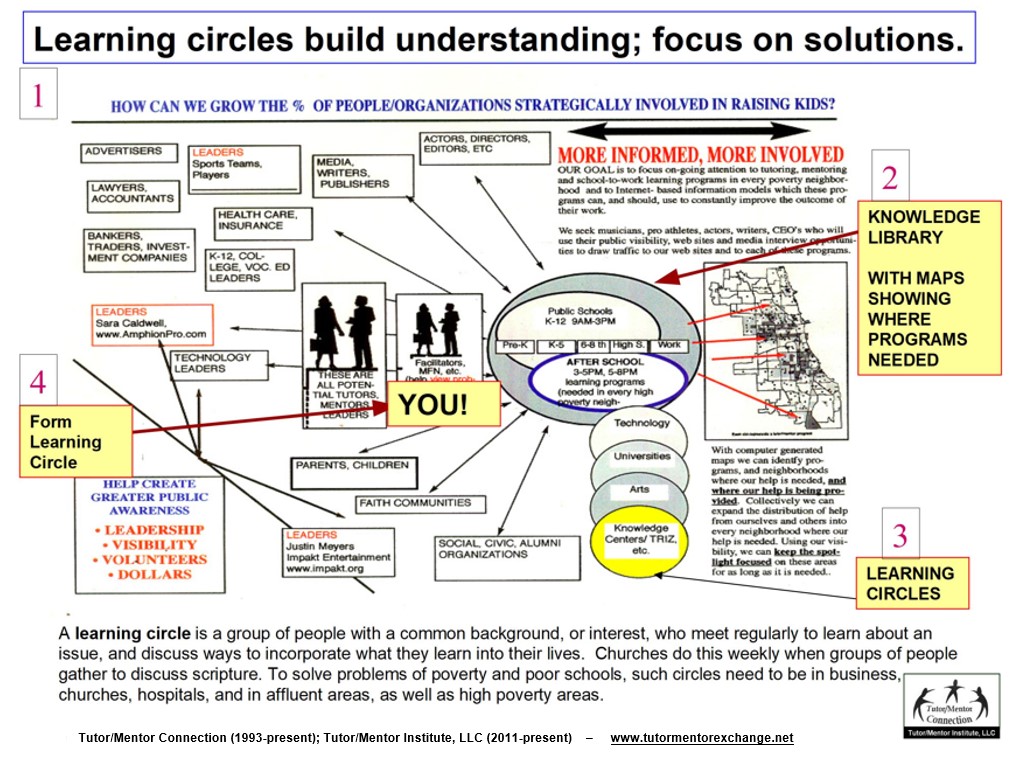
I created the graphic below many years ago to show how leaders can support youth-serving organizations via sermons given at four strategic times each year.   

We're in 2026 with still too few volunteer-based tutor, mentor and learning programs reaching youth in high poverty areas of Chicago and other places.

What's a message that faith leaders might be delivering to draw support to individual youth-serving programs in different parts of a city like Chicago?  I asked Google Gemini to look at this speech, by the CEO of a company, then create a sermon, delivered by a Faith leader. It's posted below.

--- begin Gemini version ---

From Prayer to Purpose: A Unified Covenant for Chicago’s Future Presenter:
[Leader Name/Title], [Faith Community/Organization Name]
Audience: Chicago Interfaith Council & Regional Religious Leadership

The "Why": Beyond Charitable Almsgiving
Friends and fellow laborers, we are all familiar with the call to "clothe the naked" and "feed the hungry." We pass the plate, we run our food pantries, and we offer our prayers. But if we are honest, our current approach is fragmented. We are tending to the wounds, but we are not stopping the violence that causes them.

If we were building a new sanctuary, we would not lay a single brick without a sanctified blueprint. Yet, when it comes to the "living stones" of our city—the children growing up in the shadows of systemic neglect—we often operate without a shared vision.

I am here today to ask our congregations to adopt a specific strategic blueprint: The Tutor/Mentor Connection Strategy Map.


 The Blueprint: A Map for Mercy and Justice
This is more than a diagram; it is a systemic path to redemption for our neighborhoods. You can view this concept map here: http://tinyurl.com/tmc-strategy-map.

As faith leaders, we understand the "Cradle-to-Calling" journey. If a child’s path is blocked by the thorns of poverty and a lack of guidance, the divine potential within them is stifled. This map shows us a way we, as a community of faith, can help mend it.

The Sacred Site: Our Buildings as Bridges
The research is clear: relationships save lives, but relationships need a place to grow. We cannot rely on informal or school-based connections alone. We need organized, site-based programs that serve as "hubs" of social capital.

Look around at our houses of worship. These are not just buildings; they are underutilized sanctuaries for the youth in our "service deserts." By hosting organized programs, we provide a safe, consistent space where a child knows a mentor will be waiting every week. These sites become the "glue" that attracts both the child and the volunteer, offering access to technology, quiet study, and a community of peers that many cannot find elsewhere.

The Four-Part Ministry of Presence
To make Chicago "mentor-rich," we must apply the same discipline to our outreach that we apply to our liturgy:

* Bearing Witness (Data): We must map where the light is shining and where the darkness remains. We must identify the neighborhoods where organized programs don't exist and ask ourselves: Why not here?

* Prophetic Voice (Public Awareness): We must use our pulpits. I am challenging you to record a video "reading" this strategy map to your congregants. We must signal that mentoring is a core tenet of our faith, not a side project.

* Stewardship of People (Resource Distribution):
We don’t just give tithes; we give ourselves. We must drive our most valuable asset—our people—into the zip codes that have been forsaken.

* Cultivating the Vineyard (Continuous Improvement):
We must share our collective expertise in administration and stability to help small, neighborhood missions move from "surviving" to "thriving."

The "Village" Cluster: Our Sacred Role
Look at the "Village Clusters" on the map. Whether you lead a mosque, a synagogue, a cathedral, or a storefront church, you are a pillar of this village. I am calling for "Moral Signaling." When a faith community adopts this map, they are committing to a 20-year covenant of support—a "long obedience" in the same direction.

 "Enough is enough. We cannot simply pray for a better Chicago while standing still. We must adopt a strategy that matches the scale of the giants we are facing." 

The Closing Challenge: Anoint the Strategy
At the top of this map is a blue box. It is currently empty. It is waiting for the seal of your faith community.

By placing your identity alongside this strategy, you are telling the people of Chicago that your house of worship is a bridge to the future. You are vowing that a child born today in a high-poverty neighborhood will have a spiritual family and a physical "site" of support walking beside them until they reach their full, God-given potential twenty years from now.

My Next Step: I have already integrated this strategy map into our community’s mission portal and opened our doors for these sessions. I would like to show you how to do the same.

---- end Gemini ----

I wish I could point to faith leaders who actually have taken the "Next Step" shown above.  

I think one of the best ways to honor the memory of the Rev. Jesse Jackson would be to adopt the strategies I've shared in this post, and share your commitment at least four times a year with a sermon based on what you've read here, or that you create by using Gemini yourself. 


 You can become the YOU in the graphic shown above.  

Form a learning circle and read and discuss ways you can apply the ideas in this visual essay.


Thanks for reading this.  Let's connect on LinkedIn, Facebook, BlueSky, Twitter, Mastodon, etc.  Find links here.

If you value what I'm sharing, please visit this page and make a contribution to help me keep doing it.

Saturday, February 21, 2026

Tribute to a Larger-than-Life Leader

I've seen many tributes in local and national media this week, recognizing the life of service and leadership of the Rev. Jesse Jackson, who passed away this week.  Here's one from PBS.


I met Rev. Jackson in 1997 when I was part of the Chicago delegation to the President's Summit for America's Future. I'm in the back row of this picture, between General John Borling, who was CEO of the United Way/Crusade of Mercy and the Rev. Jackson.

I was in several meetings with him following the April 1997 Summit, but never built any kind of relationship.

Between 1998 and 2000 I participated in monthly planning meetings held at Operation PUSH headquarters, along with leaders of the Illinois Judicial Council.  The goal was to develop a strategy that the Judges could take to area Black churches to influence the growth of mentoring programs in more places.

Below is part of a plan that I developed for the group, titled "Join the Minister's Mobilization".


You can view the complete plan at this link, along with some related documents. 

Then open this document to see an updated version of this plan that I created in the late 2000s. 


My latest update can be seen in this visual essay.

Unfortunately, the strategy presented at Operation PUSH never went very far.  We reached a point in our meetings when I was asking the Rev Jackson to take the role shown in the graphic below, using his powerful voice to draw volunteers AND donors to individual churches, so they would have the resources to actually start AND operate mentor-rich programs.  


I was told that this was not what the Rev Jackson did, since he was constantly raising money for Operation PUSH programs.  That's when I stopped attending the meetings at Operation PUSH.

So we're in 2026 with still too few programs, and with a lot fewer Black kids living in the Southside neighborhoods of Chicago.

However, I've continued to share that strategy for the past 25 years.

What's a message that faith leaders might be delivering?  I asked Google Gemini to look at this speech, by the CEO of a company, then create a speech, delivered by a Faith leader. It's posted below.

--- begin Gemini version ---

From Prayer to Purpose: A Unified Covenant for Chicago’s Future Presenter:
[Leader Name/Title], [Faith Community/Organization Name]
Audience: Chicago Interfaith Council & Regional Religious Leadership

The "Why": Beyond Charitable Almsgiving
Friends and fellow laborers, we are all familiar with the call to "clothe the naked" and "feed the hungry." We pass the plate, we run our food pantries, and we offer our prayers. But if we are honest, our current approach is fragmented. We are tending to the wounds, but we are not stopping the violence that causes them.

If we were building a new sanctuary, we would not lay a single brick without a sanctified blueprint. Yet, when it comes to the "living stones" of our city—the children growing up in the shadows of systemic neglect—we often operate without a shared vision.

I am here today to ask our congregations to adopt a specific strategic blueprint: The Tutor/Mentor Connection Strategy Map.

The Blueprint: A Map for Mercy and Justice
This is more than a diagram; it is a systemic path to redemption for our neighborhoods. You can view this sacred map here: http://tinyurl.com/tmc-strategy-map.

As faith leaders, we understand the "Cradle-to-Calling" journey. If a child’s path is blocked by the thorns of poverty and a lack of guidance, the divine potential within them is stifled. This map shows us exactly where the path is broken and how we, as a community of faith, can mend it.

The Sacred Site: Our Buildings as Bridges
The research is clear: relationships save lives, but relationships need a place to grow. We cannot rely on informal or school-based connections alone. We need organized, site-based programs that serve as "hubs" of social capital.

Look around at our houses of worship. These are not just buildings; they are underutilized sanctuaries for the youth in our "service deserts." By hosting organized programs, we provide a safe, consistent space where a child knows a mentor will be waiting every week. These sites become the "glue" that attracts both the child and the volunteer, offering access to technology, quiet study, and a community of peers that many cannot find elsewhere.

The Four-Part Ministry of Presence
To make Chicago "mentor-rich," we must apply the same discipline to our outreach that we apply to our liturgy:

* Bearing Witness (Data): We must map where the light is shining and where the darkness remains. We must identify the neighborhoods where organized programs don't exist and ask ourselves: Why not here?

* Prophetic Voice (Public Awareness): We must use our pulpits. I am challenging you to record a video "reading" this strategy map to your congregants. We must signal that mentoring is a core tenet of our faith, not a side project.

* Stewardship of People (Resource Distribution):
We don’t just give tithes; we give ourselves. We must drive our most valuable asset—our people—into the zip codes that have been forsaken.

* Cultivating the Vineyard (Continuous Improvement):
We must share our collective expertise in administration and stability to help small, neighborhood missions move from "surviving" to "thriving."

The "Village" Cluster: Our Sacred Role
Look at the "Village Clusters" on the map. Whether you lead a mosque, a synagogue, a cathedral, or a storefront church, you are a pillar of this village. I am calling for "Moral Signaling." When a faith community adopts this map, they are committing to a 20-year covenant of support—a "long obedience" in the same direction.

 "Enough is enough. We cannot simply pray for a better Chicago while standing still. We must adopt a strategy that matches the scale of the giants we are facing." 

The Closing Challenge: Anoint the Strategy
At the top of this map is a blue box. It is currently empty. It is waiting for the seal of your faith community.

By placing your identity alongside this strategy, you are telling the people of Chicago that your house of worship is a bridge to the future. You are vowing that a child born today in a high-poverty neighborhood will have a spiritual family and a physical "site" of support walking beside them until they reach their full, God-given potential twenty years from now.

My Next Step: I have already integrated this strategy map into our community’s mission portal and opened our doors for these sessions. I would like to show you how to do the same.

Would you like me to send you the "Leader’s Script" we use to explain this map and the use of our buildings to our members during service?

---- end Gemini ----

I was inspired to use Google Gemini by Gene Bellinger, who has demonstrate its value through articles he's posted on his Substack - click here to find his articles.  

Thanks for reading this.  I think one of the best ways to honor the memory of the Rev. Jesse Jackson would be to adopt the strategies I've shared in this post, and share your commitment at least four times a year with a sermon based on what I shared here, or that you create by using Gemini yourself. 

You can become the YOU in the graphic shown above.

Let's connect on LinkedIn, Facebook, BlueSky, Twitter, Mastodon, etc.  Find links here.

If you value what I'm sharing, please visit this page and make a contribution to help me keep doing it.

Tuesday, September 23, 2025

What issues unite us?

The political and cultural issues of the United States are creating growing political divides, and growing "hate" and "distrust" of others. Political violence is creeping in.  I'm seeing more and more signs that we're losing our traditional democracy and gaining a narrow focused dictatorship.

I've used this blog since 2005 and my print and email newsletters since 1993 to focus attention on libraries where people can spend time learning about these issues and finding ways to connect with others who are trying to find a better way.

I use concept maps, like the one below to try to guide people to different sections of my library, which has links to more than 2000 external websites, with their own extensive libraries.


And, I've created visual essays, like this one, to show actions anyone can take to draw attention to the issues and causes that they care about.  Borrow what works for you. Teach it to others.


My own focus for the past 50 years has been to help youth who live in areas of concentrated, persistent poverty, get the extra, on-going support they need to move through school and into adult lives, with jobs and careers that enable them to raise their own kids free of poverty.

I use visualizations like the one below to illustrate this goal.


The photo at the upper left is from the mid 1990s and the photo at the lower right is when one of those young women came back in 2010 to speak at our year-end graduation.  We're all now connected on Facebook and I'm seeing stories of their own kids finishing high school and college.

The graphic shown below emphasizes the need for long-term programs in high poverty areas of Chicago. If donors recognized this value, and the long-term support needed, my hope is that they would fund on-going general operations of programs who build such support for kids into their core strategies.  A map should show such programs reaching k-12 kids in every high poverty area, not just a few places.


In the lower left corner of this graphic is a  map of the Chicago area, with areas of persistent poverty highlighted.  Since 2005 I've posted more than 280 articles using maps to focus attention on specific areas of Chicago.  I highlight a few in this collection.

In this article I included this map of the United States, showing cities with high concentrations of poverty.  


The dark areas are metros. The orange area within each metro indicates an area of concentrated poverty.  Each of these cities should have a research intermediary that borrows strategies piloted since 1993 by the Tutor/Mentor Connection, who collects and reports information that everyone else in that city can use to supply the resources needed to reach a higher percent of kids in high poverty areas with well-organized, mentor-rich, non-school tutor, mentor and learning programs.

In another article I show a dashboard created by the Economic Innovation Group (EIG) that shows areas of the United States where economic prosperity is more prevalent, and where distressed communities are located.  Below is one view of that dashboard.

Here is a second view, this time centering on the Chicago region, where I've worked for the past 30 years to help volunteer-based tutor, mentor and learning programs grow.

This map shows that there are many places in the Chicago region and Northwest Indiana that have distressed communities. So do other cities surrounding Lake Michigan, such as Milwaukee and Kenosha, Wisconsin, Waukegan, Illinois, Benton Harbor and cities further East.

If you zoom out, you'll find places all over the country with areas of persistent poverty and/or where economic opportunity is low.

This means people from every one of these cities and states should be talking to each other.  Where is that happening?

So, what's your cause?  Saving democracy? The planet? People in distressed situations?  If someone is building a library like mine, it can be a resource used by anyone, anywhere, to find information about complex issues and ideas for trying to solve those problems.  The blue box in the graphic below illustrates the role of such libraries. 

As I wrote above, the Tutor/Mentor library has more than 2000 links to external websites. Many of those have extensive libraries on their own site.  Each resource I point to represents one, or dozens, of people who work with that organization.  Imagine finding web platforms where people from all of these organizations were connecting regularly to share ideas, build networks and relationship, and create blueprints that show what's needed, and in what sequence, to solve the problem they focus on.

This concept map is an example of a blueprint that could be used in every metro shown on the map above.  In every high poverty zip code all of the supports shown on this map, for each age group, need to be available.  Building the blueprint and getting support for it are two huge challenges.

I wonder if anyone has created a concept map like this showing steps that would reduce the growing conflicts dividing this country.  I'd love to see it.

Thanks for reading.  I'm sure there are hundreds, if not thousands, of organizations building libraries and trying to draw viewers to their sites and events.  When I learn about these, I add them to my own library.

For instance, I added the SocialRoots website today. Check it out. 

I encourage them to dig into my blog articles and library and then include these in their own libraries. 

Then, reach out and connect with me on one or more of the social media platforms that I share on this page. 

If you value what I'm sharing and can help, please visit this page and make a contribution to help fund my work. 

Wednesday, September 03, 2025

Dig deeper into the ideas shared on this blog

Below is a graphic that compares the process of helping youth from birth-to-work to building a huge building. Both take a long time and a lot of money.


Below is another graphic that visualizes the thinking involved in building and sustaining youth-serving programs that are needed in every high poverty area for many years.


After the 2024 US election, I posted an article showing the many challenges that face the United States. Unfortunately, it seems that the current President and his followers are making some of these issues worse, not better.    View the map here.


I think many of the topics on my map are issues that need to be addressed, if not by the Federal government, then by state and local governments.  

These are complex problems. If you look at the two graphics I started this article with, you might understand why I call on leaders to create visual blueprints that show the depth of each problem, and to connect people who are trying to solve each problem in different places with each other and with resource providers.  

Engineers and construction workers use blueprints because they show ALL of the work that needs to be done, in the sequence it should happen.

They also draw from a huge body of knowledge and experience, that many learn over 4 to 8 years of formal post high school college or vocational training and many years of continuing learning. 

Each symbol on a blueprint represents a specific skill and/or action and a library of knowledge that is hosted in a variety of places.  Such libraries need to be available for each of the topics shown on my concept map.  Without applying this thinking to solving complex problems, progress is slow, if at all.  A lot of money gets spent, but without lasting impact, and without reaching many (most) of the places where help is needed.

I've been writing about this for a long time. Before I started this blog in 2005 I was sharing these ideas in print and e-mail newsletters and in visual essays posted at www.tutormentorexchange.net

I've posted some paragraphs from past blog articles that I hope someone in every city and state will will take time to read.  These are ideas I've been sharing since the 1990s.  Too few have ever seen them. Too few have adopted them. 

You can click the image to enlarge and read the graphic. Then I hope you'll use the link provided at go to the article. Read it. Think about it. Share it.


I've only highlighted five articles.  I've written more than 2300 since 2005. Many have the same ideas and the same focus.  

In many of my articles I emphasize a use of maps to show where people need help, and to assure an even distribution of resources to EVERY area where help is needed, not just to the most visible or the most well connected.   Here's one example. 


While I've addressed this article to the people who are in power in Washington, DC, these ideas are for leaders in every city and state, both in the private and the public sector.  

Building interconnected web libraries that make "all that is known" available and easier to understand and apply, then an on-going public education campaign that teaches people to visit this information and use it to innovate solutions to complex problems, is a path forward. 

The big challenge is that too few have the resources, or motivation, to build such libraries and keep them updated for 20-30 years like I have.  This is an ideal project for universities to be doing, using a constant flow of student talent to collect and share the resources, then to use them during their alumni years.  

In 2009 a Northwestern University Public Service Fellow, who spent a year working at my organization, created this concept map, showing all of the different parts of NU that could help a tutor/mentor program grow.  You can see it and read his article at this link.


Unfortunately, after one year the writer moved on to other things, and no one at NU took ownership of his ideas.  If an updated map exists, I'm not aware of it.  

Most universities may be doing some of this work already. But most don't connect to libraries in other places, and other universities, in an interconnected web of knowledge.  That's what I feel should be happening. 

Maybe it is.  If you know of examples where this is being done, please share the link in the comment section. 

Thanks for reading, and sharing my article.  Please reach out and connect with me on social media platforms, like Twitter, Facebook, LinkedIn, Mastodon, BlueSky, Instagram, etc.  Find links on this page.

Finally, please consider a contribution to help me continue this work. Visit this page.


Friday, August 29, 2025

Create a New Tutor/Mentor Program Locator

With the help of others I created the Tutor/Mentor Connection in 1993, with the goal of helping volunteer-based tutor, mentor and learning programs grow in every high poverty area of the Chicago region.  I've led it since 2011 through the Tutor/Mentor Institute, LLC.

We launched a survey in January 1994 to learn what programs were already operating in Chicago and I've tried to keep a current list of those programs available for the past 27 years.

While we published a printed directory from 1994 to 2002 we launched this on-line directory in 2004. It shows how we attempted to categorize programs by a) type of program; b) age group served; c) time of day service was provided; and d) location (zip code or community area).


The image above shows the search page of the Program Locator, which you can find at this link. The results of each search were shown on a Google map. Thus, searchers could see any tutor/mentor programs in a specific zip code of Chicago and find a website address they could use to go directly to each organization and learn more of what they do.

A map-based Program Locator was created in 2008, drawing from the same data.  You can view the archive at this link.  

Program Locator - 2008

This worked from a global perspective, showing the entire Chicago region and all of the tutor/mentor programs in our database, then enabled visitors to narrow their search by type of program, age group served, and location. It also included layers of information showing demographics, public school performance and assets (business, universities, hospitals, universities, faith groups) who shared the same geography and could be doing more to help programs grow.

While the Program Locator has not been updated since 2011, and some features do not work properly, it still is a template and model of the type of platform that is needed in every city. It was designed to provide decision support for community, business and philanthropic leaders while also helping parents, volunteers, educators, etc. find programs located in different parts of the Chicago region. 

View this concept map to learn more about the Program Locator. 

Their is a much wider range of youth-serving programs than just volunteer-based tutor/mentor programs.  Below is a graphic that you can find in this article. It calls for a segmented understanding of youth-serving programs. 

Over the past 15 years I've expanded the range of youth programs that I share in the Tutor/Mentor library, and if I had ever had the resources, I might have included a broader range of programs on my maps and in the searchable program locators. 

Over the past decade I've often wondered if anyone was using IRS 990 data to build a much more comprehensive understanding of existing tutor/mentor programs along with other types of your services. 

Today a LinkedIn post pointed me to this article, titled:  MapAgora, civic opportunity datasets for the study of American local politics and public policy.  


It's a detailed description of the process of building datasets that provide a comprehensive view of civic life across America.  The data they have collected  "illuminates where civic opportunities are available and which types of organizations provide them". 

The article says, "This entire pipeline is reproducible and relies on the two open-source R packages we developed: MapAgora (v0.08 https://github.com/snfagora/MapAgora) for parsing and integrating administrative data, and autotextclassifier (v0.05 https://github.com/snfagora/autotextclassifier/tree/main) for machine-learning-based text classification."

I did not see an maps showing this data, or anything like the Program Locator platforms we built in 2004 and 2008.  Yet, the data collection process is a blueprint for doing this and the datasets they built are available for anyone who might want to take this next step.

1-19-2026 update - Here are two links to efforts aimed at mapping the nonprofit ecosystem:

- Nonprofit Ecosystem Mapping - click here

- Project 990 - Building a comprehensive data analytics platform that integrates information from millions of tax filings, grants, and other sources related to philanthropic giving. click here

4-29-2026 - Chicago Social Impact Atlas, is a "free, searchable map of Chicago's nonprofits, funders and support organizations - built from IRS 990 filings and public data."  Most of the nonprofits shown have budgets of $250,000 or larger. click here


Do you know anyone doing this type of data collection/analysis?  Or drawing from this information to build platforms like the Program Locator? Or, anyone who wants to?  Please share the links.

Connect with me on LinkedIn, Instagram, Twitter, Facebook, BlueSky and/or Mastodon (see links here).

Thanks for reading.  I depend on contributions to help fund the Tutor/Mentor Institute, LLC.  Visit this page if you'd like to help. 

Friday, April 18, 2025

Innovating new funding solutions

I wish peace, good health and happiness to all who celebrate any religious holiday this weekend.  However, I'm not sure any GOD is going to help us unless we do more to help ourselves.  Thus....

A few days ago I shared an article titled, "Funders, here's the blueprint for saving democracy", written by Vu Le.   I wrote about it in this article. 

I've used the term "blueprint" in many articles, to show a range of actions that donors, leaders, policy-makers, etc. need to be taking to help make sure well-organized, long-term, volunteer-based tutor, mentor and learning programs are available in EVERY high poverty area of Chicago and other places with concentrations of persistent poverty.
I've been using this "Mentoring Kids to Careers" graphic, along with various versions, since late 1990s, to emphasize the same goals.

In the lower left corner is a map of Chicago, with high poverty areas shaded grey. These are the areas where mentor-rich programs are most needed BECAUSE of how they can expand social capital and aspirations and open doors to opportunity.  

What makes my work unique is that I don't just point to the research.  I maintain a list of Chicago volunteer-based tutor, mentor and learning programs and look for ways to draw volunteers AND donors DIRECTLY to each program, throughout the year.   My long-term goal has been that a program website serves as the "grant proposal" and donors use that, plus the information I share about long-term mentoring, and the need for such programs in high poverty areas, to make funding decisions.

In this article you can find my list of programs and see how I plot them on a map. This helps people find existing programs and hopefully is used by planners to determine where more are needed.

Below I've created another version, highlighting one stage on my career ladder.

Kids grow one year at a time. Support  needed for many years.

It's great to be able to provide a youth tutoring and/or mentoring activity that lasts for one, or two years, but it takes 12 years to move from first grade through high school and four to six more years beyond that to be starting a job and career. Expanding the "who you know" network is critically important for kids living in areas of segregated, concentrated poverty where "who they know" is not as extensive as it is for kids living in more affluent areas.

The challenge Chicago and other places face is building and sustaining k-12 support programs in every high poverty neighborhood.  I've written about this often since starting my blog.  

View in this article

I've been writing articles and sharing graphics like this for nearly 20 years, but as just one voice, I don't have enough impact to influence the massive changes that are needed in how such programs are organized, designed and supported.

Below is another graphic that I use to emphasize the need for continuous flows of flexible operating dollars to youth programs in every high poverty neighborhood.

View in this article

The benefit of long-term support of mentor-rich programs as a form of social capital was reinforced in this 2023 article which points to a report from MENTOR, titled "Opportunities to Invest in Long-Term Social Capital for Our Youth: A Philanthropic Agenda".    

View this group of articles and find more research that donors can use to support funding decisions.

Here's an article about philanthropy that I wrote about in 2018 after it was published by Open Impact. It's titled, "The New Normal: Capacity Building During a Time of Disruption"

I read the article and saw many ideas which I've been trying to implement via the Tutor/Mentor Connection/Institute, LLC since 1993. So I decided to put it on Hypothes.is and re-read it, highlighting relevant parts, and writing comments in the margin that show my own efforts.

In the paper's introduction the writers say "we hope this paper will spark and important conversation". I agree. 

In my comments I suggest that philanthropy would dramatically change if donors were shoppers and if non-profits and social change organizations would put enough information on their web sites for donors, volunteers and clients to make better choices of who they support, and in what ways.  I also emphasize the use of maps to support a better distribution of resources to all high poverty areas of the Chicago region and other places where help is most needed.

Read about Annotation
Thus, I invite you to read "The New Normal: Capacity Building During a Time of Disruption" with three purposes:

1) build a deeper understanding of what I've been trying to do, and to find reasons to support my efforts and help carry them into the future;

2) build a deeper understanding of the challenges facing all social benefit organizations, in the US and the world, and a commitment to draw others into this conversation; and

3) see how on-line annotation works and build a commitment to launch other articles and invite more readers and learners to join in.

I look forward to meeting you in the margins.

So far no one has joined me in reading the New Normal article.   Maybe that's because so few people actually see my articles.

I post on Facebook, Twitter, BlueSky, Mastodon and LinkedIN and occasionally on Instagram. I also have graphics on Pinterest.com.  If you do a Google search for "tutor mentor" my web sites will be on the first page (after paid advertising). Thus, if people are looking, they can find me.

If you're connected to any youth-serving programs in any way (student, alum, volunteer, board member, staff, donor) you can help them attract support by sharing what the organization is doing and making an effort to raise the organization's profile.

You can even write articles like mine.

Thanks for reading!  Enjoy your weekend.


Tuesday, April 15, 2025

A way forward for philanthropy. A path out of darkness.

My main website is still not working so I'll use my articles to point to the type of links I include in the library.

Here's an article titled, "Funders, here's the blueprint for saving democracy".    It's written by Vu Le, who I've followed for several years.  I urge you to read it.  


I've used the term "blueprint" in many articles, to show a range of actions that donors, leaders, policy-makers, etc. need to be taking to help make sure well-organized, long-term, volunteer-based tutor, mentor and learning programs are available in EVERY high poverty area of Chicago and other places with concentrations of persistent poverty.

I've also used visualizations to communicate ideas, like this one, which I used this in 2021 in an article where I first quoted Vu Le.  


Again, I urge you to read Vu Le's current article.  

You want a plan to save democracy? He says we already have many blueprints, but donors don't use them.  In his current article he says,  "You want a plan to stop fascism? Here it is, broken down into two parts:"

He starts out with "First, stop the bleeding" and list 8 steps that donors should take.  

I love the first step, which I show below:

"Change your founding charters so you can give out more money and fund differently and more effectively, such as funding progressive individuals, movements, mutual aid, LLCs, religious orgs, 501c4s, PACs, and so on. Stop letting policies written during different times and by people who are less likely to suffer under this regime dictate your actions in the present moment."

I've operated as an LLC since 2011 and if donors had been following this thinking since then all of the content that we created through the Tutor/Mentor Connection (1993-present) in the 2000s would still be working, with many upgrades that would draw youth programs together and draw volunteers and donors more consistently to every youth tutor/mentor program operating in defined geographic areas.

His second set of strategies come under the heading of "Fight Fire with Fire".

He wrote, "Gather your team and read Sally Covington’s report that spelled out all the strategies conservatives have been using for decades that liberal-leaning funders have largely avoided, which has contributed greatly to the situation we find ourselves in today. (This report is so vital, I’ve created a link you can easily remember: tinyurl.com/rightwingfunding)

It’s time we use conservatives’ strategies, which focuses on FIVE KEY AREAS, which I summarize here but overlay a progressive lens. These strategies need to be funded through Multi-Year General Operating Dollars (MYGOD), for 20 or 30 years at a time, which is what the right has done, which is why they’ve been so effective."

When Vu Le says "Gather your team" I think of the graphic below. Share Vu Le's article, and mine, and start discussions with friends, family, co-workers, etc. and figure ways to adopt the blueprint he's shared.


While I focus on  helping mentor-rich youth-serving organizations grow, which help kids through school and into adult lives, the graphic below shows many other issues that also need long-term, flexible funding.


A similar concept map could be created to show all of the issues we need to address to not only save Democracy, but to move closer to the ideals expressed in the forming of America, which have made this a land of hope, and opportunity, for immigrants of all backgrounds, since the day the first European set foot on these shores.   

Such a strategy would also address the challenges facing the people who occupied the North American continent before the arrival of Europeans.

I have used cMapTools since 2005 to create concept maps like the one shown above (click here).  Since my website is not opening, I can't point you to the page with my entire collection.  However, I invite you to skim these articles and open the maps I've been sharing.

Furthermore, I encourage you to skim the collection of articles I've written about philanthropy (click here).


Then, read these "tipping point" articles. 

And, read my "blueprint" articles.

In many you'll see that I believe this information needs to be aggregated, and taught from universities and high schools as kids move from first grade through school and through their adult lives.  It needs to be part of on-going learning, just as conservative radio and TV had been embedded for the past 60+ years in an on-going public education and influence program.

Donors need to fund this, too.

Thank you Vu Le for your articles.  If people share these in their networks that's the first step toward making them a reality.

6-3-2025 update - here's another article by Vu Le, titled "Funder-inflicted trauma and how it affects nonprofit leaders and our sector - click here

11-26-2025 update - here's another article by Vu Le, where he compares funding of conservative efforts to that of progressive efforts. - click here

Monday, January 13, 2025

Small voice in big universe of problems


I'm starting a new week, like I've started new weeks for the past 20-30 years. Recommitting myself to using my small voice to try to have a positive impact on the lives of people living in areas of concentrated poverty. 

As I though about how to write this I searched for "slice of the pie" to find a graphic that I created in the 1990s showing many issues that require attention, and how the "youth in poverty, and volunteer-based tutor/mentor programs" category is just one small slice of that pie. I found an article I wrote in 2015 and updated in 2020. I've reposted it below, with updates for 2025. 

The fires in Los Angeles and the hurricanes that hit the US South East states in November are just the two latest massive disasters that will require many years of consistent effort for people in the affected areas to recover.  This is not a new problem. 

In September 2005 I wrote an article titled "Disaster challenges us all".  In it I wrote,

"For the next few weeks there will be a tremendous outpouring of charitable donations to support relief efforts, just as there was in the weeks following the Tsunami. However, following this there will be a need for donations to continue for a decade or more. 

However, in six months or a year there will be another disaster that will mobilize public attention. Then the people who need Tsunami aid, and the people who need Katrina aid, will be off the front page and struggling to find the dollars needed to continue rebuilding their communities."  Read the article. 

This graphic is part of a strategy graphic that shows the planning steps needed to solve complex problems or roll out a new business strategy. See the full graphic and explanation here.

Every year, millions of dollars are spent by social benefit organizations trying to attract resource to support their work. The money is spent directly on fund raising, marketing and public education. It's spent indirectly on training programs and consultants.

Regardless of where an organization operates or what cause it focuses on, we're all competing for a slice of the same donor pie. That pie seems to be shrinking, either because of economic circumstances, or because of the rise in organizations competing for a share of the pie. Natural disasters that occur randomly around the world exert a huge pull on discretionary donor dollars every time they happen.

In the last few cycles elections have also drawn a huge share of donor dollars.

In my 2005 article, I wrote, 

"I spent 17 years doing corporate advertising for a large retail store. We sent out 3 waves of advertising each week to 20 million people in 40 states telling potential customers that we had stoves, clothes, tires and other merchandise they wanted in one of 400 stores that we operated. We also spent millions of dollars in making sure we had the right merchandise in those stores, well trained people, and that the stores were in the right locations. 

Each store had a responsibility to do its own advertising and training but because of the support from the national advertising and training, each store was able to attract customers on a regular basis, at a fraction of what it would cost if each had to create their own advertising campaign."

I've not found any city with a consistent, on-going effort to support all tutor/mentor programs in that city the same way big companies supported hundreds of retail stores spread all over the country.

Thus, it's unlikely that great programs, doing similar work, but in different places, will be available in a large percent of the places where such programs are needed. 

Since 1993 I've piloted uses of maps to show where non-school tutor/mentor programs are most needed, then using the maps to influence donor support of programs in every place where the map shows programs are needed. In recent years there is a growing application of mapping and data visualization (see examples on this concept map). However, I still don't see many who are trying to create maps of all service providers doing similar work in areas where that work is needed. Such maps would show a poor distribution of needed programs. Over time it would show change as new programs launch and some go out of business.

It's also unlikely that many organizations will attract on-going dollars to enable them to provide long-term support. In youth development, this is a serious issue. Kids take 12 to 20 years to move from first grade to first job. If they are living in high poverty areas, the support system needs to reach them early and stay with them through school and even into work. Such support systems are needed in many, many places.

Architects, engineers, web developers, etc. all use some form of blueprint to show all of the work that needs to be done, in the correct sequence, and with the right talent, to build a tower, a rocket, or any other product.

In disaster recovery, or helping kids through school and into careers, I feel that this is missing.  Take a look at this concept map.


It shows some of the supports kids need at each grade level as they move through school. It includes a map showing high poverty areas of Chicago, where these supports are most needed (because they are not naturally available).  It also shows a role volunteers and extra adults can take. 

I've seen list posted on social media showing supplies people need in LA because of the fires, but not a concept map that shows what's needed from today (fighting fires/finding places to live) until some day in the future when these areas have been rebuilt and when all the people affected have rebuilt their lives.

Without the blueprint a lot of money will be spent, but without an accumulated long term impact. Without a map, only a few places will get the help it needs.

What's the solution?

Building public will is step 7 on this map. Each step is important in solving complex problems. However, until more people from different places, with different talents, and different levels of influence get involved in brainstorming ways to build public support and keep it growing, I don't see many long-term solutions emerging.

I created this graphic (see article) to illustrate that while we want to help social benefit organizations and clients use the resources available to achieve their missions and/or overcome challenges they face, we also need to influence what people who don't live in poverty do to help them. This can include direct support such as funding, or public policy. It can also include indirect support, such as removing barriers and obstacles.

Some (but certainly not all) of the actions we need to be focusing on include:

a) constant education of the public so they have deeper understanding of the problems and places where strong, constantly improving, social benefit organizations are needed

b) innovation of on-going advertising-type campaigns to influence what resource providers do

c) build growing understanding of how current systems of philanthropic and government support are not working.

Just a small growth of the resource pie every year could make a huge impact on the availability of needed social benefit organizations (including tutoring/mentoring organizations) in more of the places where they are most needed.

Building public will requires champions and leaders from every sector, in every city of the world. I'm certain that this discussion is taking place. I'm just not sure where this is an on-line forum, a cMOOC, or part of a web library that points to a wide range of places where this is being discussed.

I've started using BlueSky more than Twitter. However, while I find groups of educators and a good discussion of nonprofit issues I still don't find volunteer-based youth serving organizations, their donors, the media, or their researchers.    

I've been sharing this message, along with a library or resources, and list of existing programs operating in Chicago, since 1994.  Yet, I find almost no leaders using a collection of graphics similar to those I've put into this article, to share their own commitment to this same goal.

Ideas bursting in air!
I launch my ideas on blog articles every week, then spread them, like fireworks via social media. As you and others pass them on in your own feeds, we reach more people, and maybe convince some to take on leadership roles in this effort.  Such leaders can be from any city in the USA, or from other parts of the world!

Thanks for reading. I'm a small voice, just a whisper in the wilderness. But if you share, we can roar like a lion.

Please share.  I'd like to hear from you.

Use the comment section to provide links to open, on-line forums, social media groups, or cMOOCs that you're aware of, where "building public will" is the focus of the group. Or introduce yourself to me on Facebook or LinkedIn.

Finally, it's a new year and once again I need to raise a few thousand dollars to cover the costs of maintaining the Tutor/Mentor library, writing this blog and trying to be a spark that ignites a massive increase in using these ideas.  Visit this page to make a contribution.