I found this video through one of my Linkedin Groups. It shares many ideas that resonate with me. I hope you'll take a look.
In this video one example was the STRIVE Partnership in Cincinnati in which the President of the local university was a major force for bringing business, educators and philanthropists to the table.
In other articles I've read it seems that "those with the money" are the ones most effective in drawing groups together for common purpose.
I think that misses one of the major strengths of the Internet. Anyone with a good idea should be able to share it and invite others to view it. If the idea is good enough it should become a magnet that attracts support from many places.
I'm not sure it's yet working this way except in rare cases.
Friday, August 31, 2012


Thursday, August 30, 2012
Learning2Gether: Recruiting Volunteers Podcast
With this comment, Vance Stevens of the Webheads group announced that the Podcast from the August 26 discussion on volunteer recruitment is now available for others to listen.
Dan Bassill does some remarkable work bringing his past business experience and present passion for improving the lives of disadvantaged kids in Chicago through his tutor mentor programs, and the mechanisms he sets up for that are interesting, instructive, and relevant to communities of practice which rely on the cognitive surplus of like-minded volunteers.
Find the link at http://learning2gether.net/2012/08/27/dan-bassill-discusses-ways-educators-and-non/
Dan Bassill does some remarkable work bringing his past business experience and present passion for improving the lives of disadvantaged kids in Chicago through his tutor mentor programs, and the mechanisms he sets up for that are interesting, instructive, and relevant to communities of practice which rely on the cognitive surplus of like-minded volunteers.
Find the link at http://learning2gether.net/2012/08/27/dan-bassill-discusses-ways-educators-and-non/
Future of Education and Learning
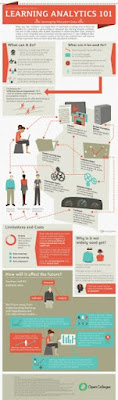
I received an email this morning from Tess Pajaron, who has been reading the articles I post. Thank you Tess! She sent me the infographic posted below.
 This is a graphic I created in the 1990s to illustrate a need for many leaders to be drawing people from their own influence networks into learning circles which use information like these infographics and recorded sessions to build strategies that reach youth in high poverty areas with all of the learning opportunities that keep expanding for kids who live beyond such neighborhoods.
It would be great to see students and volunteers creating infographics to describe the process that might make this happen. At this blog you can see work interns have been doing working with me in Chicago. If you're interested in joining this work please introduce yourself.

Learning Analytics: Leveraging Education Data – An infographic by the team at Open Colleges
Last week I listened to one of the sessions from the Learning 2.0 Conference. The speaker was Audrey Watters, who shares her ideas at Hack Education.com . In her presentation she talked about the growing use of robotics in education. The Blackboard Collaborate Recording is: https://sas.elluminate.com/p.jnlp?psid=2012-08-21.0647.M.D4D806A15860351B259A585F17EC47.vcr&sid=2008350
Through the combination of data, information technology, the internet and financial interests big changes are coming to how and where learning is provided and supported.

It would be great to see students and volunteers creating infographics to describe the process that might make this happen. At this blog you can see work interns have been doing working with me in Chicago. If you're interested in joining this work please introduce yourself.
Friday, August 24, 2012
Volunteer Recruitment Discussion, Sunday 8/26
I led an informal discussion about volunteer recruitment on Sunday, Aug. 26 in the Webheads Elluminate forum. The recording can be seen here. See description of this discussion on the Learning2Gether site.
This discussion was focused on learning ways educators and non profits are recruiting and utilizing volunteers as tutors and/or mentors in school and non-school programs throughout the world. Dan would like to draw information from participants. Below is a list of questions that I intended to ask:
* Where do your find volunteers?
* What are your expectations for your volunteers? Where do you share this information?
* Describe your volunteers. Are they business people, college students, community residents?
* How long do your volunteers stay involved with you? Less than a year? One or two years? More than two years?
* How do you tell your story to show volunteers how and why they should join you? If you use a web site, blog or video, please share links.
* How do you screen volunteers? What is your interview process?
* Once you have volunteers how do you train and support them?
Unfortunately, only two other people joined me in the discussion. One was Vance Stevens, who has led the Webheads network's growth since the early 1990s and who is located in Abu Dhabi. Vance and I first connected in 2004 when the Webheads group co-sponsord a tutor/mentor on-line conference while I was hosting a place-based conference in Chicago.
The second was John Hibbs, who has been hosting a Global Learn day since the late 1990s. Here's an introduction from John in the 2004 event. Here's some photos from Global Learn Day VI which I participated in from Chicago. John is now focusing on Coursera, which is a new platform for massive on-line learning that is partnering with "the top universities in the world to offer courses online for anyone to take, for free".
Since we did not have any tutor/mentor program leaders in the discussion to give feedback on their volunteer recruiting practices we used the time to talk about ways on-line networks like Webheads or Coursera could incorporate questions like this into their own efforts, reaching thousands more potential participants than the few I'm able to bring to the conferences in Chicago or gather in my social networking spaces.
I encourage you to listen in to the one hour recording. Follow the text chat box to find questions and ideas that are being shared while I was pushing out information through the Elluminate screen. If these topics interest you, join the Tutor/Mentor Connection forum on Ning to expand your ideas of where, why volunteer-based tutor/mentor programs are needed and how people in all sectors of society can help them grow.
This discussion was focused on learning ways educators and non profits are recruiting and utilizing volunteers as tutors and/or mentors in school and non-school programs throughout the world. Dan would like to draw information from participants. Below is a list of questions that I intended to ask:
* Where do your find volunteers?
* What are your expectations for your volunteers? Where do you share this information?
* Describe your volunteers. Are they business people, college students, community residents?
* How long do your volunteers stay involved with you? Less than a year? One or two years? More than two years?
* How do you tell your story to show volunteers how and why they should join you? If you use a web site, blog or video, please share links.
* How do you screen volunteers? What is your interview process?
* Once you have volunteers how do you train and support them?
Unfortunately, only two other people joined me in the discussion. One was Vance Stevens, who has led the Webheads network's growth since the early 1990s and who is located in Abu Dhabi. Vance and I first connected in 2004 when the Webheads group co-sponsord a tutor/mentor on-line conference while I was hosting a place-based conference in Chicago.
The second was John Hibbs, who has been hosting a Global Learn day since the late 1990s. Here's an introduction from John in the 2004 event. Here's some photos from Global Learn Day VI which I participated in from Chicago. John is now focusing on Coursera, which is a new platform for massive on-line learning that is partnering with "the top universities in the world to offer courses online for anyone to take, for free".
Since we did not have any tutor/mentor program leaders in the discussion to give feedback on their volunteer recruiting practices we used the time to talk about ways on-line networks like Webheads or Coursera could incorporate questions like this into their own efforts, reaching thousands more potential participants than the few I'm able to bring to the conferences in Chicago or gather in my social networking spaces.
I encourage you to listen in to the one hour recording. Follow the text chat box to find questions and ideas that are being shared while I was pushing out information through the Elluminate screen. If these topics interest you, join the Tutor/Mentor Connection forum on Ning to expand your ideas of where, why volunteer-based tutor/mentor programs are needed and how people in all sectors of society can help them grow.
Thursday, August 23, 2012
Bill Strickland TED talk - Inspirational
If you've time, this video will inspire you to expand your vision of what's possible.
Wednesday, August 22, 2012
Making Sense of How America Gives
Through my Twitter feed I was introduced to the Chronicle of Philanthropy's special section on How America Gives. The graphic below shows the home page of this innovative site.

There is a wealth of data on this site that can be used to help volunteer-based tutoring, mentoring and similar birth-to-work programs grow, if we can find people who will make time to dig through the data and figure a way to use it to educate and motivate donors.
 This image is one showing the Chicago area. It's an example of the powerful interactive mapping capacity of the site and shows how people can create their own maps, then export them to photoshop and create JPG images that can be inserted into blog articles or other communications.
In this Rest of the Story article and this "How to use Tutor/Mentor Program Locator article I've been sharing ideas that student and volunteer writers, journalists and advocates could use to help build on-going support for volunteer-based tutoring and/or mentoring programs helping young people move through school and into jobs and careers.
Making sense of the information is only the first challenge. Communicating these ideas on an on-going basis so that busy people in business, philanthropy, politics, etc. spend time reading, reflecting and integrating the understanding into their own commitment and actions is a much more difficult challenge. We have a short term problem solving mentality and want to simplify complex problems into five-minute elevator speeches.
That only works if the person we're talking to has a deep understanding of the problem and can intuitively understand the proposed solutions. That does not happen without many hours of reading, reflection and experience.

Sharing this information and increasing the number of people who use it is as difficult as pushing a boulder up a mountain, especially if you're doing it by yourself. Finding others who share the same vision, purpose and goals and who will share the work is what my daily goal is in writing these articles.
If you'd like to help, or if you know others who already are doing this same work, please connect with me.

There is a wealth of data on this site that can be used to help volunteer-based tutoring, mentoring and similar birth-to-work programs grow, if we can find people who will make time to dig through the data and figure a way to use it to educate and motivate donors.

In this Rest of the Story article and this "How to use Tutor/Mentor Program Locator article I've been sharing ideas that student and volunteer writers, journalists and advocates could use to help build on-going support for volunteer-based tutoring and/or mentoring programs helping young people move through school and into jobs and careers.
Making sense of the information is only the first challenge. Communicating these ideas on an on-going basis so that busy people in business, philanthropy, politics, etc. spend time reading, reflecting and integrating the understanding into their own commitment and actions is a much more difficult challenge. We have a short term problem solving mentality and want to simplify complex problems into five-minute elevator speeches.
That only works if the person we're talking to has a deep understanding of the problem and can intuitively understand the proposed solutions. That does not happen without many hours of reading, reflection and experience.

Sharing this information and increasing the number of people who use it is as difficult as pushing a boulder up a mountain, especially if you're doing it by yourself. Finding others who share the same vision, purpose and goals and who will share the work is what my daily goal is in writing these articles.
If you'd like to help, or if you know others who already are doing this same work, please connect with me.
Monday, August 20, 2012
Getting from HERE to THERE in NonProfit Sector
In an article I wrote in December 2011 I talked about how non profits become good at what they do, then great, and how they need to stay great for many years to have an impact on young people and communities.
In this part of the Links Library I point to articles that illustrate challenges non profits have in growing from good to great.
I've created a number of graphics to illustrate this thinking which I hope are used in leadership circles throughout the country to engage others in thinking of what actions they need to take on an on-going basis to help all of the youth serving organizations in their community become world class at what they do to help kids become thriving adults.
Here's one I'd like to share:

In my own efforts I've been trying to help constantly-improving non-school tutor/mentor programs grow in high poverty areas of Chicago. I use maps like this one to show where poverty is concentrated which I feel is where resources need to focus in order for a wide range or mentor-rich youth programs to form.
I've never had more than $150,000 a year to do this work which is far too few dollars to collect all of the information needed to support decisions that need to be made in many leadership sectors. Nor have I had money for advertising, training and promotions that would draw volunteers and donors to this information on a consistent basis, and at key times of the year, such as now when school is starting and all tutor/mentor programs are looking for volunteers. For the past year I've had almost not money to support this effort.
Thus, I keep looking for others who are doing some of the intelligence gathering that needs to be taking place. Here are some questions that I hope someone is asking:
* What is the "combat readiness" of each of the organizations working with youth in the Chicago region?
* What is their financial health? Do they have a consistent flow of resources to carry them through this year and into next year and beyond?
* What is their leadership strategy? Do they have experienced people devekioubg abd leading the organization's strategies?
* Who do they want to emulate? When you look at the web site (if they have one) of each youth organization do they post a list of 4-6 other youth organizations that they feel are "best in class" and that they are trying to emulate?

* What is their mission? Where would the organization's strategies fit on this graphic? How do they compare to others who do this work?
Is anyone doing the market research needed to understand how well youth organizations in the Chicago region (or in other cities) are prepared to help youth move through school and into adult lives?
I'm not looking for "generalizations" or "aggregations" of information. We should be able to put icons on maps showing the different readiness of each organization shown on the map. And leaders should be able to use this information in resource-mobilization effort that help strengthen existing organizations and fill in voids with new organizations where more are needed.
Is anyone interested in putting their name on a Think Tank or Research Institute focused on collecting and sharing this information?
Share the links in the comment section if you can answer these questions.
In this part of the Links Library I point to articles that illustrate challenges non profits have in growing from good to great.
I've created a number of graphics to illustrate this thinking which I hope are used in leadership circles throughout the country to engage others in thinking of what actions they need to take on an on-going basis to help all of the youth serving organizations in their community become world class at what they do to help kids become thriving adults.
Here's one I'd like to share:

In my own efforts I've been trying to help constantly-improving non-school tutor/mentor programs grow in high poverty areas of Chicago. I use maps like this one to show where poverty is concentrated which I feel is where resources need to focus in order for a wide range or mentor-rich youth programs to form.

I've never had more than $150,000 a year to do this work which is far too few dollars to collect all of the information needed to support decisions that need to be made in many leadership sectors. Nor have I had money for advertising, training and promotions that would draw volunteers and donors to this information on a consistent basis, and at key times of the year, such as now when school is starting and all tutor/mentor programs are looking for volunteers. For the past year I've had almost not money to support this effort.
Thus, I keep looking for others who are doing some of the intelligence gathering that needs to be taking place. Here are some questions that I hope someone is asking:
* What is the "combat readiness" of each of the organizations working with youth in the Chicago region?
* What is their financial health? Do they have a consistent flow of resources to carry them through this year and into next year and beyond?
* What is their leadership strategy? Do they have experienced people devekioubg abd leading the organization's strategies?
* Who do they want to emulate? When you look at the web site (if they have one) of each youth organization do they post a list of 4-6 other youth organizations that they feel are "best in class" and that they are trying to emulate?

* What is their mission? Where would the organization's strategies fit on this graphic? How do they compare to others who do this work?
Is anyone doing the market research needed to understand how well youth organizations in the Chicago region (or in other cities) are prepared to help youth move through school and into adult lives?
I'm not looking for "generalizations" or "aggregations" of information. We should be able to put icons on maps showing the different readiness of each organization shown on the map. And leaders should be able to use this information in resource-mobilization effort that help strengthen existing organizations and fill in voids with new organizations where more are needed.
Is anyone interested in putting their name on a Think Tank or Research Institute focused on collecting and sharing this information?
Share the links in the comment section if you can answer these questions.
Friday, August 17, 2012
Tutor/Mentor Connection - Knowledge Network
This is one of several videos I created a year ago to outline the strategies of the Tutor/Mentor Connection.
There are more than 2000 links in the Library I've been building for the past 20 years. I have used this information personally to build and lead volunteer-based tutor/mentor programs since 1975. I've been sharing this information for over 20 years to help others build and sustain programs with similar goals in many different places.
No one can read this in a short time. However, if learning is extended over many years this information can become a foundation of ideas that support actions of leaders from many sectors, intended to help high poverty neighborhoods have a wide range of youth and family supports that lead more young people through school and into adult jobs and careers.
I'm now supporting the Tutor/Mentor Connection through the Tutor/Mentor Institute, LLC. I've posted a library of essays showing how this information might be used and encourage you to view these along with the videos.

I hope you'll budget time each week or month to read and reflect on some of this information. I also invite you to become a financial supporter, partner or investor to help me build and sustain this platform. Read more.
There are more than 2000 links in the Library I've been building for the past 20 years. I have used this information personally to build and lead volunteer-based tutor/mentor programs since 1975. I've been sharing this information for over 20 years to help others build and sustain programs with similar goals in many different places.
No one can read this in a short time. However, if learning is extended over many years this information can become a foundation of ideas that support actions of leaders from many sectors, intended to help high poverty neighborhoods have a wide range of youth and family supports that lead more young people through school and into adult jobs and careers.
I'm now supporting the Tutor/Mentor Connection through the Tutor/Mentor Institute, LLC. I've posted a library of essays showing how this information might be used and encourage you to view these along with the videos.

I hope you'll budget time each week or month to read and reflect on some of this information. I also invite you to become a financial supporter, partner or investor to help me build and sustain this platform. Read more.
Wednesday, August 15, 2012
Chicago's Murder Problem - article
Here's a blog article from Chicago Magazine that offers additional perspective about Chicago's Murder Problem.
What I'm looking for are efforts by traditional and nontraditional media to increase the number of people reading these articles then working to build solutions and make the available in every neighborhood where poverty and segregation contribute to the problem.
This is one article I share at Scribd.com showing the goal of "growing the network".

I'd like to find a place on Facebook or Linked in where media, journalists, advertisers, etc. who area already writing about the problems of poverty would share ideas for building and sustaining a growing network of people who will volunteer time, talent and dollars to support information aggregation, better understanding, and solutions in many places.
Such efforts should be supported by documentation systems where people show what they do daily to build the network (see OHATS introduction as example) and by network analysis maps that show the growth and diversity of the network and connect members to each other. View this network analysis report showing work done by a May-June 2012 intern.
What I'm looking for are efforts by traditional and nontraditional media to increase the number of people reading these articles then working to build solutions and make the available in every neighborhood where poverty and segregation contribute to the problem.
This is one article I share at Scribd.com showing the goal of "growing the network".

I'd like to find a place on Facebook or Linked in where media, journalists, advertisers, etc. who area already writing about the problems of poverty would share ideas for building and sustaining a growing network of people who will volunteer time, talent and dollars to support information aggregation, better understanding, and solutions in many places.
Such efforts should be supported by documentation systems where people show what they do daily to build the network (see OHATS introduction as example) and by network analysis maps that show the growth and diversity of the network and connect members to each other. View this network analysis report showing work done by a May-June 2012 intern.
Tuesday, August 14, 2012
Using data to solve problems - STRIVE example
I encourage you to view this video where Jeff Edmonds, CEO of the STRIVE project in Cincinnati talks about how data can be used to support "every child, every step of the way, from cradle to career".
I've been talking about supporting youth from "birth to work" for more than 18 years and have been using maps and graphics to illustrate these ideas. Yet while STRIVE has an annual budget of more than $1.5 million to do its work in Cincinnati, a much smaller urban area than Chicago, I've never had more than $150,000 to support the Tutor/Mentor Connection. I encourage you to read this Stanford Social Innovative Review article which describes the STRIVE partnership and shows its own funding challenges.
While I'd like to find a benefactor and partner to turn the Tutor/Mentor Institute, LLC into a Think Tank that could support collective efforts focused on mentoring kids to careers in every city in the country, I'd also like to find a way to become a consultant/adviser to any group who is already doing this....in Chicago....or in any other city.
I've been talking about supporting youth from "birth to work" for more than 18 years and have been using maps and graphics to illustrate these ideas. Yet while STRIVE has an annual budget of more than $1.5 million to do its work in Cincinnati, a much smaller urban area than Chicago, I've never had more than $150,000 to support the Tutor/Mentor Connection. I encourage you to read this Stanford Social Innovative Review article which describes the STRIVE partnership and shows its own funding challenges.

While I'd like to find a benefactor and partner to turn the Tutor/Mentor Institute, LLC into a Think Tank that could support collective efforts focused on mentoring kids to careers in every city in the country, I'd also like to find a way to become a consultant/adviser to any group who is already doing this....in Chicago....or in any other city.
Place Matters - Where You Live Affects Your Life
 I've used maps to show where poor schools are located and where acts of violence take place in an effort to mobilize more people to support mentor-rich non-school tutor/mentor programs in these places.
From time to time I point to research done by others that reinforce these points, as well as to news stories that bring attention, but not solutions.
Here's a new report titled: Place Matters for Health in Cook County: Ensuring Opportunities for Good Health for All. A Report on Health Inequities in Cook County, Illinois
Prepared by the Joint Center for Political and Economic Studies Health Policy Institute and the Cook County, Il, Place Matters Team
In the introduction the first paragraph says "Where one lives may be the most important factor in determining health outcomes. And because of our history of racial oppression and the legacy of that oppression in residential patterns today, the intersection of place and race in the persistence of health disparities looms large."
The Executive Summary provides this motivation for citizens throughout the Chicago region to be concerned and involved. "Clearly, there is a strong moral imperative to enact policies to redress the inequities of the past, as well as current inequities, in ways that will improve health for all. But, there also is a powerful economic incentive. A study released by the Joint Center for Political and Economic Studies in 2009 found that direct medical costs associated with health inequities among African Americans, Hispanics, and Asian Americans approached $230 billion between 2003 and 2006. When indirect costs, such as lowered productivity and lost tax revenue resulting from illness and premature death, were included, the total cost of health inequities exceeded $1.24 trillion.7 Thus, for both moral and economic reasons, we must address health inequities and their root causes now."
In today's Chicago Tribune is an article titled "Violence takes a toll on child's play." which also draws attention to "place" and the challenges that face parents, schools and children in these neighborhoods.

I hope that one of these articles will make some of your concerned enough to launch a "learning group" in your company, family, faith group, alumni group, etc. Only when more people are engaged with the information and actively involved in building youth support programs in all of the poverty neighborhoods will we ever have enough people involved to change these conditions.
If you do have a group of people focusing on this issue why not participate in the November 19 Tutor/Mentor Leadership and Networking Conference where you can share your own understanding and help more people get involved?
Follow the tags below to see more articles related to this topic.
Saturday, August 11, 2012
Can't Drain the Swamp? Up to your Neck in Alligators?
If you skim through articles I've written since 2005 you'll see a growing use of visualizations to communicate ideas. Many of these start as scratches on a tablet as an idea comes to me, then are converted to power point. I've been lucky to have interns from IIT and other universities work with me for a few weeks every year who have used their own talent to convert some of my essays into new graphics. This page shows work that has been done.
However, these interns are only with me a few weeks in the winter and spring. I come up with ideas all the time but don't have the talent to communicate these as effectively as I'd like. Here's an example.
 I've used maps to show where poverty is concentrated in Chicago and to show where existing tutor/mentor programs are located. You can see many like this in this map gallery. In addition, I use maps in many of my blog articles I've written about how poverty affects health, student aspirations, education performance, etc.
In other articles and in this section of my library I show challenges that non profit tutor/mentor programs face in finding the talent and operating resources to build and sustain constantly improving long-term programs.
Since I started the Tutor/Mentor Connection in 1993 my goal has been to help all of the non-school tutor/mentor programs in the region get the operating resources they need while helping new programs focus in areas where more are needed. While many of my peers have said "I like what you do." most have said "When I'm able to get my own program stabilized, I'll help you do this".
I've always said to myself, "They will never help because by themselves they can't solve the funding and resource flow problems facing non profit organizations."
So this week I was thinking about this and I thought of the saying "can't drain the swamp because I'm up to my neck in alligators". How could I visualize this? Well I started scratching out some ideas.

So here's the first image I thought of. I'm in a boat in the middle of a swamp. The boat is leaking water and I'm surrounded by alligators.
Operating a small non profit feels like this. I'm surrounded by challenges and don't have the manpower to solve all of the problems facing my kids, volunteers and the organization. In this analogy, the swamp represents the high poverty neighborhoods where our kids live and where we operate. Parents, schools, kids and non profits are surrounded by all sorts of problems. Violence is just one of these (see articles)
 Through the actions of the Tutor/Mentor Connection I've been trying to "drain the swamp". This graphic illustrates this.
This next graphic shows how many of the 170-plus tutoring and/or mentoring programs in the Chicago region face the same challenges every day.
 So what if many non profits were working together to overcome the challenges we each face. What if leaders in business, faith groups, politics, sports, entertainment, etc. were working with us?

We could be building greater daily attention for ways to help build student aspirations and learning habits while also building support systems that expand the network of adults and learning opportunities available to kids in every high poverty neighborhood.

Through the collective efforts of many people we could be helping more volunteers connect with kids in tutor/mentor programs as school starts each year. We could be encouraging more workplace donors to support these programs during workplace fund raising campaigns in the fall. We could be bringing more people together to share ideas and give recognition to programs in November. And we could be using this November attention to encourage more year-end donors to seek out tutor/mentor programs in different neighborhoods.

However, these interns are only with me a few weeks in the winter and spring. I come up with ideas all the time but don't have the talent to communicate these as effectively as I'd like. Here's an example.

In other articles and in this section of my library I show challenges that non profit tutor/mentor programs face in finding the talent and operating resources to build and sustain constantly improving long-term programs.
Since I started the Tutor/Mentor Connection in 1993 my goal has been to help all of the non-school tutor/mentor programs in the region get the operating resources they need while helping new programs focus in areas where more are needed. While many of my peers have said "I like what you do." most have said "When I'm able to get my own program stabilized, I'll help you do this".
I've always said to myself, "They will never help because by themselves they can't solve the funding and resource flow problems facing non profit organizations."
So this week I was thinking about this and I thought of the saying "can't drain the swamp because I'm up to my neck in alligators". How could I visualize this? Well I started scratching out some ideas.

So here's the first image I thought of. I'm in a boat in the middle of a swamp. The boat is leaking water and I'm surrounded by alligators.
Operating a small non profit feels like this. I'm surrounded by challenges and don't have the manpower to solve all of the problems facing my kids, volunteers and the organization. In this analogy, the swamp represents the high poverty neighborhoods where our kids live and where we operate. Parents, schools, kids and non profits are surrounded by all sorts of problems. Violence is just one of these (see articles)

This next graphic shows how many of the 170-plus tutoring and/or mentoring programs in the Chicago region face the same challenges every day.


We could be building greater daily attention for ways to help build student aspirations and learning habits while also building support systems that expand the network of adults and learning opportunities available to kids in every high poverty neighborhood.

Through the collective efforts of many people we could be helping more volunteers connect with kids in tutor/mentor programs as school starts each year. We could be encouraging more workplace donors to support these programs during workplace fund raising campaigns in the fall. We could be bringing more people together to share ideas and give recognition to programs in November. And we could be using this November attention to encourage more year-end donors to seek out tutor/mentor programs in different neighborhoods.

So now that I've laid out my thinking. Who is willing to volunteer their talent to turn this into a new graphic, animation, video or some form of communication that will draw thousands of people to read it, reflect on what the meaning is, and find ways to support the growth of tutor/mentor programs this year in Chicago or any other city in the country?
I've been coaching my interns in the Tutor/Mentor Connection forum. I encourage you to introduce yourself there if you'd like to offer your talent.
I've been coaching my interns in the Tutor/Mentor Connection forum. I encourage you to introduce yourself there if you'd like to offer your talent.
Saturday, August 04, 2012
Learning from others
Every day I spend time connecting with a wide range of people and ideas from around the world. As I find ideas that I think leaders can use to support "birth to work" activities in Chicago and other cities I add these to the Library on the Tutor/Mentor Connection web site. That way they are there for me to read in the future and also available to anyone who visits that site.
Today I found a few interesting articles in my Facebook groups.
Human Development Framework - this site includes a concept map which is "A visual representation of the roles of ICT in the Human Development process".
Understanding Content Curation - This is a really significant article because it talks about the value of aggregating information and what makes this valuable. In one paragraph the writer says, "In considering the advantage of collecting vs. curating, it seems that collecting serves primarily the needs or interests of the collector. With curating, a larger goal is to benefit not only the collector, but other potential learners as well. It is meant to be shared. And, both the process and the product of curating help the curator as well as those who view the curated collection to understand and to learn." .
Developing Future Workskills Through Content Curation - This site includes a concept map of skills needed and talks about "the role content curation can play for students in inspiring passion-based learning, moving towards personalized learning and of the many skills and habits of mind that students can develop through the process." These two articles pointed me to the link below.
Future Work Skills 2020 - this article lists 10 skills that workers should have for jobs in the coming decades. I'd like to find someone who has developed a "test" that could measure how well students and adults are learning these skills and to show what percent of youth in each school are "meeting standards" for learning these. I think it would be far more valuable than testing reading, writing, math proficiency.
I've written many articles on learning in past blog articles. I hope you'll budget some time to read and reflect on what I've added today.
Today I found a few interesting articles in my Facebook groups.
Human Development Framework - this site includes a concept map which is "A visual representation of the roles of ICT in the Human Development process".
Understanding Content Curation - This is a really significant article because it talks about the value of aggregating information and what makes this valuable. In one paragraph the writer says, "In considering the advantage of collecting vs. curating, it seems that collecting serves primarily the needs or interests of the collector. With curating, a larger goal is to benefit not only the collector, but other potential learners as well. It is meant to be shared. And, both the process and the product of curating help the curator as well as those who view the curated collection to understand and to learn." .
Developing Future Workskills Through Content Curation - This site includes a concept map of skills needed and talks about "the role content curation can play for students in inspiring passion-based learning, moving towards personalized learning and of the many skills and habits of mind that students can develop through the process." These two articles pointed me to the link below.
Future Work Skills 2020 - this article lists 10 skills that workers should have for jobs in the coming decades. I'd like to find someone who has developed a "test" that could measure how well students and adults are learning these skills and to show what percent of youth in each school are "meeting standards" for learning these. I think it would be far more valuable than testing reading, writing, math proficiency.
I've written many articles on learning in past blog articles. I hope you'll budget some time to read and reflect on what I've added today.
Tuesday, July 31, 2012
Planning your Impact

 School starts in less than a month, so anyone who writes a story about their experience in a tutor/mentor program, or about the need for such programs in more places, can help attract volunteers and donors to these programs if they just add links to portals that enable people to search for programs by zip code and type of program. In this concept map I point to the Chicago Tutor/Mentor Program Locator and Chicago Links Library as well as to other volunteer search engines that anyone can use.
While school starts soon the next event I'm organizing comes on November 19 when I host the next Tutor/Mentor Leadership and Networking Conference at the Metcalfe Federal Building , 77 W. Jackson, Blvd, in Chicago. During the June 2012 conference we recorded three panel discussions. Below you can find a video from the first of these. During the November 19 Conference there will be more panels like this.
In order to host these conference and keep fees low to all participants we need volunteers to step forward to offer workshops or be part of panels. This is a list of suggested workshop topics. Speakers can come from businesses and universities or from non profits. If you're interested in hosting a workshop use this form to present your idea. I also need one or two sponsors to help cover the costs.
While we hope we can bring together 100 to 150 people at the November conference I hope we can attract even larger numbers to our web sites or to internet meeting places such as the Tutor/Mentor Forum, Facebook, or Linked in. Furthermore, I hope others will use their own media to write articles and encourage volunteers, businesses and philanthropists to support volunteer-based tutor/mentor programs in different locations throughout Chicago and other big cities.
By showing how important tutor/mentor programs are to inner-city youth and how such programs depend on donor generosity to operate, the November conference can stimulate year end charity giving if enough people will make an effort to write about tutoring/mentoring in their own media.
That's what I'm focusing on now that I'm back from my camping trip. I hope you can help me find others who are focusing on the same topics.
Wednesday, July 25, 2012
Building Distributed Networks of Knowledge
Over the past year I've met many new people on Facebook, LinkedIN and Twitter who have exposed me to a wide range of new ideas. Last week Giorgio Bertini who lives in Mexico City and hosts a blog/library titled Learning Change posted an article titled Exploring the Role of Boundary Spanning in DistributedNetworks of Knowledge
The abstract says "Knowledge sharing and creation are considered key processes leading to innovation and organizational performance. Several organizational initiatives have focused on building communities of practice in order to create a platform where employees can share experiences and insights."
The article goes on to show the value of people who help organize these communities of practice and who use the Internet to connect people from different locations and different parts of the organization. It also talks about how companies are becoming intentional in how they support the growth of such networks.
I've suggested for many years that companies that strategically encourage and support on-going employee involvement in tutor/mentor programs should do this as part of their own workforce and talent development strategies. As volunteers connect in tutor/mentor programs they begin to build bonds with youth and the organizations. They begin to have questions of "what to do" and "what more can I do to help the child, or help the organization." Many programs provide social activities and are beginning to use social media to connect their volunteers to each other and to coach the ongoing invovlvement of volunteers and young people.
 I believe there is an opportunity for companies and industries to form communities of practice and learning circles consisting of employees from many locations and branches of a company who share ideas with each other based on involvement they have with many different tutor/mentor programs. Such ongoing idea sharing can empower each volunteer with more ideas that they can bring to their weekly tutoring/mentoring and to the way they support the organization where they volunteer.
However, it can also lead to new innovations in how the company or industry uses its own resources to support multiple organizations providing the same type of service in different locations.
While this would have a growing impact on the availability and quality of volunteer-based tutor/mentor programs it also would create informal social networks connecting people from different parts of a company which would lead to many of the benefits described in the paper I've pointed to.
In addition, employees who take on the role of network facilitator supporting employee involvement in social causes will build skills that they can bring to building and sustaining communities of practice focused on internal corporate goals. Gaining such skills from volunteer involvement has limited cost but potentially great benefit to the company.
So how do we encourage this type of growth? Companies who already support this type of community of practice should connect their internal communities to external communities who focus on the same issues. Companies can create face-to-face connection opportunities by encouraging employee involvement in the May and November Tutor/Mentor Conferences we host in Chicago and that others host in other cities.
This Role of Leaders PDF shows ways CEOs can encourage employee involvement in volunteer-based tutor/mentor programs in cities where they do business. I'd be happy to work with companies, hospitals and professional associations to help you build communities of practice focused on helping volunteer-based tutor/mentor programs grow in more places.
We can connect in forums like http://tutormentorconnection.ning.com or on Facebook or LinkedIn or in forums already hosted by company teams. Let's connect.
The abstract says "Knowledge sharing and creation are considered key processes leading to innovation and organizational performance. Several organizational initiatives have focused on building communities of practice in order to create a platform where employees can share experiences and insights."
The article goes on to show the value of people who help organize these communities of practice and who use the Internet to connect people from different locations and different parts of the organization. It also talks about how companies are becoming intentional in how they support the growth of such networks.
I've suggested for many years that companies that strategically encourage and support on-going employee involvement in tutor/mentor programs should do this as part of their own workforce and talent development strategies. As volunteers connect in tutor/mentor programs they begin to build bonds with youth and the organizations. They begin to have questions of "what to do" and "what more can I do to help the child, or help the organization." Many programs provide social activities and are beginning to use social media to connect their volunteers to each other and to coach the ongoing invovlvement of volunteers and young people.

However, it can also lead to new innovations in how the company or industry uses its own resources to support multiple organizations providing the same type of service in different locations.
While this would have a growing impact on the availability and quality of volunteer-based tutor/mentor programs it also would create informal social networks connecting people from different parts of a company which would lead to many of the benefits described in the paper I've pointed to.
In addition, employees who take on the role of network facilitator supporting employee involvement in social causes will build skills that they can bring to building and sustaining communities of practice focused on internal corporate goals. Gaining such skills from volunteer involvement has limited cost but potentially great benefit to the company.
So how do we encourage this type of growth? Companies who already support this type of community of practice should connect their internal communities to external communities who focus on the same issues. Companies can create face-to-face connection opportunities by encouraging employee involvement in the May and November Tutor/Mentor Conferences we host in Chicago and that others host in other cities.
This Role of Leaders PDF shows ways CEOs can encourage employee involvement in volunteer-based tutor/mentor programs in cities where they do business. I'd be happy to work with companies, hospitals and professional associations to help you build communities of practice focused on helping volunteer-based tutor/mentor programs grow in more places.
We can connect in forums like http://tutormentorconnection.ning.com or on Facebook or LinkedIn or in forums already hosted by company teams. Let's connect.
Monday, July 23, 2012
One Year Aniversary - Why Not a Non Profit
One year ago this week I left my President, CEO role at Cabrini Connections, Tutor/Mentor Connection and embarked on a new journey as the Tutor/Mentor Institute, LLC. If you're interested in seeing why the change took place read these blog articles.
The big challenge has been finding talent and revenue. Most individuals who supported me as a non profit between 1993 and 2011 find it difficult to continue to support the same work under an LLC (for profit) structure. Most foundations only support non profits or social enterprises with a business plan that promises a financial return on investments made. Finding volunteers who can and will manage the technology or help with building a business plan has been difficult, but I have had some help in this area.
Let me clarify a few things:
a) I did not have a volunteer team in place, with civic reach and a commitment to the vision of the Tutor/Mentor Connection in July 2011. Without that a non profit has no chance of finding the investment capital needed to thrive.
b) I'm 65. Thus, in building a new non profit I need to find volunteers who want to "own the vision" and carry it forward for another 20 years after I'm no longer involved. I keep looking for such people. It's a difficult commitment to make.
c) Thus I created Tutor/Mentor Institute, LLC to offer structure, a new way to generate revenue, and a new way to create potential partnerships with people and organizations in many cities who have the same problems of high poverty as Chicago. I've operated for the past year on less than $11,700 in revenue. I've kept expenses to under $24,000. I've paid the difference from my own savings and have not drawn a salary.
This is Chicago. It's the 3rd largest city in the United States. If you search for "tutor mentor" on Google or other search engines my sites come up on the first page. In this "nitch" market, I'm the top resource. Who are the advertisers or sponsors that would want to partner with me?
I've posted several articles over the past year showing that social enterprises do the same work as non profits, but with a different tax structure.
Today I'd like to share the thinking of Susan Ellis, President of Energize, Inc. on why she chose not to be a non profit.
"Why We Are a For-Profit Company
This question arises periodically, so here is what Susan Ellis has to say:
I could have opted to make Energize a nonprofit organization, recruit a volunteer board of directors, raise funds, and put myself on salary. Instead, I had a conscious, philosophical reason for taking the for-profit route. I have watched too many nonprofits convince third-party funders of the value of their services, while those who actually receive the services are dubious of their worth. Since funders rarely ask the end users what they think, grants continue to be awarded mainly on the skills of the organization's proposal writers. The only way that I could be certain that my clients valued Energize's services was to establish a direct, customer relationship with them. Many of our customers pay for our training, books, and other help with money they, in turn, get from donors. But the customer decides how to spend that money. If they choose Energize, I feel that is a true endorsement. And that's why I'm proud to have lasted in business for over 30 years."
I've been trying to figure out a business model to generate revenue for to keep the Tutor/Mentor Connection a free service for parents, volunteers, youth, community leaders, etc. At the same time I've spent time every day for the past year maintaining the web sites, building the network, and doing the work that needs to be done.
Creating a business model to support the strategies that I've developed over 18 years is far more difficult that one that supports a new start-up without an existing set of projects that need nurturing every day. I created this wiki to show the range of work I think needs to be included in efforts that reach kids in all high poverty neighborhoods with long-term, mentor rich learning activities.
I can't drop 90% of the Tutor/Mentor Connection strategy and vision just to focus on a single element that might generate revenue. That would be like trying to fight a war with troops in only one location who are armed with rifles but without bullets. It is a comprehensive plan, as John McCarron indicated when he wrote this article in 1995.
One strategy is to find partners or co-owners of individual parts of the strategy shown on the wiki. These could be people in any part of the country or the world.
As I look for such opportunities, I will continue to maintain this information and reach out every day to share it in a growing network of people that I meet on line hoping that others will step forward to fill the talent gaps needed to do this work.
I hope you'll browse through the blog articles I've written since July 2011 and read the essays I started posting on Scribd.com last October. These have already recorded over 18,000 reads.
School starts again in a month and my focus is on helping build greater visibility so that more volunteers and donors support the tutor/mentor programs operating in Chicagoland. That means I also have been trying to reach out to the programs in the Tutor/Mentor Program Locator to check to see if their information is accurate and recruit intermediary groups to help collect information on tutor/mentor programs in different parts of Chicago.
In a recent series of articles on the Stanford Social Innovation Review (SSIR) the role of "backbone organizations" is discuss, showing how important they are to bringing the entire community together around key challenges. I think the Tutor/Mentor Connection has been doing work that leads to collective efforts, yet without the support of a major corporate foundation or civic leader and in a much larger metropolitan area.

If you agree help me build this platform so it becomes more important to Chicago and can be made available to other cities.
The big challenge has been finding talent and revenue. Most individuals who supported me as a non profit between 1993 and 2011 find it difficult to continue to support the same work under an LLC (for profit) structure. Most foundations only support non profits or social enterprises with a business plan that promises a financial return on investments made. Finding volunteers who can and will manage the technology or help with building a business plan has been difficult, but I have had some help in this area.
Let me clarify a few things:
a) I did not have a volunteer team in place, with civic reach and a commitment to the vision of the Tutor/Mentor Connection in July 2011. Without that a non profit has no chance of finding the investment capital needed to thrive.
b) I'm 65. Thus, in building a new non profit I need to find volunteers who want to "own the vision" and carry it forward for another 20 years after I'm no longer involved. I keep looking for such people. It's a difficult commitment to make.
c) Thus I created Tutor/Mentor Institute, LLC to offer structure, a new way to generate revenue, and a new way to create potential partnerships with people and organizations in many cities who have the same problems of high poverty as Chicago. I've operated for the past year on less than $11,700 in revenue. I've kept expenses to under $24,000. I've paid the difference from my own savings and have not drawn a salary.
This is Chicago. It's the 3rd largest city in the United States. If you search for "tutor mentor" on Google or other search engines my sites come up on the first page. In this "nitch" market, I'm the top resource. Who are the advertisers or sponsors that would want to partner with me?
I've posted several articles over the past year showing that social enterprises do the same work as non profits, but with a different tax structure.
Today I'd like to share the thinking of Susan Ellis, President of Energize, Inc. on why she chose not to be a non profit.
"Why We Are a For-Profit Company
This question arises periodically, so here is what Susan Ellis has to say:
I could have opted to make Energize a nonprofit organization, recruit a volunteer board of directors, raise funds, and put myself on salary. Instead, I had a conscious, philosophical reason for taking the for-profit route. I have watched too many nonprofits convince third-party funders of the value of their services, while those who actually receive the services are dubious of their worth. Since funders rarely ask the end users what they think, grants continue to be awarded mainly on the skills of the organization's proposal writers. The only way that I could be certain that my clients valued Energize's services was to establish a direct, customer relationship with them. Many of our customers pay for our training, books, and other help with money they, in turn, get from donors. But the customer decides how to spend that money. If they choose Energize, I feel that is a true endorsement. And that's why I'm proud to have lasted in business for over 30 years."
I've been trying to figure out a business model to generate revenue for to keep the Tutor/Mentor Connection a free service for parents, volunteers, youth, community leaders, etc. At the same time I've spent time every day for the past year maintaining the web sites, building the network, and doing the work that needs to be done.
Creating a business model to support the strategies that I've developed over 18 years is far more difficult that one that supports a new start-up without an existing set of projects that need nurturing every day. I created this wiki to show the range of work I think needs to be included in efforts that reach kids in all high poverty neighborhoods with long-term, mentor rich learning activities.
I can't drop 90% of the Tutor/Mentor Connection strategy and vision just to focus on a single element that might generate revenue. That would be like trying to fight a war with troops in only one location who are armed with rifles but without bullets. It is a comprehensive plan, as John McCarron indicated when he wrote this article in 1995.
One strategy is to find partners or co-owners of individual parts of the strategy shown on the wiki. These could be people in any part of the country or the world.
As I look for such opportunities, I will continue to maintain this information and reach out every day to share it in a growing network of people that I meet on line hoping that others will step forward to fill the talent gaps needed to do this work.
I hope you'll browse through the blog articles I've written since July 2011 and read the essays I started posting on Scribd.com last October. These have already recorded over 18,000 reads.
School starts again in a month and my focus is on helping build greater visibility so that more volunteers and donors support the tutor/mentor programs operating in Chicagoland. That means I also have been trying to reach out to the programs in the Tutor/Mentor Program Locator to check to see if their information is accurate and recruit intermediary groups to help collect information on tutor/mentor programs in different parts of Chicago.
In a recent series of articles on the Stanford Social Innovation Review (SSIR) the role of "backbone organizations" is discuss, showing how important they are to bringing the entire community together around key challenges. I think the Tutor/Mentor Connection has been doing work that leads to collective efforts, yet without the support of a major corporate foundation or civic leader and in a much larger metropolitan area.

If you agree help me build this platform so it becomes more important to Chicago and can be made available to other cities.
Wednesday, July 18, 2012
Let's Hangout on Google+

On Sunday, June 3, 2012, I participated in an on-line discussion hosted by the Webheads network and met Curt Bonk, a Professor at Indiana University, and author of The World is Open. Curt talked about Instructional Ideas and Technology Tools for Online Success. The archive is here.
I reached out to Curt on Linked in and we began to exchange messages. He sent me his book which I've read and found to be a great resource. You can see how I used sticky notes to point to pages and links I intended to look up after reading the book. Then I went to this page on his web site and found that he has already done much of this work for me. He has excerpts from each chapter, and has posted links to organizations that he talked about in the book, in a chapter-by-chapter sequence. It's really a great way to connect readers with content.

As I've connected to the Webheads and others I'm dramatically expanding my network and the ideas I have available to do my own work in Chicago. Most recently I've participated in a couple of Sunday morning Google Hangouts. You can find links to these in this archive of Webheads events. These are FREE. Anyone can participate.

We can talk about the November 19 Tutor/Mentor Conference in Chicago, or Volunteer Recruitment efforts taking place during August and September. Or we can talk about ways to connect during January 2013 National Mentoring Month. Or we can just share a bit about what we do in different programs and different places, what works, and what challenges we need to over come.
Are you interested? Connect with me on Google+ and lets schedule a time to "hang out".
Friday, July 13, 2012
Where do Mentors Learn?
In Chicago there are probably 5,000 adult volunteers serving in organized tutoring and/or mentoring programs as tutors, mentors, and on volunteer board. In the program locator database I show 172 organizations. I'm sure there are additional places where volunteers are connecting with kids, but I don't have that information.
In my own leadership of a tutor/mentor program since 1975 I recognized very early that there was no way I could effectively "teach" 100 or more volunteers everything they needed to know to become effective tutors/mentors. Instead I began to amass a library of reading material and used weekly communications and coaching to try to motivate the volunteers to spend time reading, reflecting and learning.
In theory that's a great idea. In practice, it's difficult to motivate this type of extra effort on an on-going basis. It's also difficult to track and document how much of this was taking place.
So, my question is where are all of these people learning about the challenges faced by the inner-city kids and families they work with? Where do they go to find ideas they can apply each week in their tutoring/mentoring activities? Who coaches this process?
Or, where are they learning about the challenges organizers of tutor/mentor programs face in finding the resources (money, space, technology, ideas, talent, etc.)needed to enable volunteers to connect with inner-city kids and to keep them connected week-after-week for multiple years?
There are more than 200,000 school age youth living in high poverty areas of Chicago. We need thousand more volunteers in this system. Where are people going for data and ideas that could empower them to help programs grow, and to help the kids in these programs become active learners and CEOs in their own lives?
Where do these volunteers go to get this information?
I hope that some of you who read this article will circulate it in your own networks. If there are on-line forums where volunteers, board members and donors are converging I really don't know where they are.
I do know where there are on-line libraries of information that they could be tapping to learn more about where and why tutor/mentor programs are needed, or what the nonprofit organizers face in trying to make these programs available. You can browse the sections of the Tutor/Mentor Connection library to open your world to a virtual universe of information that is just waiting for readers and learners.
Or you can go to Curt Bonk's World is Open web site and see the list of links to on-line learning and education resources that he has amassed.
If we're not spending time learning how can we get better at what we do to help kids overcome the challenges of big city poverty?
I invite anyone who has ideas on this topic to join in a Facebook or Tutor/Mentor Forum conversation and share what you know. Or, post a link to the online learning you know about so myself and others can connect with you there.
In my own leadership of a tutor/mentor program since 1975 I recognized very early that there was no way I could effectively "teach" 100 or more volunteers everything they needed to know to become effective tutors/mentors. Instead I began to amass a library of reading material and used weekly communications and coaching to try to motivate the volunteers to spend time reading, reflecting and learning.
In theory that's a great idea. In practice, it's difficult to motivate this type of extra effort on an on-going basis. It's also difficult to track and document how much of this was taking place.
So, my question is where are all of these people learning about the challenges faced by the inner-city kids and families they work with? Where do they go to find ideas they can apply each week in their tutoring/mentoring activities? Who coaches this process?
Or, where are they learning about the challenges organizers of tutor/mentor programs face in finding the resources (money, space, technology, ideas, talent, etc.)needed to enable volunteers to connect with inner-city kids and to keep them connected week-after-week for multiple years?
There are more than 200,000 school age youth living in high poverty areas of Chicago. We need thousand more volunteers in this system. Where are people going for data and ideas that could empower them to help programs grow, and to help the kids in these programs become active learners and CEOs in their own lives?
Where do these volunteers go to get this information?
I hope that some of you who read this article will circulate it in your own networks. If there are on-line forums where volunteers, board members and donors are converging I really don't know where they are.
I do know where there are on-line libraries of information that they could be tapping to learn more about where and why tutor/mentor programs are needed, or what the nonprofit organizers face in trying to make these programs available. You can browse the sections of the Tutor/Mentor Connection library to open your world to a virtual universe of information that is just waiting for readers and learners.
Or you can go to Curt Bonk's World is Open web site and see the list of links to on-line learning and education resources that he has amassed.
If we're not spending time learning how can we get better at what we do to help kids overcome the challenges of big city poverty?
I invite anyone who has ideas on this topic to join in a Facebook or Tutor/Mentor Forum conversation and share what you know. Or, post a link to the online learning you know about so myself and others can connect with you there.
Wednesday, July 11, 2012
Poverty, Media, Leadership

Yes, we have. I've posted this front page from the October 15, 1992 Chicago Sun-Times on this blog at least once a year since 1995. I included it in print newsletters I was sending from 1994 to 2001 (while I still had money to do this.)

Because non-profits don't have money to buy the first three pages of a major newspaper to tell their stories I've followed a "Rest of the Story" strategy to try to get this message consistently in front of readers. If you visit the media and violence links on this blog you can see how I point to stories in the daily media then add maps and commentary pointing out the availability, or lack of, tutor/mentor programs in the areas where the media was focusing that day's story. I also point to articles and research that readers can use to dig deeper.
I've primarily followed the two major papers but recognize that many other papers are telling this story. Today my Facebook network pointed me to an article in the Reader, written by Steve Borgia, titled "The root cause of Chicago's glut of murders". In this Steve includes hyperlinks to other articles he's written such as "Separate, Unequal, and Ignored" and "Two mayors, two Chicagos".

My goal is that people who are outraged by the stories they see in the local news will form learning circles in their business, company, school and/or faith group and build their own understanding of the program, and their own belief in strategies that connect kids in poverty neighborhoods with ideas and networks of people beyond their own neighborhoods. Volunteer-based tutor/mentor programs can do this if they are structured to encourage long-term connections of kids and volunteers and if they are available in the neighborhoods where their is the highest degree of poverty and segregation.
One concern I have is that when I point to articles and commentary in the local media those links do not stay in place far into the future. Thus, as people read past articles on a blog, too many of the hyperlinks are broken...even to my own web site. If anyone has suggestions for ways these articles might be archived for future research and planning, please share your thoughts.
Saturday, July 07, 2012
Article on Adaptive leadership
I have been reading Curt Bonk's book, The World is Open, and found this list of resources to be really valuable.
The first link on the list is the Connexions library hosted by Rice University. In searching that site for articles on social capital I found this one titled: Applying Adaptive Leadership to Sustain K-12 District Initiatives and Challenges. http://cnx.org/content/m34765/latest/
I was surprised to see the information about Chicago HOPES. I've met with their leaders and hosted them at Tutor/Mentor Leadership and Networking Conferences over the past decade so feel I've had some contribution to their growth. In this blog written by Nicole While, who was on staff with the Tutor/Mentor Connection between 2007 and 2011, you can find a link to a Chicago HOPES Blog that we helped them set up in 2009. Small world, isn't it.
Since the Connexions article invites feedback, I sent this message to the authors:
"My thought would be that we need to find ways to keep leaders in place for longer periods of time so that the knowledge of an organization can grow as well as the relationships formed between leaders in many different groups focused on the same issues. Chicago HOPES relies on National Service volunteers who change every one-to-three years and principles in public schools also change frequently. Leaders and staff in community based non profits working with youth change frequently due to lack of funding and working conditions.
Thus, while there is a huge wealth of knowledge available in places like Connexions and similar on-line libraries, the accumulation of this knowledge in organizations is not consistent because of the changes in people."
One way to help programs keep leaders would be to help them tell their stories and share their 'theory of change' on their own blogs and web sites. The Chicago HOPES blog has not been consistently updated since 2009. In the Chicago Links Library you can find links to nearly 200 youth organizations serving Chicago. Very few have active blogs showing work they do nor do they have sections where they show the thinking and "theory of change" that supports their operations. Without this information on a web site it's very difficult for volunteers, donors and parents to shop and compare and choose what programs to support. To be fair, many organizations are using Facebook as meeting places where they share current information. The Chicago HOPES Facebook page is http://www.facebook.com/chicagohopes
Volunteers, interns, high school students, etc. could take on the role of journalists for programs in different neighborhoods. Tech volunteers could help programs set up pages on their sites to host blogs, post vision statements, and post links to programs that illustrate what they are trying to do. We can connect on-line to share ideas of how we help programs grow. We can also connect in conferences such as the one I host in May and November each year in Chicago.
I write about these issues on this blog and share more ideas on the Tutor/Mentor Institute, LLC site. I would be delighted to connect with any of you who are interested in sharing ideas and brainstorming "tipping points" where we could influence the retention of key people, the connections of these people, and the ways information on the Internet is being used to support understanding, thinking and strategies.
I'm based in Chicago and have an office in the Highsight.org program at 315 W. Walton.
The first link on the list is the Connexions library hosted by Rice University. In searching that site for articles on social capital I found this one titled: Applying Adaptive Leadership to Sustain K-12 District Initiatives and Challenges. http://cnx.org/content/m34765/latest/
I was surprised to see the information about Chicago HOPES. I've met with their leaders and hosted them at Tutor/Mentor Leadership and Networking Conferences over the past decade so feel I've had some contribution to their growth. In this blog written by Nicole While, who was on staff with the Tutor/Mentor Connection between 2007 and 2011, you can find a link to a Chicago HOPES Blog that we helped them set up in 2009. Small world, isn't it.
Since the Connexions article invites feedback, I sent this message to the authors:
"My thought would be that we need to find ways to keep leaders in place for longer periods of time so that the knowledge of an organization can grow as well as the relationships formed between leaders in many different groups focused on the same issues. Chicago HOPES relies on National Service volunteers who change every one-to-three years and principles in public schools also change frequently. Leaders and staff in community based non profits working with youth change frequently due to lack of funding and working conditions.
Thus, while there is a huge wealth of knowledge available in places like Connexions and similar on-line libraries, the accumulation of this knowledge in organizations is not consistent because of the changes in people."
One way to help programs keep leaders would be to help them tell their stories and share their 'theory of change' on their own blogs and web sites. The Chicago HOPES blog has not been consistently updated since 2009. In the Chicago Links Library you can find links to nearly 200 youth organizations serving Chicago. Very few have active blogs showing work they do nor do they have sections where they show the thinking and "theory of change" that supports their operations. Without this information on a web site it's very difficult for volunteers, donors and parents to shop and compare and choose what programs to support. To be fair, many organizations are using Facebook as meeting places where they share current information. The Chicago HOPES Facebook page is http://www.facebook.com/chicagohopes
Volunteers, interns, high school students, etc. could take on the role of journalists for programs in different neighborhoods. Tech volunteers could help programs set up pages on their sites to host blogs, post vision statements, and post links to programs that illustrate what they are trying to do. We can connect on-line to share ideas of how we help programs grow. We can also connect in conferences such as the one I host in May and November each year in Chicago.
I write about these issues on this blog and share more ideas on the Tutor/Mentor Institute, LLC site. I would be delighted to connect with any of you who are interested in sharing ideas and brainstorming "tipping points" where we could influence the retention of key people, the connections of these people, and the ways information on the Internet is being used to support understanding, thinking and strategies.
I'm based in Chicago and have an office in the Highsight.org program at 315 W. Walton.
Subscribe to:
Posts (Atom)


 Posts
Posts


