Monday, July 27, 2026

Create your on pin buttons!


Over the past few days my #clmooc friend Algot Runeman, who you can find on Mastodon, as been sharing pin buttons.  In this article he shows how he makes them and how he wore a different pin button every day while he was a teacher. His students loved it!


This seems like something that could be an activity in any site-based tutor/mentor program, which is why I'm sharing it.  If you read his article you'll find several pages of pins that he created in the past, which you can use as you make your own.  Or you can create your own.

This would fit well with creative activities like the Student Voices project at Tutoring Chicago. Below is one student creation which you can view in this PDF.


As programs are recruiting volunteers for the new school year, imagine having pin-buttons created by your own students and volunteers to hand out at recruitment fairs and events. 

I see ideas like this because I scroll through my LinkedIn, Instagram, Mastodon, BlueSky and Facebook post each day.  I hope you'll connect with me in one, or more, of these places.

Finally, I depend on financial support from a small group of people (even though I'm not a 501-c-3) to keep doing this work. Visit this page if you can help. 


Wednesday, July 22, 2026

Turning Research into Active Problem-Solving


Every month I see a new report showing the impact of concentrated poverty on school performance, health, economic well-being and other issues.  Last year A Better Chicago released a new report titled "State of Chicago Youth, 2025". I wrote about it in this article.  They issues an update in 2026 - click here

Below is a message I've shared often, in different articles, for the past 30+ years.

I’ve been collecting similar information since I became a volunteer tutor in 1973, showing where people need extra help, why, and what type of help could be offered to youth via organized, on-going, volunteer-based tutor/mentor programs.

From 1993 to 2003 I shared this information via printed newsletters. Then on a website since 1998.   I’ve been pointing to that research in articles on this blog since 2005.

I’m sharing a few below. I hope you’ll open the links and take a look, then share the ideas through your own blogs, videos, etc.

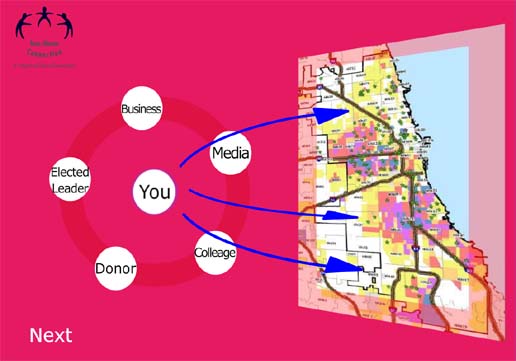
Here’s an article where I use maps to show where people need extra help.


It’s one of dozens where I show the four-part, information-based problem-solving strategy that I’ve piloted since forming the Tutor/Mentor Connection in 1993, and Tutor/Mentor Institute, LLC in 2011. It’s one where I point to a section of my library with hundreds of links to articles and research about poverty, racism, inequality and social justice. And, it’s one where I encourage others to share this information in their network, so more people find it and use it.


When I formed the Tutor/Mentor Connection the goal was to help every existing tutor/mentor program in the Chicago region get the operating resources, volunteers and ideas each program needs to grow. Here’s one of many articles that focus on the challenges of finding on-going funding for mentor-based programs.

My leadership of a single volunteer-based tutor/mentor program from 1975 to 1992 and a second program starting in 1993, along with my career in retail advertising with the Montgomery Ward corporation, provided the foundation ideas for the Tutor/Mentor Connection.

These experiences led me to understand that organized volunteer-based programs were a way to connect kids in high poverty areas to people, experiences and opportunities that were not readily available in their own family/neighborhoods, due to extreme poverty. Over time, I began to understand this as a form of ‘bridging social capital’ and visualized it in graphics like the one shown below.


Here’s one of many articles where I write about mentoring as a form of social capital.

In my work at Montgomery Ward’s corporate headquarters, from 1973 to 1990, I learned how my department, and other functional teams, supported more than 400 retail stores spread in 40 states. We helped each store be good at attracting customers, selling merchandise and earning a profit. (at least we tried)

Thus, when we formed the Tutor/Mentor Connection plan in 1993 our initial strategy was to learn what programs existed in Chicago, then to build a public awareness strategy that would attract more attention, volunteers and donors to each program, and to every high poverty neighborhood.


This article shows how we began publishing a Directory of programs in 1994 and how this information was used to support programs.

In this article I describe an on-going information-based planning process, that uses information like I’ve been collecting.

This could be led from institutions who have deep roots in geographic areas, like hospitals, universities, businesses, etc.

To do this research, someone needs to host a library like mine, with lists and directories of youth serving programs, then use that information in an on-going planning, program development and public education and resource generation strategy.

This is a missing step in most of the research I’ve seen for over 25 years. Researchers get the money to do the research and produce a report, with a big event that shares it with the public, but then don't have the money to continue to share that research and draw people together to use it over the following years.  What I do is aggregate links to that research and try to motivate people to use it to support youth tutor/mentor and learning programs in every high poverty area of cities like Chicago.

I encourage you to look at articles, like this, where I point to work being done by Daniel Max Crowley, who I met on LinkedIn.  He calls on universities to go beyond collecting research to helping communities use it. 

Over the past 30 years I've piloted actions that I share on my website and that anyone can borrow and apply in their own geographic area.

While I do find a few who host lists of youth serving programs, and even plot the list on interactive maps, I don’t find any with multi-year public awareness efforts aimed at drawing volunteers and donors to every youth-serving program within their city.  If you know of any who do this, please share the link and I'll add them to my library.

Furthermore, I don’t find any doing the deeper research asking “what youth programs exist in your area”.

Doing such research and maintaining a list of programs is a big job, especially in cities as large as Chicago. That’s why, for many years, I’ve tried to motivate universities to build a Tutor/Mentor Connection-based strategy on their campus. This is one of several articles where I share this invitation. 


Here’s an article where I show 30 years of effort to build strategic alliances with universities. You can see a wide range of interactions with many universities, but no long-term initiative led by, and funded by, any university.

Why wasn’t I successful?
Money. Reputation. Clout.

I never had much of any of these so when I met with someone at a university, I’d receive polite nods, with a “I’m already over extended. Find a younger professor.”

 The answer: ultra wealthy donors


Here's one of several articles where I show the potential of strategic investment by one or more wealthy donors.  Here's another

How might we find such donors? 


They are all around us. Do you watch NFL football games? How often do you hear players praised for their philanthropic work? I posted this on Twitter in 2024 sharing the idea from this post.

What if a university aggregated this information and then used it to recruit a group of athletes who support the same cause, to support a Tutor/Mentor Connection strategy at the university that was building the database of athlete involvement?

What if? What if? What if?

What if you share this article in your networks? Maybe someone will read it and adopt the idea and actually take the next steps.

That’s why I write these articles.

If you're connected to a university, or looking to put your name on a building at your alma mater, I hope you'll make this your mission.


Thanks for reading.
  There's a lot here, so bookmark the page and return often.  Then, look me up on LinkedIn, BlueSky, Instagram, Facebook, Twitter, etc. and let's connect.  If you're writing similar articles, which I hope you will, please share them.

Finally, if you're able, please visit this page and make a contribution to help fund my work. 

Saturday, July 11, 2026

Systems Thinking - Case Studies

 A few days ago I found this post on LinkedIn by Simon MacCormac. It shared a paper he wrote about Systems Thinking.  That's a topic I've written about often in the past. 

I started a conversation that ultimately asked, "Who is aggregating links to case studies showing the application of systems thinking in solving complex problems?"

Today Simon shared two links. The first is SCiO (Systems and Complexity Organization) which is building a library of case studies showing successful application of systems methodologies.  click here

Open the site and scroll through the collection.  If you're looking to solve a complex (or simple) problem you can find some ideas among these case studies.

The second is the Systems Thinking Case Study Bank, hosted by the UK Government. click here

I found the map shown above by scrolling through the list of articles on this page.  It was part of an interview with Caitlin Jones about a project aimed at reforming agricultural policy design.  There are many like this on the site.

I shared the graphic below and this article with Simon on LinkedIn. 


This shows my own application of systems thinking to visualize the many problems that need to be solved to make volunteer-based tutor/mentor programs available to K-12 youth in every high poverty neighborhood, then to help those programs build long-term connections between youth, volunteers and the program, that lead kids safely through school into adult lives.

Over the 30 years I've been leading the Tutor/Mentor Connection I've come to realize that this is only one of many challenges that need to be addressed. I show many of these on the right side of the graphic. Each one should have many people applying systems thinking practices to find solutions and make them available in every place where that problem persists.

That's a wicked problem. A huge challenge.  How to start? Collect information showing how others are already trying to solve the problem. Learn from that. Then begin innovating your own solutions.

As you do that share your ideas with me and others on LinkedIn and other social media platforms. We can learn from you as you learn from us.

If you appreciate what I'm sharing please help fund the work I'm doing. click here


Tuesday, July 07, 2026

What's Needed in an on-line Tutor/Mentor Program Locator?

This week I posted a new article on Substack.com that shows how I've been using GIG maps since 1993. I hope you'll read it. click here


I pointed to articles on the MappingforJustice blog, such as this one, that show examples of how I've used maps, and how others are doing similar work. 

And, I encouraged universities, and others, to borrow from my history  and build their own platform to support youth-serving programs in their community, and to help them reach more K-12 kids in every high poverty area.  

So what is involved.  Take a look at this concept map.

From left to right I show

a) boundary layers - city, zip code, community area, state and federal legislative districts, etc.

b) indicators layers - poverty, violence, poorly performing schools, etc.

c) programs - while I focus on tutor/mentor programs, this could also show arts/science, or other types of services which need to be located close to consumers, meaning many are needed throughout the city.  The programs layer can be sorted by age group served, type of program, time of day

sample map
d) this shows the goal of the program locator, and the Tutor/Mentor Connection/ Institute, LLC.  We want to help leaders use this to build support for existing programs and help new ones form where needed.  At the right is an example of a map view that can be created using the program locator, then adding additional annotation using Power Point

e) assets layers - in this section you can find sub sections for banks,  hospitals, universities, faith groups, drug stores, and insurance companies, with offices/branches in different locations throughout the city. 

sample map
Using this information a map of a small section of the city can be created that shows indicators of need, existing programs and assets who share the geography, and thus should be expected to support programs that help kids in that area.

Ideally an updated version of the Program Locator would find ways to pull data on assets from resource files on the Internet, making this a continually updated feature.

Two features were never built into the program locator.

a) I wanted to be able to connect data from indicators into a form that program leaders (or donors) could use to determine the need for tutor/mentor programs in specific neighborhoods.  Imagine clicking on a community area and getting a form showing number of kids; level of poverty, locations of existing programs, age group, type of program, etc. A program would just fill in their program information on the form and get a printed document to send to a donor.  View this PDF to see how a map might show the number of kids in a community area. 

b) I wanted to create another layer that could be used to raise money for programs shown on the map, and to track donations to do an analysis showing the different levels of funding going to different neighborhoods.  I describe what I have in mind on this page of my planning wiki.

In another concept map I've been sharing links to platforms that collect and map data, shown all the places in the country where people need extra help.


Most of these show where help is needed, but don't host a directory of organizations who are trying to solve those problems.  And, if a service needs to be close in order for people to participate, many such organizations would be needed in big cities like Chicago.

And they all compete with each other for scarce funding.

If you live in one of the cities where there are pockets of concentrated poverty and your newspaper headlines are showing "bad news" happening,  why not reach out to technologists in your community or at your local university.  Show them how I've been using maps and the Program Locator that was built in 2008. 

Encourage them to build a similar resource for your community.

If you'd like my help, just reach out on LinkedIn.

That's just one place where you can find me. Visit this page to see my social media links.

And, if you want to help me pay the bills, visit this page.