Showing posts with label violence. Show all posts

Monday, June 02, 2025

Still judged by the color of their skin

For the past few years I've delighted at seeing alumni of the tutor/mentor programs I led sharing photos of their own kids finishing high school, going to college and graduating.  That was what we hoped would happen. 

However, I'm continuing to see evidence that this success does not lessen the fear that these young adults will become victims of police violence and continued racism in the USA.

Below are two pages from my Sunday Chicago SunTimes, showing a story about how at "Illinois public universities, campus cops pull over Black drivers at higher rates."  Read it here.


This story was also on the WBEZ.org site.  You can find it here.  I found this link on my BlueSky feed. I hope you'll join me there. 

These articles show that "Black driver stops far exceed Black enrollment, population. At every Illinois four-year public college campus police department that reported stops in 2023, the share of Black drivers getting pulled over by campus police surpassed both the share of Black students enrolled in the institution in the fall semester of 2022 and the percentage of Black individuals in the surrounding community age 18 and up."

It is frightening to read stories of young Black men and women talking about being routinely stopped and ticketed by campus police and see the lack of response from police leaders. If you're a White parent, this is not something you worry about when you celebrate your child's high school graduation and college acceptance.

It should not be something Black and Brown parents fear either.  But is is.

My Sunday SunTimes also had this story showing how "Sports was a major catalyst in the drive for equity after George Floyd’s murder, but time has erased all progress.." 


A year ago I wrote a similar article to this one. It also pointed to athletes talking about racism.  I included the graphic below, in that article with the same headline as I'm using today. 


Last year's article also included this:

"This was reinforced yesterday when I watched baseball star, Reggie Jackson, talk about the racial discrimination that he faced when playing in the 1960s and 1970s.  You can view the video on Twitter  (x) at this link." 


I wrote, "These are among many things happening locally, nationally and globally that scare me."

Locally, I see stories daily showing Black and Brown kids and adults shot and often killed in intentional and random shootings.  I see growing evidence that our highest source of justice, the Supreme Court, is corrupt and under the control of religious extremists.  

I see growing evidence of other forms of hate, from antisemitism to growing attacks on the rights of LGBTQ individuals and families, too.  

Globally we're facing a range of complex problems from a climate crisis, to war and conflict and massive suffering. Yet, in too many places, including the USA, we're electing right-wing leaders who care less about the poor and the planet than they do about their wealth and privilege. 

Last June I wrote, "While we're hopeful that November's US elections will bring control of the US House back to Democrats and Progressives, expand the majority in the Senate, and keep the White House, that's no guarantee that any of the terrible things happening in the US and the world will change."

That did not happen. A radical, greedy, cruel and careless man was elected President, progressives lost control of both the House and Senate, and Drump (you know who) has filled the top levels of government with radical extremists.   

Read the rest of my June 2024 article at this link.

Expanding the choir of "those who care" and "those who speak out".

My own long term efforts to help well-organized, volunteer-based, non-school tutor and/or mentor programs grow in high poverty areas of Chicago, where adults connect with youth when they are as young as elementary school, then stay connected through high school, and into adult lives, has always aimed to influence what the volunteers do to get others involved, not just to be an effective tutor and/or mentor.

I created this concept map many years ago to show how volunteers who are recruited from a diverse economic-social-educational background to be tutors and mentors can grow their understanding of the challenges kids and families in high poverty, highly segregated, areas face.  For some, this can lead to a much greater use of their talents and networks to help solve the root-causes and lead to a much brighter future for our kids and families, and ourselves.

http://tinyurl.com/TMI-Vol-Growth-Cycle

This chart shows a cycle that takes place almost every day, in hundreds of locations throughout the country. However, it may be happening with less purpose and impact in most places, than is needed to change the flow of resources to tutor/mentor programs and the number of people who get involved in the broader issues.  

Read this article to see a full explanation of the concept map, and see how interns from universities created animated versions.

Create a learning organization.

I've been building the Tutor/Mentor library since the 1970s.  Over the past 10 years I've added more and more links to websites that focus on race, poverty, inequality, and prevention.  Here's a cMap where I point to that section of the library.


Each node on this concept map opens to a collection of websites with an extensive range of articles that I wish I had had when I studied history, social studies and political science in high school and college in the 1960s.

I point to several hundred volunteer-based youth-serving organizations on this page of the Tutor/Mentor Institute, LLC website.  I don't find many showing a strategy aimed at educating their volunteers and turning them into leaders...beyond building support for their own program.   I'd love to have some look at my blog and website and see the value of duplicating my efforts.  

Maybe this is happening in more places and I just don't see it. Thus, I invite readers to look at the websites in my library, or in their own communities, and point out pages that show how volunteer-based organizations are systematically educating their volunteers and motivating them to become evangelists who reach out and educate others.

If enough organizations did this consistently for 20 or 30 years it would grow a movement of people that might be large enough to actually create needed changes. 


Thanks for reading this.

I hope you're saying "ENOUGH" and that you'll read and share my articles, and my library, with family, friends, co-workers, and others in your own network.  Until more people are personally connected to these issues too few will speak out or do the organizing work needed to innovate long-term solutions.

Please connect with me on LinkedIn, Instagram, BlueSky, Facebook, Twitter and other sites (see links here). 

And, if you're able, visit this page and make a contribution to help me do this work.

Tuesday, October 22, 2024

Tell this story in your own words


In October 1992, this was the front page of the Chicago SunTimes. 

The headline said "7-Year-Old's Death at Cabrini Requires Action".  

I had led a volunteer-based tutor/mentor program serving Cabrini-Green 2nd to 6th grade kids since 1975, so this hit hard.  I was in the process of creating a new program to help kids who aged out of the first program after 6th grade have similar support to help them from 7th grade through high school.  We called that program Cabrini Connections and launched it in January 1993. I led it until mid 2011.

However, this shooting was the catalyst for our creating a second program as we launched our site-based program.  That was the Tutor/Mentor Connection (T/MC). It's goal was to help on-going, volunteer-based tutor, mentor and learning programs reach K-12 youth in every high poverty area of the Chicago region.


As I write today's article, most attention is focused on the coming election and a variety of natural and man-made disasters taking place in the USA and the world.  

So how do we get a share of that attention focused on this issue?

Over the weekend I had a chat with a person on BlueSky after I accepted his request to follow him. He asked me to tell him more about my work and after a short exchange he observed,  "Your vision of empowering others to build on your work is a powerful one. By sharing your knowledge and experiences, you’re setting the stage for future leaders to step up and make a difference." 

That prompted me to look at a few past articles where I had explained what I was trying to do and encouraged others to create their own versions of my articles, visual essays and videos, and share them in their own networks.


This led me to three articles that pointed to the "execution death of 11-year-old 'Yummy' Sandifer in 1994".  

The first was written in September 2012.

It included this paragraph:


Today on page 2 of the Chicago Tribune was a story about the execution death of 11-year-old ‘Yummy” Sandifer in 1994. The writer reports “Since Yummy’s death, other child victims have fallen within walking distance of where he was killed.” He goes on to say “Neither I nor anyone else has an easy solution to the city’s gunfire.”

I wrote, I have a suggestion if anyone cares to listen.

My article described my use of maps to show where tutor/mentor programs were most needed and where existing programs were located and included this message.

I wrote, 

Yet, had Chicago’s civic, political, philanthropic and political leaders provided the leadership and funding I’ve asked for every year since 1995 when I sent this Chicago Tutor/Mentor Program Directory to many of them, perhaps the Program Locator map that is now on my web site would show more “world class” programs in high poverty neighborhoods where kids could be connected with people, ideas and facilities that were inspiring them to learn and make the most of their lives.

It concluded with this message.

I have a clip file of dozens of editorials and newspaper columns written since 1990. I link to hundreds of blogs, research papers and other reports where people who are far more talented than I are sharing their ideas. 

My goal is that some of these writers look at my blogs and pdf essays and rewrite them using their own talents, but with a shared purpose of increasing the number of people who become involved and stay involved in this effort to help kids who need extra help for a long time.

I wrote about "Yummy" again in August 2019 after another Chicago Tribune editorial. I included copies of 1994 news articles about "Yummy's" death that I had saved. 

In that article I included one of the first maps the T/MC had created to show the Roseland area of Chicago where the shooting took place. 

I included this text.

Over the next 25 years our maps became more sophisticated yet the purpose remained the same.  I've been using maps in stories for 25 years, in my print newsletters, on my web sites, email newsletters and blog articles. If you read the stories about kids in poor schools, kids in gangs, kids in poverty and kids killing each other, and look at maps showing where these are taking place, you begin to understand that there is a need for solutions in many parts of the city.

I ended that article with this graphic and message.

What I started 25 years ago has left many footprints that others could follow, but as we enter 2020 I don't have any resources to go beyond maintaining an information base and posting articles like this to build on stories I see in the media and try to stimulate more strategic thinking by more people.

I followed that August 2019 article with another a few days later.  In it I wrote:

Since the mid 1990s I've been using visual tools to try to show "systems" of support that need to be available in every high poverty neighborhood, using graphics like the one at the right. I've embedded these in print newsletters, web sites and my blog articles, as well as in my own posts on social media.

I ended that article with the text below:

That's what I was trying to communicate in this graphic (which was created by an intern from South Korea, using the graphic shown below).  We talk about the "village" that needs to be involved in raising kids.  I show that the "village" consists of many groups.  Each needs to be looking at these graphics, and maps of their city, and asking "What can we do?" and "Where can we help?"

The graphic below shows this in two earlier visualizations.  The top one shows the network of support that helps kids grow from birth to adult lives. Where you are born determines the range of support and opportunities your network makes available to you. Kids born in high poverty don't have as diverse a network modeling hope and opportunity. 

I believe organized tutor/mentor programs can provide such support. They need to be available in every high poverty zip code.  Here's my list of programs that I'm aware of

The second graphic shows how any person can invite people she knows into a discussion using the graphics and articles I've been sharing.  Many need to be doing this. 

I mentioned that an intern from South Korea created the first graphic, using the second as inspiration. Youth from schools across the world could be looking at my graphics and then creating their own interpretations and sharing them via social media, YouTube, Instagram, BlueSky, Mastodon, etc. with the same goals as I have.  If you're doing that, let me know!

Chicago SunTimes 4-7-1997
While weekly media stories focus on one killing, there have really been thousands over the past 30 years.  At the left is a story from 1997 with a map we created at that time.  We did not have the Internet then to communicate these. Now we do.

Now we're heading into 2025, with a new President and with me several years older.

The three articles I've pointed to are just a fragment of the articles I've posted in print newsletters, email newsletters, blog articles and list serve conversations over the past 30 years.  I've digitized many of these conversations for any researchers who'd like to learn what I was doing and teach others to duplicate it, using their own time, talent and resources.

Visit this blog where I've posted stories showing work of interns who created videos, animations, blog articles and visualizations to show their  interpretations of my articles and graphics.   A site like this should be available in every city with areas of concentrated poverty.  

I'd be happy to talk with any group and explain the meaning of my graphics or show how they could be creating and sharing their own.

Here are the links to the three articles I referred to

- September 2012 - click here
- August 26, 2019 - click here
- August 31, 2019 - click here

Thanks for your interest.  Visit this page and find links to social media sites where you can connect with me. 

And, if you can help me pay the bills, please visit this page and make a contribution.  

Monday, March 11, 2024

So many years. So few changes.

Below is a concept map that I created several years ago to show planning that needs to be happening in Chicago and other places with high concentrations of persistent poverty.

Open the map and follow the links. Is this process happening in your city?  Do you have a similar concept map. Do you host open meetings on ZOOM or another platform? 

Today I read an article which I posted in March 2006, following shootings in the Englewood area of Chicago.  I'm re-posting it because the message then is still relevant now.

----- begin 2006 article -----

Over the past couple of weeks I’ve written about the shootings in Englewood, and expressed my concern that nothing will happen because there is no plan for engaging people from beyond poverty in this discussion in a process that creates ownership, understanding of the issues, and a dramatic increase the resources needed to build and sustain comprehensive tutor/mentor programs in poverty neighborhoods.

Yesterday, 3/21, I participated in an audio conference titled “Integrating Mentoring and After-School”, which focused on the need for mentoring programs in more places (like Englewood) and the potential for these programs being hosted in traditional after-school programs, such as Boys & Girls Clubs, YMCA’s, schools, etc. I encourage you to read the Policy Commentary at https://web.archive.org/web/20060324000257/http://www.forumfyi.org/files/ostpc11.pdf. In a few days you should be able to read a transcript of the actual audio conference.

Today, 3/22, I attended an event titled Non profit Leadership Challenges and Opportunities, which was hosted by the Donors Forum of Chicago 

Representatives from Compass Point, presented findings from a web survey that was distributed in eight cities over the past year. It’s titled “Daring to Lead, 2006” and you can download the full report at www.compasspoint.org.

The Daring to Lead presentation highlighted three surprising findings: a) 30% of executives leave their jobs involuntarily (either fired or forced out); b) Executive directors plan to leave their jobs but will stay active in the nonprofit sector; and c) A key driver of executive burnout is frustration with funders.

While the focus of the Donor’s Forum meeting was on succession planning, which is essential to leadership stability and organizational growth, the research constantly pointed to a lack of ACCESS TO CAPITAL as the primary challenge facing small and mid size non profits. Their was a rousing cheer when the need for funding non-restricted, long-term general operations funding was raised as a pivotal issue.

I agree. You cannot keep good leaders, or pay them well, or offer retirement, if you don’t have enough money to pay the rent on a regular basis. If you deal with this problem every day for 12 years, as I have, it tends to be a bit stressful.

How do these issues connect? If we want to do more to reduce the violence in neighborhoods like Englewood, we must provide better education and career opportunities. To do this we must increase the range of non-school programs that help kids succeed in school, stay safe in non-school hours, and move successfully to jobs and careers. The only time when work place adults are consistently available to be involved in long-term mentoring is after 5pm, when most after-school programs are not open.

Finally, it takes years to build good tutor/mentor programs and it takes a dozen years just to help a youth go from first grade through high school. It takes another 6-8 years before that youth is anchored on a career path. We can never support this process on a consistent basis in many locations if we cannot attract and keep key leaders for existing programs, let alone attract thousands more for the additional programs needed in Chicago and around the country.

We cannot do this without changing the funding paradigm.

So what do we do next?

There must have been over 500 people at the Donors Forum event. I don’t know how many were in the audio conference on Tuesday. However, most will never be in the same room, or the same discussion, at the same time again, because there was no strategy in evidence that gave participants and opportunity to connect with each other, and the presenters, in a facilitated, and open, on-going dialogs.

That’s why we created the Tutor/Mentor Connection. That’s why I invite anyone interested in tutoring/mentoring as a strategy for civic engagement and for increasing the understanding of poverty, to participate in the May and November Tutor/Mentor Leadership Conferences held in Chicago and on the Internet.

These are a meeting place for people to come together to present, reinforce, advocate and discuss information such as was presented over the last two days, in the context of the urgency that is reinforced by the media coverage of events like the shootings in Englewood.

Over the past two year’s we’ve also begun to develop a web conferencing process, so that people from distant locations can connect with people in Chicago, during the May and November conference periods, and so that people can stay connected on an on-going basis. As others host video and audio conferences, or face to face meetings such as today's event, my hope is that they will build web strategies that link the participants to each other, and to affinity groups such as the Tutor/Mentor Connection.

Our goal is to turn discussions into meetings, and meetings into a process of identifying tipping points, or ways to collaborate in activities, like leadership development, funding, volunteer recruitment, which effect all tutor/mentor programs in the country, not just our program in the Cabrini Green neighborhood of Chicago.
(note: if you're an architect, or work with complex decision support, we'd like to recruit you to map this process, to create a blueprint that people could follow to understand the problems and to be strategically involved in the solutions)

If you read back through the blogs I’ve posted in the past year, you’ll see that there have been many forums where information of importance was presented to a gathering of interested people.

I invite all of those who are creating and presenting research on poverty, workforce development, tutoring/mentoring, violence prevention, youth development, service learning, etc. to use the T/MC conferences and internet space as additional times and places where you can present your information, help more people understand it, and contribute to a long-term process that leads to the development of more and better programs that keep kids safe, successful in school and moving toward jobs and careers.

You can read about the conference at http://tutormentor.blogspot.com

---- end 2006 article -----

I've not hosted the Tutor/Mentor Leadership and Networking Conference since 2015, but still maintain an extensive web library and list of volunteer-based, Chicago area youth tutor, mentor and learning programs. I still post articles weekly, and social media posts daily, to draw visitors to the information in the library.  I keep looking for places to connect.

I created this graphic a few years ago around St. Patrick's Day, which is this week.  It says "We CREATE our own LUCK with the help of others."   It points to the four concurrent strategies that should be part of any planning process, which I've piloted since 1993.

I have not had resources to effective lead this strategy for many years, but keep sharing the ideas to inspire others to use them, in their own leadership.  

I'm on most social media platforms. Let's connect. (see links here)

You can help improve my own luck with a small contribution to help Fund the T/MI.  Visit this page and use the PayPal service. 

Thank you for reading.   May the Forth be With YOU!


Sunday, April 02, 2023

Crime and Violence in Chicago - Not New

As I read through today's Chicago Sun-Times I saw this article about the violent death of a student athlete from Crane Medical Prep High School on Chicago's Near West Side.

I thought I'd written about Crane HS in the past so did a search and found an article from 2008 with the headline of "Stop the Violence around Crane. Is Police State Mentality the Answer?"

Chicago is electing a new Mayor this Tuesday and that question seems to be dominating voter, and media, attention.

I encourage you to read what I wrote 15 years ago.

start - 2008 article ---

Today and yesterday the Chicago Sun-Times featured two-page stories in response to the shooting of one student near Crane High School, and the severe beatings of two others. You can read 3/17 here and 3/18 here.

These stories focus on the immediate response of setting up police escorts to get kids from one public housing area to the school, because the kids fear retaliation from kids who come from the neighborhood of the youth who was killed. That's a good show of force by our new Police chief. But it's not enough.

Last week an article in the Sun-Times focused on the new book chosen by the Mayor and the Public Library that everyone in Chicago is hoped will read. Why couldn't the choice have been the articles in the Tutor/Mentor Connection web library? Maybe if more people read these we can begin to get more people involved in solving the problems that plague our inner city neighborhoods.

I'm sure the stories about Crane High School are selling newspapers. But, why aren't the editorial and education writers doing stories about how kids who fear for their lives aren't going to be focusing on learning and how this affects the future of Chicago's economy because we're leaving too many kids behind who we need to fill positions in the 21st century workforce?

Why aren't we asking John, Hillary, and Barack what they are doing to engage people in this type of complex problem solving?

Over the weekend I browsed a publication in my library, titled "Wanted: Solutions for America. What We Know Works. An overview of research about what works (and what doesn't) in social service programs." This was published by the Pew Partnership for Civic Change in 2003 (2023 note: The specific link is no longer available. Look at the "solutions" reports in this 2008 web archive).

In the conclusion the article reads "Equipped with reliable information about what works, how do communities move forward to tackle tough problems? If so much is known about promising approaches, why haven't we come farther faster in connecting all citizens to hope and opportunity?"

As the authors of this report conclude, "Change doesn't just happen. It demands gifted and persistent leadership." There are no short term answers to this. Putting an army of police around this school won't solve this problem. It's a band aid. And it won't address the same problem in the area around many other big city public schools.


In many of my blog articles I use maps to illustrate the wide geographic areas where poverty is concentrated in Chicago, and where there are poor schools, gangs and youth on youth violence. I use graphics and concept maps to illustrate what the Pew Partnership was referring to when they said "We have focused too narrowly on specific interventions without confronting the complex interrelationship of issues in a community."

In this concept map of the Tutor/Mentor Connection library I illustrate the four components of the T/MC library, in an effort to draw together people from different silos, and in an effort to expand the thinking and problem solving ability of people who focus too narrowly on just one part of this problem.

Why mentoring? Because mentoring is an adult form of service learning. It can engage adults who don't live in poverty directly in the lives of youth who do. If we can support the growth of hundreds of volunteer based programs around the city we can grow the number of adults who begin to understand this problem, and begin to use their time, talent, networks and wealth to contribute to solutions.

I host a May and November conference with a goal of drawing people who read or write these articles and host these web sites, into face to face networking, and to create public awareness that draws more people to the Internet where they can read these articles and connect with others.

If you're in health care, law, higher education, engineering, workforce development, or if you're a leader, or volunteer, or donor who support tutoring/mentoring programs, I encourage you to use the conference as a meeting place (not offered since 2015) and the T/MC library as a resource for complex problem solving.

If you're the new head of the Chicago Police Department, I encourage you to look at the T/MC as your own strategy. There's no way you can keep an army of police around every high school in Chicago, throughout every school year.

The SunTimes articles show that the problems of gangs have plagued Chicago schools for 20 years and more. It's almost taken for granted. Why?

---- end 2008 article ----

I have not hosted a conference since 2015 due to lack of funds and competition for attention. Yet I still maintain a web library and use this blog and social media to try to draw users to that library. 

I use social media as a meeting place where people can connect and share ideas. 

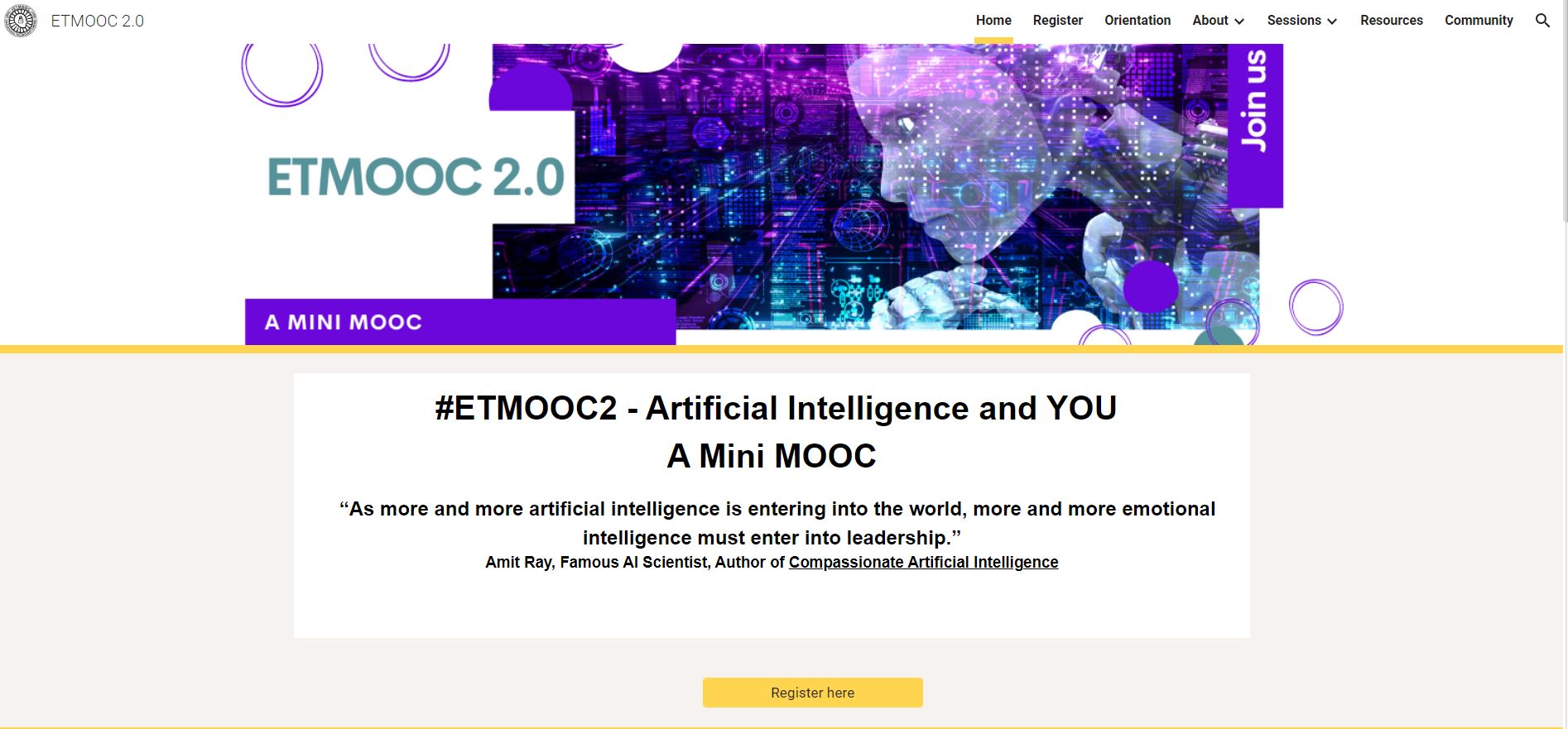
In many of the articles on this blog, dating back to 2013, I've written about cMOOCs, a form of on-line learning and network building. On April 12th a new gathering will look at Artificial Intelligence.  You can learn about this here and follow along on Twitter using the #ETMOOC2 hashtag. 


I point this out because whoever wins Tuesday's election is going to need to find innovative ways to connect people from this huge city with ideas and strategies, and resources, that lead to better solutions than I've seen in Chicago for the past 30 years. cMOOCs and social media connections are one strategy that can be applied. 

All are welcome to use the library and strategies I've shared.  I'd be happy to help coach any teams through the learning process.


Find me on Twitter, LinkedIn, Instagram, Facebook and Mastodon and maybe on Discord, too. See links here.


If you can help fund Tutor/Mentor Institute, LLC, please visit this page and send some support. 


Sunday, January 29, 2023

We can help kids through school, but can we keep them safe from racism?

The nation is once again shocked by a Black man being murdered by police. This time it was in Nashville, Tennessee.   Below is one of many Tweets that have prompted this post. If you have spent any time on this blog over the past 17 years you've seen this graphic, or a version of it.


This shows the goal of organized, volunteer-based tutor, mentor and learning programs, that operate in non-school hours out of neighborhood facilities, which help kids from high poverty areas move through school and into adult lives.  

If enough of these programs were available, in more places and consistently funded, constantly improving, etc., more kids would move through school without detours in the criminal justice system or in need of mental health support.

Here's a concept map that visualizes this same goal.  Note the text box in the lower left corner where I describe a role for volunteers who get involved as tutors and mentors.  


I've never believed that a single mentor can do everything needed to help a youth in high poverty area overcome all of the challenges they face growing up, which I've described in the concept map below. 

Yet I do believe a single volunteers can have a life changing impact.  It's just not predictable in what cases that will happen.  I know that the boy I first met in 1973 when he was in 4th grade says I had a huge impact on his life, but I know he had other people also helping him, including a strong mother.

I've seen countless stories over the past 30 years showing similar life changing mentoring and tutoring relationships.  

Here's what I'm struggling with.  Being Black in America puts you at risk, regardless of how successful you are in business, education, sports, etc.  

You can be running in a park, or driving down a street, and someone will single you out, just because of the color of your skin.  

One of the reasons I support volunteer-based tutor/mentor programs is that they can attract people who don't live in poverty, connect them in one-on-one, on-going relationships with kids who do live in poverty, then slowly educate them of the challenges kids and families face.  

This volunteer growth cycle visualizes that process. See it in this blog article. 


Every time you read about an act of violence or racism against people of color, I urge you to do homework to understand why that is happening and ways you can get involved to help prevent it from happening in the future.

Below are two graphics to consider:

Resource library - links to articles on race, poverty and inequality.  Click here to open

Connect people to this information.


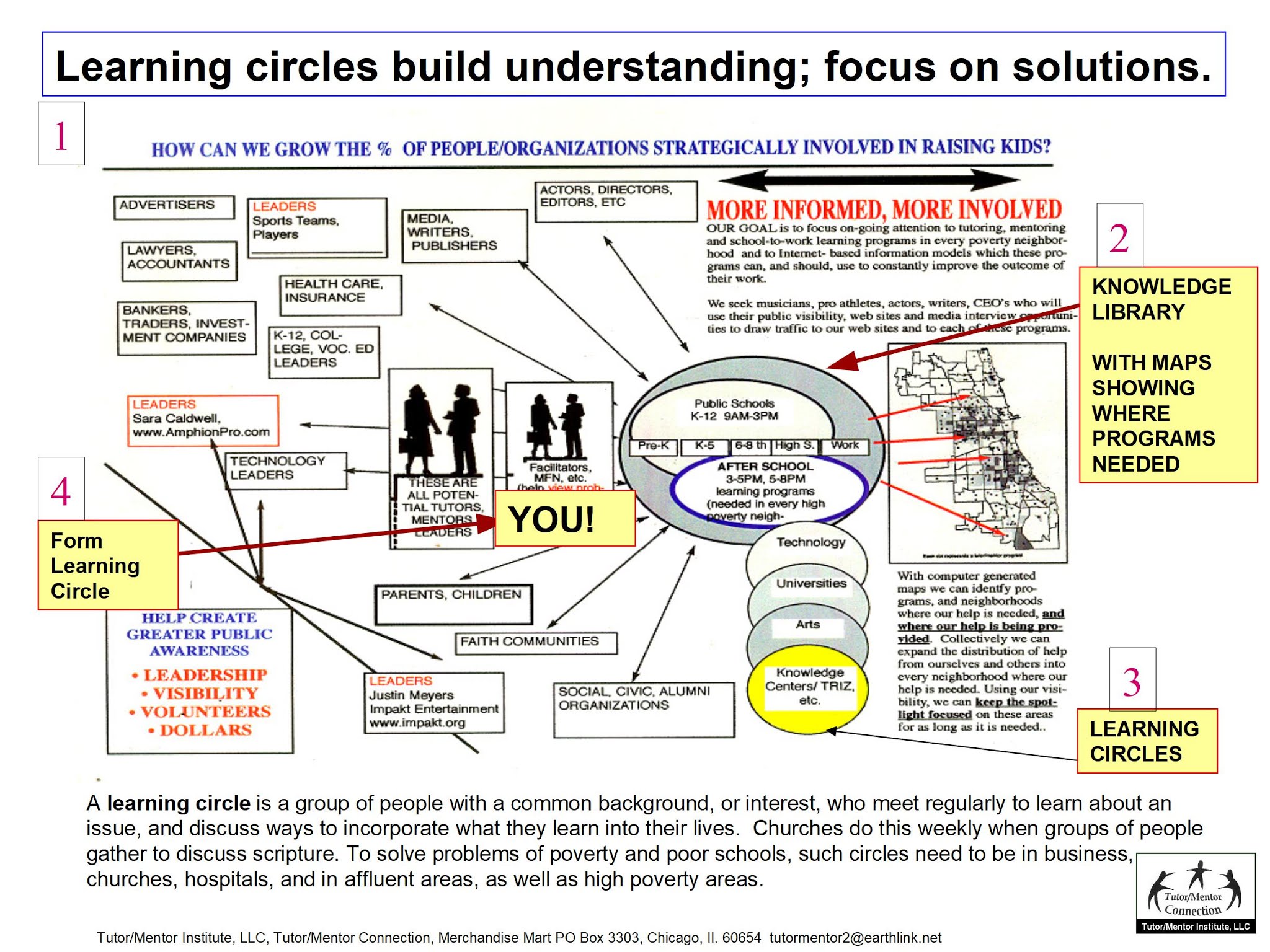
I've used versions of this graphic for over 20 years.  In the middle, the blue box represents libraries of information such as the one I host, and the many that I point to from my library.  You can find many more through your own web searches. You can even build your own.

At the right is a map of Chicago, showing high poverty areas, where kids need extra help and where tutor/mentor programs are most needed.  At the left is a list showing all the people who could be using the information in our libraries to find ways to help kids and families in high poverty areas.

However, as I look at another act of police violence against a grown man, I realize that the is more learning to be done.  Be the YOU in this graphic.


Many of the articles in my library represent starting points in a life-long learning journey.  In this graphic the big circle represents libraries of information. The smaller circles represent groups of people meeting regularly to read small segments of that library and discuss what it means and how they can respond.  In concept its very similar to classroom learning in schools across the world, or to religious circles, where people read scripture and reflect on its meaning.

If you're a volunteer in an organized tutor and/or mentor program working with kids in elementary, middle or high school, start thinking of what future they will have beyond college, getting a job and starting a family.

What can you and people you know do to assure that none of them will be a victim of racial injustice at some point in the future?

I don't know the answer.

I do know that learning can lead to understanding and can show models of how others are trying to solve these problems. And that should stimulate your own thinking of how you, and people you know, can help make a difference.

While this article, and much of my work, focuses on Black youth, racism and hate extend to Asians, Indigenous, Latino and religious groups.  In every case, understanding why and innovating solutions starts with building (or accessing) a library of information.  I encourage others to create their own concept maps and blog articles to draw people to such libraries.  Send me a link to your library and I'll add it to mine.  


Thank you for reading.  Let's do more than "thoughts and prayers" for victims of racism and police violence.  

Sunday, August 01, 2021

How Many Youth Programs Are Needed?

Since 1993 the Tutor/Mentor Connection and Tutor/Mentor Institute, LLC have tried to help comprehensive, mentor-rich, volunteer based youth programs grow in every high poverty neighborhood of Chicago and other cities. The graphic at the left visualizes this.

All of the articles on this blog since 2005 have focused on this goal.  They also focus on the graphic below.

This graphic is from a PDF presentation I wrote about in this article a few days ago. 

For every community area in Chicago planners need to look at the total number of youth, plus the percent who live in high poverty. In the example above, the 4178 number in the blue box is the number of kids, age 6-17, in poverty in one area. Below that is a number showing what percent of total kids this is in that neighborhood.

Green icons on my map are known youth serving organizations that provide various forms of volunteer-based tutoring and/or mentoring.  In almost every high poverty area there are too few programs based on the number of kids, but some neighborhoods have fewer than others.  In addition, some programs are much more sophisticated and well-organized than others.

In the article I wrote last week, I included maps showing 15 community areas considered "high priority" by the Chicago SunTimes, because of the high number of shootings and homicides in 2021.


Using this concept map anyone can open my list of programs, or view a list of programs operating in other cities. They can also use search engines provided by organizations like VolunteerMatch, to find youth serving organizations throughout the country.

Based on what an organization shows on their websites a volunteer, donor or parent should be able to decide to join or support an organization. At the same time, organizations should be able to look at what is offered by different programs to see if there are ideas they might borrow in their own program.

I said "should be able".  Just because a program is located near where a youth lives does not mean it has openings for additional youth.  You need to call and interview the program.  Furthermore, many programs don't provide much information showing their structure and types of services, so it's difficult to see if they are doing work another would want to duplicate.

But it's a start.  

Finally, as I said above, there are too few programs. Planners need to identify existing programs and develop on-going strategies to deliver talent and dollars to each, to help them constantly improve. Then they should determine where more are needed, and borrowing ideas from existing programs, start new ones.

The first question to ask is "Who is doing an analysis of my community area, and can I connect with them?  If the answer is "No one." then, the next question would be, "Who wants to be part of a group to begin this analysis?"


Thursday, July 29, 2021

Response to Chicago Violence: Do the Planning.


Growing violence in Chicago and other cities is prompting renewed calls for action.  The graphic at the left shows this is not a new problem. It dates back to 1992 and earlier.  If you've read many of the articles following shootings you've seen many calls for more non-school youth development and jobs programs.


This week I looked at a Chicago SunTimes web page titled "How Chicago's most violent neighborhoods are faring in 2021".  

This article featured 15 Chicago Community Areas, with a map and analysis such as you see in the graphic at the right.

I began using maps to show locations of non school, volunteer-based tutoring and/or mentoring programs in 1993 and to follow media stories about shootings, gangs, or poorly performing schools, with map stories that talked about the availability (or lack) of tutor/mentor programs in the area surrounding the incident.  

My goal has been that maps and the library of programs and research be used by leaders in business, government, colleges, hospitals, faith groups and government to fill high poverty neighborhoods with a wide range of  youth development and workforce development based tutor and mentor programs.

If leaders had embraced these strategies for the past 25  years the maps of the 15 neighborhoods profiled by the Chicago SunTimes would look far different.

I created a set of slides to look beyond the map analysis provided by the SunTimes.  I'm showing a couple below, and the entire presentation below that.

The North Lawndale Community area was ranked as the "deadliest priority neighborhood".  In my presentation I show the maps from the SunTimes at the top left, then a map of this neighborhood, from the Tutor/Mentor Programs map you can find in this article.  Green icons on the map are programs included in the T/MI directory. Click on the icon to get the name and website of each program.


On the T/MI map there is a blue box, showing the number of youth, age 6-17, considered "below poverty line". This is 2018 information provided by the Social Impact Research Center of the Heartland Alliance and is shown in this T/MI presentation.   I provide a brief summary showing the availability of programs and the number of youth in the area.  In the example I say "If there are three programs that each serve 50 youth regularly each week, totaling 150, and there are 2000 total youth in poverty in the area out of a larger number of total youth which could be double that, then the neighborhood clearly has a need for more programs.

Furthermore, if you look at the location of programs and the location of incidents of violence, you can see that while the neighborhood's existing programs reach some youth, they may not reach youth in different parts of the community area.  This is especially true if youth are unable to go safely from one part of the area to another because they would be crossing gang territories.

Here's another neighborhood: This is West Englewood.  I don't show any non-school tutor/mentor programs in this area (based on what I have in my database).  There are more than 2500 low income kids in the area, thus programs certainly would be a benefit.


My goal is that planning teams, consisting of all community stakeholders, including businesses, local schools, political leaders, media, etc., take part in this process, using my maps and the SunTimes maps, as a starting point (note, the Chicago Tribune, New York Times, and other media are also resources for these types of maps).  

There may be more youth serving programs in the area, offering different formats of support.  There may be programs serving one age level, such as elementary school, but no programs for middle school and high school.  My map does not show the multiple sites of some larger organizations, such as Big Brothers Big Sisters, nor does it show community-based mentoring matches.  

I've used this graphic for many years showing the need for a continuum of programs, support youth from birth-to-work, or for 20 years or longer.  Think of this as a blueprint for building a new skyscraper. On each page diagrams show a range of talent needed to accomplish the work on that page. Then the next page shows what work comes next, with what talent is needed.

Planning for each community area needs to create similar blueprints then action plans that generate resources and talent to make such programs available to a growing number of k-12 youth in the area. Such blueprints would show existing programs, the age group they serve, and the type of service provided.

From 1994 until 2011 my organization's survey attempted to segment programs by these categories. The image at the right shows a program locator built in 2004 (No longer active. View archive.) that you could use to determine what programs were in different zip codes.  The code for this could be a starting point for building a newer searchable program locator. 


Who else could be helping?  In the West Englewood area, where there are no programs shown, there are potential allies.   Below is a map view created using the Chicago Public School Locator.  


Western Avenue runs North to South along the West side of this community area. The map shows several auto dealerships and other businesses.  Each dealership is part of a lager corporate network, thus involvement of someone from a dealership on Western Avenue could provide access to financial and talent support from the corporate headquarters!  

I've only shown two out of 15 high priority community areas highlighted by the Chicago Sun Times.

To see the others, view this Slideshare presentation.  

If you are concerned about the quality of life and high poverty in these 15 community areas, or others where there also are huge needs for non-school youth support programs, then use this information and other resources that I share on the Tutor/Mentor Institute, LLC website to build a planning team, dig deeper into the information, create your own maps, and begin to work to fill your community area with world-class youth programs.

This article is one of more than 1000 that have been posted since 2005, focusing on this same topic. There's too much for most people to dig through if they're not willing to spend the time. However, if you consider this blog and the T/MI website as a "book" or a "curriculum" then it might not be so daunting to read a little at a time, then discuss what you read with others in your network.

I'd be happy to help you think through what you are reading.  Connect with me on Twitter, Facebook, Instagram and/or LinkedIn. (see links here). 

If you value what I'm sharing please consider a contribution to help fund the work.  

If you'd like to take a larger role and help rebuild the library and mapping platforms, or duplicate the process in your own community, let's connect.


Monday, November 30, 2020

Violence in Chicago. The Rest of the Story

Below is a screen shot from today's Chicago SunTimes, of a story about the high homicide rate in the 11th Police District of Chicago. The map shows where this district is in the city and shows that high levels of violence are mostly in the SW and NE side of the district, along with a section just East of Garfield Park.


Since 1993 when starting the Tutor/Mentor Connection (T/MC)  in Chicago I've tried to help comprehensive, non-school tutor, mentor and learning programs grow in all high poverty areas. I've maintained a database of such programs since then and developed what I call "The Rest of the Story" strategy to draw attention to programs in neighborhoods featured in local newspapers because of bad things that happen there.  

So today, I created a second graphic, using the SunTimes map, along with a screen shot from a Tutor/Mentor Program map that I launched in 2016.  It's shown below.


You can find my Chicago area map and my list of programs in this blog article.  I zoomed into the same area as shown on the SunTimes map, then created a screenshot.  On my map I show seven green icons, representing youth serving programs. Enlarge my graphic and you can see their names. 

It looks like there is only one youth organization, The Off The Street club in the lower left section and none in the upper right. There's a YMCA along Holman Avenue near Augusta, just outside of the high violence area in the NE corner of the map.  There are three programs in the SE part of the district and one to the far East.  

In 2018 I  used data from the Heartland Alliance to create a set of maps showing the number of high poverty youth age 6-17 living in each community area. The image below shows the West side of Chicago, including the 11th Police District.  There are about 9500 high poverty kids in the area  (and about 20,000 in total). The percent shown in the blue boxes represents what percent that number is of the total youth population in the area. 


I first created this report in 2011, so the numbers shown in yellow boxes are from then. The blue boxes are from 2018, thus you can see changes in population.


Last month I posted a story using the map at the left, emphasizing that commuters using Chicago's expressways or trains to come and go from the LOOP to the suburbs are riding right past high poverty neighborhoods.  

I've long encouraged people in these areas to work together to build public awareness campaigns that would motivate these people to spend time getting to know about the neighborhood, and its need for youth serving organizations, and showing the ones that already exist.  Then pick one or two and make a long-term commitment to help them be the best in the world at helping kids through school and into jobs.

Below is a map story created in the mid 1990s for a group on the West side of Chicago. I've highlighted in yellow the section where I encouraged them to set up a campaign along Grand Avenue that would attract commuter volunteers.  I've been preaching this story for many years.

However, too few have ever seen my map-stories or my blog.  Yet, youth from schools all over the Chicago region could be creating "Rest of the Story" strategy, following negative news they see in the local media.  In publishing their stories they could be adding their "call to action" to my own and those of others, resulting in greater visibility, and a greater flow of dollars to help youth programs grow where they are most needed.

The Mayor, the Police Department, local politicians, businesses, faith groups, universities, etc. all could have been doing this for the past 25 years.

If they had, maybe the story about the 11th Police District in today's paper would have been different.

If they start now, maybe those stories will be different in 10 or 20 years.

I'd be happy to help anyone think through this strategy.  I'm on Twitter and these social media platforms.  

If you value the stories and program list that I share please consider a small year-end contribution.  Click here to learn more.