Last Thursday I attended the UIC Urban Forum in Chicago. As I listened to speakers many of the ideas resonated with me and I began building a list of follow ups. I encourage you to visit the web site to see the list of speakers, read the white papers, etc.
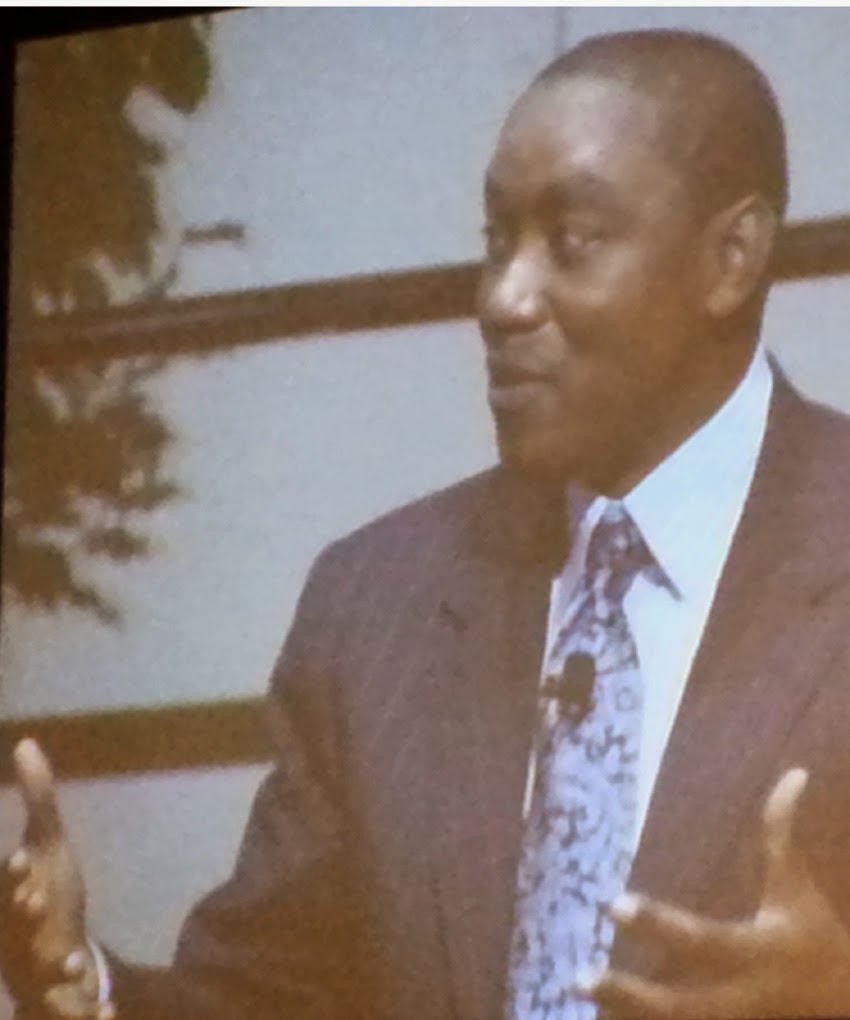
One of the panel members was NBA Hall of Fame Star Isiah Thomas, who grew up in Chicago. His comments were challenging. He said "This is about compassion, love and engagement, not a data issue." "When we start disinvestment in communities we take sports and play out of a community." "We're dancing around an issue of poverty and segregation." If you search #urbanforum on Twitter you can read some of what I heard.
Then on Friday and Saturday I attended the Chicago School of Data event hosted by the Smart Chicago Collaboration over two days people talked about collecting, organizing, mapping and visualizing data, with the important focus of "how do we use this data?".
I was one of a minority of the 300-plus participants of the Urban Forum who was posting Tweets to my timeline as the conference took place, using hashtag #urbanforum.
The organizers of the Chicago School of Data event hired bloggers, social media experts, film makers, etc who were active throughout both days collecting interviews and posting Tweets under the hashtag #chidata. Here's a RivetNews radio interview.
As I attended the Urban Forum I wrote in my notes "Where do people meet to follow-up on the various ideas shared by panel members?" The organizers of the Chicago School of Data event answered part of this by posting meeting notes in this Google Drive space.
Both web sites include agendas with bios of speakers. The School of Data event included a roster of participants, with links to their organizations. This seems like a real effort to support connections among participants.
I hope in future events organizers will use maps to show participation, such as the maps I've created to show who has been attending Tutor/Mentor Leadership and Networking Conferences. In fact, I created a concept map to suggest how participants in events like these could be mapped to show what areas they focus on, not just who they are.
If we can get more of the people who attend these events into on-going conversation and brainstorming, and bring donors in to help fund our individual efforts so we have time to participate in collective efforts, we can unleash a tremendous amount of talent toward making Chicago's future bright for all of its residents.
I encourage you to bookmark this article. As the hosts of these events provide follow up information I'll post links on this article.
Recap posted 9/24 on Escaped Notice blog
Showing posts with label public housing. Show all posts
Monday, September 22, 2014
Friday, October 29, 2010
Cabrini-Green Gone? Are you sure?
On Thursday I received a call from an CBS News research in New York, who was looking for people to talk to following a story in the Chicago Sun Times titled: Cabrini Green Last Stand
I agreed to reach out to alumni of Cabrini Connections for some people that he might talk to, but also challenged the reporter to dig deeper. I dug up the article myself and found that it had a really informative map. I encourage you to take a look at these.
The first map shows the entire Cabrini-Green area. You can see an icon showing the location of the final high rise that was the focus of the SunTimes article. If you click into the shaded sections you will get a pop up window, providing an estimate of the number of new units being built, and the number being set aside for public housing.
This is the section of two story buildings known as the "row houses". According to this article, "Only the 54 buildings of the row houses -- 586 units built in 1942 in the area between Chicago, Hudson, Larrabee and Oak -- are to remain at Cabrini. Eerily empty, a third are boarded up for rehab promised but now uncertain, as CHA reconsiders keeping this section 100 percent public housing."
Do the math. If 2/3 (390) of the row house unites are occupied and there are an average of 3 kids per family, that means about 1200 kids are living in that area. If 40% are 7th -12th grade, that means there are 480 who might benefit from a program like Cabrini Connections. We only have capacity for 80.
This is the Cabrini-North area. It "will host 700 units for former tenants out of 3,641 planned in at least 15 different developments."
This is the area called Cabrini Extension South, where "600 new units, one-third market-rate, affordable, and public housing" will be built.
This is the area North of Division Street called the William Green Homes. "This area will host 900 new units, one-third market-rate, affordable, and public housing, respectively. However, the first 100 units for former CHA tenants won’t be ready until 2013."
The Sun Times article said, "According to CHA's FY 2010 annual report to HUD, when Cabrini's transformation is complete, it will boast 5,141 privately developed, mixed-income units -- 1,200 as public housing, 932 for working-class families, and 3,009 for sale or rental at market rates."
Do the math. If there are an average of 3 kids per family, there will be 3600 low-income kids living in the public housing units in the "new" Cabrini Green. If the public thinks those kids are going to magically turn into high achievers, and their parents are going to be able to find well-paying jobs to support the education of their kids, they are not going to see any reason for tutor/mentor programs like Cabrini Connections to be in the area, and we won't be able to find the funds to continue to operate.
But the people building these projects are not educators, or social workers. Are the people who purchase the market rate properties, or the "working class family" properties, going to launch programs to connect the kids in the public housing units with mentors and learning resources that are available to their own kids?
Cabrini Connections has a history dating back to 1965 and operates a mentor-rich program (although poorly funded). When people in Cabrini Green realize there needs to be programs like this will they start from scratch and try to relearn all that we've learned over 45 years?
Take a look at the Cabrini Connections web site and meet our teens. We have nearly 80 7th to 12th grade student enrolled in the 2010-11 program. Most come from the Cabrini Green area. It will be six years before the 7th graders are high school graduates.
Here's a message posted on Facebook by one of our former students:
I graduated from the program back in 1992 and I'm troubled to hear that it is in financial peril and there is the real possibility that it can close. This program was a key factor in my finally seeing what possibilities lay out there for me to be successful.... They are currently doing that for so many of the Children of Cabrini and I'm not aware of many programs that do it in a grass root, no nonsense kind of a way.
I am throwing out a challenge. I will match donations to the program up to a total of $600. I wish I could do more. But unfortunately, I can't. However together, we can turn each others dollars into a significant amount. Facebook me if you want to join this challenge with me. If all goes well, we should be able to give the program at least $1200 dollars that they do not have right now and desperately need.
We hope many people will respond to this challenge so we can try to help them reach this goal and be prepared for the next step to college and a career.
With a good job, and a good education, they can choose where they want to live.
I agreed to reach out to alumni of Cabrini Connections for some people that he might talk to, but also challenged the reporter to dig deeper. I dug up the article myself and found that it had a really informative map. I encourage you to take a look at these. The first map shows the entire Cabrini-Green area. You can see an icon showing the location of the final high rise that was the focus of the SunTimes article. If you click into the shaded sections you will get a pop up window, providing an estimate of the number of new units being built, and the number being set aside for public housing.
This is the section of two story buildings known as the "row houses". According to this article, "Only the 54 buildings of the row houses -- 586 units built in 1942 in the area between Chicago, Hudson, Larrabee and Oak -- are to remain at Cabrini. Eerily empty, a third are boarded up for rehab promised but now uncertain, as CHA reconsiders keeping this section 100 percent public housing."Do the math. If 2/3 (390) of the row house unites are occupied and there are an average of 3 kids per family, that means about 1200 kids are living in that area. If 40% are 7th -12th grade, that means there are 480 who might benefit from a program like Cabrini Connections. We only have capacity for 80.
This is the Cabrini-North area. It "will host 700 units for former tenants out of 3,641 planned in at least 15 different developments."
This is the area called Cabrini Extension South, where "600 new units, one-third market-rate, affordable, and public housing" will be built.
This is the area North of Division Street called the William Green Homes. "This area will host 900 new units, one-third market-rate, affordable, and public housing, respectively. However, the first 100 units for former CHA tenants won’t be ready until 2013."The Sun Times article said, "According to CHA's FY 2010 annual report to HUD, when Cabrini's transformation is complete, it will boast 5,141 privately developed, mixed-income units -- 1,200 as public housing, 932 for working-class families, and 3,009 for sale or rental at market rates."
Do the math. If there are an average of 3 kids per family, there will be 3600 low-income kids living in the public housing units in the "new" Cabrini Green. If the public thinks those kids are going to magically turn into high achievers, and their parents are going to be able to find well-paying jobs to support the education of their kids, they are not going to see any reason for tutor/mentor programs like Cabrini Connections to be in the area, and we won't be able to find the funds to continue to operate.
But the people building these projects are not educators, or social workers. Are the people who purchase the market rate properties, or the "working class family" properties, going to launch programs to connect the kids in the public housing units with mentors and learning resources that are available to their own kids?
Cabrini Connections has a history dating back to 1965 and operates a mentor-rich program (although poorly funded). When people in Cabrini Green realize there needs to be programs like this will they start from scratch and try to relearn all that we've learned over 45 years?
Take a look at the Cabrini Connections web site and meet our teens. We have nearly 80 7th to 12th grade student enrolled in the 2010-11 program. Most come from the Cabrini Green area. It will be six years before the 7th graders are high school graduates.
Here's a message posted on Facebook by one of our former students:
I graduated from the program back in 1992 and I'm troubled to hear that it is in financial peril and there is the real possibility that it can close. This program was a key factor in my finally seeing what possibilities lay out there for me to be successful.... They are currently doing that for so many of the Children of Cabrini and I'm not aware of many programs that do it in a grass root, no nonsense kind of a way.
I am throwing out a challenge. I will match donations to the program up to a total of $600. I wish I could do more. But unfortunately, I can't. However together, we can turn each others dollars into a significant amount. Facebook me if you want to join this challenge with me. If all goes well, we should be able to give the program at least $1200 dollars that they do not have right now and desperately need.
We hope many people will respond to this challenge so we can try to help them reach this goal and be prepared for the next step to college and a career.
With a good job, and a good education, they can choose where they want to live.
Wednesday, July 01, 2009
CHA Mixed Income Buildings - Is it working?

The Chicago Tribune published this article yesterday under the title of CHA mixed-income building has class clash
Are you living in one of these mixed income buildings? Is it working? What's your story?
This is important to us at Cabrini Connections because much of the Cabrini-Green area where we draw kids from has been converted into mixed income buildings. Some of our kids live in these new units, and some still live in the Row Houses.
We only have 65-75 teens in the program each year, and some live in neighborhoods beyond Cabrini Green as a result of moving from the area, or as a result of parents making a strong case for us to accept their kids.
However, it's getting more and more difficult to attract funding because many donors think that tutor/mentor programs are no longer needed for the Cabrini Green area, due to the massive growth of mixed income, and upper income buildings in the area.
However, I'd like people living in these mixed income areas to think in a different way. If you read the Tribune article there is quite a bit of strife between the two income groups living together in these buildings. What if this causes more people to not want to purchase units. What will that do to property values?
Wouldn't it make sense to invest in programs that create some interaction and bonding between the youth and adults of the two economic brackets. That's what programs like Cabrini Connections do. They connect people who would not normally be interacting with each other.
Building managers don't have expertise in organizing these programs. We do. Wouldn't it make sense to invest in these types of programs, as an investment in your property values?
Think of it. If you paid $400,000 for a unit and the property value declines 20% because people don't want to buy, that's a $80,000 loss. Doesn't it make sense to donate a couple thousand dollars a year to a tutor/mentor program with the goal that you make mixed income housing work, so your property values go up?
What if you're not in the Cabrini Green area. What if you want to start a program like Cabrini Connections? Where do you find the ideas for building such a program, or people to mentor you and your leaders to help a new program grow from being a start-up, to being good, then being great?
That's what the Tutor/Mentor Connection offers. When you invest in Cabrini Connections, you're also investing in the T/MC. You're supporting our efforts to create a library of information that can help people in neighborhoods throughout the Chicago region, and in other cities, build programs that connect people from mixed income brackets, and different social and age brackets. You're investing in the diversity of the city.
What if the economy caused us to cease operations? Who would provide the services we provide?
Subscribe to:
Posts (Atom)


