Showing posts with label etmooc. Show all posts

Sunday, May 21, 2023

Learn more about Artificial Intelligence

Since March 2023 I've been participating with a group of educators who are learning about Artificial Intelligence and tools like ChatGPT.  You can browse articles here and hear to see what I've been sharing from this learning journey. 

Today on Twitter I saw a post about AI resources shared by Sheri Edwards, who lives in Washington state, along with a response from Kevin Hodgson, who lives in Massachusetts. 

I followed the link to the article Kevin shared, titled "Making Sense of Artificial Intelligence: The A to Z Guide" and found it to be a really well illustrated, easy-to-understand, guide.  

Another useful resource that Kevin is hosting is this list of ETMOOC2 blogs, which he is sharing on this Wakelet page.


I keep sharing this information with the goal that leaders of youth tutor, mentor and learning programs, as well as classroom educators and public leaders will use these ideas to build and sustain on-going efforts that reach K-12 youth in high poverty areas and help them move through school and into adult lives free of poverty.

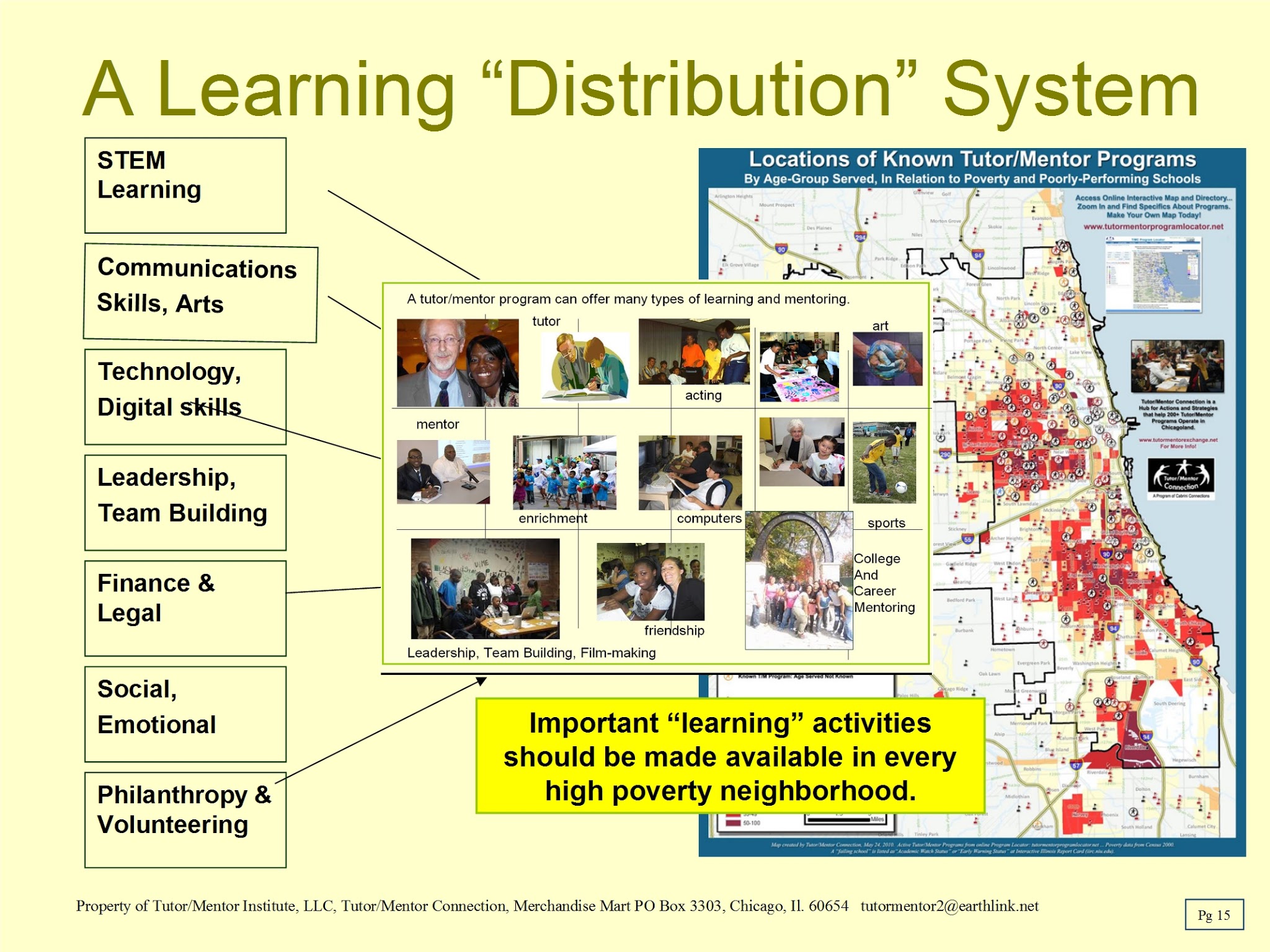
Below is a concept map created in the late 2000s that shows a learning goal that I tried to implement in the Chicago program that I was leading and that I encourage others to adopt.

Imagine how the future might differ if all kids in high poverty areas had full access to the Internet and digital learning, and were self-motivated to find articles and videos about Artificial Intelligence and tools like ChatGPT.  Imagine if teachers and mentors were helping them understand how to apply these tools to their learning, their work, and to community problem-solving.

That's a future to wish for.....and to work for. 

Thanks for reading. 


Find me on Twitter, Facebook, Instagram, LinkedIn and Mastodon. Let's connect. Let's share ideas like they do in #clmooc and #etmooc2.  

If you can help me pay the bills, please visit this page and send a contribution. 

Monday, May 15, 2023

Asking Artificial Intelligence to Predict Different Future

 In my posts over the past couple of months I've pointed to the #ETMOOC2 group which is learning about Artificial Intelligence and tools like ChatGPT.  Members are testing new tools and sharing ideas in a variety of platforms.  One writer that I keep pointing to is Kevin Hodgson, who shares ideas on his blog. Today, in this article, he wrote about a tool called TinyStorie, which can be used to write short children's stories.

Last week, in this article, he wrote about Google's AI platform, called Bard.

Last week on Twitter someone wrote about ChatGPT and I asked, "Has anyone asked ChatGPT to write about what the future would have looked like if Al Gore had been elected President of the U.S. in 2000?"

Image created using Scribble Diffusion

Today, I decided to see how Google's Bard works, and posted a set of questions.  Rather than point you to a Google doc where I've saved the responses I'm posting them below.  If you don't like the questions I asked, or the responses, then post your own questions and share the answers you get!

--- begin Bard questions and responses --- 

I asked Bard to write a story predicting what the world would be like today if Al Gore had won the 2000 US Presidential election.  

 If Al Gore had won the 2000 US Presidential election, the world would be a very different place today. Gore was a strong advocate for environmental protection, and he would have taken a much more aggressive approach to climate change than George W. Bush. He would have also been more likely to sign the Kyoto Protocol, an international agreement to reduce greenhouse gas emissions.

In addition, Gore was a strong supporter of education and healthcare. He would have increased funding for both of these important areas, and he would have made college more affordable for students.

Gore was also a more experienced politician than Bush. He had served as Vice President for eight years, and he had a deep understanding of the issues facing the country.

If Gore had been elected, the United States would have been a more progressive country. We would have been a leader in the fight against climate change, and we would have made significant progress in improving education and healthcare.

Of course, it is impossible to say for sure what would have happened if Gore had won the election. However, it is clear that the world would be a different place today if he had been elected.

Here are some specific examples of how the world might be different today if Al Gore had won the 2000 election:

  • The United States would have ratified the Kyoto Protocol, an international agreement to reduce greenhouse gas emissions. This would have helped to slow the pace of climate change and mitigate its effects.
  • Gore would have been more likely to invest in renewable energy sources, such as solar and wind power. This would have helped to reduce our reliance on fossil fuels and make our country more energy independent.
  • Gore would have been more likely to expand access to healthcare. He would have supported the creation of a public option for health insurance and made it easier for people to afford coverage.
  • Gore would have been more likely to invest in education. He would have supported increased funding for public schools and made college more affordable for students.
  • Gore would have been more likely to take a diplomatic approach to foreign policy. He would have been less likely to invade Iraq and Afghanistan, and he would have worked to build relationships with other countries.

Overall, the world would be a better place today if Al Gore had won the 2000 election. He was a more experienced and progressive politician than George W. Bush, and he would have made the United States a more just and sustainable country.

I then asked, "How would he have responded differently to the 9/11 terrorist attack? Would he have invaded Iraq? How would the world look now if he had not invaded Iraq?"

Al Gore would have responded differently to the 9/11 terrorist attack than George W. Bush did. He would have focused on building international cooperation to fight terrorism, rather than invading Iraq. He would have also been more likely to invest in homeland security and intelligence gathering.

It is unlikely that Al Gore would have invaded Iraq if he had been president in 2003. He was skeptical of the Bush administration's claims that Iraq had weapons of mass destruction, and he believed that the invasion would be a costly and unnecessary war.

If Al Gore had not invaded Iraq, the world would be a very different place today. The war in Iraq has been a major source of instability in the Middle East, and it has led to the deaths of hundreds of thousands of people. The war has also cost the United States trillions of dollars.

Without the war in Iraq, the United States would have been able to focus on other priorities, such as fighting terrorism and improving the economy. The world would also be a safer place, as there would be no ongoing conflict in Iraq.

Here are some specific examples of how the world might be different today if Al Gore had not invaded Iraq:
  • The United States would have been able to focus on other priorities, such as fighting terrorism and improving the economy.
  • The world would be a safer place, as there would be no ongoing conflict in Iraq.
  • The United States would not have spent trillions of dollars on the war.
  • The United States would not have lost the lives of hundreds of thousands of soldiers.
  • The United States would not have damaged its reputation in the world.

Overall, the world would be a better place today if Al Gore had not invaded Iraq. He would have made the United States a safer and more prosperous country.

I then asked, "If Al Gore had been elected president would we have the same level of polarization as we have today? Would Donald Trump have been elected President in 2016?"   

It is impossible to say for sure whether political polarization would be as severe today if Al Gore had been elected president in 2000. However, it is likely that the level of polarization would be lower.

Gore was a more moderate politician than George W. Bush, and he was more likely to reach across the aisle and work with Democrats. He would have also been less likely to engage in the kind of inflammatory rhetoric that has contributed to polarization in recent years.

It is also possible that Donald Trump would not have been elected president in 2016 if Al Gore had been president in 2000. Gore would have been a stronger incumbent, and he would have been more likely to unite the country after the 9/11 attacks.

Of course, it is also possible that polarization would have continued to grow even if Al Gore had been president. The factors that are driving polarization are complex and multifaceted, and they are not easily controlled by any one person.

However, it is clear that Al Gore would have been a different kind of president than George W. Bush. He would have been more moderate, more willing to compromise, and more likely to unite the country. These qualities would have made him a more effective president, and they would have helped to reduce polarization in the United States.

Finally, I asked,  "If Al Gore had been elected in 2000, and re-elected in 2008, would Barack Obama ever have been elected President? Would Joe Biden have been elected vice-president, then President in 2020?"   

It is impossible to say for sure whether Barack Obama would have ever been elected president if Al Gore had been elected in 2000 and re-elected in 2008. However, it is likely that Obama would have faced a much more difficult path to the presidency if Gore had been in office.

Gore was a popular and well-respected politician, and he would have been a strong incumbent. He would have also been able to draw on the support of the Democratic Party establishment. Obama, on the other hand, was a relatively unknown and inexperienced politician. He would have had to overcome a lot of obstacles to win the presidency.

It is also possible that Joe Biden would not have been elected vice president or president if Al Gore had been in office. Biden was a close ally of Gore, and he would have been less likely to run for office if Gore had been president.

Of course, it is also possible that Obama and Biden would have still been elected president and vice president, even if Gore had been in office. The political landscape is complex and unpredictable, and it is impossible to know for sure what would have happened.

However, it is clear that Al Gore would have been a different kind of president than George W. Bush. He would have been more moderate, more willing to compromise, and more likely to unite the country. These qualities would have made him a more effective president, and they would have made it more difficult for Obama and Biden to win the presidency.

---- end Bard questions --- 
 
What would your questions have been? I asked Bard. How would ChatGPT have answered?  Could this be turned into a short story using an AI tool like TinyStorie?  

One response stood out to me, which was,  "Gore was also a more experienced politician than Bush. He had served as Vice President for eight years, and he had a deep understanding of the issues facing the country."   On a national level this is probably true, but Bush had been Governor of Texas, and his father had been President. His political skills should have been better. 


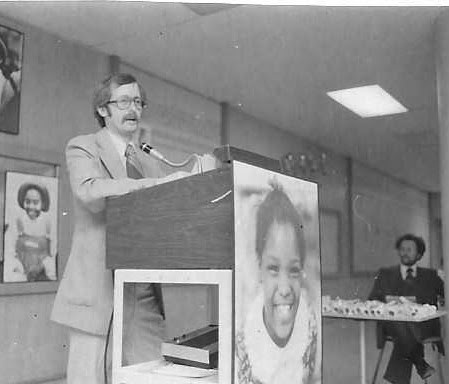
At the left is a photo of me addressing students and volunteers at one of our year-end graduation ceremonies, for the tutor/mentor program I led from 1975 to 1992. 

We did not have the Internet or Artificial Intelligence then. Desk top computers were just emerging. But I was asking our students and volunteers to imagine all they could do to assure that each student finished high school and went on to college, jobs and careers.  

Imagine if they had been able to use Bard, or ChatGPT to ask "What are all the things we need to know and do to assure that all kids born of living in a high poverty area today were starting a job and career by their mid 20s?"    

That's still a question we need to be asking today.  

Last week on Twitter Kevin Hodgson posted this 
I encourage you to visit the conversation and add your own thoughts.

Thanks for reading. Enjoy your week.  Please connect with me on Twitter, Facebook, Instagram, LinkedIn and Mastodon (find links here).

If you can spare a dime, visit this page and make a contribution to help fund the Tutor/Mentor Institute, LLC and the work I'm doing. 


Friday, May 05, 2023

Participation in on-line learning groups

Below is a map created to show where participants in the current #ETMOOC2 study of Artificial Intelligence are coming from. View it at this link

I first connected with this group in 2013 and have stayed connected for the past 10 years, via this and another group that uses #clmooc as it's hashtag.  

Below is an article I wrote in 2020, drawing from previous articles written about cMOOCs and on-line learning in the past 10 years. 

--- start 2020 article ----

See article
Last week I used the graphic at the right in an article about systems thinking. After writing it I shared it on Linkedin and so far it's recorded 3593 views and some great comments.

Yesterday I was updating links in my web library and found several that I added in 2013 while I was participating in the Education, Technology MOOC, or #ETMOOC.  Then a couple of hours later I was mentioned in a Tweet by Alan Levine, talking about the 2013 ETMOOC.

This prompted me to do a search for ETMOOC to see what I've posted about it. The first article on the list was from January 22, 2013, titled "Connected Learning. Collective Action".

I going to re-post that article here, with just a few updates and annotations, showing that the vision I had in 2013, and 20 years before that, is still live and kicking during Covid19 in 2020.

---- start of article ----
ETMOOC participants 2013
I’m one of more than 1600 people who have joined the Education Technology Mooc (#ETMOOC) since last Monday. I’ll be participating in the National Mentoring Summit in Washington, DC this Thursday and Friday where more than 500 people will be connected in the same building and for the same purpose.

This article aims to tie the two events together.

I have participated in several ETMOOC events since last Monday, including a session Sunday morning hosted by Dave Cormier, one of the first people to use the term MOOC. Visit this page to find the recording of Dave’s session, along with additional links to his ideas. (The site I originally pointed to is no longer on-line, but click here to read blogs by Dave, from 2006 till 2020) 

As part of the #ETMOOC, participants have written more than 850 blog articles and posted over 1000 Tweets. Most of these have focused on how MOOCs enable personal learning and introduce members and their ideas to each other. You can follow what you want. You can spend as much time reading blogs and taking part in live sessions as you want. You can share your own ideas and you can interact with others. Each participant controls their own learning experience. You can follow some of the blogs at this link.

This is complex problem
that I've focused on.
I’m interested in going beyond personal learning. My goal is to help build and sustain networks that use their learning, and the network, to innovate new ways to solve complex problems.

The ETMOOC network analysis map shows “who’s involved” based on history of participation. If you’ve followed previous articles on this blog you can see how I’ve been trying to map participation in Tutor/Mentor Conferences, the Ning group, and my Facebook and Linked in groups.


You’ll see how I focus on actions that grow the network, while growing the composition of the network at the same time. If we agree that It Takes a Village to Raise a Child, we need to get the business community strategically involved.

With this post I hope to stimulate a couple of different streams of thought.

1) How do we connect people participating in MOOCs with places where they become volunteers, donors, leaders who work together to solve complex social problems? (I'm still trying to do  this.)

2) How do we know if people from all sectors – e.g. business, philanthropy, government, community, religion, youth, etc. – are participating in our MOOCs or community of practice? (We still don't know, and I can't find many who are trying to find out.)

When I started the Tutor/Mentor Connection in 1993 I could have just focused on sharing ideas I had developed since 1975 when I first started leading a volunteer-based tutor/mentor program in Chicago. However, I did something different. I made a commitment to try to collect, organize and share experiences of others involved in this work. My goal was to collect “all that was known” about volunteer-based tutoring/mentoring, where such programs are needed, why they are needed, what it takes for them to have long term impact, how to support them, how to connect business and philanthropy to them, etc. This represents a vast library of knowledge and literally millions of people.

If you read the systems thinking article I wrote last week you can see this same thought. 

I’ve used Concept Maps to diagram my strategies, and the sections of my library. The diagram below shows the research section of the Tutor/Mentor Connection links library.

Open link to see current version of this cMap

If you click on any of the nodes you’ll go to a specific section of the web library which points to a variety of web sites with information related to that topic. Many of the web sites I point to have similar lists of web sites they point to. The collective knowledge that this represents is constantly expanding.

Every conversation uncovers
new ideas.
Every time I’m in a conversation, conference, or MOOC, I add sites I’m interested in to the library, which makes them immediately available to anyone else who visits the site. There’s an entire section of links in the Library to Knowledge Management articles, which is what I’m doing.

2020 --- I've been thinking about how to describe this lately. How many times are you in a conversation and someone says "Do you know about this or that piece of information?" It could be really valuable. Not just to me, but to others. Most of the time you leave the conversation and the information shared is lost. I've made a habit of taking notes, then adding links to what we talked about to the web library, so others could learn from it, too.

I realize I’ll never have “all that is known” but with 2000+ links, the library offers a massive pool of content for that could support a variety of MOOCs (and/or systems thinking projects).

By participating in ETMOOC and events like the Mentor Summit I hope to connect with others who will help with this process. I hope to find partners who will help organize future “tutor/mentor” MOOCs that draw people from the many different sites in my library into an on-line community that offers all of the personal learning and relationship building values that Dave Comier is describing in his presentation.

This is still not happening.

I hope to focus on strategies and actions that make mentor-rich programs available in more of the neighborhoods where they are most needed.

Tutor/Mentor Conference map

As that is happening, network analysis can show who’s participating and geographic maps can show what parts of the geography are represented. Such maps could demonstrate the growth of the network over a period of years, while enabling people from different sections of the library and/or different parts of the country or a big city like Chicago, to connect more easily with each other.
View articles
w this map. 


In one of the ETMOOC blogs I read last week the author told of how he feels others do a much better job of communicating ideas than he does. Then one day someone said “gee that’s really unique”.

I think others can communicate what I’m describing far better than I can. That’s one role interns have been taking. You can see some of their work here.

2020 - As people reach out and ask how can I help I invite them to read my blog articles, then create their own blog, or video, to share their  understanding of what I'm saying. Here's a concept map where I aggregate links to blogs where some people are doing that.

In this 2020 article I encourage students to take on this role, while doing learning from home. Any of the educators who I've met via cMOOCs could engage some of their students in this process, focusing on their own communities, not Chicago (unless they live in this area).


I hope that through the MOOCs and conferences I attend I’ll not only find people who share the same vision and strategy, but who will use their talent to help communicate these ideas in more creative, thoughtful and meaningful ways.

I’ll write more about this tomorrow before I head to the airport. I think this post is long enough already.

----- end rewrite of 2013 article -----

View at this link
Following the ETMOOC in 2013 I joined the CLMOOC and that has continued each year since then.  I've posted 61 articles that point to my participation in the CLMOOC including this article where I show my learning journey.

At the left is the most recent example of how we spark creativity among each other. I had posted an article about network building and Wendy Taleo from Australia included it in a visual poem she was working on with several others. See it here.  I circled where I show up on her journey map.

2020 EndPoverty Summit
in Chicago
At the right is a photo that shows participants at an EndPoverty Summit held in Chicago before Covid19 and hosted by Mayor Lightfoot. I wrote about it here and asked why we can't get non-profit youth program leaders, funders, researchers, volunteers and business partners....and youth/alumni, into on-going cMOOC type on-line conversations.

Covid19 has changed how people connect and communicate. #LearnAtHome and #WorkatHome are now becoming habits. Maybe it's time to make a new push to bring the youth and workforce development ecosystem into more integrated cMOOC-like engagement. 

For that to happen one or more visible leaders needs to step forward and champion the vision. And fund the work.

Today I was one of nearly 100 in a ZOOM meeting led by the Mayor's MyChiMyFuture youth initiative. The Mayor joined in for a few minutes. Maybe someone from that planning team will read this and begin to imagine ways to connect participants in this ecosystem, the same way the ETMOOC and CLMOOC people have been connecting and sharing ideas for many years.

Maybe someone will understand the need to  be mapping participation to show who's there, and who's missing.

---- end 2020 article ----

So far not too many people have added themselves to the #ETMOOC2 participation map.  And I'm not finding a discussion aimed at reaching more people, especially people of color and from under-represented sectors.  Here's the #ETMOOC2 website.  Take a look. There are lots of resources, and many examples of how learning groups can connect and share ideas.

If you're reading this and you want to help, create your own version of my concept maps, PDF essays and blog articles, and share them with your own network, in your own city or country. Maybe you'll be the one that some big shots listen to and provide the funds to do this work.

Connect with me on these social media channels.

If you can, make a contribution to help me pay the bills. Visit this page to use the PayPal button.  

Monday, May 01, 2023

AI tools I'm testing - try them yourself!

For the past few weeks I've been learning about different Artificial Intelligence tools from a group of educators using the hashtag #ETMOOC2.  If you scroll back through my past few articles you'll see what I've been sharing. Or just click the ETMOOC tag and scroll through those articles.  

Below I'm going to share some examples of how I've used AI.

First example is my April-May newsletter I wrote three sections using ChatGPT.  

One was about National Volunteer Week. Another was "steps to start a tutor/mentor program" and another was "information about tutor/mentor programs in Chicago".  Imagine you're a program leader, or a parent, who wants to know what tutor/mentor programs are in her zip code. Just post the question in ChatGPT. The first response might not be what you're looking for. You can keep asking, and keep fine tuning your question.  

It only took me a few minutes to generate the text that I used in the newsletter.

The next tool is one called Whimsical.  Below is a mind map created in just a few minutes. Click here to open and view. 


My Twitter friend Kevin Hodgson shared this short video with me, showing how to use the Artificial Intelligence feature to create a mind-map.  I asked the same question as I posted in the newsletter....show steps to start a tutor/mentor program. 

The AI quickly provided a list of steps, very similar to what is in my newsletter.  These are the first links to the right of the center box on the graphic.   I was able to rearrange the order a bit just by dragging text boxes to where I wanted them in the sequence and then I added some additional nodes to the mind map, which show to the right of the first column. Then I added some links to my website.  It's already something anyone could use if they are looking for ideas about starting a tutor/mentor program, or any kind of non-profit. 

One interesting feature about Whimsical is that in the FREE version I could invite a few other people to join my project, each helping to improve the content.  

Imagine a project team trying to map out a description of a problem and potential solutions. The AI can help you brainstorm and your team can add their thoughts and edit what the AI provided, with a visual record that you can share with others.  

Try it out yourself.  It took me less than 15 minutes to create what I'm sharing.

The next tool is called Scribble Diffusion. Open this link to see the graphic below. 

To create your own, open the home page. You will see an empty box with a space below where you can write a heading for your graphic.  In my first attempt I drew a horizontal "figure 8" which I use often to show information passing back and forth as a volunteer spends time in weekly tutor/mentor sessions.  I did not like the first graphic so tried again and you see the result above.    I used this graphic to add myself to the Padlet map for #ETMOOC2, which shows where participants originate from. 

Below are two more examples from Scribble Diffusion


I wanted to create an image showing a tutor and mentee.  I sketched the graphic at the left and hit "go" and received the picture at the right. I wanted something different so I added a book to my sketch and the result is shown below.


Imagine this as a potential ice breaker or creative activity with the student you're working with. You could each have the application open and each be creating graphics based on prompts you pass back and forth. Or you could be at one computer, each editing the sketch, to generate more and more versions. 

Here's one more AI called "NightCafe".

Sarah Honeychurch, an educator from Scotland shared this with me and others in the ETMOOC2 group.  I created the graphic at the right using the FREE version. Once I logged in I followed the prompts.

 I wanted to see how it would render one of my concept maps, so I pasted the strategy map shown at the left into the prompt box.  I had many choices of how this would be rendered, but my choices gave me the graphic you see above.

You can't really see any details from my concept map, but I think it's a nice piece of art!   Like the other examples shown above, you can play with this as much as you want.  Maybe if you're teaching students to start a company, they could use this to create art for t-shirts, coffee mugs, etc.  

These are just a few of the examples I've been seeing. Try it yourself!

Here's the link to the ETMOO2 event. 
Look at the Resources and Community page.  You can follow on Twitter or join the Discord Group.  

Ideas are being shared like "fireworks" bursting in the air. Each one sparks new creativity and new ways people might test these AI tools.

Thank you to everyone who has been sharing these ideas. I'm just scratching the surface of what is possible.  I hope these are interesting to you.

I'm on Twitter, Facebook, LinkedIn, Instagram and Mastodon. See links on this page

I used one of my "read my blog" graphics to create this graphic, using NightCafe.  Try it yourself?

Want to help me continue to share these ideas.? Visit this page and send a small contribution.

Thank you. 

Tuesday, April 25, 2023

How do we know when we are "there"?

Last night I had a detailed dream about the planning needed to solve complex problems.  I wish I had my brain plugged into some type of Artificial Intelligence that could capture such dreams, and put them into text and graphic articles.   Alas. I don't.

In the past few blog articles I've pointed to the #ETMOOC2 on-line learning community, which is digging deeper into AI and ChatGPT.  In past years I've posted dozens of articles showing the value of online learning groups like #CLMOOC and #ETMOOC, with the goal that people working in the non-school youth development, tutor and mentor ecosystem might create similar on-going learning networks.  

The goal would be "How can we do this better?" or how can we reach more k-12 kids with better programs that keep them safe and help them move through school and into adult lives where they can raise their own kids free of poverty?

Then, this morning, I thought of a graphic that I had created several years ago that shows steps in the journey from "here" to "there", or, "where we are now" to "where we want to be in the future".  I found an article and video that I wrote in 2017.  I'm re-posting it below.

---- start 2017 article ----

On Wednesday I posted an article about an on-line digital citizenship conversation, under the hashtag #digciz. I included a graphic from Kevin Hodgson's blog. Today I read another article from Kevin's blog, with a list of  issues he is interested in.

Here to There Steps
That prompted me to look at some past articles I'd written, including this one titled "Social Media and Civic Engagement" where I point to another article by Kevin. In that article I also included this graphic.

Each text box on this graphic represents an issue that I feel needs to be part of any discussion of local-global problems and solutions.  To me civic engagement is not just talking about who gets elected. It's talking to other people about ways we can use our own time, talent and dollars, as well as our votes, to bring solutions to some of those problems.

I created this graphic earlier this year to illustrate how much of our daily attention seems to be focused on what the new President of the US is doing, and what I and others should be doing to resist or elect different people to represent us.

However, the goal was to also show that we still need to provide daily attention to the problems we can solve, if we can just get more people to connect and work together, and more people to think creatively about ways they apply their time, talent and dollars.

In my article I wrote
I'm not just trying to motivate people to read and reflect. I'm trying to motivate on-going investments of time, talent and dollars to support the growth of youth serving organizations that help kids move through school and into jobs.
Thus, my list of topics is focused on problem solving, not just creating on-line discussions and learning opportunities.

I wasn't sure how to communicate what was shown on the graphic, so I decided to put the Lumin5 tool to a new test. Below is the video that I created.


Since 2005 interns have been looking at graphics and blog articles I've created and have then created their own interpretations, which I show here.  

I think one thing educators and leaders of non-school tutor/mentor programs could do is to encourage youth to look at articles like mine, Kevin's and the #digciz community, then build their own interpretations and share them on various social media platforms. Others could do this, too.

For instance, take a look at the visualizations created during this Sketch50 event.   Or look at the ideas Terry Elliott captured in the Storify on his blog.

There are thousands of people creating visualizations daily. I'd like to focus some continuously on the graphics and ideas I've been sharing for the past 20 years in an effort to bring more people and resources to efforts that make mentor-rich school and non-school learning and youth development opportunities available to k-12 youth in every high poverty area of the country.

What do you think? Are your students doing this?

---- end 2017 article ----

I really hope you'll look at the video.  I expand upon the thinking needed, and the resources, and timeframe, to help kids move through school and into adult lives.  

Then look at the structure of the #ETMOOC2 event. It connects people from around the world, on many platforms, in on-going learning about AI and ChatGPT.  This is a model that others could  use in drawing people together to solve complex problems.

YOU could be the person or organization in your community that is building this type of community, or borrowing from #ETMOOC2 to expand what you're already doing.

I hope you'll share this and connect with me on Twitter, Facebook, Instagram, LinkedIn and Mastodon (see links here). 

And, if you're able, send a small contribution to help me fund the work I'm doing. Click here to learn more. 


Thursday, April 20, 2023

Create a WebQuest to learn AI tools

I've been exploring Artificial Intelligence and ways to use tools like ChatGPT with educator friends who I met via the 2013 ETMOOC and CLMOOC on-line events.  This month we're using #ETMOOC2 as a hashtag that connects us and out ideas on Twitter.  

Today I saw a Tweet from Kevin Hodgson, showing a project he developed using AI tools.

I've been inspired by ideas Kevin has been sharing for the past 10 years. Skim some of these posts to see a few that I've referred to.  Kevin uses Twitter to share his thoughts and his blog to show his ideas in greater detail. I followed the link in today's Tweet to this article.   Then I went to the Twine tutorial that he pointed to. 

I think I could learn to use Twine, but that would not do much to attract more viewers to my websites and strategies. 

So how do I apply these tools to help people better understand and apply the ideas I've been sharing on this blog since 2005? 

In 2010 a volunteer who was looking at the resources of the Tutor/Mentor Connection wrote a blog article titled "Thinking like Google", in which he compared the T/MC to Google. He wrote,
It occurred to me that this forum is essentially modeled on a similar format as Google's. Tutormentorconnection.ning.com a) looks for information, or content, and people relevant to the cause of tutoring and mentoring; b) organizes, analyzes, and archives that information for future reference; and c) utilizes those references for targeted advertising campaigns, social networking, grant-writing, and the like. Even more to the point, this forum is a way of attempting to grow the idea of tutoring and mentoring to scale, or to a point where it "tips".
I've built a huge web library and I've created a variety of PDF essays over the past 28 years that are intended to help people learn ways to support the growth of volunteer-based tutoring, mentoring and learning programs in high poverty neighborhoods of Chicago and other places. While I point to these via email newsletters and social media, I've been looking for new ways to introduce these concepts.

How about a WebQuest?  How might I motivate students and adults to take Michael's advice and begin to journey through my web library, and as they do, share what they are learning with people in their own network, so they begin their own journey through this information.

How might they use some of the ideas and Artificial Intelligence tools that Kevin and others are sharing? 

Several years ago I began to learn about WebQuest and I created an animation to introduce this concept. You can view it on YouTube


Here are a couple of other animations introducing students to a web quest.

Making a map, class assignment, animation.

Doing a web quest.

Interns from various colleges in the US and Asia were on this journey for short bursts of time every year between 2006 and 2015.  I asked them to look at ideas I was sharing and then create their own interpretations. 

In 2015 I asked one intern to look at the "learning path" concept map that I show below. It was intended to help people learn about the ideas and resources I was sharing.


This video shows what was created (first using Prezi, then recorded for YouTube). 

Below is another concept map that shows how people can  use the information I've been aggregating.


I wrote about this "information flow" in this article.

For the past 20 years, I've been updating the links on the web library so all are working, and I keep adding new links. I also keep adding new blog articles herehere and here. Some of the articles written 10-15 years ago are as relevant today as they were then, so while it's important that you subscribe and follow new articles, it's also important that you visit the past and read some of those articles.

learning communities
focused on specific geography
Here's a visualization done by one of our past interns that illustrates the goal of supporting groups of learners in many sectors, who each look at maps to determine where youth and families need more help, and what programs are already operating in those areas.....who need constant support to constantly improve and stay available.

The links in the web library point to more than 200 youth serving programs in Chicago and others around the country. They point to research articles and to business and foundation web sites.  They represent a large ocean of ideas you can use to help programs grow, by borrowing good ideas already working in different places, rather than by starting from scratch on an on-going basis.

Most of the links in the web library point to other people's ideas, not my own. This emphasizes the purpose of the library for myself, and others. We can do more by borrowing ideas from others than from constantly starting from the beginning.

However, some links point to my own ideas, which I've communicated with illustrated presentations which you can find in my blogs, and on this page and in libraries at Scribd.com and SlideShare.

Intern projects from 2004-2015
Students from around the world could be looking at the web library, and my articles, and could be using Artificial Intelligence and other tools to create their own presentations to draw adults and other students from their own community into this information, and into actions that lead to the growth of more programs in more places that help kids move through school and into careers.  Visit this page and see how past interns working with me in Chicago have already been doing this.

Pages like mine could be hosted on the website of every college, high school and middle school, showing work their own students have done to visualize solutions to complex local and global problems.

Why is this important?  The graphic below says "how can we do this better?"


If you ask ChatGPT tell you about challenges facing kids in high poverty areas it would show you some of the reasons we need to be doing better at helping them.  That's why this is important.

If you're hosting a web library, and creating visualized articles to motivate people to visit your library and support youth serving organizations in your community, please share your links so others can learn from you. If you're interested in exploring this idea with me, let's connect. 

Find me on Twitter, Facebook or LinkedIn. I'm on Instagram and Mastodon, too. 


Monday, April 17, 2023

National Volunteer Week - April 16 to 22

National Volunteer Week, April 16 to 22, is an annual celebration of the countless individuals who selflessly donate their time and effort to make a difference in their communities. This week serves as an opportunity to recognize and thank volunteers for their contributions, while also encouraging others to get involved and make a positive impact.

As we journey through National Volunteer Week this year, there is no better time to shine a light on the importance of youth tutor mentor programs in Chicago and other cities across the country, and to encourage more volunteers to get involved in these initiatives.

Youth tutor mentor programs play a vital role in the development and success of young people, particularly those who come from underprivileged or disadvantaged backgrounds. These programs provide students with the resources and support they need to succeed academically and build important life skills. By volunteering with a youth tutor mentor program, you can help to provide young people with the tools and guidance they need to reach their full potential.

In Chicago and other cities, there are many different youth tutor mentor programs that are in need of dedicated and passionate volunteers. I maintain lists of Chicago youth serving programs, and point to directories that can help you find similar programs in other cities.

Whether you have experience working with children or not, there is a place for you to make a difference. By volunteering just a few hours a week, you can help to create a brighter future for young people in your community.

So as we celebrate National Volunteer Week this year, let's remember the importance of supporting youth tutor mentor programs, and let's encourage more volunteers to get involved. By working together, we can help to ensure that every young person has the resources and support they need to succeed, both in school and in life.

Disclaimer.  Most of this article was written using ChatGPT, an Artificial Intelligence tool.  I entered a prompt asking it to "Write introduction to article about national volunteer week with encouragement of volunteers to support youth tutor mentor programs in Chicago and other cities."  I've edited the response to what you read above.

Learn about these tools.    


Visit the #ETMOOC2 website and browse the resources, read the blog articles, and join the conversation. 

While you can get directly involved with a youth tutor, mentor and learning program you can become involved at a different level, to help make such programs available to k-12 kids in every high poverty area of Chicago and other cities.


This graphic is one of many on this blog and the Tutor/Mentor Institute, LLC website that visualizes the role different industries can take to distribute their skills and career opportunities through school and non-school programs so they reach kids in every high poverty area of Chicago and other places (along with non-poverty areas, too.)

Create your own blog to tell these stories.  Borrow from articles I've posted since 2005 and ask ChatGPT and other AI tools to help you create stories.  Teach young people to use these tools and you open vast new career options.

Thanks for reading.  You can connect with me an the #ETMOOC2 community on Twitter and other platforms.  That's a quick way to get involved.


I could not keep spreading these ideas if not for the continuing contributions of a small group of donors. If you can help, visit this page and send a contribution. 

Thursday, April 13, 2023

Take a Deep Dive into Artificial Intelligence with #ETMOOC2

Last night was the first ZOOM session for a collective learning event involving educators and others from around the world who are interested in exploring Artificial Intelligence and tools such as ChatGPT.  

I've seen a growing number of posts on social media about artificial intelligence and ChatGPT over the past year or so, but have not spent time learning about it.  After a February 2023 reunion of educators who connected in the 2013 ETMOOC virtual learning event a few leaders decided to organize a 'mini-MOOC', to help myself an anyone else who is interested, learn more.

The first ZOOM session was held last night (April 12). The featured speaker was Alec Couros, a professor of educational technology & media and the Director for the Centre of Teaching & Learning at the University of Regina, who was also the lead organizer of the 2013 ETMOOC. 

Alec finished his presentation with an AI generated video of him offering closing remarks.  I show that in the graphic below.


Below is the Google doc that Alec created as an outline for his presentation and as a study guide for anyone wanting to dig deeper.  


I circled a line on this page, with a link to the slides that Alec shared via ZOOM. The video of the session is available now on YouTube.

Below is another slide from Alec's slide deck showing  that people who become skilled at prompting AI tools like ChatGPT to give the information they are looking for can earn salaries of $175k to $335k.


Wow.  My son and I were driving to my doctor's appointment yesterday and he was telling me how he and his girlfriend wanted to make a lot of money. Neither has a college degree and both work at a local grocery store.  He spends a ton of time on his computers, playing video games, so I told him he should investigate the role of "prompt engineer".

The Google Doc that Alec shared has a huge set of links that could be a resource for anyone wanting to explore this potential career opportunity.  I certainly hope leaders of youth tutor/mentor programs will find ways to share this with their students.  You don't need a college degree to make a huge leap out of poverty by learning to use these AI tools.

My son said, "Don't you need to know how to code?"  Maybe. Maybe not.  Here's another slide from Alec's presentation.

Alec showed how some hand written, hard to read, instructions, led to a page of html code which produced the web page shown.  Imagine what you might create if you learned how to use AI more fluently.

That's the point. This is a journey of learning. It never stops.  The ETMOOC group are fellow travelers, learning with you, and offering help and friendship.  

I provided a link to the Google doc that Alec  used. Here's the link the the #ETMOOC2 website where you can sign  up to participate and see the weekly (every Wednesday, 8pm CST) ZOOM sessions that are scheduled.   Visit the Resources page and you'll find an extensive list of learning resources.  This will grow over the next few weeks, perhaps months and years.

Below is a Tweet from Susan Spellman, one of the #ETMOOC2 organizers. 
In this she posts a graphic explaining what a cMOOC is.

Connect, learn and share.

You can follow this learning group on Twitter, just by searching for #ETMOOC2 and scrolling through the Tweets.  You can also follow on Instagram.  I recommend Twitter since that's where most people are posting.  You can also search for #ETMOOC2 on Facebook and on LinkedIn, to see posts by organizers. 

Write about it, just like I am.

During the 2013 ETMOOC participants were encouraged to share ideas via blogs and many did.  That practice continues with ETMOOC2.  This page on SMORE (which I never heard of until this week) has a list of bloggers. 


I really appreciate the work the organizers, who are shown in the slide below, and on this page.  


So, that's a wrap up from last night's first ZOOM session. You're welcome to join in and participate as much, or as little, as you want.  Or just dig into the resources and/or create your own learning circle.

Today I asked ChatGPT to write a summary of the ETMOOC2 exploration of AI. Below is the response:

As an AI language model, ChatGPT was featured in the second iteration of the Educational Technology and Media Massive Open Online Course (ETMOOC2) exploring Artificial Intelligence. The first Zoom session took place on April 12, 2023. During the session, participants discussed various topics related to AI and its implications for society, education, and communication. ChatGPT was introduced as an example of a language model that uses machine learning to generate human-like responses to text-based inputs. Participants explored the capabilities and limitations of ChatGPT and discussed the ethical considerations surrounding the use of AI in various contexts. They also discussed the potential benefits of using AI in education and the challenges of integrating AI into the classroom. Overall, the ETMOOC2 exploration of AI and ChatGPT provided a space for participants to learn about AI and its applications, and to engage in meaningful discussions about the impact of AI on society and education.

In this write up I did not point to the slides where the ethical and education questions of Artificial Intelligence were discussed, but there is a full set of articles that focus on this and the life-changing impact AI will bring.  I asked ChatGPT to describe this.  Here's the response:

During the ETMOOC2 exploration of AI and ChatGPT, participants engaged in discussions about the ethical concerns related to the use of AI in education, particularly among educators. One of the primary concerns was the potential for AI to exacerbate existing inequalities in education. For example, if AI is used to grade student assignments or to recommend courses, it may be more likely to favor students who are already performing well or who come from privileged backgrounds. Participants also discussed the ethical implications of using AI to collect and analyze student data, such as tracking student progress or behavior. There were concerns about privacy and data security, as well as the potential for biases to be introduced into the analysis of this data. Another ethical consideration was the role of educators in ensuring that AI is used in a responsible and ethical manner. Participants emphasized the need for educators to be knowledgeable about AI and its implications, and to actively engage in discussions about how AI can best be integrated into the classroom. Overall, the discussions about ethical concerns related to AI in education highlighted the importance of ensuring that AI is used in a way that benefits all students and does not perpetuate existing inequalities.


See. I'm already using it.  Take some time to browse through the links, view a couple of videos, then start testing this for yourself.  It's all there.  Dig in.  Happy learning!