Thursday, April 20, 2023

Create a WebQuest to learn AI tools

I've been exploring Artificial Intelligence and ways to use tools like ChatGPT with educator friends who I met via the 2013 ETMOOC and CLMOOC on-line events.  This month we're using #ETMOOC2 as a hashtag that connects us and out ideas on Twitter.  

Today I saw a Tweet from Kevin Hodgson, showing a project he developed using AI tools.

I've been inspired by ideas Kevin has been sharing for the past 10 years. Skim some of these posts to see a few that I've referred to.  Kevin uses Twitter to share his thoughts and his blog to show his ideas in greater detail. I followed the link in today's Tweet to this article.   Then I went to the Twine tutorial that he pointed to. 

I think I could learn to use Twine, but that would not do much to attract more viewers to my websites and strategies. 

So how do I apply these tools to help people better understand and apply the ideas I've been sharing on this blog since 2005? 

In 2010 a volunteer who was looking at the resources of the Tutor/Mentor Connection wrote a blog article titled "Thinking like Google", in which he compared the T/MC to Google. He wrote,
It occurred to me that this forum is essentially modeled on a similar format as Google's. Tutormentorconnection.ning.com a) looks for information, or content, and people relevant to the cause of tutoring and mentoring; b) organizes, analyzes, and archives that information for future reference; and c) utilizes those references for targeted advertising campaigns, social networking, grant-writing, and the like. Even more to the point, this forum is a way of attempting to grow the idea of tutoring and mentoring to scale, or to a point where it "tips".
I've built a huge web library and I've created a variety of PDF essays over the past 28 years that are intended to help people learn ways to support the growth of volunteer-based tutoring, mentoring and learning programs in high poverty neighborhoods of Chicago and other places. While I point to these via email newsletters and social media, I've been looking for new ways to introduce these concepts.

How about a WebQuest?  How might I motivate students and adults to take Michael's advice and begin to journey through my web library, and as they do, share what they are learning with people in their own network, so they begin their own journey through this information.

How might they use some of the ideas and Artificial Intelligence tools that Kevin and others are sharing? 

Several years ago I began to learn about WebQuest and I created an animation to introduce this concept. You can view it on YouTube


Here are a couple of other animations introducing students to a web quest.

Making a map, class assignment, animation.

Doing a web quest.

Interns from various colleges in the US and Asia were on this journey for short bursts of time every year between 2006 and 2015.  I asked them to look at ideas I was sharing and then create their own interpretations. 

In 2015 I asked one intern to look at the "learning path" concept map that I show below. It was intended to help people learn about the ideas and resources I was sharing.


This video shows what was created (first using Prezi, then recorded for YouTube). 

Below is another concept map that shows how people can  use the information I've been aggregating.


I wrote about this "information flow" in this article.

For the past 20 years, I've been updating the links on the web library so all are working, and I keep adding new links. I also keep adding new blog articles here, here and here. Some of the articles written 10-15 years ago are as relevant today as they were then, so while it's important that you subscribe and follow new articles, it's also important that you visit the past and read some of those articles.

learning communities
focused on specific geography
Here's a visualization done by one of our past interns that illustrates the goal of supporting groups of learners in many sectors, who each look at maps to determine where youth and families need more help, and what programs are already operating in those areas.....who need constant support to constantly improve and stay available.

The links in the web library point to more than 200 youth serving programs in Chicago and others around the country. They point to research articles and to business and foundation web sites.  They represent a large ocean of ideas you can use to help programs grow, by borrowing good ideas already working in different places, rather than by starting from scratch on an on-going basis.

Most of the links in the web library point to other people's ideas, not my own. This emphasizes the purpose of the library for myself, and others. We can do more by borrowing ideas from others than from constantly starting from the beginning.

However, some links point to my own ideas, which I've communicated with illustrated presentations which you can find in my blogs, and on this page and in libraries at Scribd.com and SlideShare.

Intern projects from 2004-2015
Students from around the world could be looking at the web library, and my articles, and could be using Artificial Intelligence and other tools to create their own presentations to draw adults and other students from their own community into this information, and into actions that lead to the growth of more programs in more places that help kids move through school and into careers.  Visit this page and see how past interns working with me in Chicago have already been doing this.

Pages like mine could be hosted on the website of every college, high school and middle school, showing work their own students have done to visualize solutions to complex local and global problems.

Why is this important?  The graphic below says "how can we do this better?"


If you ask ChatGPT tell you about challenges facing kids in high poverty areas it would show you some of the reasons we need to be doing better at helping them.  That's why this is important.

If you're hosting a web library, and creating visualized articles to motivate people to visit your library and support youth serving organizations in your community, please share your links so others can learn from you. If you're interested in exploring this idea with me, let's connect. 

Find me on Twitter, Facebook or LinkedIn. I'm on Instagram and Mastodon, too. 


Monday, April 17, 2023

National Volunteer Week - April 16 to 22

National Volunteer Week, April 16 to 22, is an annual celebration of the countless individuals who selflessly donate their time and effort to make a difference in their communities. This week serves as an opportunity to recognize and thank volunteers for their contributions, while also encouraging others to get involved and make a positive impact.

As we journey through National Volunteer Week this year, there is no better time to shine a light on the importance of youth tutor mentor programs in Chicago and other cities across the country, and to encourage more volunteers to get involved in these initiatives.

Youth tutor mentor programs play a vital role in the development and success of young people, particularly those who come from underprivileged or disadvantaged backgrounds. These programs provide students with the resources and support they need to succeed academically and build important life skills. By volunteering with a youth tutor mentor program, you can help to provide young people with the tools and guidance they need to reach their full potential.

In Chicago and other cities, there are many different youth tutor mentor programs that are in need of dedicated and passionate volunteers. I maintain lists of Chicago youth serving programs, and point to directories that can help you find similar programs in other cities.

Whether you have experience working with children or not, there is a place for you to make a difference. By volunteering just a few hours a week, you can help to create a brighter future for young people in your community.

So as we celebrate National Volunteer Week this year, let's remember the importance of supporting youth tutor mentor programs, and let's encourage more volunteers to get involved. By working together, we can help to ensure that every young person has the resources and support they need to succeed, both in school and in life.

Disclaimer.  Most of this article was written using ChatGPT, an Artificial Intelligence tool.  I entered a prompt asking it to "Write introduction to article about national volunteer week with encouragement of volunteers to support youth tutor mentor programs in Chicago and other cities."  I've edited the response to what you read above.

Learn about these tools.    


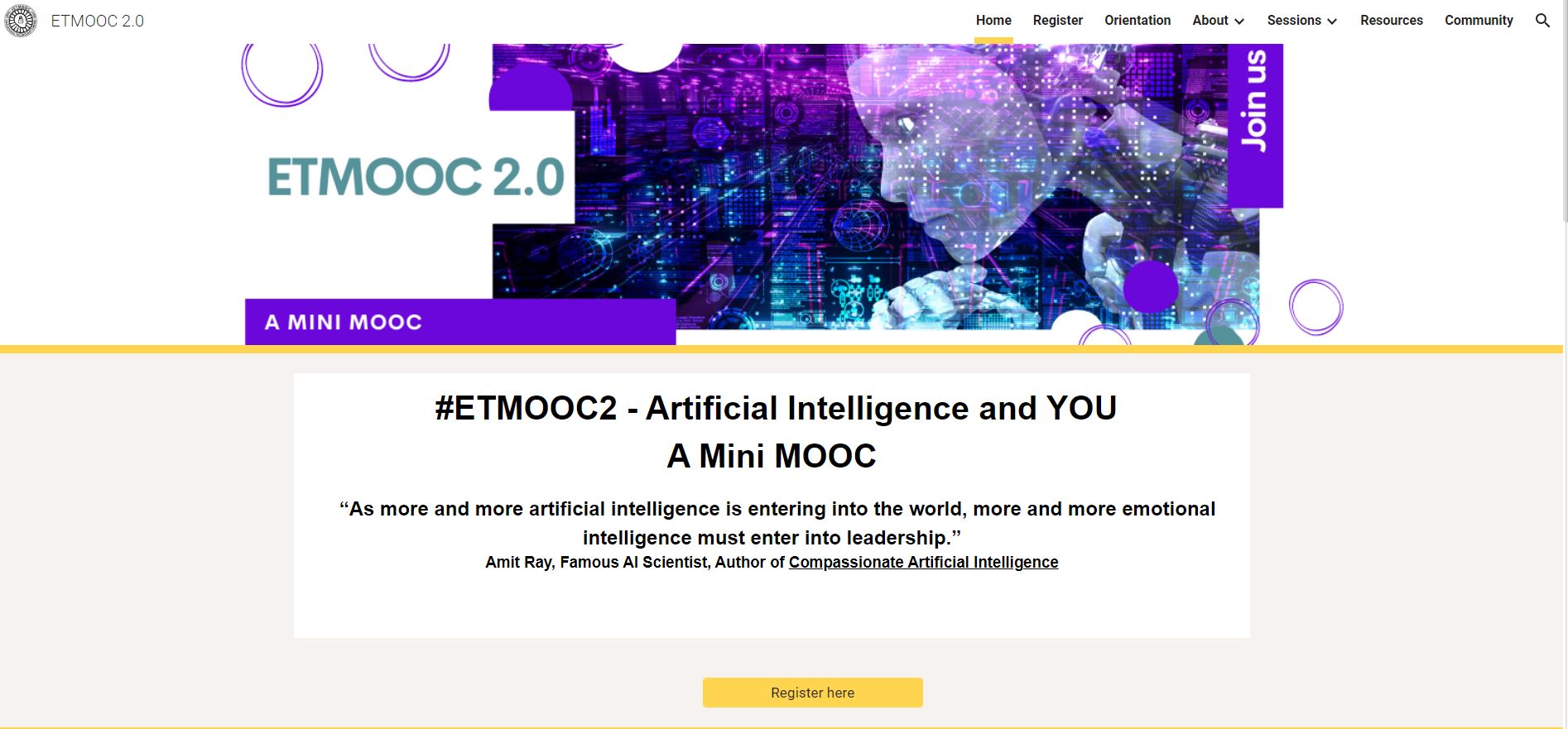
Visit the #ETMOOC2 website and browse the resources, read the blog articles, and join the conversation. 

While you can get directly involved with a youth tutor, mentor and learning program you can become involved at a different level, to help make such programs available to k-12 kids in every high poverty area of Chicago and other cities.


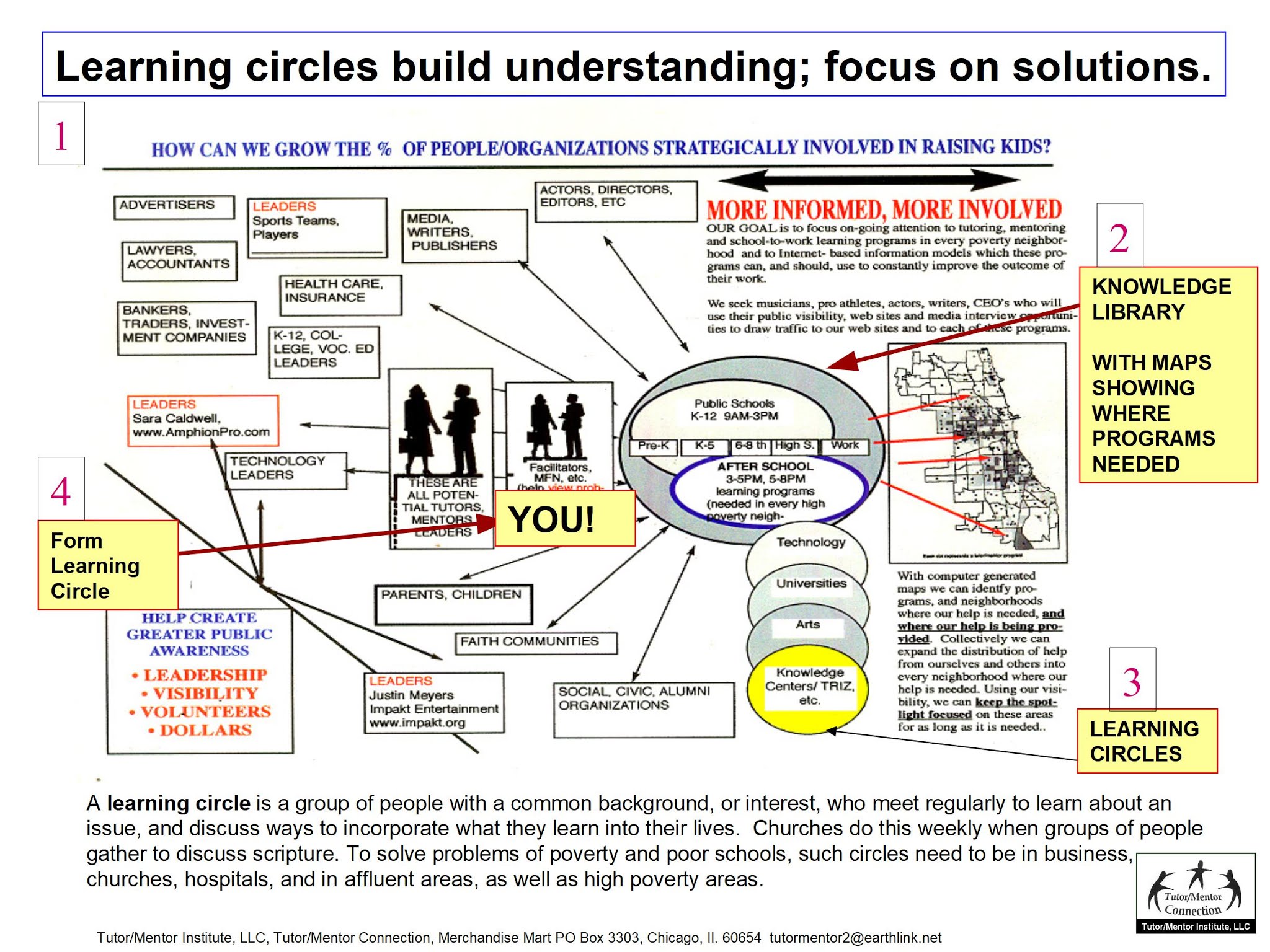
This graphic is one of many on this blog and the Tutor/Mentor Institute, LLC website that visualizes the role different industries can take to distribute their skills and career opportunities through school and non-school programs so they reach kids in every high poverty area of Chicago and other places (along with non-poverty areas, too.)

Create your own blog to tell these stories.  Borrow from articles I've posted since 2005 and ask ChatGPT and other AI tools to help you create stories.  Teach young people to use these tools and you open vast new career options.

Thanks for reading.  You can connect with me an the #ETMOOC2 community on Twitter and other platforms.  That's a quick way to get involved.


I could not keep spreading these ideas if not for the continuing contributions of a small group of donors. If you can help, visit this page and send a contribution. 

Thursday, April 13, 2023

Take a Deep Dive into Artificial Intelligence with #ETMOOC2

Last night was the first ZOOM session for a collective learning event involving educators and others from around the world who are interested in exploring Artificial Intelligence and tools such as ChatGPT.  

I've seen a growing number of posts on social media about artificial intelligence and ChatGPT over the past year or so, but have not spent time learning about it.  After a February 2023 reunion of educators who connected in the 2013 ETMOOC virtual learning event a few leaders decided to organize a 'mini-MOOC', to help myself an anyone else who is interested, learn more.

The first ZOOM session was held last night (April 12). The featured speaker was Alec Couros, a professor of educational technology & media and the Director for the Centre of Teaching & Learning at the University of Regina, who was also the lead organizer of the 2013 ETMOOC. 

Alec finished his presentation with an AI generated video of him offering closing remarks.  I show that in the graphic below.


Below is the Google doc that Alec created as an outline for his presentation and as a study guide for anyone wanting to dig deeper.  


I circled a line on this page, with a link to the slides that Alec shared via ZOOM. The video of the session is available now on YouTube.

Below is another slide from Alec's slide deck showing  that people who become skilled at prompting AI tools like ChatGPT to give the information they are looking for can earn salaries of $175k to $335k.


Wow.  My son and I were driving to my doctor's appointment yesterday and he was telling me how he and his girlfriend wanted to make a lot of money. Neither has a college degree and both work at a local grocery store.  He spends a ton of time on his computers, playing video games, so I told him he should investigate the role of "prompt engineer".

The Google Doc that Alec shared has a huge set of links that could be a resource for anyone wanting to explore this potential career opportunity.  I certainly hope leaders of youth tutor/mentor programs will find ways to share this with their students.  You don't need a college degree to make a huge leap out of poverty by learning to use these AI tools.

My son said, "Don't you need to know how to code?"  Maybe. Maybe not.  Here's another slide from Alec's presentation.

Alec showed how some hand written, hard to read, instructions, led to a page of html code which produced the web page shown.  Imagine what you might create if you learned how to use AI more fluently.

That's the point. This is a journey of learning. It never stops.  The ETMOOC group are fellow travelers, learning with you, and offering help and friendship.  

I provided a link to the Google doc that Alec  used. Here's the link the the #ETMOOC2 website where you can sign  up to participate and see the weekly (every Wednesday, 8pm CST) ZOOM sessions that are scheduled.   Visit the Resources page and you'll find an extensive list of learning resources.  This will grow over the next few weeks, perhaps months and years.

Below is a Tweet from Susan Spellman, one of the #ETMOOC2 organizers. 
In this she posts a graphic explaining what a cMOOC is.

Connect, learn and share.

You can follow this learning group on Twitter, just by searching for #ETMOOC2 and scrolling through the Tweets.  You can also follow on Instagram.  I recommend Twitter since that's where most people are posting.  You can also search for #ETMOOC2 on Facebook and on LinkedIn, to see posts by organizers. 

Write about it, just like I am.

During the 2013 ETMOOC participants were encouraged to share ideas via blogs and many did.  That practice continues with ETMOOC2.  This page on SMORE (which I never heard of until this week) has a list of bloggers. 


I really appreciate the work the organizers, who are shown in the slide below, and on this page.  


So, that's a wrap up from last night's first ZOOM session. You're welcome to join in and participate as much, or as little, as you want.  Or just dig into the resources and/or create your own learning circle.

Today I asked ChatGPT to write a summary of the ETMOOC2 exploration of AI. Below is the response:

As an AI language model, ChatGPT was featured in the second iteration of the Educational Technology and Media Massive Open Online Course (ETMOOC2) exploring Artificial Intelligence. The first Zoom session took place on April 12, 2023. During the session, participants discussed various topics related to AI and its implications for society, education, and communication. ChatGPT was introduced as an example of a language model that uses machine learning to generate human-like responses to text-based inputs. Participants explored the capabilities and limitations of ChatGPT and discussed the ethical considerations surrounding the use of AI in various contexts. They also discussed the potential benefits of using AI in education and the challenges of integrating AI into the classroom. Overall, the ETMOOC2 exploration of AI and ChatGPT provided a space for participants to learn about AI and its applications, and to engage in meaningful discussions about the impact of AI on society and education.

In this write up I did not point to the slides where the ethical and education questions of Artificial Intelligence were discussed, but there is a full set of articles that focus on this and the life-changing impact AI will bring.  I asked ChatGPT to describe this.  Here's the response:

During the ETMOOC2 exploration of AI and ChatGPT, participants engaged in discussions about the ethical concerns related to the use of AI in education, particularly among educators. One of the primary concerns was the potential for AI to exacerbate existing inequalities in education. For example, if AI is used to grade student assignments or to recommend courses, it may be more likely to favor students who are already performing well or who come from privileged backgrounds. Participants also discussed the ethical implications of using AI to collect and analyze student data, such as tracking student progress or behavior. There were concerns about privacy and data security, as well as the potential for biases to be introduced into the analysis of this data. Another ethical consideration was the role of educators in ensuring that AI is used in a responsible and ethical manner. Participants emphasized the need for educators to be knowledgeable about AI and its implications, and to actively engage in discussions about how AI can best be integrated into the classroom. Overall, the discussions about ethical concerns related to AI in education highlighted the importance of ensuring that AI is used in a way that benefits all students and does not perpetuate existing inequalities.


See. I'm already using it.  Take some time to browse through the links, view a couple of videos, then start testing this for yourself.  It's all there.  Dig in.  Happy learning! 

Monday, April 10, 2023

Sharing on Twitter

Chicago has a new Mayor and over the past week I've shared some strategies from this blog via Tweets. You can see some of them below.

I hope a few people will read this and then share it so others will also take a look.  Then, I hope some people will say, "I can do that, too!"  and "I can do that better."   Or, "I can create my own version of these articles and apply them to my city instead of Chicago".

That is my goal. Until there are more people in Chicago and other places writing a similar blog, hosting a website like www.tutormentorexchange.net, and sharing on social media, we just won't have enough attention or enough people applying these ideas to create a better future.

Enjoy your week. There's much work to do. 


Wednesday, April 05, 2023

Chicago has a new Mayor; Same Problems

Last night Chicago voters elected Brandon Johnson to be the city's next Mayor.  I've been giving advice via this blog since 2005. I offer my congratulations and support.

I hope Johnson's team will spend time looking at these articles. 

Below are a few graphics that I want to emphasize.

Invest in programs that reach youth living in EVERY high poverty area of Chicago with pre-school programs and continue with age appropriate programs until they are adults and in jobs where they can raise kids free of poverty. 


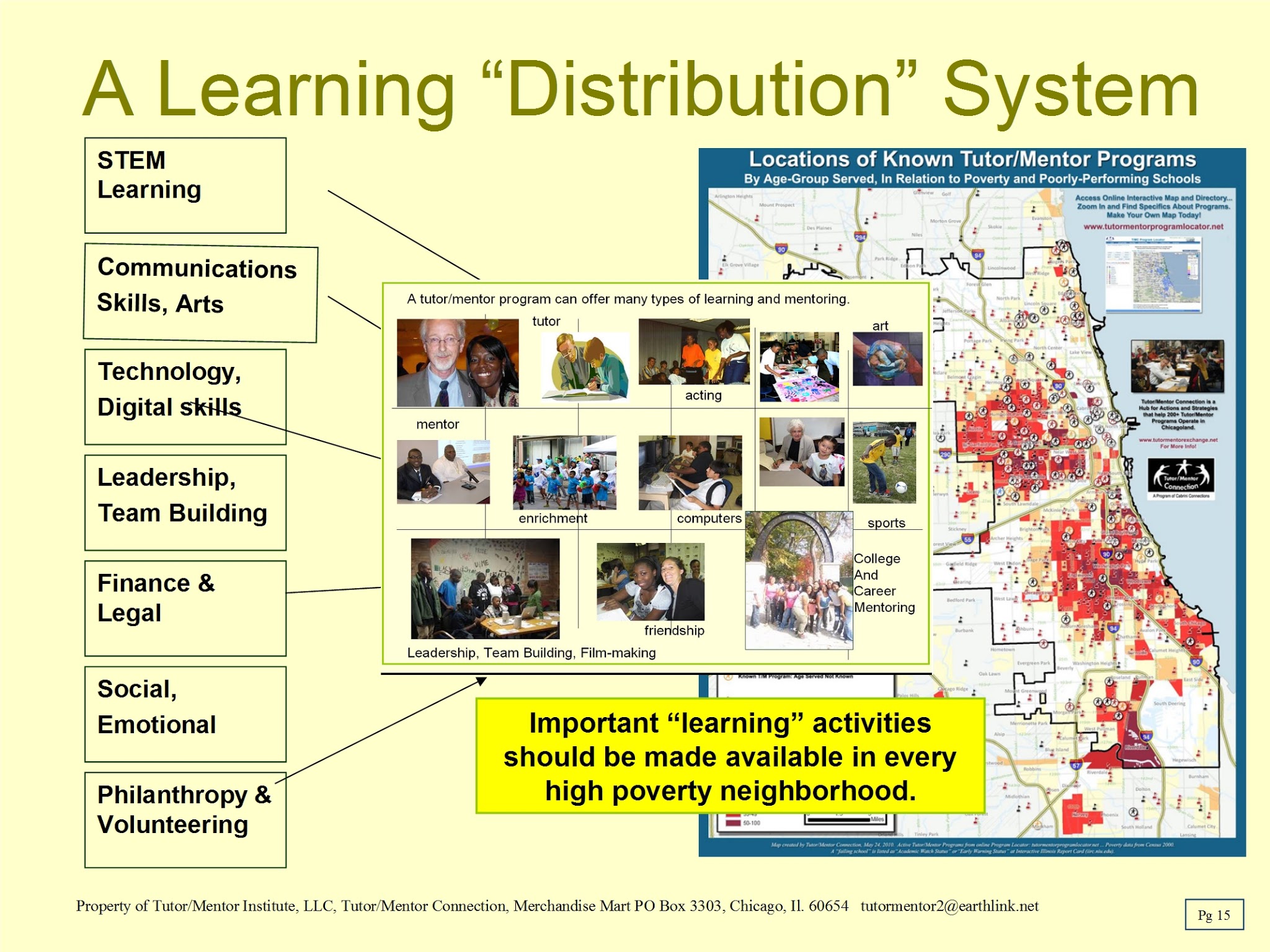
Build a learning distribution system, engaging the business community, colleges, entertainment, technology and every other sector.  Ask school and non-school programs to put graphics on their website that indicate the many types of learning made available to students and that engage mentors and tutors from a wide range of networks.   Do the data collection and analysis that assures that such programs are available to each grade level in EVERY high poverty neighborhood.


Address the other issues, too. Just building tutor/mentor programs and improving schools won't remove all of the barriers that reduce opportunities for kids living in high poverty neighborhoods or come from minority communities.  


Be a cheerleader and team builder. Be the YOU in this graphic. Use your public appearances, interviews, websites, policy and other tools to connect people from EVERY sector of Chicago and its suburbs to information they can use to learn more about the problems that need to be solved and places where they can use their time, talent, dollars and votes to solve those programs.  


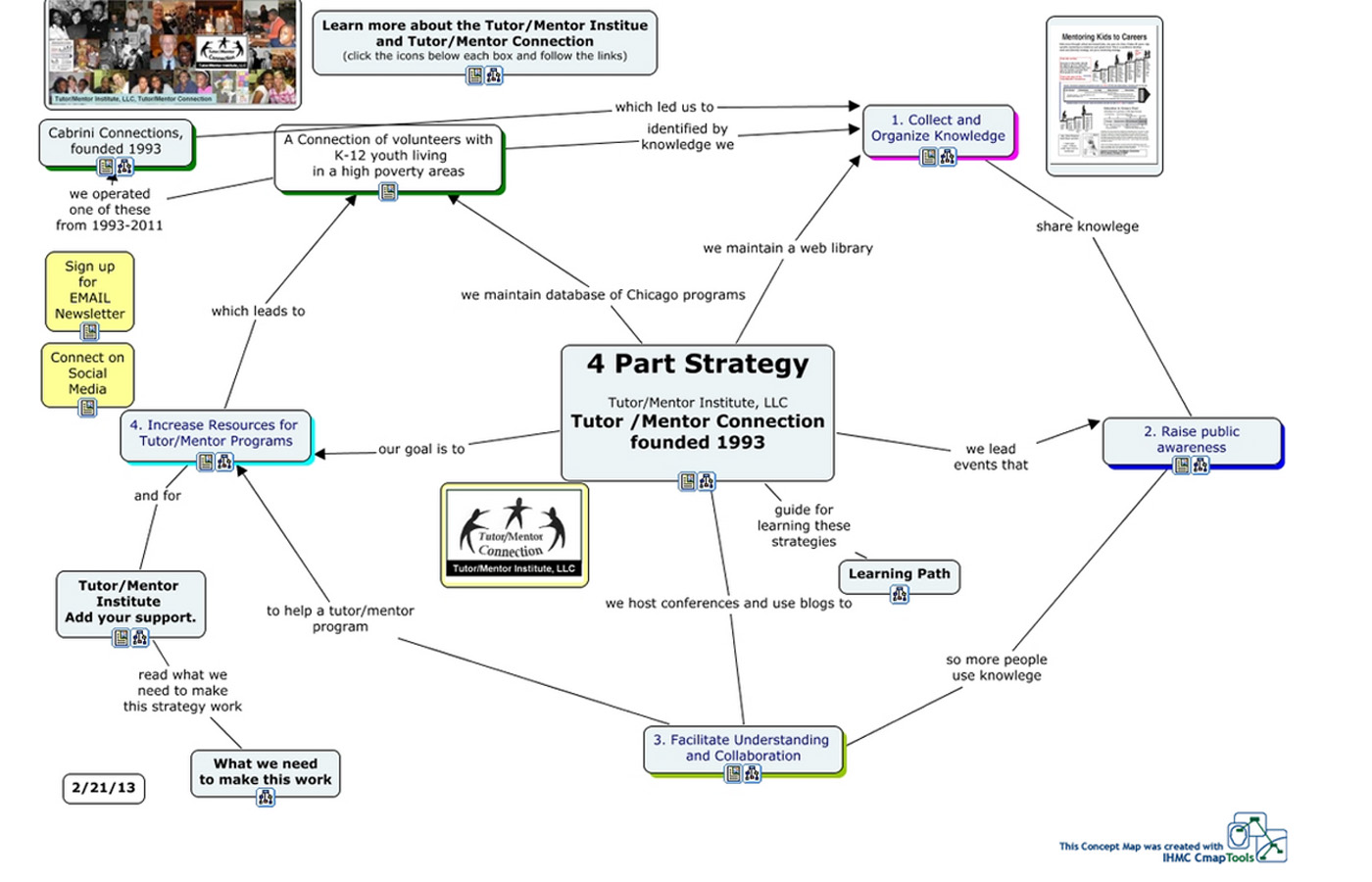
Create a version of the concept map shown below, with your name in the blue box in the middle. Enlist leaders from all sectors to do the same. 


Point volunteers and donors to directories of youth serving programs where a consistent flow of operating dollars are needed to sustain constantly improving, long-term support for kids.  I point to many lists from this concept map.


These graphics just touch the surface of what your team needs to know and support.  Scroll through the articles on this blog to see where I've used these graphics and others that share similar ideas.  In four years I hope to see a collection of similar articles on blogs and websites of many people in the Chicago region.

If you set the example I hope you are re-elected in four years. More importantly, I hope the next Mayor, and the ones after that, continue this set of actions.  

One thing I hope to see are stories showing you standing in front of a map of Chicago, recognizing the leaders who are investing in programs that help kids from birth to work, and showing what neighborhoods they are investing on-going efforts. 

I'd be happy to coach and mentor your teams, or teams from any organization so more people can navigate this information base. 

I'm still using Twitter and can be found on LinkedIn, Instagram, Mastadon and other platforms, too.  Find links here.

I've been doing this work for the past 30 years and now seek leaders from universities and other institutions to take ownership of my archives and my strategies, creating a new, stronger Tutor/Mentor Connection type strategy. Read more in these articles. 

Now that the election is over I hope a few of your donors will invest a few dollars to help me continue to operate the Tutor/Mentor Institute, LLC and keep the Tutor/Mentor Connection available to Chicago. Visit this page to send a contribution. 

Sunday, April 02, 2023

Crime and Violence in Chicago - Not New

As I read through today's Chicago Sun-Times I saw this article about the violent death of a student athlete from Crane Medical Prep High School on Chicago's Near West Side.

I thought I'd written about Crane HS in the past so did a search and found an article from 2008 with the headline of "Stop the Violence around Crane. Is Police State Mentality the Answer?"

Chicago is electing a new Mayor this Tuesday and that question seems to be dominating voter, and media, attention.

I encourage you to read what I wrote 15 years ago.

start - 2008 article ---

Today and yesterday the Chicago Sun-Times featured two-page stories in response to the shooting of one student near Crane High School, and the severe beatings of two others. You can read 3/17 here and 3/18 here.

These stories focus on the immediate response of setting up police escorts to get kids from one public housing area to the school, because the kids fear retaliation from kids who come from the neighborhood of the youth who was killed. That's a good show of force by our new Police chief. But it's not enough.

Last week an article in the Sun-Times focused on the new book chosen by the Mayor and the Public Library that everyone in Chicago is hoped will read. Why couldn't the choice have been the articles in the Tutor/Mentor Connection web library? Maybe if more people read these we can begin to get more people involved in solving the problems that plague our inner city neighborhoods.

I'm sure the stories about Crane High School are selling newspapers. But, why aren't the editorial and education writers doing stories about how kids who fear for their lives aren't going to be focusing on learning and how this affects the future of Chicago's economy because we're leaving too many kids behind who we need to fill positions in the 21st century workforce?

Why aren't we asking John, Hillary, and Barack what they are doing to engage people in this type of complex problem solving?

Over the weekend I browsed a publication in my library, titled "Wanted: Solutions for America. What We Know Works. An overview of research about what works (and what doesn't) in social service programs." This was published by the Pew Partnership for Civic Change in 2003 (2023 note: The specific link is no longer available. Look at the "solutions" reports in this 2008 web archive).

In the conclusion the article reads "Equipped with reliable information about what works, how do communities move forward to tackle tough problems? If so much is known about promising approaches, why haven't we come farther faster in connecting all citizens to hope and opportunity?"

As the authors of this report conclude, "Change doesn't just happen. It demands gifted and persistent leadership." There are no short term answers to this. Putting an army of police around this school won't solve this problem. It's a band aid. And it won't address the same problem in the area around many other big city public schools.


In many of my blog articles I use maps to illustrate the wide geographic areas where poverty is concentrated in Chicago, and where there are poor schools, gangs and youth on youth violence. I use graphics and concept maps to illustrate what the Pew Partnership was referring to when they said "We have focused too narrowly on specific interventions without confronting the complex interrelationship of issues in a community."

In this concept map of the Tutor/Mentor Connection library I illustrate the four components of the T/MC library, in an effort to draw together people from different silos, and in an effort to expand the thinking and problem solving ability of people who focus too narrowly on just one part of this problem.

Why mentoring? Because mentoring is an adult form of service learning. It can engage adults who don't live in poverty directly in the lives of youth who do. If we can support the growth of hundreds of volunteer based programs around the city we can grow the number of adults who begin to understand this problem, and begin to use their time, talent, networks and wealth to contribute to solutions.

I host a May and November conference with a goal of drawing people who read or write these articles and host these web sites, into face to face networking, and to create public awareness that draws more people to the Internet where they can read these articles and connect with others.

If you're in health care, law, higher education, engineering, workforce development, or if you're a leader, or volunteer, or donor who support tutoring/mentoring programs, I encourage you to use the conference as a meeting place (not offered since 2015) and the T/MC library as a resource for complex problem solving.

If you're the new head of the Chicago Police Department, I encourage you to look at the T/MC as your own strategy. There's no way you can keep an army of police around every high school in Chicago, throughout every school year.

The SunTimes articles show that the problems of gangs have plagued Chicago schools for 20 years and more. It's almost taken for granted. Why?

---- end 2008 article ----

I have not hosted a conference since 2015 due to lack of funds and competition for attention. Yet I still maintain a web library and use this blog and social media to try to draw users to that library. 

I use social media as a meeting place where people can connect and share ideas. 

In many of the articles on this blog, dating back to 2013, I've written about cMOOCs, a form of on-line learning and network building. On April 12th a new gathering will look at Artificial Intelligence.  You can learn about this here and follow along on Twitter using the #ETMOOC2 hashtag. 


I point this out because whoever wins Tuesday's election is going to need to find innovative ways to connect people from this huge city with ideas and strategies, and resources, that lead to better solutions than I've seen in Chicago for the past 30 years. cMOOCs and social media connections are one strategy that can be applied. 

All are welcome to use the library and strategies I've shared.  I'd be happy to help coach any teams through the learning process.


Find me on Twitter, LinkedIn, Instagram, Facebook and Mastodon and maybe on Discord, too. See links here.


If you can help fund Tutor/Mentor Institute, LLC, please visit this page and send some support. 


Monday, March 27, 2023

What is a Tutor/Mentor Learning Network?

I've used this graphic for many years to visualize the role of the Tutor/Mentor Connection (T/MC) (1993-present) and Tutor/Mentor Institute, LLC (T/MI) (2011-present) in connecting "people who can  help" with information they can use to support actions where they "help" people and organizations in places where maps show help is most needed.

In reviewing posts about Starting a new T/MC or About T/MI I saw that I've not included the presentation below, describing a Tutor/Mentor Learning Network.  


Tutor/Mentor Institute - Le... by Daniel F. Bassill


On page 12 of this presentation I show the graphic at the right.
 

I've been building a library of "everything we can know" since the early 1990s, which is the "information people can use" that I referred to above.

In this graphic I refer to "hubs" which are websites hosted by other people that are comprehensive resources focused on specific topics.  I don't need to host "everything" about a topic on my website if I can point to someone else who does.  Thus, today I added a link in the Prevention Resources section of my library to an organization called Start Your Recovery, which is a substance abuse resource. 

Many of the websites that I point to are "hubs" like this. 

On page 13 I show the graphic at the left.  If "hubs" link to each other more information is available through the network of libraries. 

Unfortunately, many of the people who I've added to my library, and/or who have asked to be added, do not have a section of resources where they point to my site, nor do they follow me on social media. 

That's true for the Start Your Recovery site, too. However, they do include an extensive directory, pointing to resources for substance abuse knowledge and recovery.  


On page 16 I show the graphic at the right.   If everyone in my library, including "hubs" like Start Your Recovery, were pointing to myself and each other in our websites and our social media and newsletters, we could increase attention and funding for each of us.

On page 23 of this presentation I show that my goal is that the Tutor/Mentor Connection (T/MC) strategy be embedded in one, or many, universities, where student/faculty and alumni manpower can do the work much better than my small organization has the capacity to do.

The presentation below shows this "Invitation to Universities".


Forming a Tutor/Mentor Connection on a College Campus - click here

Take time to review these. Set up a learning group in your university network, your business or your community to read these presentations and consider how you'd adopt the ideas, and how a major donor might provide the seed money.

You can find me on Twitter, Facebook, LinkedIn, Instagram and Mastodon (see links here). I want to help people adopt these ideas and carry them forward, using the library and history I've established over the past 30 years as a building block.


As I share this information and seek leaders who will adopt and support this strategy in more places, I still rely on a small group of donors to help me pay the bills to continue operating the Tutor/Mentor Institute, LLC.

Please visit this page and consider sending a contribution. 

Thank you for reading and sharing this article. 

Friday, March 24, 2023

Talking about social capital

I was invited to participate in a chat on Twitter this week, hosted by the Christensen Institute, using the hashtags #SoCapChat_CI  and #EconomicMobility.  Their goal was "to help connect the people/organizations who are discussing social capital and economic mobility".  Click on the links and scroll through the Tweets that were posted and you'll gain an understanding of what was discussed. 

As I participated, I shared ideas from my own collection of social capital articles on this blog. Below is one example. During the chat I posted a Tweet to my friends at @NodeXL and asked if they would create a graph showing participation.  Below was the result. You can view the graph as this link. 


This graph shows that 116 Twitter users participated in the chat. If you zoom in you can see who these people are and who they connected with. 

I think expanding networks of adults supporting youth in high poverty areas is important and that organized, volunteer-based tutor/mentor programs are one strategy for doing this. I created the graphic below in the 1990s to visualize the type of support network that such programs might provide.


Unfortunately too few people who lead youth programs include the idea of expanding social capital in the information they share on their websites.  Too few youth program representatives were in this week's chat, and too few donors, policy-makers and/or business representatives were participating.  

Hopefully a chat like this will be repeated every few months and more people from the ecosystem will show up on NodeXL maps.  I'll try to help make that happen.

Below is one of my concept maps, showing intermediaries who support youth serving programs in Chicago. 


Each node on the top half of this concept map includes links to the organizations shown.  I follow all of them on social media and participate in virtual events that they host.  I try to generate deeper conversations, such as one I had yesterday with a team from Northwestern and the Chicago STEM Co-op.  

Ideally there would be on-going chats hosted by these groups on Twitter and NodeXL type maps would show participation of multiple organizations from my concept map in each of these chats.  In addition, while many are now hosting face-to-face meetings, I urge them to add virtual components.  One reason is that COVID is not over for many of us. A second, is that I feel each participant in a virtual meeting has a closer connection to the speakers and to other participants.  In a room of 100 or more that is not happening. 

Chicago will have a new Mayor after the April election.  I've been sharing posts on Twitter, inviting the two candidates to look at strategies I've been sharing and incorporate those ideas in their own plans. 

I have been sharing these ideas since the mid 90s.  Maybe in the coming months and years we will see evidence that staff from the new mayor are looking at this blog and borrowing the ideas.

One piece of evidence would be chats about "how to help kids in Chicago" on Twitter, with NodeXL maps showing participation from a broad section of city leaders and citizens.

I'm available to help mentor that process.  Connect with me on Twitter, Facebook, Instagram, LinkedIn or Mastodon (or all of them). See links here. 

If you want to help me continue this work, visit this page and use PayPal to send a small contribution.

Thank you for reading. 

7-19-2023 update - read this new research report about mentoring, social capital and philanthropy. Download report at this site. 

Wednesday, March 15, 2023

Habitat for Humanity and LinkedIn

I was invited by LinkedIn to join a conversation led by Jonathan Reckford, CEO of Habitat for Humanity, who wrote about how he translates a bold mission into action. In the LinkedIn interview, Jonathan shared tips about how to combine the urgency of field work with a careful strategic focus on societal issues. 

LinkedIn's message to me was:  'If you also are trying to change individual lives – and society – at the same time, it would be great to include your story in the conversation, too. Check out the active discussion around this post and then add your perspective."

I started to do that then found that there was not enough space. So I'm posting my comments here.

I first connected with Habitat for Humanity in the 1990s. I felt that they had a great opportunity to educate the people who were building houses and providing funding about the greater issues that caused there to be a need for the organization in the first place.

Below is a map story that my organization created.

Since houses are built following plans laid out in blueprints, I felt that organizations like this would be unique in their ability to help people think of "all the things that need to be done, in the proper sequence" to help reduce the poverty surrounding so many people.

People who entered this work as carpenters and home builders could become disciples who turned around and got more people involved in other work that needed to be done. Imagine if that had been happening across the country for the past 30 years.


I led volunteer-based tutor/mentor programs in Chicago from 1975 to 2011 and created the Tutor/Mentor Connection in 1993 to help similar programs grow in all high poverty areas, and constantly improve how they help kids through school and into adult lives free of poverty. In the programs I led I shared a library of information I had been collecting, in an effort to educate our volunteers and turn them into evangelists for tutoring/mentor programs.

Thus, my suggestion to Habitat for Humanity was based on my own leadership efforts for the previous 20 years. 

In 1993 we started building a list of nearly 150 Chicago tutor/mentor programs and connecting them to us and each other via conferences and newsletters that library became available to every program, along with the goal that each was educating their volunteers so more people were focusing on all the work needed to help kids to careers.

As the Internet became a tool our library expanded and so did the number of people potentially using that information.  

In early 2000s I posted a list of eLearning goals on this page of the Tutor/Mentor Institute, LLC website.  Imagine if thousands of nonprofits who focus on youth, education, poverty, inequality, etc. were all contributing ideas to concept maps like the one below, which represents a blueprint leaders could follow in every part of the country.


Creating a library and drawing users to it is a huge challenge, in a single organization, and across organizations.  Below is a 4-part strategy that I launched in 1993 and have followed since then.

Step 1 focuses on collecting information about a problem and potential solutions.  Step 2 focuses on building public awareness and drawing people to the information being collected. Step 3 focuses on helping people understand the information and ways to apply what they are learning.  Step 4 uses maps to focus actions on all high poverty areas within any geographic region, instead of just a few high profile places. 

I think any organization can adopt this strategy, and help innovate ways to build a larger, and larger, collection of people who give time, talent, dollars .... and votes, to build the systems needed in every high poverty zip code to "change individual lives, and society, at the same time".

However, it's 2023 and as a nation we're not even close to the type of connected ecosystem that I envisioned in the late 1990s and when I posted our eLearning goals.  Thus, there's still much, much more that needs to be done.

Maybe LinkedIn can help make that happen. 

Thanks for reading.

I hope to connect with you on LinkedIn, Twitter, Facebook, Instagram and Mastodon. 


Sunday, March 12, 2023

Creating more luck for kids in high poverty areas

St. Patrick's Day is coming so I'm reposting a few past articles where I talk about creating better luck, and brighter futures, for kids born or living in high poverty areas of Chicago and other places.

Here's an article I posted in 2019 saying "We Need a Lot More Good Luck in the World Today".  That was before Covid! 

I wrote this article in 2018, with the headline of "Solving Complex Problems. Do the Homework. Make your own Luck". 

In 2017 the headline of this article was "Hard Work, Creative Thinking Brings Good Fortune"

The first time I used this graphic was in this 2014 article with the headline of "Change Fortune for Youth in High Poverty".  


I started this blog in 2005.  Since St. Patrick was a religious symbol, here's an article I wrote in 2005 about making religion relevant. 

We need that in 2023 much, much more than we did in 2005, which is saying an awful lot about how times have changed.

I ended my St. Patrick's Day articles with a link that would help change my own luck, and ability to keep posting these articles. You can help. Visit this page and use PayPal to send a contribution to help fund Tutor/Mentor Institute, LLC.

Thanks for reading. 


Saturday, March 04, 2023

Building Future Youth Program Leaders - ChatGPT article

On March 20, 2019 I wrote this article about the role universities could take in growing future leaders, and supporters, of youth tutor/mentor programs. The title was "Tipping Point - Growing and Supporting Future Leaders"


A couple of weeks ago during a ZOOM reunion with educators I'd met via the #ETMOOC event held in January 2013 we started talking about ChatGPT, which is an artificial intelligence tool used for writing articles.  We decided to create a mini MOOC to explore this and help each other learn to use it.

I've never used ChatGPT before but I looked at this video and decided to give it a test today. 

My interest is in how I, or others, could use Chat GPT to rewrite my past blog articles, making them more readable, and more interesting.  I used the March 20, 2019 article. After a few prompts, below was the result:

Begin ChatGPT version - 

Tutor/mentor programs are essential to helping young people from underserved communities succeed in school and prepare for successful careers. Universities have a critical role to play in building future leaders for these programs and fostering support from businesses and philanthropists to help them grow in more places.

While it's important to equip graduates with the skills and knowledge needed to build and lead mentor-rich youth-serving organizations, it's also essential to recognize that only a few graduates from each university will become leaders and staff in these programs. Most will go on to careers in business, entertainment, medicine, and other fields. However, universities can still play a vital role in supporting these graduates to be proactive in providing ongoing funding to support the few who do become directly involved with tutor/mentor programs.

To achieve this vision, universities could offer a comprehensive four to six-year master's or PhD program, starting in the freshman year of college, designed to train students to become effective tutors and mentors and to build and lead successful youth-serving organizations. This program could include coursework in education, psychology, social work, leadership, grant writing, fundraising, and program management, essential for building and sustaining successful tutor/mentor programs.

Students could participate in on-going practical learning, serving in existing programs and reaching youth as young as elementary school. This service could be tied to coursework being studied on campus at different points over their college career. The program could also offer opportunities for students to connect with local tutor/mentor programs, as well as networking events with business and community leaders who are passionate about education and youth development.

Additionally, universities could provide ongoing post-graduation support to both the few graduates who become directly involved with tutor/mentor programs and the majority who go into other fields. By training all graduates to be proactive in providing ongoing funding and support for these programs, universities can help to create a sustainable network of programs that can make a real difference in the lives of young people.

By investing in the development of future leaders who are committed to this cause and supporting ongoing funding and support for these programs, universities can help to build a strong and sustainable network of programs that can make a real difference in the lives of young people. By working together, we can create a future in which all young people have access to the resources and support they need to succeed in school and in life.

---- end ChatGPT version ----

I think this is a pretty good summary of what I've been trying to say to universities through articles in this section, and in this section, of this blog. 


Students in high school and college who are exploring artificial intelligence writing tools such as ChatGPT, could do what I did today and pick out articles on this blog and explore ways to rewrite them to help share the ideas with people at their schools and in their communities.

I've only begun my exploration. One thing that ChatGPT did not do was pick up the many images I've embedded in my articles or the links I embed to other articles or other websites.  That might be possible, but I don't know (and I'm only using the FREE version). 

I'm creating an archive to show my exploration and once I have a few articles I'll share it via my Google Drive so others can see how I asked multiple questions and looked at multiple revisions.  

Below is a graphic created by an intern from South Korea, vis IIT in Chicago,  in 2013.


View the graphic on this page and find more articles showing intern work on this blog. These show work interns did between 2006 and 2015 to build and share understanding of ideas I've shared since forming the Tutor/Mentor Connection in 1993.

A blog like this could be at every university and high school in the country (or the world) sharing work students have done to communicate these ideas, using any tool available to them, including ChatGPT.


The key point in all of my articles is that this work needs to be on-going, for multiple decades, and reaching youth in EVERY high poverty area of Chicago and other places.  Strategies that support on-going involvement are needed in every city and they need to last beyond the term of any Mayor, Governor or President.

If you're already doing this please share links to your work.