Showing posts sorted by relevance for query leo hall. Sort by date Show all posts

Saturday, August 11, 2018

Value of Tutor/Mentor Program - Alumni Update

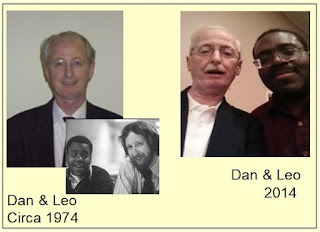
Leo & Dan - 1973
I started volunteering in a tutor/mentor program in Chicago in 1973. That's when I first started meeting weekly with Leo Hall, a 4th grade boy living in Cabrini Green Public Housing, near the Montgomery Ward headquarters where I was starting an advertising career.

I became the leader of that program in 1975 and continued through mid 1992. Then I and a few other volunteers formed Cabrini Connections, to help kids who aged out of the first program at the end of 6th grade have similar support as they move from 7th grade through high school. I led that program till mid 2011.

Maps show all areas where
programs are needed.
As we created the direct service program in 1993 we also created the Tutor/Mentor Connection to help similar programs grow in all parts of Chicago and to try to increase visibility and the flow of operating dollars to all programs, including the Cabrini Connections program. I still lead that strategy through the Tutor/Mentor Institute, LLC.

I try to share my experiences, and those of others, by pointing to a list of program web sites that I've been maintaining since 1993.

At the Cabrini Connections program we maintained a blog from mid 2005 through 2011 that was a daily journal of what was happening in the program. I was scrolling through it today looking for information about one of the activities when I came across a message from Leo, posted in 2006.  I've re-posted it below:

Hi.. I'm Leo Hall - Dan Bassill's tutee and friend

Today, I got an email from my friend and former tutor, Dan Bassill, about the graduation ceremony going on tonight. It made me think about when I graduated from MWTP (Montgomery Ward Tutoring Program) or what some of you may call Cabrini Connections. 
See, I was Dan's first tutee, way back in 197??. It's been that long ago, I honestly cannot remember. But ask Dan about the one kid that changed his life and he will probably mention me (or maybe his daughter and son first, then me). But I digress. 
As a former tutee and volunteer, I want to say that you all have a great program working on your behalf. When I graduated from the program, it only went to the sixth grade, but you all get to stay until senior year of high school. 
That is so cool, cause high school can be a very stressful time in your life. I should know, I went to one of the largest high schools in the state, Lane Technical High School. Graduated with 1000 students, so I was basically a number. But the things I learned from Dan and the MWTP really kept my head on straight. 
See, Dan was at every major event in my life, with the exception of the births of my children. Now, how many people do you know would travel all over the country to see you graduate from college, then come back to see you get married. With gas prices today, I'd only expect a card. Dan has been my mentor and friend for over 30 years and I really respect his opinion on things. 
I also liked what he has done for the children in Cabrini Green, the children of Chicago, IL. But especially, the children on Cabrini Green. Dan has taken a lot of heat from a lot of people and he kept going. So, you all are the fruits of his labor. 
After graduating from high school, I went to Memphis State University (Univ. of Memphis) and graduated in 1988, on the Dean's List with a Bachelors degree in Engineering. I now have 2 sons, and am a movie producer and director. A lot of what I do with people is what Dan used to do with me, and that is mentor them. Teach them how to make good decisions and trust and believe in themselves. 
Presently, I am on the set of my new movie, and I asked Dan to send me some CC products, tee-shirts and stuff, so that my cast can wear them on the set. You never know, you may see CC on the big screen real soon. 
Well, time to get back on set, but I wanted to say this, keep your head up and never forget where you came from and the people that got you there. Thanks Dan and MWTP for everything that you have done for me.

Leo Hall
Leo & Dan, 2014

In 2014 Leo invited me to Nashville to celebrate his 50th birthday. He paid all of my expenses! I wrote this article following that.

The testimony by Leo is one of several alumni articles posted on the Cabrini Blog. I encourage you to read them.

Here's a 2016 article about mentoring, from The Atlantic, which featured myself and Leo. 

It's these stories, which I have experienced over and over for more than 35 years which drives my passion to help make well organized, non-school, volunteer-based tutor/mentor programs available in more places.

If you browse the Chicago Programs list, and this section of programs in other states, you'll find many who also have stories from alumni.  I was just looking at this page on the Higher Achievement web site (Washington, Baltimore) with 40 stories. Can these convince you to become strategically involved in helping these programs continue to do good work, while helping new programs start where needed?

I've been reaching out to alumni and others to help re-build the Tutor/Mentor Connection and carry it forward into the next decade, with them as leaders and people writing articles like this.  While a few have begun to show interest, there still is no new leadership team in place.

I've also been asking for financial help to keep me going. Click here to find a page with contributor information.

If you'd like to get involved or know more, just introduce yourself with a message in the comment box or connect with me on Twitter, LinkedIN or Facebook.

Thursday, May 28, 2020

Looking back over 45 years of Tutor/Mentor Program Involvement

Dan Bassill - year end graduation
program - 1970s
I've spent the majority of my adult years working to help inner city youth have networks of support similar to what more affluent kids take for granted.  Below you can read about my journey.

I came to Chicago in 1973 to start a retail advertising career with the Montgomery Ward corporate headquarters in Chicago.

I started volunteering in a company-sponsored tutor/mentor program during that first year and was matched with a 4th grade boy named Leo Hall.  We met for an hour ever Tuesday night during the school year. At the end of the first year Leo's Mom said "He talks about you all the time. You've got to be his tutor again next year." So I did.  We're still connected on Facebook, 47 years later! 

After that first year I was recruited to be on the committee of volunteers who led the program, and at the end of that second year I was pulled into the role of program leader. That was the summer of 1975.

I continued being directly involved, leading a non-school tutor/mentor program in Chicago, until mid 2011 when that was suddenly taken away from me. That's over 35 years. Probably longer than most people in the country!

Leo Hall & Dan Bassill
We're still connected 47 yrs later!
Leo needs Kidney donor.
I had no teaching or tutoring experience in 1973 when I first joined the program at Montgomery Ward, so I drew upon my history degree at Illinois Wesleyan and my three years in US Army Intelligence, and began looking for ideas of what to do each week when Leo and I met.

Then, when I joined the program leadership committee in 1974, I began to ask, "How do others do this?" and started to reach out to find other programs in Chicago who I could learn from.

When I became program's volunteer leader in 1975 the program already had been recruiting 100 pairs of kids and volunteers to start the school year for the previous two years. However, nearly half dropped out during the year due to lack of organization and structure, and were not replaced by on-going recruiting.  Thus, I accelerated my learning process, seeking out other tutor/mentor program leaders in Chicago and inviting them to a monthly lunch & learn session at Wards.

While I continued meeting weekly with Leo, as his tutor and mentor, for another two years, more and more of my time focused on mentoring 100 pairs of kids and volunteers, as well as nurturing a small group of other volunteer leaders to help me.  Leo stayed involved as a student assistant after he finished 6th grade, and I stayed involved with his life through high school, college and we're still connected today, in 2020.

Note: Leo needs a kidney donor. If you want to help, email me at tutormentor 2 at earthlink dot net and I'll connect you to Leo.

View Systems Thinking
article
By 1980, my life begin to take on a cycle, similar to this problem solving loop. This repeated every year for 35 years.

In August, the focus was on recruiting volunteers and students from the previous year to return for another year. As we entered September, the focus expanded to recruiting new volunteers to replace those who dropped out, and to recruiting enough kids to match the number of volunteers we recruited.

During September the focus was on student and volunteer orientations (training was on-going) and on matching pairs so that by the last week of September most of our kids and volunteers were paired up and getting to know each other.

This matching process actually extended almost to November since we started the year with either more kids than volunteers, or more volunteers than kids, and spent the first few weeks trying to balance this out. By the end of October we'd matched all the volunteers we had on our waiting list, and then put any other kids still looking for tutors on a student waiting list.

While this matching was taking place, I had to provide a weekly framework for student and volunteer activities, provide one-on-one coaching to respond to questions, find substitutes for volunteers who did not show up, and assign kids to new volunteers when their volunteer stopped coming.

To aid this process we took attendance weekly, with me sitting at a table at the entry to the Montgomery Ward cafeteria where tutoring took place, and checking off names of kids and volunteers as they came in. Usually another volunteer helped me.

Once the session was over I reviewed the attendance and determined which kids and/or volunteers would need follow up during the coming week. By 1979 or 1980 I was using computers and Excel spreadsheets to enter weekly attendance data into a tracking system that enabled me to see attendance patterns, enabling a focused follow up on those who had missed two or three weeks in a row. During the mid 70s the Chicago  Housing Authority was the intermediary who had contact with families. While we called volunteers directly, we had to call the CHA rep, and they contacted the families, if we needed to follow up on attendance or any other issues. By the late 70's we were contacting the families directly.

We provided a framework for weekly youth and volunteer activities and communicated this via verbal announcements and one page newsletters created on a duplicating machine. I  had to write these and get copies made every week.   As we started the year we pointed to Halloween, Thanksgiving, Christmas and then spring events as learning and writing activities.  These provide conversation topics and work activities for volunteers to build relationships with kids and provided something to "look forward to".

Indiana Dunes field
trip - 1980s
As incentives for student attendance we began to offer quarterly field trips for perfect attendance. These photos are from trips to the Indiana Dunes.  Planning these trips was another on-going role.

By 1980 the enrollment was up to 125 pairs and we convinced Wards to give money for us to hire a part time college student to work a few hours a week to help  us.  Throughout the 80's this number grew to three students, with none working more than 20 hours a week. However, they took a huge load off the weekly work I was doing.

This was org chart of
MW-Cabrini-Green
Tutoring Program in 1980s.
A big change in organizational structure was made in 1980 or 81. I changed from having a small  committee of leaders that I recruited each spring to building an larger group of leaders, focused on all of the functional areas involved with operating the program.  The program grew, and grew, and by 1990 we were up to 300 pairs of kids and volunteers....and we still had only 3 part time college students working 15-20 hours a week helping do the administrative work.

As we moved through the year, from September to June the challenges changed from recruiting and retaining, training and on-going support, to celebrating work done during the year and recruiting new leaders to help repeat the cycle again in the following year.  I did this over, and over, for 35 consecutive years!

My job responsibilities with Montgomery Ward grew throughout this time. By 1980 I was in charge of the creative print development for all of their national advertising and throughout the decade I took on other management and planning responsibilities. Yet, I also devoted huge amounts of time on weekends, evenings and lunch breaks to the work of leading the tutoring program.

I met my wife through
the tutoring program.
I met my future wife Emily in the early 1980s when she became a volunteer tutor and much of our social life was centered around tutoring program activities and volunteers.  We were married in 1986 and while she took evening college classes I spent time in my office either doing my advertising work, or my tutoring program work.

Things changed in 1990 when I was given the opportunity to leave Wards (or be fired) and I turned that into an opportunity to convert the tutoring program to a non profit where I could provide full time leadership and get paid at the same time.  Things really changed when our daughter Amanda was born in October 1990, about the same time as we received our 501-c-3 papers.

With the birth of our daughter Emily was no longer involved with the tutoring program, but with the day-to-day work of raising a child, and holding her own job.  Our time to socialize together with the volunteers in the program was greatly reduced in the 1990s, and 2000s.

The new non profit, which we named Cabrini-Green Tutoring Program, Inc., was an artistic and financial success. We grew to 440 students and 550 volunteers by June 1992 and raised over $100,000 to fund our operations. However, I misjudged what it would be like to have a governing board overseeing my work, and the frictions  that grew over those two years led the board to fire me without notice in October 1992.

Oct. 15, 1992
Of course they did not consult with the volunteers, students or parents when they made that decision. As a result many volunteers rallied to my defense and wanted to fight my firing.  However, as this was happening, something else happened that changed everything.  A 7-year-old boy named Dantrell Davis was shot and killed in Cabrini-Green. He was related to many of  the kids in the tutoring program.

I was driving home as I listened to this news on the radio, and the thought  popped into my mind "I don't need to lead an under-funded program with 900 people involved, and with a dysfunctional board, to share what I've learned over the past 17 years to help tutoring programs grow in all poverty areas of Chicago."

I immediately stopped looking backwards to regain what was lost and began looking forward to build what needed to be built.

At the same time, I recognized an opportunity to fill two voids. Parents had been asking for a program for kids beyond 6th grade, and I'd begun to develop an expanded Junior Assistant program in 1990 and 1991.

Great programs needed
in all high poverty areas.
With the help of six other volunteers, I created a new volunteer-based tutor/mentor program aimed at helping kids move from 7th grade through high school and beyond and named that Cabrini Connections. That filled the first void.

To fill the second, and larger void, we created the Tutor/Mentor Connection to help similar programs grow in all high poverty neighborhoods of Chicago,  including our own Cabrini Connections program and the Cabrini-Green Tutoring Program, Inc.

The Cabrini Connections program launched in January 1993 with seven volunteers and five teens meeting in the day-room at St. Joseph's Church. In the fall of 1993 Wards donated space on the 16th floor of the corporate tower on Chicago Avenue, and $40,000 a year, and we move our operations there and started to add new 7th and 8th graders each year. By 1997  we were serving about 80 pairs of kids and volunteers and by 1999 the first 7th graders were finishing high school. By 2003 some of these were finishing college.

this printed directory published from
1994 through 2002

We spent 1993 planning the Tutor/Mentor Connection and launched our first program survey in January 1994.  120 programs responded and we printed the first Tutor/Mentor Programs Directory and held the first Tutor/Mentor Leadership and Networking Conference in May 1994. Over the next few years we created an information based strategy and quarterly events to draw attention to tutor/mentor programs throughout the city of Chicago.

My daughter Amanda was
enlisted to help with newsletter
mailings  in 1990s.
With the first 1993 grant of $40k from Montgomery Ward we hired two veteran tutoring program volunteers (Gena Schoen and Claudia Crilly Bellucci) to work part time as leaders of the Cabrini Connections program. Working together we created a structure for the tutor/mentor program and from that point forward my role as President was to overview that work, provide ideas, fill in during transitions of staff, and raise money to pay the bills.   I also did much of the work involved in building the Tutor/Mentor Connection.

We never had enough money, or enough staff do do all this work, which meant that I spent countless hours, weekends included, doing program work.   I often brought our quarterly newsletters home and my daughter, Amanda, would help me put mail labels on them.

We had a wide range of volunteer and pro bono help building the Tutor/Mentor Connection in the 1990s and 2000s. Read this article to see a list of many who helped. 

Honored by IWU in 2001
Our son Jacob was born in 1998.  It's his 23rd birthday today!  The responsibilities of being a parent grew, but the responsibilities of leading a small non profit with more than 200 people depending on me to keep the doors open, also grew.

My daughter once said to me "Daddy, you love those kids more than you love us."

War on Poverty planning
That hurt.  Yet over the years I've talked about the work I was doing as part of a "War on Poverty."  I realized that I could do little to change the education system, or change the  habits and behaviors of parents living in high poverty areas. But through the tutoring program I felt we could help kids escape the cycle of poverty by helping them through school and into college and careers.  Connect with me on Facebook and you can follow the lives of many of these former students, and see how they are now celebrating their own kids finishing high school and college.

I realized that one small program could be life changing for a few kids, but would have little impact on the couple hundred thousand kids living in poverty in Chicago. I also believe that if I could help build a world that creates safety and opportunities for every child, then I'd be also building that world for my own kids. 

That's why I have been so passionate about the Tutor/Mentor Connection and its goals.

Youth in every high poverty zip code, and their parents, need a system of supports.  This map visualizes some of the supports that are needed.

System of support needed


Over the past 25 years I have found very few leaders in Chicago, or the country, using maps and visualizations and thinking of ways to support an entire ecosystem of youth serving organizations, using the same strategies that teams in corporate headquarters of big companies like Wards were using to support multiple stories all over the country.  Thus, just getting the attention and participation of youth, volunteers and donors in a single program, and support for the intermediary role of the Tutor/Mentor Connection often seemed like a Marine battalion's efforts to land on a fortified beach. You took a lot of casualties before you were able to get a foothold, then move inland.

In my case, imagine sending troops into battle without ammunition for their weapons, or with no weapons.  Leading an inconsistently funded, and  under-funded nonprofit feels that way.

In many ways I think I'm still fighting that battle in 2020.

I recognized that I was neglecting my own kids to help other kids who lived in high poverty neighborhoods and did not have the support my kids enjoyed where we lived.  I rationalized, that in war, soldiers leave home for years on end, and some never come home, or when they do come home they are severely injured. We accept that as a price of freedom.

I said to myself,  "If I can help make a world that is better for kids born in poverty, then I'd be creating a better world for my own kids and grandkids, too."

Merri Dee - at 1995
Tutor/Mentor Conference
I met Merri Dee of WGN TV in the early 1990s and she supported my work through the early 2000s. She gave me a slogan that I took to heart.

If it is to be, it is up to me (and you).

In 2011 the board of Directors at Cabrini Connections asked me to resign, as a result of the financial crisis that had started in 2008. They gave me ownership of the Tutor/Mentor Connection as part of the deal, since they did not want to continue supporting that strategy.

I created Tutor/Mentor Institute, LLC since I did not have a group of volunteers to help me create a new non profit structure. I've continued to lead the T/MC since then, but without any source of revenue other than my own savings and social security and a few continued annual contributions from a small group of supporters....many from my college fraternity at Illinois Wesleyan..

In many ways I've had more time since 2011 than ever before to focus on the work of the Tutor/Mentor Connection, because I've not had responsibility for the weekly operations of the entire organization and the kids' program.

Yet, I recognized that I have had a huge void in my life for the past 9 years. I spent almost every day for 35 years thinking of what needed to be done to connect youth and volunteers in a single tutor/mentor program. I got to know the kids who came to the center as they kept coming back from 7th grade through 12th grade. I got to know the volunteers, too, and some of them had a huge impact on helping get the Tutor/Mentor Connection started.

That involvement with the youth program was a big part of my identity. It gave me daily reinforcement for why the Tutor/Mentor Connection was so needed.

I've not had that anchor in my life and that is a big void.

At the same time, my own kids are now adults, and the world I hoped to build for them is still just a dream. My focus now is finding institutions, like universities, to take ownership of the Tutor/Mentor Connection, the history, archives and ideas, and rebuild it to achieve more in the future.

Want to know more?  

View History and Awards 
View timeline - 1965-1990 - click here
View timeline of Tutor/Mentor Connection - 1990-2016 - click here
Read "Tutor/Mentor Business" written in 1997 by Sara Caldwell
Read "How Social Sector Leaders are Created, on I-Open blog - click here

I have archives of many planning documents, yearbooks and weekly newsletters from the Montgomery Ward/Cabrini-Green Tutoring Program, 1975-1990.  If you'd like access for learning and research purposes, let's start a conversation.

Want to help? Connect with me on any of these social media platforms - click here.

And....A financial contribution would be welcome. click here

Monday, August 18, 2014

Violence Not Limited to Chicago - Solutions Need to Connect Cities

I was at the St. Louis airport Sunday morning after spending Saturday in Nashville to celebrate the 50th birthday of Leo Hall, who I first met when he was a 4th grader living in the Cabrini Green area of Chicago. I've been Leo's mentor, and he's been my mentor, for 41 years.


While I sat at the airport I browsed the St. Louis Post-Dispatch and the stories about the violence in Ferguson, MO, a suburb of St. Louis. This editorial and the extensive media coverage reminded me that the issues of race, poverty, violence and economic inequality are not limited to Chicago.

Nor is this a new problem.

This image is from the editorial page of the April 22, 2014 Chicago Tribune. I have written follow up stories to negative news for nearly 20 years. I've used maps in many of these. Here's the article I wrote following the April 22 Tribune editorial.

Among the many stories in Sunday's St. Louis Post-Dispatch paper was one titled Why Did this Happen Here which included several maps to show how isolated this neighborhood is from surrounding areas.

As with the violence in Chicago, and other tragedies that take place throughout America, media all over the country are writing about this incident. One story from the Washington Post, which was printed in the St. Louis Post-Dispatch was written by Michael Gerson in the Washington Post. In his column Gerson wrote "As America has grown more diverse and prosperous over the last several decades, the economic and social isolation of some communities has only decreased." He goes on to say "As a practical matter, it becomes increasingly difficult to enforce order in the absence of opportunity."

This map of the US, hosted by a site titled Poverty and Race in America, Then and Now, shows that poverty and racial segregation are concentrated in urban areas. You can zoom into this map and create your own map stories of St. Louis, Chicago, Atlanta, New York or any other major city in the US.

These are not new problems. However, the Internet enables us to connect and understand these problems in ways that never were possible in the past. What we've not yet learned is how to go from talking about the problem to drawing needed talent, technology, dollars, jobs, etc. into each of these poverty areas, and keeping the flow going for a decade or longer. The presentation below illustrates a role young people and volunteers from every part of the country might take to help make this happen.

Building Network to Solve Community Problems: Youth As Leaders by Daniel F. Bassill


As I said, I was in Nashville to help celebrate the 50th birthday of Leo Hall, who I first met in 1973 when I joined the Tutoring Program at the Montgomery Ward headquarters in Chicago. In my remarks to Leo's friends and family I emphasized that Leo and I met because others had made the commitment to organize a volunteer-based tutor/mentor program at Wards in 1965 and keep it going for 9 years before I joined it. If they had not done that Leo and I would never have connected. Furthermore, we would not have stayed connected if I and others had not kept the tutoring program at Wards going through 1990, then kept newer versions going through 2011. Tutoring Chicago and Cabrini Connections both still operate today, even though I'm not directly involved with either. Thousands of youth and volunteers have been connected, not just Leo and I. I'm still connected to many via Facebook and other social media.

I use maps to emphasize the need for long-term mentoring and tutoring programs in all high poverty areas of Chicago so more volunteers and youth can connect in long-term relationships. My goal is to draw consistent resources to all of the tutor/mentor programs in the Chicago region, not just to the two I've been part of. I reminded the people I spoke with on Saturday that everyone has a responsibility to provide time, talent and dollars to help these programs grow, and that many of us have unique communications talent to draw attention to these programs and neighborhoods where such programs are needed on a daily basis.
That's the message I've put in this blog since I started writing it in 2005. It's the message in printed newsletters since 1993.

This problem is not limited to Chicago, or St. Louis. Yet it is one that people in big cities may understand better than people living in smaller communities and/or rural areas. Thus, I feel that people in big cities need to connect and innovate tools and collaboration strategies that draw needed resources consistently to all of the youth serving organizations and intermediaries who work in each city, while also innovating in an on-going communications effort intended to draw needed resources to youth serving organizations in high poverty neighborhoods of each city.

At the end of every day, look in the mirror and say to yourself what you've done on that day to make this happen.

Saturday, November 25, 2006

Thanks and Giving


At 8am on Thanksgiving morning I met for coffee with a middle age man named Leo Hall. Leo lives in Nashville, TN, makes videos and is a substitute teacher. He has two great boys and a wonderful wife.

What made this event special?

I first met Leo almost 33 years ago when he was in 4th grade, attending an elementary school in the Cabrini-Green area of Chicago. I was a first year employee working in the Advertising Department of the Montgomery Ward corporate headquarters of Chicago. In the fall of 1973 I became a volunteer tutor with the Montgomery Ward Cabrini Green Tutoring Program in Chicago. I was assigned to work with Leo. We met every Tuesday night during that 1973-74 school year, and for the next several years.

In the years since then, I've attended every graduation of Leo's, including 8th grade, high school and college.

Leo sent me an email Tuesday, telling me he was coming to Chicago, and that he wanted to meet with me. He made special arrangements to be able to join me on Thursday morning, just as I did.

We have stayed in contact for 33 years, although we've not seen each other for about six years. Since he was coming to Chicago he wanted to make sure he saw me.

He wanted to say "thanks" for me being his mentor for all of these years.

While I accepted his "thanks" I also offered my own. I said "thanks" for him letting me be part of his life, and for all of the ways this involvement has become my life in the years since then.

When I write about tutoring/mentoring and the infrastructure needed to support such programs, I'm thinking about what it took for Leo and I to first meet in 1973, and to stay connected for all of these years. If some volunteers had not made the weekly commitment for the Wards program to operate, we never would have met. If donors had not provide enough dollars to operate every year, we would not have been able to stay connected. He could not have found me, or me him, if Cabrini Connections were not a home, that connects us, and many others, to each other.
As you do your holiday charitable giving, I encourage you to made a donation to a volunteer-based tutor/mentor program like Cabrini Connections so you can help us continue to make these connections between youth like Leo and adults like me.

If you view the Chicago Programs Links at the Tutor/Mentor Connection web site, you'll find web site links for Cabrini Connections and for many other Chicago organizations that offer various forms of tutoring and/or mentoring. You can use these to choose places where you might want to make a donation or become a volunteer in the coming year.
We all give thanks for the richness that mentoring has added to our lives. We hope that through your giving we'll be able to continue this work for many more years.

Monday, September 28, 2009

I'm a proud "tutor/mentor papa"


I first started volunteering as a tutor in 1973. The first, and only, student that I've ever been matched with was Leo Hall, who was in 4th grade at that time. We have been connected to each other ever since.

He just sent me this newspaper article, showing that he was in Elgin to judge a film festival this weekend. The article talks about a movie he made about the murder of a homeless girl from Elgin. He used Cabrini Connections space a couple of years ago when he was doing the casting for the movie.

I'm proud of you Leo. I hope you win an Oscar some day.

How about some of you making a donation to recognize the 35 years that Leo and I have been connected because of the tutor/mentor program started at Montgomery Ward back in 1965.

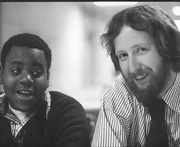
This was Leo and me around 1974.

Monday, February 07, 2022

Mentoring Connections - Over Many Years

If you've read many of my articles you know I advocate for the growth of long-term volunteer-based tutor, mentor and learning programs that reach youth in high poverty neighborhoods. My passion comes from leading such a program from 1975 to 2011 and from the many long-term connections I've been part of. 

Below are a few photos that illustrate this.

Me and Leo Hall - 1973 till 2022 - Leo and I were matched in 1973 when he was in 4th grade. We've stayed connected since then. We're now connected on Facebook.  View past articles where I've talked about Leo and myself.  Leo's now looking for a Kidney donor. If you think you can help reach out to me on Facebook. 


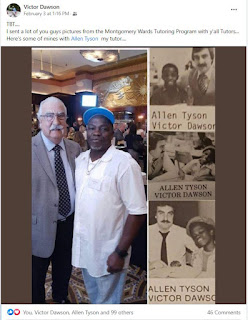
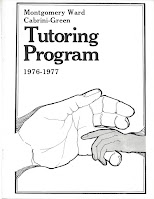
Allen Tyson and Victor Dawson - 1975 till 2022.  Below is a set of photos that Victor posted on Facebook last week.  The three on the right are from the year-end yearbooks that I created every year from 1974 to 1991.  


Allen has actually been involved a year or two longer than myself.  He has had a series of mentees, including Victor's siblings, over the past 50 years.  Here are a few articles where you can read about Allen and past mentees.  


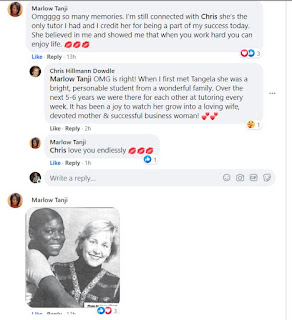
Chris Dowdle and Tangela Smith Marlow - late 1980s till 2022. Below is a Facebook interaction in February 2021 between Chris and Tangela.  They met in the original program at Montgomery Ward, then joined Cabrini Connections in 1993 when Tangela aged out of the original program. Chris's husband, Ray Dowdle, with the long-term board president of Cabrini Connections. 


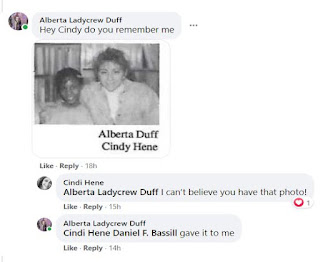
Alberta Duff and Cindy Hene.  1980s till 2022.  This is part of a Facebook conversation started by Alberta in 2021.  She asked if I knew who her past tutor was before the Cabrini Connections program.  I looked in yearbooks from the late 1980s and found the photo of her and Cindy, then looked for Cindy on Facebook. I then re-connected them.


View the yearbook archive.

Victor has had several of the yearbooks from past years and a couple of years ago I shared this link where anyone can find the entire collection from 1976 to 1991. Visit this page and you can find links to newsletters from 1993-2003 from the Cabrini Connections - Tutor/Mentor Connection, as well as annual reports from those years. 


When Victor posted some photos of him and his Cabrini-Green friends and family recently I skimmed through them and did not recognize any faces after so many years. So I suggested he look at the old yearbooks and put pictures from the past with those of the present.  He did that.

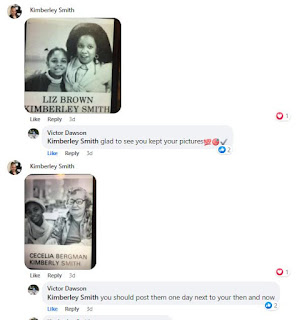
I also suggested that others look up their former tutors.  Kimberly Smith found photos of herself with two of her former tutors and posted them the the Facebook conversation.


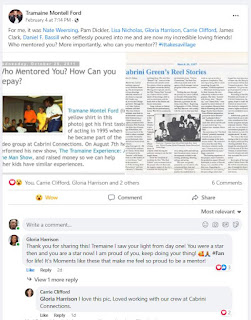
Tramaine Ford accepted the invitation too,  and posted the photos below to Facebook. He received responses from Carrie Clifford and Gloria Harrison, who he met when they launched the Innervisions Youth Productions video creation group at Cabrini Connections in 1997.  


These are just a few of the connections taking place today, in 2022, that were started through the tutor/mentor programs I led from 1973 to 2011.  They show that the work we did in past years to help build and sustain these relationships are still paying dividends today.  

I'm connected to each of these former students and many others on Facebook and delighted when I see them posting stories telling of the success of their own kids.  I'm also saddened when I hear of tragedies that continue to plague others.

There are very few organized tutor/mentor programs in Chicago that have longer histories than 20 or 30  years, but there are some.  The program I led at Montgomery Ward is now Tutoring Chicago and can probably offer many stories of these on-going connections.  The Chicago Lights program at 4th Presbyterian Church and the Custer Tutoring Program in Austin are also long-term programs. 

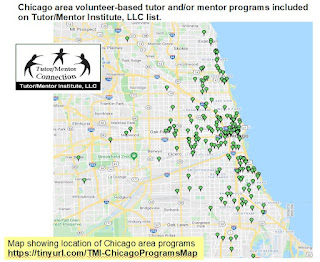
Each green icon on this map is the location of one of the tutor and/or mentor programs on a list I host. Find the map and list at this link.  Browse through the list, look at the websites, identify other long-term programs and/or unique mentoring models, then share stories of these programs with your friends, family and co-workers. Help each program attract the resources needed to build long-term connections. 


Create your own map stories.

I've plotted the location of Chicago area tutor and/or mentor programs on maps since 1993 and created overlays showing indicators of where programs are most needed, such as high poverty, poorly performing schools and/or incidents of violence.  

Use this information to create your own map-stories that draw attention, volunteers and donors to programs in different parts of Chicago.  Browse the list of map-based articles on this blog, or the MappingforJustice blog to see how I've embedded maps in stories. 

Increasing attention. Sharing information.

I hosted Tutor/Mentor Leadership and Networking Conferences in Chicago every six months from May 1994 to May 2014 to help programs learn and share from each other, and to draw media and donor attention.  I've used my newsletters, blogs, social media and websites to encourage every program to constantly learn from each other, and to share their own stories of what works, what challenges they face, and how their students and volunteers are still connecting after many years.  

I've  used articles like this to encourage programs to share more information on their websites and to create and use blogs. I feel such information would provide more evidence that donors, volunteers and parents might use to choose programs to support or get involved with.

However, more people need to encourage this than myself, especially donors.   

Add your photos. Rebuild connections.

If you're part of the tutor/mentor programs I led I encourage you to go through the old yearbooks and find photos of yourself and your tutor or mentee, then share them on Facebook with myself and each other. In doing so you show the value of these programs and encourage donors to support existing programs that are doing similar work.  And, you help re-build and strengthen the ties that bind us. 

Are you part of other programs? Tell your own stories.

If you are connected to other tutor/mentor programs in Chicago or in other cities encourage them to share stories showing the connections that still exist between former students and volunteers, or the successes alumni are having because of the help the programs provided in the past. Use Facebook, Twitter, Instagram and LinkedIn to get the largest possible attention for your posts, and for these organizations. 

Together we can draw greater attention to programs that support long-term connections and help them attract the volunteers and donors needed to help those programs operate from year-to-year.

Thanks for reading.  

I hope you'll connect with me on one of these social media platforms. 


Wednesday, December 14, 2016

Article in "The Atlantic" - Mentoring's Promise and Limits

Leo Hall and I were featured in this article, titled "Mentoring's Promise and Limits" which appeared today in The Atlantic. I want to thank Larry Gordon for interviewing me and Leo for the story.

Leo and I first met in 1973 when he was in 4th grade and I had just joined the tutoring program at Montgomery Ward as a volunteer. We have stayed connected for over 40 years, which to me is the goal of "well organized, long-term" tutor/mentor programs.

The article includes comments from many researchers but really does not dig into the information base needed to understand where organized programs are most needed, where existing programs are located and what they do, or who they serve. Nor does it talk about the long-term, on-going support, that business, media, donors, volunteers, etc. need to provide to enable long-term programs to exist ....where relationships like the one between Leo and I are able to launch and grow.

I've posted more than 1000 articles on this blog since 2005 that show strategies intended to help well-organized programs grow. If you look at this collection of printed newsletters from 1994-2001 you will see that I started sharing these ideas long before blogging became available.

I created the Tutor/Mentor Institute, LLC in 2011 to continue the Tutor/Mentor Connection, which started in 1993 as part of a small site based tutor/mentor program that I was forming.   I still depend on contributions to do this work, even though I do not operate as a 501-c-3. Visit this page to offer your help.

Thursday, March 28, 2024

What motivates me

If you've read any of the articles posted on this blog since 2005 you'll see that I'm constantly advocating for the growth of comprehensive, long-term, volunteer-based tutor, mentor and learning programs that operate in non-school hours and connect k-12 kids living in high poverty areas with adults who work in a wide range of industries and have many different backgrounds.

What drives this passion?  Experience.

I led one volunteer-based program from 1975 to 1992. It served 2nd to 6th grade kids. I led it as a volunteer while holding a full-time retail advertising job until 1990, then became the first paid executive director when we turned it into a non-profit organization in mid 1990.

Below are two of the yearbooks that I created for that program.

The first if the 1976-77 yearbook.   View at this link. About 100 pairs of kids and volunteers were involved.

The second is the 1988-89 yearbook.  View at this link.  Over 280 2nd to 6th grade kids and 300 workplace volunteers were involved that year. 

When I joined as a volunteer tutor in 1973 the program was already eight-years-old.  I became its leader in the 10th year.  We grew over the next 15 years because of the organization I brought to the program and the way we engaged volunteers as leaders, not just tutors and mentors.  

I left that program in October 1992 and with the help of six other volunteers we formed a new program, called Cabrini Connections, to help kids who aged out of the first program after 6th grade have continued support all the way through high school.

Below is the 1994-1995 annual report for Cabrini Connections. View at this link. 


Below is the annual report for 2008-09.  We stopped doing print versions around 2000 and did PPT reports through 2010.  Here is the link.


Here's a folder with Cabrini Connections-Tutor/Mentor Connection Annual Reports from 1995 to 2010. Each report shows the activities that we offered to support student and volunteer involvement.  If you lead a program you might duplicate some of this work in your own program.

We held the first sessions of the Cabrini Connections program in January 1993, meeting with some teens monthly at Wells High School and others every Saturday morning at St. Joseph's Church on the North side of Cabrini-Green.  We were reaching 42 kids by June of 1993.

Then in the fall of 1993 Montgomery Ward gave us an entire floor of their corporate tower, over 20,000 sq ft of space, and we began expanding. 

If you view page 6 of the 1994-95 annual report you'll see how the number of students enrolled grew from 42 in June 1993 to 90 in the fall of 1995.  Page 7 of the report shows similar growth in the number of volunteers, from 30 in spring 1993 to 103 in the fall of 1995.

By 1998 our graduating class of high school seniors included five teens.  In 1999 it was nine. Thus the size of the program did not grow much since seniors were graduating each spring. 

In 1999 everything changed. Montgomery Ward was sold and we had to move to rented space in Cabrini Green to continue operating.  We lost Wards as our major donor in 2000 after they went out of business. And we lost many more donors in 2001 and 2002 due to the financial crisis after the 9/11 attack and the Dot-Com melt-down. 

Our move to rented space meant we had a much smaller facility for two years. Then we moved to a bit larger space on Huron, near the intersection of Halsted and Chicago Avenue. Our average enrollment from 2000 to 2010 remained at about 80 teens and 100 volunteers.   Open this PDF and see photos showing the 10 years from 1993 to 2003. 

In 2010, I created a report showing a decade of work. On page 10, I show HS graduates each year from 1997 to 2010. View that report at this link. 


We did all of this while also building the Tutor/Mentor Connection, to help similar  programs grow in all high poverty areas of Chicago. 

In November 1992 when we decided to form Cabrini Connections we realized that one more small non profit could be life changing for a few teens, but would have little impact on the more than 200,000 kids living in high poverty areas of Chicago. So we decided to split our resources and create an intermediary that could help tutor/mentor programs grow in many places.  We spent all of 1993 doing research and planning and launched in January 1994 with our first survey to learn about other tutor/mentor programs in the city and suburbs.  That led to our first published Directory of Programs and first Tutor/Mentor Leadership and Networking Conference in May 1994, and first citywide Tutor/Mentor Volunteer Recruitment Campaign in August/September 1995.

In each of the annual reports from 1995 through 2010 you can see work done to help tutor/mentor programs, including our own, get the resources they need.  If  you look through the articles I've tagged with "history" and "archives" you can see more evidence of what we were doing.

Then browse through the sections of www.tutormentorexchange.net and see everything that is available to help tutor/mentor programs start and grow and to help leaders be more consistent and strategic in supporting them.  


I often said that I was an effective leader of the Tutor/Mentor Connection because I also led a single tutor/mentor program. I knew how hard it was to attract kids and volunteers and keep them coming week-to-week and year-to-year. I knew how difficult and frustrating it was to attract and keep donors.  

Yet I've often heard from parents and alumni how important our program was to them.  I often heard from people in other places how much they appreciated what the Tutor/Mentor Connection was doing.


In all these years I've really only had one mentee, which was Leo Hall, who I was matched with in the fall of 1973, when he was entering 4th grade. We met weekly during the school year for the  next 3 years.  After 6th grade Leo continued to volunteer to help the program as one of the Junior Assistants who passed out milk and coffee. So we stayed connected.

I did not take another single youth as a mentee because as leader of the program, they ALL were my mentees.

I received a call from Leo this morning. He spotted a scam on Instagram, where someone had set up a duplicate account, using my profile picture. I reported it, and so did a couple of other people and that account has been removed.  I'm at https://www.instagram.com/danielf.bassill/ on Instagram. 

As we talked Leo told me to expect a call from an event organizer who was putting together his 60th birthday celebration. He wanted me to be there, or to record a video, if I could not be there.


Thus, my own experiences leading a single tutor/mentor program drive my passion and make me a credible advocate for cities building and sustaining  volunteer-based tutor/mentor programs.

The other thing driving my work is this front page from the October 15, 1992 Chicago SunTimes, following the shooting death of a 7-year-old boy in Cabrini Green.   The headline says "7-Year-Old's Death at Cabrini Requires Action".

If you open this folder you'll see many similar stories that I've collected over the past 30 years. They "Demand Action" but very few follow that with the type of on-going effort I have modeled.

Which is not enough.

As I talked to Leo today I again encourage him to use his own talents to amplify my "call to action" and to encourage other alumni to do the same.  As I write my blog articles I encourage you to share them and get other people involved.

Be like Dan.

You can't just say "ENOUGH". 

You need to act regularly to draw people to information they can use to be better informed and to be motivated to use their time, talent, dollars and votes to build and sustain volunteer-based tutor/mentor programs in more places and to help remove the structural racism that has roots extending back over 300 years in America.

I think I've written enough for today.  Please connect with me on Twitter, Facebook, LinkedIn, Instagram and other platforms and share my posts with your network.  

And, if you can spare a dime, please visit this page and make a contribution to help me keep these archives and my library available to you and others.