Showing posts sorted by relevance for query saturday. Sort by date Show all posts

Monday, September 28, 2009

The Violence is just on the other side of the Highway

I spent most of the day Saturday at the Morgan Park Church of God, located on the far South Side of Chicago. On Friday, I posted a map of Roseland, listing five youth serving organizations.

On Thursday afternoon, another Chicago teen was beaten to death, as part of a gang fight, right outside of one of these agencies, Agape Community Center, 342 W. 111th St., . Read the follow up story in the Chicago SunTimes.

Below is a map showing the location of Morgan Park Church of God, just west of I-57, within the 15th Illinois State Senate District.


This church is just West of Roseland. Further west are more affluent communities and more faith groups who could be mobilizing volunteers and donors to support the growth of volunteer-based tutor/mentor programs in Roseland, Englewood and other South Chicago neighborhoods. Voters in these areas could be judging elected leaders based on what they do to help such programs grow, if maps like this were used to show change over time. Anyone can be using the ideas in the Tutor/Mentor Institute to build their own leadership strategies.

I went to this health fair at the invitation of Rev. Jonathan Hall, of Vernon Park Church of God. My goal was to continue to reach out to faith leaders, to help them create communications strategies that would draw more people from faith communities in the city and suburbs, to information that would help them learn where, and how, they could be involved in helping volunteer-based tutor/mentor programs grow in high poverty areas.

While there was not a huge crowd, this was a successful network-building event for me. The map below illustrates the different people and organizations that I connected with because of this invitation and my willingness to give up my Saturday for this event.


One of the people I met was from Aunt Martha's Youth Service, and had attended a Tutor/Mentor Conference in the past. Others were from different types of health care providers, and from the host church, Morgan Park Church of God.

In each case, my goal was to introduce the T/MC, and point out ways that the people I meet can begin their own leadership and network-building strategies, so that people in health organizations, faith groups, business, and politics, would be more consistently involved in learning ways that people can use time, talent, and limited dollars, to build programs that connect youth with more positive mentors, and non-school learning and enrichment, so there are fewer youth becoming involved in the tragedies that we keep reading about in the paper.

Here's a follow up map that I created and will be sharing with the people I met on Saturday. It shows a 12 month schedule of communications, outreach, and networking at events such as the Nov. 19 and 20 Tutor/Mentor Conference.


Imagine if dozens of faith groups that are not located in poverty were using this strategy to engage the members of their congregations, and the places where faith members work.

That's our goal and we'll be happy to meet with anyone who'd like to discuss ways they might build such a strategy.

Sunday, September 26, 2010

Inner City Violence - "its not just in Chicago"

I attended a memorial and community resource fair on Saturday at St. Sabina Church, on the South Side of Chicago, near Racine and 79th Street. You could have read about it on the front page of Saturday's Chicago Tribune, and again in today's Tribune.

It was a moving ceremony, with bells rung for each of 78 young people killed this year and with mothers of Derrion Albert and Lazarus Jones and police officer Thomas Wortham speaking to the audience of over 300 people.

I have seen Rev. Dr. Michael L. Pfleger in the news many times, but this was the firs time I've been to his church. I was one of about 40 community based organizations sharing information at the resource fair.

During the service, Fr. Pfleger said "It's not going to stop until we make it stop" and then he added, referring to the Mayoral election "Don't give money to anyone who doesn't have a track record working to end violence or improve schools."

I wish I had had a chance to talk one-on-one to Fr. Pfleger. I would have showing him the maps and the map gallery, and illustrated how political leaders can use these to mobilize and distribute resources to tutor/mentor programs in their districts. I did not get that chance on Saturday, but hope others who want to end violence, will take a look at the way we are using maps.

Monday, September 14, 2015

Follow the Leader(s): Connecting the Dots.

I attended an event on Saturday at the James Jordan Boys & Girls Club, which was led by Tavis Smiley, a well known Black entertainer. This was one of many visits to different cities, where he's drawing attention to poverty and inequality, not just focusing on Black Americans, but on all who live in poverty in America (read more). Much of his focus is on inequality for Black Americans, which is a huge issue for Chicago and other major cities. His closing message was that we need to get this into the 2016 presidential campaign debates, and that will happen on January 17, 2016. He encouraged all of us to use #2016povertydebate often in our social media to build attention for the debates, and to draw viewers to his web sites.

Over the past year I've found a few other highly visible people focusing on inequality. Robert Putnam wrote a book titled Our Kids: The American Dream in Crisis which he promotes with his Facebook page. Robert Reich has a website and Facebook page, and is releasing a new book this week, titled “Saving Capitalism: For the Many, Not the Few,” Hedrick Smith is now on Facebook and has a web site titled Reclaim the American Dream.

Are these guys talking to each other? I can't find links on their web sites pointing to each other.

When I started the Tutor/Mentor Connection in 1993 I could have created a web site with just my ideas, based on 20 years of leading a tutor/mentor program in Chicago. Instead, I said "let's build a library full of ideas from anyone who is working in this arena". The map below shows the many different sections in my library. In this link, I've posted links to the men mentioned above so that anyone who visits my library, can find their ideas, too.


This link points to a map of the four sections of the graphic above. Open each, and you'll see sub sections. Each has links pointing to dozens of web sites.  (note: in January 2016 I created this blog article, with links to individual sections of my web library and to articles I refer to often.

This has two purposes.

One, it enlarges the pool of ideas anyone draws from to fight inequality in America, or the world.

Second, it is an attempt to connect all of these people and organizations to each other, in on-line, on-going, conversations that might actually generate enough support to change the public will and generate the resources needed to help close the opportunity and inequality gaps we face.

There were nearly 200 people in the audience Saturday. During the 30 minutes question and answer session a few had the opportunity to ask questions. Most used the time to offer their own self-promotion and/or opinion. Out of 200, perhaps 15 had one chance to talk. Even the panel members only had a few opportunities to offer their own ideas.

I'd love to go to Tavis Smiley's web site and find links to the web sites and blogs of each panel member, just so I could reach out and learn from them and try to connect where it fits. I do encourage you to visit his site and many others in my web library, then organize a discussion group at your faith group, school, business, etc,. and start a real discussion around the ideas you're going to find.

I created this graphic many years ago to show how any one of us can invite people we know to talk about ideas that help improve equality and opportunity in America. One of the panel members on Saturday, a young man named Jamal Cole, said "Every one of us has agency. There is something we can do."

I agree. Everyone can pass on information to others about ideas and web sites where we can learn, gather, share and innovate solutions to complex problems. Furthermore, we can build upon what we're learning, and create new ways of understanding.

This graphic was created a few years ago by an intern who first looked at the graphic I posted above, then created her own interpretation. This is in two parts. Below is the second. Student in schools, non-school programs, universities and/or faith groups, aided by adult mentors, could be creating their own interpretations of these ideas, in a collective effort aimed at building the public will needed to turn ideas into solutions that reach into every high poverty area of the country.

I hope that the people who I point to will apply some of these ideas on their own web sites. I'd like to become an important resource and part of their own conversations, not just someone who follows their lead.

2017 Update - 
Since I wrote this Donald Trump  has been elected President of the United States and the anger of a neglected rural and small town American population has began to come into view.

My work has focused on urban poverty, focusing first on Chicago, then on other cities. The issue of urban poverty in Chicago is shaped by long-term segregation between classes and races, with a large African American population living in high poverty neighborhoods. Much of the research in my web library focuses on this population and the reasons youth and families need the extra help offered by organized non-school tutor/mentor programs. 


I created the graphic at the right to show that while all youth need help, kids in poverty need extra help.  I think I'll update this to show that the size of your geography, big city vs small town, also offers difference in terms of needs and challenges.

I'd like to find people building web libraries like mine who are focusing on this population.

Saturday, October 19, 2019

Using Archives on this Blog

Today I did a search for the word "Saturday" in the search box in the upper left corner of this blog.  I do this often just to see what I've written in past years...since I started this blog in 2005.

I found this graphic in one article.  I was trying to show that all youth need help growing up, but that some need extra help based on where they live, their economic status, or physical and/or health issues.  The Tutor/Mentor Connection, started in 1993, has focused on youth living in high poverty areas, which is the light blue area on the graphic.

Included in this article

Here's another graphic found in the "Saturday" articles.  This one focuses on ways groups of people from different backgrounds can gather on an on-going basis to read and discuss the information in my blog articles, or in the web library that I started building in the late 1990s. 

Included in this article

Here's the link to my "Saturday" search results.  Take time to browse through these. Share them with friends, co-workers, faith group and other groups you are part of and ask "how do these apply to our own efforts?"  

If you're creating similar articles share the link in the comment section. 


Friday, September 30, 2005

Illinois High School Summit, held Sept. 29, 2005

Illinois High School Summit presented by Illinois College Access Network (IllinoisCAN) and Chicago Public Schools (CPS). The discussion at the Summit was framed by the question, “What is the future vision and what must be achieved systematically for high schools to be successful in the 21st century?”

Some of the key speakers and panelists included: * Arne Duncan, CEO of Chicago Public Schools * Jesse Ruiz, Chairman of Illinois State Board of Education * Terry Mazany, President and CEO of the Chicago Community Trust * Allan Alson, Superintendent of the Evanston Township High School * Peggy Luce, Vice President of Chicagoland Chamber of Commerce * Sandra Guthman, President of Polk Bros. Foundation * Donna Carroll, President, Dominican University

Opening: Joan Klaus, Founder Illinois College Access Network

Joan set the stage for the conversation by providing statistics similar to these which were part of a speech given in late September by U.S. Secretary of Education Margaret Spellings in an address to the National Association of Manufactures Board of Directors Meeting in Washington, DC. Among her comments, she said:

Manufacturing executives rank a "high-performing workforce" as the most important factor in their firms' future success. But how can you be a high-performing worker when you don't even have a high school diploma?...

"Among ninth-graders, five out of 10 minority students fail to finish high school on time. Overall, three out of 10 ninth-graders don't finish on time... Leaving our high school students behind is not only morally unacceptable, what the President calls "the soft bigotry of low expectations." It is also economically untenable.

"When you lose a million students every year that has a tremendous impact on our economy. And it represents the American Dream... denied.

"So I would suggest, for this and a host of other reasons, that how well our students are doing is not just an "education issue." It's also an economic issue, a civic issue, a social issue, and a national security issue."

You can read the entire Margaret Spellings speech at: http://www.ed.gov/news/pressreleases/2005/09/09282005.html

A similar 2-day summit was held in Washington in September 2005. The two-day event, called The Fate of the American Dream: A National Forum on Strengthening Our Education and Skills Pipeline, was hosted by Jobs for the Future and sponsored by a number of corporations also committed to improving the education and skills pipeline. JFF has put much of this summit on its web site. Visit http://www.jff.org/jff/approaches/econopp/showcase/AmDreamForum.html

The Chicago High School Summit was attended by more than 100 leaders of community organizations, foundations, businesses, schools, etc. It was hosted by the Illinois College Access Network (http://www.illinoiscan.org ) . While the panelist were first rate and the information discussed was critically important, this forum did not have an Internet collaboration portal, thus most of the participants did not get to ask questions, and the comments of most speakers were not recorded or posted on the Internet where others could read them, comment, or reach out to find ways to work together to solve the problems that were discussed.

I’ve commented on this in previous messages that I’ve posted on this blog since April 2005. While the Summit offered time for networking, the number of participants made it impossible for anyone to talk to everyone he/she might have wanted to meet. Such networking is also not suitable for an exchange of complex ideas, which is possible through an Internet discussion portal.

I took notes as I listened to the speakers and below, I’ve posted some quotes that I feel were important. I’ve also added my own comments (see DB: xxx) Whenever I attend a meeting I am always thinking of the purpose of the meeting, and the goals of the Tutor/Mentor Connection, as I listen to speakers. Thus, I’m constantly innovating new ideas making notes of “things to do” as I listen to speakers. Yesterday, for instance, I took 12 pages of notes.

Most of the time these notes just go in a file that I keep, which I refer to for inspiration from time to time. If I had someone who would transcribe these notes for me, I’d post them on a blog like this, so others could share my own thoughts and perhaps innovate along with me.

IF YOU ARE AN ORGANIZER OF THE HIGH SCHOOL SUMMIT, OR IF YOU WERE ONE OF THE SPEAKERS, I HOPE I HAVE NOT MISQUOTED YOU IN ANY WAY. IF YOU WOULD LIKE TO POST A TRANSCRIPT OF YOUR COMMENTS, ON THIS BLOG, PLEASE DO.

IF YOU HOST YOUR OWN WEB SITE WITH THESE COMMENTS, PLEASE POST THE WEB SITE ADDRESS IN THE COMMENTS SECTION
.

First Panel:
Moderated by Warren Chapman. Vice President for Corporate Philanthropy at JPMorgan Chase:
How did we get here? 100 years ago most schools only served 3rd through 8th grade. * High schools began to be built in early 1930’s. Not planned as college prep. Post World War II high schools became national policy issue. In 1960’s became a civil rights issue. In their current states high schools are less than 75 years old.

DB thought. It never was the intention of wealthy to educate masses to hold leadership positions reserved for their own kids.

First panelist: Michael Cohen, President of Achieve, Inc.
Achieve’s web site provides a much better overview of what Michael Cohen added to the forum than I can post here. Visit http://www.achieve.org/achieve.nsf/Challenge_Overview?OpenForm

Cohen: Formal high school sorting process has limited options for many kids by steering them to college or vocational paths. Now, every child needs to be able to chose for himself which path he wants to take

Second Panelist: Allan Alson, Superintendent, Evanston Township High School. Mr. Alson is also part of the Steering Committee for Chicago Public High School’s High School Transformation Project.
DB: I would love a transcript of Mr. Alson's comments. He was right on target.

. Presumptuous to predict where we’ll be in 70 years when the system we’re in is only 70 years old.
. Not one system fits all needs. Need to have goal.
. High schools must serve Equity, Social Justice, Democracy goals

DB: even in US Constitution it may not have been intention of framers to educate all kids

DB: why rebuild box? Why not re-design learning distribution system?

Alson: can’t just fix one part and not fix other connected parts.

. Goal: a) improve curriculum; b) improve instruction; c) connect youth with teachers and other adults


Alson: Let’s not make mistake of saying all kids enter high school at same place (academic preparation)

Kids are not just behind in skills. If you’ve gone through 14 years of your life thinking you cannot succeed, your confidence is eroded.

As you rebuild skills, think of messages we send – high expectations. Every teacher, counselor, adult, needs to say we know you can succeed and paint picture of how to get you there.

DB: wish Alson had his comments on Internet. A ETHS student could interview Alson and post his comments on blog.

Alson. Is a 10 month year sufficient to get done what we need to do? We need to create professional learning communities.
DB: are these connected to peers on other schools?

Broker partnerships with community agencies and business. Give offices inside high school so CBOs can stay connected with same kids from middle school through high school.
DB: Great idea!!

Chapman: How do we organize schools in order to train knowledge workers. What are things that need to happen over next couple of years? From Tops Down and Bottom UP?:

Cohen: organize government and business leaders
a) learn math and English skills required for careers in business
b) research shows that only 3 states require students to take needed courses (state standards too low
c) graduation tests standards too low. In six states the math you need to know to pass the test is equivalent to what kids are expected to know in 7th or 8th grade in other countries.

Cohen – top down
a) get expectations into state policy; bring educators and employers in to picture in ways not done before; make system more transparent
b) build political will to make these changes
c) build different pathways for kids to go through the system to reach common standards of career and technical skills
d) build capacity of the system to deliver results

db: what is the marketing plan that will get millions of people involved and educated on this issue. What is strategy to create this political will?

Alson:
It is one thing to say they need to take this, but Algebra 1 in one school is different than Algebra 1 in other schools. We must address equality in learning.

We must listen to kids. What helps/hinders their education? Turn peer influence into a positive.
Db: this could help with program in peer mentoring at Maine South where my daughter is a 9th grader

Alson: We have broken system on how we recruit, train and support teachers.
a) Must be building human capital to deliver goods
b) This must be a K-16 system. Need to look backwards
c) Knit communities together. All work together.


Chapman conclusion: I hope this panel inspires you to think about these issues.

Arnie Duncan – CEO of Chicago Public Schools

Improving performance of high schools is most important issue in America. We need to figure out how to make this viable.

Db: Tutor/Mentor Connection is not just a connection of volunteers with kids. It is a connection of a volunteer with the issues of educating youth for 21st century careers. This is a social, democratic issue and is a strategy of engagement. Why don’t schools understand this?

Duncan: Every other city mirrors what is happening in Chicago. Goal is to have systems of excellence instead of just islands of excellence.

Duncan talked about research team that came up with new plan for high schools. Goal was how to take system to next level?

DB: no one on research team every talked to me. I cannot find a web site collecting public input.

Duncan; We’ve improved. We’re down to a 10% annual drop out per year.

DB: that’s 40% over 4 years.

Duncan: We need a laser-like focus
a) raise expectations
b) improve quality of teachers
c) improve quality of opportunities

Improve quality of teachers and classroom instruction
1) better tools; better support
2) RFP out for new curriculum (DB, don’t we change curriculum too often? Shouldn’t we stay with something long enough to make it work?)
3) Pilot in 15 schools per year (DB, with 600 high schools in system, that will take 25 years to reach all schools

Need to hire 100 great principles. No good organization without good leaders. We need to figure out how to get better at this.

a) shrink principle eligibility pool (fewer choices of higher quality people)
b) area managers spend more time on development of leaders
c) hire recruiter to go national in looking for talent
db: how to address retention of quality people in system

Expand Quality Options - need more schools like Whitney Young. Average students don’t have quality options. Students need more choices. Need 6-8-10 great options in each section of city.

DB: What about social and emotional development, civic education, community and career mentoring? Adopt a neighborhood vs adopt a school. What about elearning? I did not hear anything all day about Internet learning.

What are we doing to get kids better prepared to enter high school with a chance to succeed? This means we need to focus on elementary schools.

URGENCY: Easy to say this is theoretical issue. We need to recognize how important this is. 85% of CPS students live in poverty. This is a life transforming opportunity. Where we don’t educate well, we perpetuate poverty.

They can rebuild New Orleans all they want, but if they don’t change the education system you’ll still have the same poverty 30 years from now.

Media not going to put spotlight on education. We need to find ways to do it ourselves.
DB: this is why I don’t understand his not embracing T/MC strategy.

Duncan’s conclusion: we must move from islands of excellence to a system of excellence.

From 9:30 to 10:30 A Panel Discussion was moderated by Peggy Luce: Her first question to Jesse H. Ruiz, Chair of the Illinois State Board of Education, was “Is there one challenge? One magic answer?”

Ruiz: Remove bureaucracy; raise standards. Gary Chico appointed to lead Illinois Education Task Force.

The second panelist was Cynthia Barron, Instructional Officer, Small Schools Area for Chicago Public Schools:

Luce to Barron: “What is most important issues of keeping students on track and bringing others up.”
Barron -
a) curriculum is most important element of high school transformation,
b) we’ve been teaching to the middle. We need to have personal plans for every student
c) every high school needs to offer advance placement classes for students that want rigor
d) at risk students, those who enter unprepared, what do we do?
e) Rigor, Relevance, Relationships-every school needs support structure to catch youth who begin to fail; intervene early
DB: where is mentoring in strategy? If boys tune out at 3rd grade, support needs to start earlier.
f) going to take ton of strategic planning to keep the momentum going
DB: what is strategy for public engagement? Building the political will?

The third panelist was Donna Carroll, Pres. Dominican University; and Federation of Independent Colleges and Universities –

Ms. Carroll introduced herself as “the university voice in college readiness”.

Remediation –access to higher education is a promise, and a presumption. I don’t think colleges will ever be out of the remediation business.
DB: universities need to re purpose resources. Look for other ways to use resources to impact college readiness goals. Colleges have army of students, faculty and alumnii.

Systemic issues of college prep. Dominican University’s average ACT is 23. CPS average ACT is 17.

Expectations and self-assessment. Students need mechanisms for understanding themselves. Most college students say
a) I wish my High School teachers pushed me harder
b) I wish I studied harder
c) I wish I knew what was expected for me to have the career I want

DB: I wish kids would listen to adults when we gave them all of this information, over and over again.

Colleges looking for students who persists vs students who do not.

Collaboration – we need to communicate more.
a) connect college and high school faculty. We need to create capacity and time to do that
b) very often it is student with potential who is working two jobs just to attend college. How can we expect him to do college work? We need to provide financial support.
Db: this is that question of political will again.

The next panelist was Jeff Mays, President, Illinois Business Round Table:

Role of business: help shape message; help reach broader audience
DB: Read ROLE of LEADERS in Tutor/Mentor Institute at http://www.tutormentorexchange.net

How they (youth) make decisions scares me. We need to do more to influence how they make decisions.

The next panelist was Terrell Burges – an African American teacher at Lane Tech high school. Burges was a recipient of the Golden Apple Scholarship and was a Bank One Saturday Scholar. He still works with Saturday Scholars in the summer.

a) many students don’t have access to technology and classroom support
b) need to provide authentic professional development for teachers; more collaboration time
c) provide extra learning opportunities. Saturday Scholars gave time to empower students to think
d) When students have opportunity to discover on their own, they learn
e) Only way to do this is to empower teachers
DB: but his help came from mentors in a non-school, privately funded tutor/mentor program. What about making more of these available?

The final panelist was Sandra Guthman, CEO, Polk Bros. Foundation. Funds Chicago HS Redesign Initiative.

DB: Polk Bros Foundation has funded the Cabrini Connections Tutor/Mentor Program for several years, yet, they don’t seem to have any interest in the Tutor/Mentor Connection. It seems that foundation’s who fund mentoring, don’t automatically include mentoring in strategy of high school redesign. Why not? What are we not doing?

a) need to work as individual foundations to move system forward.
DB: if school reform system does not include mentoring in strategy, foundations won’t make priority to fund

b) some foundations work toward goals in a single community.
Db: Easy to work toward goals in a single community, but leader needs to assure that there is a foundation funding each community

c) Foundation role of critical friend (outside pressure). Maybe we can work together to make it (system) better.
d) New Schools for Chicago – some corporation and foundation supporting specific schools
DB: how do they network and learn from others who do same work in different places. Seems redundant.

At this point the moderator said “A few minutes for questions”. There were more than 100 people in the room. Less than 10 were able to ask questions and most were not able to follow up on the questions they asked.

One man brought up issue of political will. He said “Are the right people involved to make significant change? Are the people driving the process the ones in charge of crafting the solutions? This question was not given an answer and the questioner was invited to email the ICAN to post his question.

DB: this illustrates the need for a forum like this to have an internet component. This person and all others could have posted questions to speakers, and each other, on line.

DB: this event had a self-serving focus on ICAN. Two speakers mentioned Saturday Scholars. However, there was no effort in the meeting to expand mentoring. The two examples of success of CPS were a teacher and a college student, both who participated in Saturday Scholars, a privately funded non-school program. If this is such a good program why are policy makers not trying to get more programs like this?

While we talk of having good schools in every neighborhood, why are we not talking about having good Saturday Scholar type programs in every neighborhood?

Final speaker: Omar, a Saturday Scholar. He was one of the best speakers. I asked him to blog his comments for T/MC

Wish list for schools:
a) financial literacy
b) people of different backgrounds working together
c) cultivate good social skills
d) sports for everyone, not just talented
e) ought to be programs for students to make sure they are there (at college) on first day of classes. Transition from inner city high school to college terrifying to some
DB: I understand this need. A couple of y ears ago we had one volunteer drive a student to Wisconsin for first day of school just to make sure he got enrolled.

Terry Mazany, President, Chicago Community Trust, concluded the meeting

Mazany listed school reform funding goals of Trust:
Read the Strategic Vision of the Education Initiative at: http://www.cct.org/grantsseekers/grantprograms/education/index.html

DB: CCT Education Initiative Goals do not seem to include funding of community supports or funding of elearning and collaboration.

We’re in third decade of school reform post A Nation At Risk. We know a lot. There is a paradigm shift. We’re now trying to prepare all youth for higher education.

Education is means to fulfill promise of American Dream

Failure to create school system that works leaves young people out of American Dream.
DB: suggest he say “learning system” instead of “school system”

a) 8 hour school day needed; staffing ratios that provide time for planning
b) counseling ratios of 100 to 1 needed
c) inner city schools need more resources than suburban schools because of poverty
d) resources needed for technology; need more buckets of water. Illinois is 49th in state funding of education
e) Fourth R: real world connections. Need pathways to careers.
DB: if foundations follow lead of schools and schools do not show non-school mentoring as priority, then funding will not support these programs. If these programs not in place, neither are pathways or adult supports.

The formal presentations ended at 11:15am and many participants continued to introduce themselves to others and network. I had the opportunity to talk to more than a dozen people who work with the T/MC, or who I have approached in the past for support. That’s the value of forums like this that bring people together face to face. As I left I was talking to an African American woman and she saw that my name tag said Cabrini Connections.

She asked if I served the Cabrini-Green neighborhood and when I said “yes” she told me she grew up in Cabrini-Green. I asked if she had ever gone to Montgomery Ward for tutoring and she said “yes”. I told her that I was the leader of that program when she was attending. I also told her of my goal of attracting many of the 4000 volunteers and more than 2000 youth who have participated in the Wards program since 1965 to the http://www.cabriniconnections.net web site where they can share their stories and talk about how the opportunity to connect with a tutor or mentor at Montgomery Ward has influenced their lives. By bringing people who have been enriched by this process back together via the internet, we can continue to connect youth and adults from different backgrounds in the on-going networking that removes social and economic isolation and creates pipelines and pathways to careers.

We also can build an army of support for the vision of the Tutor/Mentor Connection, which is to have programs like Cabrini Connections available to young people in every poverty neighborhood of Chicago and every other large American city.

IF YOU WERE QUOTED IN THIS SUMMARY, AND WOULD LIKE TO WRITE A COMPLETE SUMMARY OF YOUR COMMENTS, PLEASE POST THEM IN THE COMMENTS SECTION OF THIS BLOG.

IF YOU HOST YOUR COMMENTS ON YOUR OWN WEB SITE, OR IF THERE IS AN INTERNET FORUM WHERE THIS TOPIC IS BEING DISCUSSED, PLEASE PROVIDE THE ADDRESS SO THE REST OF US CAN PARTICIPATE.

Monday, August 18, 2014

Violence Not Limited to Chicago - Solutions Need to Connect Cities

I was at the St. Louis airport Sunday morning after spending Saturday in Nashville to celebrate the 50th birthday of Leo Hall, who I first met when he was a 4th grader living in the Cabrini Green area of Chicago. I've been Leo's mentor, and he's been my mentor, for 41 years.


While I sat at the airport I browsed the St. Louis Post-Dispatch and the stories about the violence in Ferguson, MO, a suburb of St. Louis. This editorial and the extensive media coverage reminded me that the issues of race, poverty, violence and economic inequality are not limited to Chicago.

Nor is this a new problem.

This image is from the editorial page of the April 22, 2014 Chicago Tribune. I have written follow up stories to negative news for nearly 20 years. I've used maps in many of these. Here's the article I wrote following the April 22 Tribune editorial.

Among the many stories in Sunday's St. Louis Post-Dispatch paper was one titled Why Did this Happen Here which included several maps to show how isolated this neighborhood is from surrounding areas.

As with the violence in Chicago, and other tragedies that take place throughout America, media all over the country are writing about this incident. One story from the Washington Post, which was printed in the St. Louis Post-Dispatch was written by Michael Gerson in the Washington Post. In his column Gerson wrote "As America has grown more diverse and prosperous over the last several decades, the economic and social isolation of some communities has only decreased." He goes on to say "As a practical matter, it becomes increasingly difficult to enforce order in the absence of opportunity."

This map of the US, hosted by a site titled Poverty and Race in America, Then and Now, shows that poverty and racial segregation are concentrated in urban areas. You can zoom into this map and create your own map stories of St. Louis, Chicago, Atlanta, New York or any other major city in the US.

These are not new problems. However, the Internet enables us to connect and understand these problems in ways that never were possible in the past. What we've not yet learned is how to go from talking about the problem to drawing needed talent, technology, dollars, jobs, etc. into each of these poverty areas, and keeping the flow going for a decade or longer. The presentation below illustrates a role young people and volunteers from every part of the country might take to help make this happen.

Building Network to Solve Community Problems: Youth As Leaders by Daniel F. Bassill


As I said, I was in Nashville to help celebrate the 50th birthday of Leo Hall, who I first met in 1973 when I joined the Tutoring Program at the Montgomery Ward headquarters in Chicago. In my remarks to Leo's friends and family I emphasized that Leo and I met because others had made the commitment to organize a volunteer-based tutor/mentor program at Wards in 1965 and keep it going for 9 years before I joined it. If they had not done that Leo and I would never have connected. Furthermore, we would not have stayed connected if I and others had not kept the tutoring program at Wards going through 1990, then kept newer versions going through 2011. Tutoring Chicago and Cabrini Connections both still operate today, even though I'm not directly involved with either. Thousands of youth and volunteers have been connected, not just Leo and I. I'm still connected to many via Facebook and other social media.

I use maps to emphasize the need for long-term mentoring and tutoring programs in all high poverty areas of Chicago so more volunteers and youth can connect in long-term relationships. My goal is to draw consistent resources to all of the tutor/mentor programs in the Chicago region, not just to the two I've been part of. I reminded the people I spoke with on Saturday that everyone has a responsibility to provide time, talent and dollars to help these programs grow, and that many of us have unique communications talent to draw attention to these programs and neighborhoods where such programs are needed on a daily basis.

That's the message I've put in this blog since I started writing it in 2005. It's the message in printed newsletters since 1993.

This problem is not limited to Chicago, or St. Louis. Yet it is one that people in big cities may understand better than people living in smaller communities and/or rural areas. Thus, I feel that people in big cities need to connect and innovate tools and collaboration strategies that draw needed resources consistently to all of the youth serving organizations and intermediaries who work in each city, while also innovating in an on-going communications effort intended to draw needed resources to youth serving organizations in high poverty neighborhoods of each city.

At the end of every day, look in the mirror and say to yourself what you've done on that day to make this happen.

Wednesday, July 20, 2022

What if. Looking at past. Looking forward.


A main part of the strategy that I launched in 1993 when we formed the Tutor/Mentor Connection was an effort to draw more consistent media attention to places in Chicago where news stories were showing "bad things happening" to kids.  I used maps and my database of youth tutor/mentor programs to create story-maps like the one at the left. Unfortunately, this was before the Internet, and too few people ever saw these.

For today's article I want to jump from 1993 to 2005, and an article that I wrote, titled "A Tutor/Mentor Program is a Place where Idealism meets Reality."  Below is that article. I've highlighted some key passages. 

--------------- start 2005 --------------------

I was only able to attend the O-net conference for half a day Saturday. However, I read through all of the summary reports and blogs this morning. I hosted a conversation on Saturday, focused on creating a group of active o-net members who work to draw people from universities into o-net conversations, with the goal of recruiting resources to support o-net projects.

As I said after Friday's day-long session, I'm really impressed with the talent of the people who are participating in the conference, and who have posted introductions at www.omidyar.net. One person I talked to yesterday was a PhD student at Purdue, who is organizing information intended to be used to help connect people doing good work with resource providers. Another person was a technologist who had great ideas of creating alternative currencies that would encourage people to share talent with each other. A third was a women with an idea of creating visual databases to map assets.

I was really inspired by the Peace Tiles project. I hope we can duplicate this in Chicago tutor/mentor programs and connect our kids with kids in African and on other continents.

When I read one of the blogs, one person was questioning whether or not O-net was just a lot of talk, or if it was stimulating action (providing resources for O-net members to do their various projects). I'm hoping that my participation accelerates the rate at which people help each other, or draw new resources into o-net that end up helping members of the community do their work.

However, until this happens it is idealism within a world where the daily papers remind us of reality. A few weeks ago I did a Mind Map of the Sunday Chicago Tribune. Today I did another. I found a really great story written by Mary Schmich, one of my favorite writers, telling how people had responded to an earlier story about a computer center in Cabrini-Green being flooded, with all computers destroyed. Because of her first story, people provided new computers, and everything else needed to get this site up and running again. That demonstrates the power of the media.

However, in the same section of the Tribune Metro section was a story about a boy being fatally shot at a playground on the far South side of Chicago. There was another story on the same page about a Muslim teen center re opening, after being closed since 2003. These neighborhoods don't have a feature writer of the Chicago Tribune, or SunTimes, writing regular stories about life in these neighborhoods. Most of the times they get in the news is when something bad happens.

My mind map linked these stories. Every time I read a story about Cabrini-Green, written by Mary Schmich, I just wish she'd end with "and this is just one neighborhood of Chicago where kids live in poverty and need extra help with volunteers, donors, technologist, etc." (and provide a link to web sites that people could use to learn about other places where volunteers, donors and technology are needed).

If she and other reporters were doing this regularly, maybe people would have been helping the Muslim teen center get computers, and maybe the boy shot on a playground (or the shooter) would have been inside sitting at a computer rather than out on the street where something terrible happened.

When I sit with my friends at O-net and talk about ideas, it is with an urgency of putting these ideas to work to help more kids in cities like Chicago have safe places where they can gather to learn, be mentored, have access to computers and the world around them. The reality is that while we talk of great ideas, we are losing kids to the streets and to poverty.

Maybe I cannot convince the media to consistently tell the rest of the story when they write their stories about individual tragedies or triumphs, but maybe I can enlist a few technologist at O-Net to help me create a map gallery that would show where negative news happens and where volunteers and donors are needed. If hundreds of friends at communities like o-net were to take on the same goal, we might create a much larger public involvement and flow of resources to every place in the world where good people are trying to do good work to help people who need extra help.

What about you? Can you help?

--------- end 2005 article ---------------

Since 2005 I've created a presentation, and many articles, like these, showing this "Rest of the Story" idea and how students and volunteers from schools throughout Chicago, and other places,  could be creating their own stories, modeled after the ones I've been doing.

Below is a presentation showing this strategy:

Rest of the story: A Strategy to Draw Attention and Resources to Youth Serving Organizations from Daniel Bassill

This continues to be missing from media thinking.  This week WTTW shared an article showing the effectiveness of Chicago Youth Programs, which I had included among featured programs in this 2019 article

I think it's wonderful that Chicago Youth Program gets this attention.  However, I just wish every story would end with something saying, "This is just one of many youth programs in Chicago who need constant help to do good work.  They all need help.  Look at the list hosted by the Tutor/Mentor Institute, LLC and get to know others".  

I launched this strategy in 1993. I launched this blog in 2005, so the article I pointed to was one of the first that I wrote.  Today, in July 2022, we still have the same problems, plus new ones.  Getting people on social media and traditional media to connect "bad news" to "idea libraries" and then to places where time, talent and dollars are needed to change conditions, still is my purpose for writing these articles.

I thank you for reading and invite you to share this, and your own version.  


Wednesday, February 24, 2010

Student Video Supports Two Non Profits


This is a video created by Cabrini Connections film makers and members Shaquille Strauther, Melissa Young and Ashaunti Roby, who wrote, produced, edited and directed this video to promote their upcoming fundraiser this Saturday 2/27/10 from 4pm-7pm at the Green Heart Shop .

Buy tickets here to come to this fun event and support Cabrini Connections: http://theawesomes.eventbrite.com

The video not only supports the Cabrini Madness fund raising effort of this team, but also tells of the work being done by the Green Heart Shop ()1911 W. Division St. in Chicago, which is another non profit group that is hosting the fund raising event.

This video demonstrates that workplace volunteers, working with inner city kids, can teach skills that they youth apply in their own service to others. These are skills that can lead these teens to part time jobs as they go through high school, and into jobs and careers.

However, without the investment of donor dollars, programs like Cabrini Connections can not make such extra learning available for these teens. I hope you'll help by attending the fund raiser Saturday, or by supporting The Awesomes in the Cabrini Madness campaign.

Monday, August 15, 2016

Want To Make a Difference? Spend Time In Deeper Learning


Saturday I included this graphic in this article, and pointed to an annotation platform called NowComment, where I highlighted sections of the map, and offered comment to try to help readers build their own  understanding.

As my #clmooc friends Terry Elliott and Kevin Hodgson took a look and added their own comments, I responded. Thus, we've started a conversation around this strategy map, using the NowComment annotation platform.

It takes a certain level of commitment, and time, to create these maps, explain them, and read them. They are not 140 character sound bytes.  Yet, unless people spend that time, they won't know what is being offered and how the ideas might be used by them in their own efforts to help reduce poverty and inequality in big cities like Chicago.

After posting my blog on Saturday I came across an article by the Global Priorities Project,  with the graphic shown below embedded as a Prezi presentation. You can see it at https://web.archive.org/web/20230427060638/http://globalprioritiesproject.org/2015/09/flowhart/


Just looking at this graphic will probably cause a lot of people to move on to something else. I spent about an hour reading each node and following the lines that helped me move from one point to another. I did not open the links that were provided, and dig even deeper into the ideas, but that would be the next step.  I did respond to the invitation to share my own ideas.

When I started  using the Internet in 1998 I was excited by the potential for putting complex ideas on a web site that other people, from anywhere in the world, could find and read...at their own pace.

I use concept maps the way this group uses a Prezi, to try to guide people sequentially from one part of the map to another.  If you visit this page, you can find a few Prezi presentations done by interns working with me from 2005 to 2014. They work the same way.

In order to teach, and motivate, people to spend time looking at these documents, I think we need to be teaching young people to create them, as part of their own classroom and non-school learning experiences. I've invited others to look at my presentations and create their own interpretations, applying the ideas to their own community, or to the work they are doing in their own tutor/mentor program.

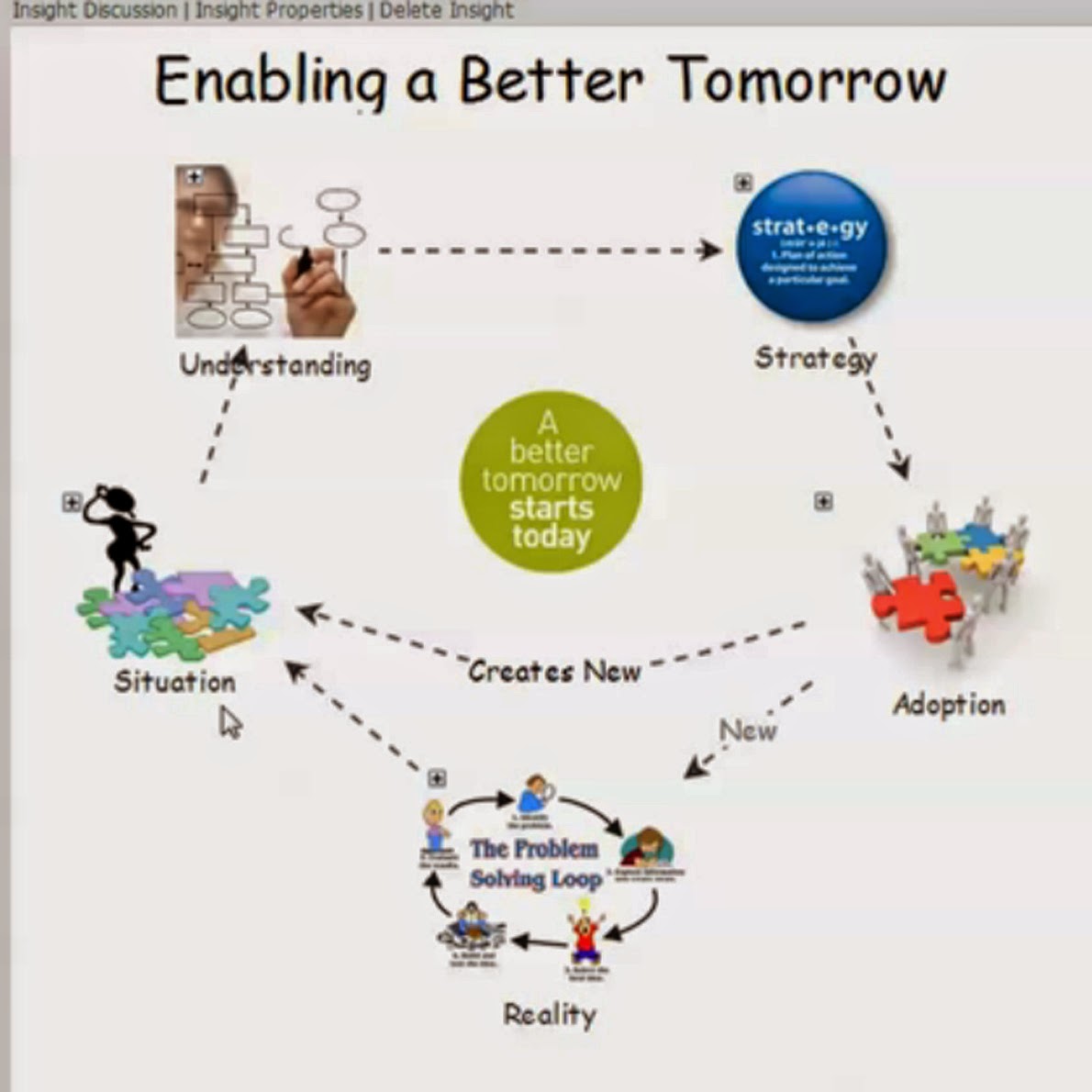
As you do your research, take a look at this article where I introduce systems thinking work being led by Gene Bellinger and apply it to my own efforts.  The graphic is a screen shot from one of Gene's videos.

I hope some of  you will spend some time looking at these presentations and reading the linked blog articles. Then take me up on that offer as you begin a new school year over the next few weeks.

As your students create new understanding through their own work, let's aggregate that work so others will find it and learn from it.

Friday, July 09, 2021

Network Building - Learning from the Past

Today I participated in ZOOM meeting organized by the Social Capital Research Group who I connected with first on Twitter, then on Facebook.. Today's speaker was Daniel P. Aldrich, who I'd met last year on Twitter. After the formal session I was invited to host a breakout, which I did. I was joined by Christopher Chinapoo from Jamaica, and Marion Cornish, from the RCRG. I was able to share resources of the T/MC and Tutor/Mentor Institute and opened connection with Christopher on Twitter.  

I've been entering this type of event for 25  years and it's never certain who I'll meet or what will happen.  Below is an example taken from two articles I wrote in July 2005, the first year I wrote this blog.

On July 29, 2005 I wrote this: 

I attended the O-Net conference in Chicago (Oak Park) today. More than 20 people from different parts of the world gathered to brainstorm ideas on how we might work together to make this a better world. 

The wonderful thing about this is that up till today, most of the people had never met face to face. They had met in the www.omidyar.net portal (available now only in web archive). The conference was the result of the efforts of just a few people who said, "let's get together" and who then used the o-net space to plan the entire event, even raising nearly $4,000 to provide scholarships so that seven people could attend, from as far away as Germany!

I met many people who shared exciting ideas and who may someday be partners with the Tutor/Mentor Connection. I even met one person who had come to a Tutor/Mentor Conference many years before. The conference will continue tomorrow, and hopefully on the Internet after that.

I hope that tutor/mentor stakeholders participate, and that some begin to use the new www.tutormentorconnection.org portal as a meeting space where some of them can launch actions that lead to more people coming together to help each other do good.  Thanks gang. 

Then on July 31, 2005 I wrote this: 

I was only able to attend the O-net conference for half a day Saturday. However, I read through all of the summary reports and blogs this morning. I hosted a conversation on Saturday, focused on creating a group of active o-net members who work to draw people from universities into o-net conversations, with the goal of recruiting resources to support o-net projects. 

 As I said after Friday's day-long session, I'm really impressed with the talent of the people who are participating in the conference, and who have posted introductions at www.omidyar.net. One person I talked to yesterday was a PhD student at Purdue, who is organizing information intended to be used to help connect people doing good work with resource providers. Another person was a technologist who had great ideas of creating alternative currencies that would encourage people to share talent with each other. A third was a women with an idea of creating visual databases to map assets. 

I was really inspired by the Peace Tiles project. I hope we can duplicate this in Chicago tutor/mentor programs and connect our kids with kids in African and on other continents. 

When I read one of the blogs, one person was questioning whether or not O-net was just a lot of talk, or if it was stimulating action (providing resources for O-net members to do their various projects). I'm hoping that my participation accelerates the rate at which people help each other, or draw new resources into o-net that end up helping members of the community do their work. 

One of the people I met through the Omidyar network was Steve Habib Rose. He took time to get to know what the Tutor/Mentor Connection was attempting and started this conversation in 2007 to help me find others who would help. Unfortunately, Steve died suddenly shortly after starting this and the potential support never was realized. However, his demonstrated interest and initiative of starting the conversation, is what motivates me to keep joining in new conversations, such as today's ZOOM meeting.

Unfortunately, until on-line events and forums like Omidyar.net actually draw attention and resources to participants on a regular basis,  it is just idealism within a world where the daily papers remind us of reality. 

A few weeks ago I did a Mind Map of the Sunday Chicago Tribune. Today I did another. I found a really great story written by Mary Schmich, one of my favorite writers, telling how people had responded to an earlier story about a computer center in Cabrini-Green being flooded, with all computers destroyed. Because of her first story, people provided new computers, and everything else needed to get this site up and running again. That demonstrates the power of the media. 

Below is a media map from 2007, which demonstrates what I had created in 2005.


However, in the same section of the Tribune Metro section was a story about a boy being fatally shot at a playground on the far South side of Chicago. There was another story on the same page about a Muslim teen center re opening, after being closed since 2003. These neighborhoods don't have a feature writer of the Chicago Tribune, or SunTimes, writing regular stories about life in these neighborhoods. Most of the times they get in the news is when something bad happens.

My mind map linked these stories. Every time I read a story about Cabrini-Green, written by Mary Schmich, I just wish she'd end with "and this is just one neighborhood of Chicago where kids live in poverty and need extra help with volunteers, donors, technologist, etc." (and provide a link to web sites that people could use to learn about other places where volunteers, donors and technology are needed).

If she and other reporters were doing this regularly, maybe people would have been helping the Muslim teen center get computers, and maybe the boy shot on a playground (or the shooter) would have been inside sitting at a computer rather than out on the street where something terrible happened. 

In my ZOOM call today I encouraged people to enlist students as story tellers, and as network builders.  This article shows how students could follow negative news with "The Rest of the Story", generating more consistent attention and public awareness and drawing volunteers and donors into neighborhoods where these stories were taking place.  This blog includes stories showing work interns did with Tutor/Mentor Connection for many years.   Websites throughout the world could be hosting work like this, done by local youth, pointing to their own communities.

When I sat with my friends at O-net and talked about ideas, it was with an urgency of putting these ideas to work to help more kids in cities like Chicago have safe places where they can gather to learn, be mentored, have access to computers and the world around them. The reality is that while we talk of great ideas, we are losing kids to the streets and to poverty. 

Maybe I cannot convince the media to consistently tell the rest of the story when they write their stories about individual tragedies or triumphs, but maybe I can enlist a few technologist at O-Net to help me create a map gallery that would show where negative news happens and where volunteers and donors are needed. If hundreds of friends at communities like o-net were to take on the same goal, we might create a much larger public involvement and flow of resources to every place in the world where good people are trying to do good work to help people who need extra help. 

Actually, this  has happened. Just not often enough, or with multiple year sustained commitments.  At the right is a map gallery built by Jim Corey, a volunteer from Wisconsin, who I met in one of these on-line forums in the early 2000s.  This link points to a newer map gallery, built in 2009 by Mike Trakin, who I was able to hire at a part-time map maker from 2008-2010, with donations from HSBC North America and an anonymous 2007 donor who gave the T/MC $50,000 to rebuild our mapping capacity. 

Neither of these is now active, due to losing funding support in 2009 due to the financial melt-down, then the separation of the Tutor/Mentor Connection in 2011 from the non-profit where it was given birth in 1993. 

This concept map shows four actions that I've been taking daily for the past 28 years.  It involves 1) collecting information; 2) creating public awareness to attract more people to the information; 3) helping people understand the information; then 4) motivating them to use the information in one or more specific places to help solve a complex problem, such as helping kids in poverty move through school and into jobs and careers.  

It also shows help I've needed every year since creating the Tutor/Mentor Connection in 1993 and the Tutor/Mentor Institute, LLC in 2011.  

I think this 4-part strategy should be duplicated in every city, state and country, to support local problem solving focused on any issue. 

Interested in knowing more?  Can you help?  Let's connect.  I'm on social media at these sites

Thursday, August 19, 2010

Tutor-Mentor Summit in Indianapolis, Aug 21

This Saturday Aug 21, I'll be the keynote speaker at a Tutor-Mentor Summit in Indianapolis.

I first connected with the organizers of this Summit ten years ago, during a Tutor/Mentor Leadership and Networking Conference, held in Chicago. Nathan Harris and his wife Carrie, have been attending these conference almost every year since then In 2004 we began meeting in Indianapolis, at IUPUI, with the goal of helping a Tutor/Mentor Connection grow in Indiana. That process has been slow, but one outcome was that IUPUI rebuilt the main Tutor/Mentor Connection web site in 2005 and still hosts it today.

The timing of the Summit is perfect. It not only brings people together to share ideas, but serves as a recruiting fair to help programs in Indianapolis recruit volunteers for the start of the 2010-11 school year.

The on-going idea sharing with IUPUI has helped the Tutor/Mentor Connection do things it could not do with its own limited resources. It's helping Indianapolis duplicate what we're doing in Chicago, without "reinventing the wheel".

Our hope is that businesses, universities, hospitals, faith groups, foundations, and non profits, will join together in these events, and in on-line forums, so we're all doing as much as we can each day to change the future for kids living in poverty.

We'd like to be working with business and non-profit groups, and university teams, in every city, the same way, and for the same purposes as we've been building our relationships in Indianapolis. If we can expand the number of connected cities and organizations, where each member is sharing ideas and resources, based on what we know, and what we have to offer, we can each be more successful of reaching kids with high quality, mentor-rich programs.

Join us if you're close to the Summit this Saturday. Or join us in the Tutor/Mentor Portal on the internet.

Sunday, July 31, 2005

A tutor/mentor program is a place where idealism meets reality. Day 2 at o-net.

I was only able to attend the O-net conference for half a day Saturday. However, I read through all of the summary reports and blogs this morning. I hosted a conversation on Saturday, focused on creating a group of active o-net members who work to draw people from universities into o-net conversations, with the goal of recruiting resources to support o-net projects.

As I said after Friday's day-long session, I'm really impressed with the talent of the people who are participating in the conference, and who have posted introductions at www.omidyar.net. One person I talked to yesterday was a PhD student at Purdue, who is organizing information intended to be used to help connect people doing good work with resource providers. Another person was a technologist who had great ideas of creating alternative currencies that would encourage people to share talent with each other. A third was a women with an idea of creating visual databases to map assets.

I was really inspired by the Peace Tiles project. I hope we can duplicate this in Chicago tutor/mentor programs and connect our kids with kids in African and on other continents.

When I read one of the blogs, one person was questioning whether or not O-net was just a lot of talk, or if it was stimulating action (providing resources for O-net members to do their various projects). I'm hoping that my participation accelerates the rate at which people help each other, or draw new resources into o-net that end up helping members of the community do their work.

However, until this happens it is idealism within a world where the daily papers remind us of reality. A few weeks ago I did a Mind Map of the Sunday Chicago Tribune. Today I did another. I found a really great story written by Mary Schmich, one of my favorite writers, telling how people had responded to an earlier story about a computer center in Cabrini-Green being flooded, with all computers destroyed. Because of her first story, people provided new computers, and everything else needed to get this site up and running again. That demonstrates the power of the media.

However, in the same section of the Tribune Metro section was a story about a boy being fatally shot at a playground on the far South side of Chicago. There was another story on the same page about a Muslim teen center re opening, after being closed since 2003. These neighborhoods don't have a feature writer of the Chicago Tribune, or SunTimes, writing regular stories about life in these neighborhoods. Most of the times they get in the news is when something bad happens.

My mind map linked these stories. Every time I read a story about Cabrini-Green, written by Mary Schmich, I just wish she'd end with "and this is just one neighborhood of Chicago where kids live in poverty and need extra help with volunteers, donors, technologist, etc." (and provide a link to web sites that people could use to learn about other places where volunteers, donors and technology are needed).

If she and other reporters were doing this regularly, maybe people would have been helping the Muslim teen center get computers, and maybe the boy shot on a playground (or the shooter) would have been inside sitting at a computer rather than out on the street where something terrible happened.

When I sit with my friends at O-net and talk about ideas, it is with an urgency of putting these ideas to work to help more kids in cities like Chicago have safe places where they can gather to learn, be mentored, have access to computers and the world around them. The reality is that while we talk of great ideas, we are losing kids to the streets and to poverty.

Maybe I cannot convince the media to consistently tell the rest of the story when they write their stories about individual tragedies or triumphs, but maybe I can enlist a few technologist at O-Net to help me create a map gallery that would show where negative news happens and where volunteers and donors are needed. If hundreds of friends at communities like o-net were to take on the same goal, we might create a much larger public involvement and flow of resources to every place in the world where good people are trying to do good work to help people who need extra help.

What about you? Can you help?

Friday, May 06, 2005

eConference, first day

The first wave of workshops is now archived at www.alado.net/econference.

I joined the portal at 6am and found Phil Shapiro from Washington, DC, and a second person already in the portal. Due to changes in the Saturday schedule, we had decided to move my presentation from Friday at 7am to Saturday at 6:30 am Chicago time. This is so the group in Thailand can participate live.

Since Phil was already in the portal, we had a nice one-on-one conversation. He had never used this technology, so was able to get a good feel for how it works and how he might use it in DC. Phil is an active Digital Divide.net blogger, which is how we first met. I hope that through this round of networking I can meet one or two more friends with as much passion and talent and commitment to helping others as Phil.

It's off to work now to prepare for next week's conference. I hope you'll visit the econference and view the archive and that you'll join us tomorrow for more econferenceing.

Dan

Tuesday, May 09, 2023

Building and Sustaining Mentor-Rich Support Systems for K-12 Youth

Chicago will have a new mayor in a few days and he has huge challenges facing him.  I think many of those center around how he builds and sustains a mentor-rich support system that reach k-12 kids in every high poverty area of the city and helps more of those kids move safely through school and into adult lives.

I've been sharing strategies for over 25 years, based on my own leadership of a non-school tutor/mentor programs and what I've learned from other programs in Chicago and other places, as well as what I learned in 17 years of retail advertising for the Montgomery Ward Corporation, 4 years as a Loaned Executive with the United Way and 3 years in Army Intelligence. 

Those ideas are on the Tutor/Mentor Institute, LLC website and in articles posted on this blog since 2005.  

Below I'm reposting an article from 2016 that I hope you'll read and share with Mayor Johnson, and with leaders in other cities.

----- start 2016 article ----

I've been using graphics like this for more than 20 years to communicate the vision of long-term volunteer-based tutor/mentor programs that connect with youth as early as elementary and middle school, then do everything they can to help those kids move through school and toward jobs and careers.  If you do a Google search for "tutor mentor" my sites are frequently in the first five. If you then look at the "images" feature, you'll see dozens of maps and visualizations. You can click on each to find the article where the image was used.

In many of my graphics I combine maps with network-building visualizations. This is one. The circle in the middle represents the knowledge that's available to us through the internet, and through the contacts we make with others. The two images to the left of the circle represent intermediaries, like myself, who collect and share the information, and use blog articles and social media to "nudge" the network. The second image represents people who read these stories, then re-post them to people in their own networks, who then form "learning circles" who read, reflect, discuss, then act.

Sort of what happens in faith groups every Saturday or Sunday, except these groups use maps to focus their attention and resources on neighborhoods where tutor/mentor and learning programs are most needed.


This is the front page of many of the PDF articles I share on Scribd.com.  Our learning should be intended to help strong, and constantly improving tutoring, mentoring and learning programs be available in all high poverty neighborhoods. That means we need to influence what resource providers do as well as what program leaders and policy makers do.   In this video I describe volunteer involvement in a tutor/mentor program as a form of adult "service learning". 


Since starting the Tutor/Mentor Connection in 1993, and the Tutor/Mentor Institute, LLC in 2011,  I've recognized the need to dig deeper into the library of Chicago area youth serving programs that I've been hosting, to learn about their history and infrastructure, so we know more about what it takes to connect youth and volunteers in long-term relationships that transform the lives of both.  This graphic recognizes that much of the work that needs to be done is not visible to someone just spending an hour or two a week as a tutor/mentor, or to someone reading a one page summary included in a grant proposal.

I've never had the staff or finances to dig deeply into this information, thus have reached out to universities and others to share this work, I created the presentation below to show that community information collection is a shared responsibility.


I created another pdf that I titled "Shoppers Guide" to suggest elements that researchers would look for as they studied different youth serving organizations, or that volunteers, parents and/or donors might look for on web sites of youth serving organizations.


There's a lot of information in my blog articles and on my web sites, representing information and ideas collected over the past 40 years.  It's not something that anyone can master in one or two sessions. Yet college degrees are earned over four to eight years of study. And people have been gathering in big and small groups weekly for over two thousand years to understand the scripture collected in the Torah and the Bible.  

When you read a newspaper story, or Tweet that talks about the bad things happening in our world, where do you go to find ideas for making those negatives change into something better? Or do you even try?

Anyone, anywhere, can take this role.

If you have read this far, your next step is to share this, so others read and reflect, then pass the ideas on to others in their own networks. Through this network-building we'll find people with special talents and resources who will help make a greater difference in the world with the ideas we're sharing. 

 --- end 2016 article ---

I started tutoring in 1973 and was matched with a 4th grade boy named Leo Hall.  We've stayed connected for 50 years.  Over the past few years I've broadcast that Leo was in need of a kidney transplant.  I'm thrilled to say he received that last month and now is in full recovery.

I share these posts on Twitter, LinkedIn, Facebook, Instagram and Mastodon (see links here). I hope you'll connect with me and share these ideas with your own networks.

I also hope a few readers will go to this page and make a small contribution to help me continue to do this work.  Thank you.