Monday, November 14, 2022

Follow media stories with actions

Yesterday's Chicago SunTimes had a feature commentary with the headine "We should not accept any more children being gunned down"

I highlighted one of the recommendations which was "Invest heavily in both data driven programs and in mentoring programs that have proven outcomes.

Below is another issue of the Chicago Sun-Times. This was October 15, 1992, following the murder of a 7-year-old boy in Cabrini-Green. 

The headline was "7-Year-Old's Death at Cabrini Requires Action".  That was 30 years ago!  There have been other stories and other "call-to-action" headlines and editorials in both major Chicago newspapers in the years between, but none have a) consistently (or frequently) pointed to a list of existing Chicago area youth tutor and/or mentor programs; and b) called on people to support those programs with time, talent and dollars.

Nor have they led an on-going analysis asking "where are these programs most needed?; where are existing programs located?; are we reaching kids in every age group from 1st grade through high school?; and where are more programs needed?." 

They might even have gone so far as to ask "What businesses are supporting programs throughout the city with dollars, talent and employee volunteer involvement?" 

Every year since 2012 there has been a Giving Tuesday campaign, intended to raise money for charities throughout the USA and the world.  The map below is on the global Giving Tuesday website.  

This year Giving Tuesday will be November 29th.  Visit the US Giving Tuesday site and scroll down to see this map (image shown above). Each red dot is a participating organization seeking donations. 

Unfortunately there are few Chicago area organizations on this map.  I did a Google search for "Giving Tuesday 2022" and found many organizations seeking donations for themselves, but no organization (that I know of) is aggregating links to all tutor/mentor programs in the region, or all anything. 

However, if you want to "invest heavily" in youth mentoring, here are some resources: 

You can use my Twitter list to see posts by Chicago tutor and/or mentor organizations, such as this one by Christopher House.

Many organizations will be running Giving Tuesday campaigns and those with large support groups or able to build extra media attention, should be able to attract donors.  However, many won't.  That's why I've been building a comprehensive list since 1993 and have been using maps to show a) where they are needed; and b) where existing programs are located.  

The goal is that every neighborhood has a full range of youth serving programs helping all kids from birth-to-work. Or, to "hope" and "opportunity".

In addition to my Twitter list you can also visit the www.tutormentorexchange.net website and see my lists of Chicago area programs and find my Instagram and Facebook lists of programs.  
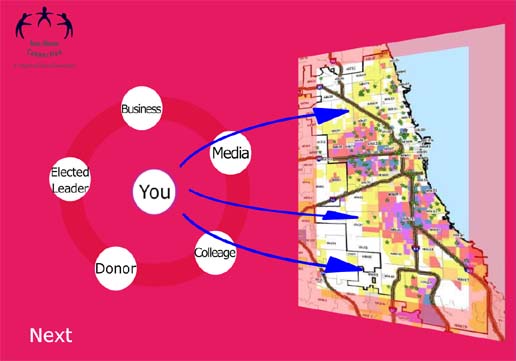
If you begin "shopping" now, by looking at my lists and posts made by various programs on social media you can a) decide what program(s) you want to support on Giving Tuesday; and b) provide information to friends, family and others in your network, so they can also add their support.

The SunTimes, Tribune and all other Chicago area media could write an article like this one, providing the same encouragement to give, and give generously, or as the commentary in Sunday's SunTimes said "invest heavily". 

They could be pointing to program lists following every negative news story. Every week.

A donor like Mackenzie Scott could even provide money for a new platform to be created to aggregate links to tutor/mentor programs and plot them on maps, as I was doing from 2004 to 2018, but also adding a "donate" feature, so people using the site could also make contributions, not just one Tuesday of the year, but "every Tuesday". 

Had the media been following their negative news with "Giving Tuesday" type of capacity building over the past 30 years maybe Chicago would not now be facing so much anger and violence.  Too late to look back, but not too early to look forward.

Thanks for reading.  Please connect with me on social media platforms (see list). 

Also, Tutor/Mentor Institute, LLC is not a non-profit, but does depend on contribution to fund its work. Click here if you'd like to help. 


Friday, November 11, 2022

Veterans Day - Never Forget

That's me, in South Korea, in 1971.  I was in my third year with the US Army.  I was part of the Army Intelligence unit stationed in Seoul, having completed training for collecting information that leaders could use to support US force distribution in any war that might be fought.

That was in 1970.

Since Veterans Day is today I encourage you to visit articles I wrote on past Veterans Day celebrations. 

On many you'll see this graphic. It shows the planning needed to make resources available in every high poverty area of Chicago and other places, to help kids through school and into jobs, where they can raise their own kids free of poverty.


You can find this graphic at http://tinyurl.com/TMI-Planning as well as in these blog articles.  

If you're on active duty or in the military reserves, or a veteran, I salute you for your service. I encourage you to use the skills you learned to help neighborhoods and communities build a map-based planning process that draws an on-going flow of talent, dollars, technology and ideas to every high poverty area and sustains that support for many years.

If you're on social media I hope you'll connect with me on one of these sites.

If you're able to make a contribution to help me do this work for another year, visit this page


Wednesday, November 09, 2022

Focus on alumni

The national elections were yesterday and votes are still being counted.  It looks like Democrats and progressives will do better than expected. It's still not clear if they will maintain their majority in the House or Senate. Let's hope they do.

In the meantime we still need to do all we can to make organized, volunteer-based tutor, mentor and learning programs available to youth in every high poverty neighborhood of the country.

More than 4500 K-12 youth have been part of the tutor/mentor programs I led in Chicago between 1975 and 2011.  I'm connected to many on Facebook and keep encouraging them to become leaders of mentoring programs themselves and to take up the work I've been doing to help such programs grow in more places.

Here are three promising examples.

I wrote about Kaeaiya Holmes a few weeks ago.  Since then she's posted this article on her T.Js Angels T3 Services blog.   

In this article you can read about the I Am Her78 - An End to A New Beginning book, that she co-authored with Toi Dickson-Fuller, another student alumni (see below).  The book launch is November 19.  Here's a post on Facebook about the book.   

Here's where you can purchase the book.   Here's the link to the TJs Angeles T3 Services website. 


In the mid 1990s Toi Dickson-Fuller was also part of the tutor/mentor program I led in Chicago.  As you can see from this graphic she's become a published author and is co-author with Kaeaiya Holmes and a few other women on the I Am Her78 - An End to A New Beginning book.

In addition, Toi has launched a mentoring program in Chicago called I Am Her 78 Ministries, which you can learn about here

Kaeaiya and Toi are two of several dozen former students who I'm connected to, and still mentoring, via Facebook.

Tramaine Montel Ford is another alum from the 1990s.

Tramaine got his "acting bug" while part of the Cabrini Connections program's video club, which was started in the mid 1990s while he was in high school. Now he's in New York city and doing all sorts of great work.  At the right is a photo from this 2011 article, showing how Tramaine was a keynote speaker at the 2011 Tutor/Mentor Leadership and Networking Conference. 

Over the years since then we've had a few ZOOM calls and Facebook conversations where I've encourage him to use his communications skills to share the ideas I've been posting on this blog. 


While continuing his work in New York City, Tramaine is now also working with the 1 JAR Foundation, which honors the memory of 9 year old Janari Ricks (Tramaine's nephew), who was killed in Cabrini Green in 2020.   

Their programs offer mentorship and other resources intended to empower youth and children towards achieving a better future and contributing positively to society

The featured program of the foundation is an annual toy drive, which this year will be held on December 22.  Find details on the foundation's website.

Below is Tramine's Facebook page.    In this ensemble photo Tramaine is in the top row, far right.  


These are just three alumni who are beginning to do organized work to help younger kids have the same opportunities which were offered to them via the tutor/mentor programs I led.  

Here's another example of a former student supporting a tutor/mentor program - Isaiah Brooms. 


Isaiah was part of the tutoring program at Montgomery Ward while I led it in the late 1980s.  That program is now Tutoring Chicago and Isaiah supports if via fund raising efforts like this one on Facebook. 

Network Building

I share posts from this blog and my website regularly with all of these alumni and with many former volunteers, with the goal that they will begin to support existing programs and help new ones grow where more are needed.

Here's a May 2022 Facebook post from a former student, which is an example of the type of questions I hope more students and volunteers will be asking as a result of my social media network building.


At the same time, by hosting space on social media sites I'm trying to help these alumni connect with each other, with former volunteers, and with people in other tutor/mentor programs in Chicago and other places.

Those who have been given much need to step forward and provide the same opportunities to future generations.

Thanks for reading.  Maybe there will be a few more positive election results to view by the time you look at this.  There's much work ahead.  


Friday, November 04, 2022

Examples of Tutor/Mentor Library

In today's article I'm going to show two examples of the type of information that's in the Tutor/Mentor Institute, LLC web library.

Below are two concept maps, creating using free cMapTools:

The first is an outline of the Our Kids book written in 2013 by Dr. Robert Putnam.  click here to view.

Putnam focuses on social capital and how "benefits accrue to kids born in affluent areas" and "negatives accrue to kids born in low income areas".  I outlined the book and point to articles on this blog and my library that expand on this idea and show volunteer-based tutor/mentor programs to be an ideal strategy for expanding bridging social capital and narrowing the impact of "where you were born" for kids born in low income areas. 

The second is an outline of a book titled Uncharitable, written by Dan Pallotta. click here to view

Pallotta offers challenging ideas for how social sector organizations should operate and be funded, focusing on "if you want charities to do important work you need to change how they are funded."  Links from different nodes in the concept map point to sections of the tutor/mentor library with information related to philanthropy and fund raising. 

Thus, a big part of the library focuses on building and sustaining constantly improving tutor/mentor programs that have a quantum impact on the lives of kids in poverty, as well as volunteers who become part of their lives via organized programs.  

Next I'm showing three map-based information platforms.

First is the Georgia Statewide AfterSchool Network website and data map.  


Take time to browse this site and see all the information that's available to help leaders support the growth of high quality afterschool programs throughout Georgia.  A second map on the site is a program locator

Next is the 50 State Afterschool Network map, funded by the C.S. Mott Foundation. 

Run your mouse over each state and the afterschool network for that state is shown, with a link to a page with extensive information, and a link, to that network.

So, I clicked into Washington State, then followed the links to the Elevate Washington website that has a map-directory showing afterschool programs in that state. 


I added links to both sites to this section of the tutor/mentor library, where I point to afterschool networks and resources.  I've another section with "program locators and directories" where I could have put these links. 

Anyone in the country could be viewing these links with the goal of finding ideas and "best practices" that they could apply to help youth tutor/mentor and afterschool programs grow in their own state.

That's the goal of the library.  


As one person gets to know what's in the library they can share links with other people, who do the same.  In this way it becomes a "learning resource" available to anyone in the world who is committed to helping reduce poverty, violence, inequality and many other problems by providing more support to kids in high poverty areas as they grow from birth to work.

I keep looking for people who will share ownership of the library, provide funds, and even rebuild it, to make the information easier to find and to fix broken links and continually add new information.

So far no one has stepped forward to take this role, so I'll just "keep on, keeping on."  However, I'll be 76 in December and that means for the library to remain available, someone(s) need to begin to take ownership.  

I'm still using Twitter. Here's a set of posts that show some good reasons why I plan to stay.  I'm also on LinkedIn, Facebook and Instagram and have re-started my Mastodon account.  I hope you'll reach out and connect with me.

I'm also seeking contributions to help fund the Tutor/Mentor Institute, LLC. Click here if you want to help. 

Thanks for reading. 

Sunday, October 30, 2022

Role of Libraries in Constant Improvement Process

I've used the image of a "carrot" to represent a "good idea" for many years  to emphasize the role of the web library that I started in the late 1990s. 

Someone who is inspired by the good work being done by others, is represented by the "rabbit" who is always looking for good ideas, or better ways to operate. In this graphic, the "rabbits" are the most aggressive innovators. The dogs, chasing the rabbit, are other organizations, who are following the example provided by "rabbits", and trying to use the same good ideas to improve their own organizations.

I've used the graphic shown below in several articles to illustrate the goal most of us want as a result of the work we do to help young people, as well as the work we need to do to achieve those results.


We need a constant flow of ideas, and operating dollars, in every high poverty zip code of the country, to support what we do to help kids through school and into adult lives.  Since that's not happening, we need to innovate new ways to make it happen.

Below is another article that shows the innovation process.


In this graphic I compare the innovation and constant learning needed to help schools and non-school youth serving organizations have a long-term impact on the lives of kids (and volunteers) to the thousand experiments that led Thomas Edison to invent the light bulb. In this graphic I also try to remind leaders of the resources they need to provide for many years, for light bulbs (great programs) to be available in all of the neighborhoods where they are needed, and for all the years they need to be in place.

I started building a library of research and peer tutor/mentor program information in the 1970s, to stimulate the thinking and innovation of volunteers working with me to build the tutor/mentor program I was leading at the Montgomery Ward Corporation in Chicago. As I created my library, began sharing it with peers, leading other programs. I formalized this information collection/sharing in 1993 when I created the Tutor/Mentor Connection. Now I host an extensive web library, with links to more than 2000 other web sites, that anyone in Chicago, or the world, can dig into to find "carrots" that inspire their own innovation and constant improvement.

In the Scribd.com pdf below, I show how the information in web libraries can stimulate constant innovation and improvement, if given support by others who take on intermediary roles and champion the work we do to help kids move through school and into careers.

Using Ideas to Stimulate Competition and Process Improvement - Concept Paper by Daniel F. Bassill


Between 2006 and 2015 interns working with me in Chicago have created new visualizations re-interpreting some of the ideas and graphics I've introduced in this blog. See a collection of these here.

I'd love to see others, not just interns working with me, make their own versions of the ideas I share in my blogs, focusing on their own communities and causes, not just Chicago, or volunteer-based tutor/mentor programs. 

All of these articles could be summarized in the graphic below.  "How can we do this better?"  What can we learn from the work being done in other places that helps us do better where we work? 


I've participated in Making Learning Connected MOOC and others like it because thousands of innovative educators are meeting and sharing ideas for inspiring students. I learn new ideas and ways of communicating from my participation in these events. That's how I've built my web library over the past 20 years.


I hope some will inspire their students to become intermediaries like myself, using the ideas I and others share, to motivate adults in their communities to do the work needed to assure an equal opportunity for the American Dream for everyone in their community, not just those lucky enough to have been born out of poverty, or to be in a classroom with a super inspired teacher.

This graphic was created by an intern about 10 years ago. It shows the role of "learning communities". They are like "Bible study" groups.  Someone provides a "reading assignment" then leads a discussion of what was read.  

Thousands need to be doing this. Students from middle schools, high schools, colleges and youth serving organizations could be taking this role.  Please do! 

If you do create a version of one of my ideas, just give me credit and send me the link so I can share it with others.

I'm still on Twitter (but see many leaving that platform due to recent ownership changes). I'm also on LinkedIn, Facebook and Instagram. (see links here).  If you know of new spaces where I can share my library and ideas and find several thousand others to connect and learn from, let me know.

In the meantime, thanks for reading.  Have a safe Halloween. 

If you want to offer a "treat" to support the Tutor/Mentor Institute, LLC, please use the PayPal at this link

Wednesday, October 26, 2022

Mission Impossible - Reflection

I have not led a volunteer-based tutor/mentor program since mid 2011, yet, I continue to share what I learned from 35 years of leading a single program, to try to help similar programs reach k-12 youth living in all high poverty areas of Chicago and other places. I know the challenges these programs face every day because I faced them, too. Here's an article I wrote in 2010, titled "Mission Impossible".

----- start----

I've led a volunteer-based tutor/mentor program for 35 years. I believe the lives of youth and volunteers are enriched in many ways because of participation in these programs. The program I lead now is called Cabrini Connections. It operates in rented space at 800 W. Huron in Chicago and has 75 active teens and 90 volunteers. We have 9 seniors who will graduate from high school this spring and 7 are already accepted into college. 1/3 of our teens have been with us 3 to 6 years. 

 More than 100 of our alumni, going back to the boy I first mentored in 1973, are connected to us on Facebook. 

When we created Cabrini Connections in the fall of 1992, we had a second goal. We realized that tutor/mentor programs are needed in all high poverty areas, and that no one had a master database showing what programs were in Chicago, or where they operated. Thus, there could be no consistent leadership intended to help tutor/mentor programs reach more kids in high poverty areas. We called this new effort the Tutor/Mentor Connection

 One of the tools we have created to show where programs are needed, and where they are located, are maps, like the one above. 

 By building a master database of programs, we not only can show where they are located, and where new ones are needed, we can invite programs to work together to generate more of the resources we all need to do this work. 

  That's where this becomes Mission Impossible.

 While I read in many places how it is important to reduce the isolation of non profit leaders, and provide better information that parents, leaders, donors, etc. can use to know what services are available to young people, I've not been able to find the dollars needed to provide a consistent level of support to Cabrini Connections, or the Tutor/Mentor Connection.

 The economy, environment, politics, terrorism all seem to work against us. While I have a passion for this work, there are high poverty neighborhoods all over the world where charity dollars are needed to support programs working with youth, the environment, health issues, etc. It seems an impossible task to draw consistent attention, and a consistent, on-going flow of flexible operations dollars to all of these places, on an on-going basis.

 Yet, to me, this is the only way we can help our teens grow to adults, or others can make a dent in solving complex problems.

As I researched some ideas for this blog, I found a poem by: Edgar A. Guest, titled, It's Better to Have Tried

 'Tis better to have tried in vain,
Sincerely striving for a goal,
Than to have lived upon the plain
An idle and a timid soul.

 'Tis better to have fought and spent
Your courage missing all applause,
Than to have lived in smug content
And never ventured for a cause.

 For he who tries and fails may be
The founder of a better day;
Though never his the victory,
From him shall others learn the way.


 I share a wide range of information on the Cabrini Connections and Tutor/Mentor Institute sites, showing my thinking, and the strategies that I've developed over many years. While I hope benefactors step forward and help us fund this work, I also hope that even if I don't succeed, "others will learn the way" from me and find ways to make these ideas work in the future.

 Here's a couple of other blog articles related to this:

Do a Mitzvah Every Day.. in honor of Judge Abraham Lincoln Marovitz

Many to One - strategy of Cabrini Connections, Tutor/Mentor Connection

---- end 2010 article ----


This is a 1994 article from the Chicago SunTimes, where I'm with one of our students (who now is a college grad and mother of a college student!). In the background is a map of Chicago, with high poverty areas shown in the shaded areas.

We're almost to the end of 2022 and a huge election is coming in two weeks.  While I've spent the past 12 years continuing to try to draw attention and support to tutor/mentor programs, I've also continued to build an information library that anyone can use to know where such programs are most needed, why  they are needed, and other challenges that also need to be addressed.

The words of the Edgar A. Guest poem still ring true.   I hope you feel the same.

More than ever I hope that "even if I don't succeed, "others will learn the way" from me, and find ways to make these ideas work in the future."

Thanks for reading.  Thank you to the small group who use this page to send small donations that help fund the Tutor/Mentor Institute, LLC.  

Find me on Twitter, LinkedIn, Facebook and Instagram. Let's connect. 

Friday, October 21, 2022

Alumni Collaboration - Role of Mentoring

Yesterday I saw this image announcing a new book titled "I Am Here" which was co-authored by two former students from the Cabrini Connections program that I led from 1993 to 2011.  The book has not yet been published, but I'll share that information when it is available.

11-9-2022 update - the book launch will be Nov. 18, 2000. Click here for details

One student, Kaealya Holmes was one of the first students to join Cabrini Connections in 1993. The other, Toi Dickson-Fuller, was part of the program from around 1995 through her high school graduation. 

Both Toi and Kaealya are "giving back" by mentoring young children through their own efforts.  I've been sharing my own experiences and resources to help them. 

That reminds me of an article I wrote in December 2008, calling for support of Tutor/Mentor Programs.  I'm sharing that below, with updates. 

---- begin ----

Yesterday when I came to the office I received an email telling me about a funeral being held that morning for the 2-year old daughter of a former Cabrini Connections student. The message came from the volunteer who began mentoring that youth in the mid 1990s and who continues to this day --- more than 15 years later -- to still be a mentor in the life of this youth and his family.

I went to the funeral. It was tragic. The minister said "nothing I say can make sense of this tragic death" but "God has a purpose and maybe this death brings us together and changes our own life direction".

While he was addressing the family and friends of this young man and his wife, he did not realize he was also addressing the Cabrini Connections family. I had not talked to this volunteer in more than a year, or to this young man in about the same length of time. At the funeral I saw, and talked with, others who had been part of Cabrini Connections, or the Montgomery Ward/Cabrini Green Tutoring Program prior to 1992. I'd not seen many of these young people for many years, but have been making an effort to reconnect via Facebook and our Linked in pages.

Maybe this tragedy will be the catalyst that gets more of our former students and volunteers reconnected to our current students and volunteers and each other.


Mentoring is not about reading, writing, test scores, and teacher-directed tutoring. It's about relationships that form because a program like Cabrini Connections is available in the neighborhood, and creates an introduction during one year, that we hope lasts for a life time. Well organized tutor/mentor programs support the match between youth and adult, with the goal that they last for additional years so the bond between young people and volunteers, and the organization, grows and remains supportive as everyone grows older.

"Once in Cabrini Connections, always in Cabrini Connections." I've been saying this for many years. I mean it.


Being at this funeral and giving support is just one small example of the type of support mentors can give to youth, and each other. Recognizing that these young adults, who were in elementary school or middle school when we first met them, still need our support for them, and for their own children, is what this community is really all about, and why we need donations from people who read this blog or visit our web sites.

--- end 2008 article ----

I've not been an official part of the first tutoring program that I led since 1992 or part of Cabrini Connections since 2011, yet I'm still connected to young people and alumni of these programs.

I really believe the "Once in Cabrini Connections, always in Cabrini Connections." message. My involvement has never been a "job" but a "purpose". 

If you view my Facebook page and look at my Friends list, you'll see many former students and volunteers, including Leo Hall, who was the first, and only, youth who I was matched with in a one-on-one relationship, starting in 1973. 

I did not take another mentee after Leo graduated from the program after 6th grade, partially because he continued with the program as a "Jr. Assistant" volunteer helper through high school, and mainly because, as leader of the program, I was a mentor to ALL of the students and volunteers.  That's how I first came to know Toi and Kaealya.  

They are just two of many who I continue to connect with myself, the Tutor/Mentor library, and each other, using social media. 


This graphic visualizes the goal of the tutor/mentor programs I led, of helping kids through school and into adult lives. I'm still connected to three of the students in this graphic, and to the volunteer, Claudia Bellucci.  

Through the Tutor/Mentor Connection, formed in 1993, and the Tutor/Mentor Institute, LLC (formed in 2011), I continue to try to help programs like this thrive in every high poverty area of Chicago and other cities. 


I encourage you to browse this blog and the Tutor/Mentor Institute, LLC website frequently.  

Use the ideas and your own leadership to help more kids become part of well-organized, on-going, tutor, mentor and learning programs.

Build your own "life-long" connections.

Thanks for reading.  

I'm on Twitter, Facebook, Instagram and LinkedIn. I hope you'll connect with me on one, or all of these platforms.

Have a great weekend!  

Sunday, October 16, 2022

Network Building - Can you Do this, Too?

I created this graphic many years ago to visualize the idea of "network building" where the ideas I share on my blogs, website and email newsletter are shared by others, and graduadally reach people throughout the world. 

When we created the Tutor/Mentor Connection in 1993 we had no money. There were just seven volunteers, and our primary focus was building a new youth tutor/mentor program that would serve teens living in the Cabrini-Green neighborhood of Chicago.  However, we recognized that while one more small program might offer life-changing opportunities for a few kids, it would not change the future for the 200,000+ kids living in poverty areas of Chicago.  That's why we created the Tutor/Mentor Connection.

While we raised money every year, we never had much for advertising and public awareness, so our strategies were intended to recruit "disciples" who would help spread our messages.   

The graphic above is one visualization of this idea. The one below is another.  On the world's largest ping pong ball table, every time I post an idea, it spreads rapidly, if others share it with their own networks. 


Below are two recent examples of people taking this role on Twitter.

Here's a second Others have been doing this for several years.  I created the concept map below to point to blog articles by others, which point to the strategies I've been sharing.

Between 2004 and 2015 interns working with me in Chicago were encouraged to read my blog articles and then create their own interpretations.  The concept map below points to work they did. 


One of our earliest interns was from Hong Kong.  He created this blog in 2006 and I've updated it annually since then.  Browse through the articles to meet interns and see the work they did.  A page like this could be created on the website of any high school or college in the country, showing work their own students are doing to bring people to these ideas and to help youth in their own communities.

If you have a page like this, please share it. 

This graphic visualizes the goal of all of this network building.  Groups of people from every sector should be using these ideas and the research links I share in the Tutor/Mentor Library to determine where kids need more extra help, why they need that help, what others are doing in different places to provide needed help, and ways they can apply those ideas to help kids living in high poverty areas of their own communities.

This should have been happening since the late 1990s when the Internet became a platform to connect people and ideas.  

Thanks for reading. I hope you're inspired to share this blog, just like Brian and others have been doing. Use the ideas in your own company, foundation, political office.  I'd be happy to help you.

Connect with me on Twitter, Facebook, LinkedIn, or Instagram.  See links here.

If you can help Fund the Tutor/Mentor Institute, LLC please click this link and use PayPal to send your help. 


Tuesday, October 11, 2022

Greater Business Involvement in Youth Development

Last April I posted an article with photos of former President Obama, Education Secretary (and CPS CEO) Arne Duncan, and former CPS CEO Paul Vallas, who's now campaigning to become the next Mayor of Chicago.  

Today I posted this Tweet after seeing a story in the Chicago Tribune about Arne Duncan's strategy for reducing violence in Chicago.  

I've been sharing ideas on this blog, my website and in print newsletters since the 1990s showing strategies leaders should embrace.  I shared these personally with Arne and Paul Vallas in the mid 1990s when they were at Chicago Public Schools (CPS). I pointed Barack Obama to these ideas when he was the keynote speaker at a 1999 Tutor/Mentor Leadership and Networking Conference.  I also shared these ideas with Michelle Obama in the 1990s when she was working at the University of Chicago.

In the Tribune article, Arne Duncan says "we need violence prevention at scale, more effective policing and a major commitment from the business community".

I agree. However, I think he needs to offer a lot more detail.  I have the same thoughts for what I'm seeing for Paul Vallas.

So, here's one of my presentations, focusing on increased business involvement. 

Creating Virtual Corporate Office to Support Mentor_Rich Youth Programs in Multiple Locations from Daniel Bassill

Below is one of the slides from the presentation.  It includes a map of Chicago, showing areas of concentrated poverty.  In an article last month I pointed to research showing areas of concentrated poverty in cities across America.   Leaders in each city should be using maps the way I've been using them, to focus attention and resources to every high poverty area.


In the presentation I compare a site-based tutor/mentor program to a retail store, like a Walgreens, or a Wal Mart.  Leaders of these companies build stores in places where they see large numbers of potential customers.  Planning teams make sure the stores have merchandise customers want, and have friendly, courteous store staff, to ensure customers will return to the stores over, and over.   

Advertising teams publish weekly messages intended to draw customers to their stores and to sell specific products and services. 

A tutor/mentor program that offers a variety of learning and enrichment experiences, targeted to specific age groups, or to volunteers, provides reasons for them to come to the program and return every week.  I call this a "retail store full of hope and opportunity". 

Below is a chart that lists some of the "stuff" that each site-based program should have available.  It's also in the presentation. 

The reality is that few non profits have all of these elements. Nor do they have the resources to attract them.  Nor do they have advertising dollars to attract customers (volunteers, youth, donors, etc).

That's where businesses and their employee volunteers can make a difference.  Below is another presentation, titled "Role of Leaders".  


I encourage anyone who is reading my blog to take time to view these presentations, then create and share your own interpretation.  Apply the ideas to your own leadership strategies.  They are freely available to everyone, including Arnie, Paul, Barack and other visible leaders.

One first step for any leader is to build a resource page on their website, pointing people to learning that helps them better understand issues and opportunities.  Adding http://www.tutormentorexchange.net opens all of the resources I point to, including these PDF presentations, to their own followers.  

I'm on Twitter, Facebook, Instagram and LinkedIn. I hope you'll connect with me and share your own ideas.  I'd be happy to help you understand the thinking behind these presentations. 

If you appreciate what I'm sharing, consider a small contribution to help fund my work. 

Wednesday, October 05, 2022

WE instead of, just ME, in collective efforts

This week I saw a post about a new campaign from the Chicago Independent Media Alliance aimed at raising needed operating funds for more than 30 different local media outlets.
Each of the participating organizations is using their own talents to draw attention to this campaign, and draw donations to themselves and their peers.  It's a great example of applying "WE, instead of just ME", in the social sector where the fierce competition for scarce funding usually has non-profit campaigns focusing only on self-centered fund raising.

My vision, since forming the Tutor/Mentor Connection in Chicago in 1993 has been to generate attention and more consistent support for EVERY youth tutor and/or mentor program in the Chicago region.  

Read about this vision below: 


This is one of many maps you'll find on this blog and on the MappingforJustice Blog, which zoom into a Chicago neighborhood and tell a story of "why" kids and families need more help, "what" help is already in that area, if any, in the form of organized volunteer based tutor and/or mentor programs; and "what assets" and leaders share the geography and could be doing much more to help change the conditions and improve the lives of people who live there.


click to enlarge
I created the Tutor/Mentor Connection (T/MC) in 1993 and Tutor/Mentor Institute, LLC (T/MI) in 2011 to support the growth of well-organized youth tutor/mentor programs in all high poverty areas of Chicago. This graphic shows four strategies that I've followed since they were developed in 1993.

While we accomplished much and built a huge resource library, we've never had consistent funding or significant leadership support from Chicago business, political, philanthropic or other sectors. Thus, what we wanted to accomplish is far less than what has been needed.

Data collection and GIS mapping have been at the heart of T/MC work since 1993. This graphic shows what the T/MC has been trying to do and what has not ever been accomplished.

Annual cycle of Tutor/Mentor Connection mapping. Click to enlarge 

We've built a list of youth tutor/mentor programs, organized bi-annual conferences (1994-2015) to bring leaders together, organized events to draw volunteers and donors to programs, generated considerable attention from local media, built a social media presence and more.  It's been too little to change the overall range of poverty in Chicago, but has had a positive affect on many individual lives.

I created this Wiki Page to show what we were trying to accomplish. Feel free to read it and offer your help, or create a similar strategy focused on your own city. 

When we started building a mapping capacity, and on-line program locator, the goal was that we could do more to support the fund raising capacity of programs in different parts of the city. 

There were three goals that never have been reached.

click here to view
1) There is a growing mountain of data showing levels of poverty and inequality in Chicago and the world.  In the concept map shown at the left I point so some of these data platforms.  The Tutor/Mentor Program Locator (since 2022 only available as an archive) used some of that data and like other platforms enabled people to zoom into small areas to look for the availability of tutor/mentor programs in small areas.

My vision was that we could create a form that would be accepted by grant makers, to show the need for tutor/mentor programs serving different age levels in different zip codes and/or community areas.  Right now every program has to build their own case statement showing why it is important for their program to receive funding. Some have greater talent to do this than others. It's a redundant and expensive process with too few consistent winners. Thus, creating a form where you'd only need to enter a zip code or community area, plus the age group you serve, and the type of program you offer, should generate a report showing that you are needed in that area.

7-29-2022 update - below is a video created by a company called RS21 who is building data mapping dashboards and using the data in an analysis process that determines where services are needed and where to put them. View the video at this link.  View other articles showing RS21 use of data - click here.


I point to the RS21 video because this is the type of analysis that was envisioned in 1993 when we began to plan the Tutor/Mentor Connection and it's use of maps.  We never reached the capacity to do this in all the ways imagined.

I'm  pointing today to the Chicago Independent Media Alliance because it's an example of what has been needed for the past 30 years and will still be needed for the next 30 years. 

If we had fully developed this capacity in the 2000s, it would have lowered the cost to individual programs and given grant makers a consistent way to help them decide where to provide funding and who to support in each area. 

click here to view

We got partially there in 2004 when we launched this on-line searchable program locator form (since 2022 only available as an archive).  However, the maps that this produced did not show demographic information or indicators such as poorly performing schools or violence.  The Interactive Program Locator that was built in 2008 provided this information. However, there was no "easy-to-use" narrative generated in a "form" that could be printed that someone could pull from the site and use in a grant proposal.

The financial melt down starting in 2008 led to this work being discontinued in 2009 and to updates being discontinued by 2013.

So this is one bridge that we never were able to cross.

2)  Motivating programs to provide data for the Tutor/Mentor Program Locator and keep it updated has always been a challenge. One way we partially overcame that was to have our annual survey included in the grant guidelines of the Chicago Bar Foundation's Lawyer's Lend A Hand Program. About 40 out of our list of nearly 200 programs submitted applications each year from 1995-20003 which I could use to update the list. However, that was too few and too time consuming for my small staff. Thus as we built the interactive portal in 2004 we developed an on-line form that programs could use to add themselves or update their data (not working since 2013).  However, this still did not provide "motivation".

Note: I was sorry to learn recently that the Lend A Hand Program has ceased making grants to support multiple tutor/mentor programs, and will instead focus only on their own program.  That's a perfect example of the "ME instead of WE" thinking.  

click to enlarge

My strategy for motivating programs to provide information and keep it updated is shown in this PDF. The graphic at the right is part of it. As on-line fund raising portals grew since the mid 2000s I felt that we might create a portal that would work with the Program Locator maps, to encourage donors to support programs in different parts of Chicago and give media a resource to use in developing stories following incidents of violence, reports on schools, reports on gangs, etc. 

On one level, we could draw from the list we were maintaining to give donors information to create the platform. However, on another level we felt that as programs began to generate donations, and learned to use the site to build their own campaigns, we'd create greater motivation to keep their data updated.  We could even organize events at different time in each year to draw volunteers and donors to the platform.

Imagine the potential of stories about tutoring and mentoring calling attention to our maps and database and drawing needed resources into every high poverty neighborhood.  Imagine the visibility this would generate if similar campaigns were happening in every city! 

This is another bridge that has not been crossed. This has never gotten further than me putting the idea into this PPT and sharing it on my planning wiki.

click to enlarge
Media stories continue to remind us that some people in Chicago and other cities live with fewer resources and fewer opportunities than do other people.  Thus, there's still a need for organizations that provide a bridge, connecting youth and families to resources and connecting people who don't live in poverty with people who do.

3) The final bridge - As we developed the Tutor/Mentor Connection in the 1990s we felt we could generate income to support our continued operations and innovation by making it available to other cities and offering our expertise to help them use it. When I formed the Tutor/Mentor Institute, LLC that continued to be the goal.  However, that has not happened.   Now my goal is to find people who will take time to understand what I've been trying to do and will want to take ownership and carry it into the future.   One idea that might offer promise is to make the code for the Program Locator and any new platforms freely available on GitHub, so it could be more easily applied in other cities, and to other causes.  That might attract more developers to help build in the features I've not been able to construct, and to keep updating it as technology and needs change.  Having parallel portals in every major city of the US and the world would certainly contribute to greater visibility and greater traffic, and thus a bigger flow of donations through the portal and the maps to individual tutor/mentor programs in different places.

That's always been the goal.  So far it's still a bridge to far to cross.

Does any of this interest you?  I'm on Twitter, Linkedin and Facebook. Let's connect.

Can you send a contribution to help fund this work? Click here to find a PayPal link.