Monday, February 21, 2022

Navigate the Tutor/Mentor Resource Library

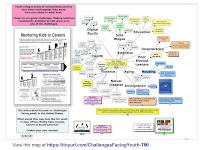
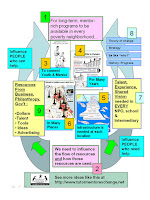
Last week I started an article with this "birth-to-work" graphic, then shared concept maps that are intended to guide learners through the library I've built since the 1990s.

Below are a couple more concept maps intended to support this learning journey.

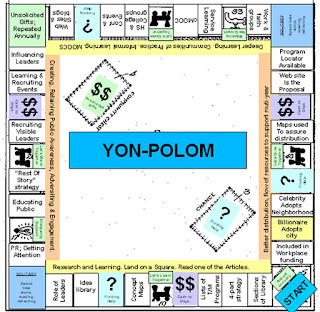
The first is a hack of the Monopoly game.  I mixed the letters to create YOM-POLOM (Youth Organizations Need Purposeful Ongoing Leadership and Operating Money).  

Open the concept map and zoom in to view the individual squares, and the links that take you from any square to a specific part of the Tutor/Mentor library.  I introduced this game board in this 2015 article. 

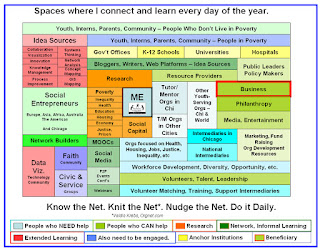
The second concept map shows sections of the Tutor/Mentor library.  

I created these using cMapTools and encourage others to create and share their own versions focusing on their own cities if they are not in the Chicago region.

The information from these concept maps and others in my collection is intended to support what people in business, philanthropy, religion, education, media, entertainment and other sectors do to help make well-organized, mentor-rich, non-school tutor, mentor and learning programs available to K-12 youth in more high poverty areas, and to help those programs constantly learn from each other so that all can do more to help kids move from birth-to-work and lives free of concentrated poverty.

I've been writing this blog since 2005 and have hosted a website since around 1998. I started creating visualizations to help people understand the strategies I was piloting and have shared these in printed newsletters, blogs, social media, Pinterest, etc. for almost 30 years. 

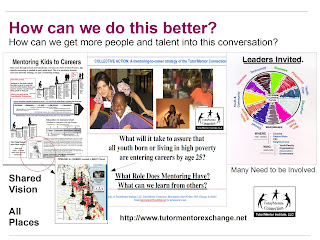
They all invite people to gather and learn from the ideas I'm sharing with one goal:  "How can we do t his better?"  


As we start a new week, in the second month of a new year, I keep looking for others who are asking the same questions and who use web platforms, maps and visualizations to draw others into this conversation and to encourage on-going actions that help youth programs reach more kids with constantly growing impact. 

You can find my social media platforms in this link.  I look forward to connecting to you and your own ideas and efforts. 


Tuesday, February 15, 2022

Birth-to-Work Goal and Use of Knowledge Base

I'm going to show four graphics from my collection in this article.  I hope you'll take time to dig through the links.

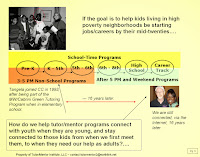
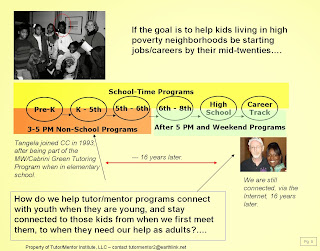
1) This graphic shows three time frames when we can connect with kids and the number of years we need to be doing this. 

It shows a group of kids and an adult volunteer who were part of a tutor/mentor program I led in Chicago in the 1990s and myself with one of those kids in 2010 when she came back as a guest speaker at our end-of-year dinner. I'm connected to almost all of these former students and the volunteer on Facebook and now see them posting stories of their own kids finishing high school and going to college.  That's the generational impact possible from well-organized volunteer-based tutor/mentor programs who build and sustain long-term connections with kids.

I focus on the after-five PM timeframe because in big cities like Chicago, that's when workplace volunteers are more able to meet with kids in community locations on a weekly, on-going basis. 

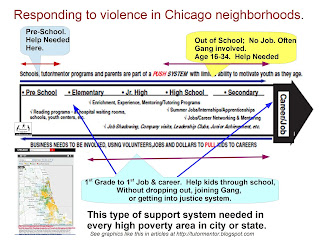
2) This next graphic includes a Birth-to-Work arrow that I've used in many past articles and in a variety of graphics. I show many in this Pinterest collection.  

This graphic includes a map of Chicago, showing high poverty areas were kids need mentoring-based support during school and non-school hours, from pre-school through high school and beyond.  Click on the image to enlarge and look at some of the types of activities that could be made available to kids at different age levels.  If you were to stand the arrow on end, like a tall building, it would emphasize how these supports are needed consistently for 10-20 years, in every neighborhood with high levels of poverty, meaning too few people to model the wide range of career choices kids have, and to help them through school and into those opportunities. Volunteers in organized tutor/mentor programs can help make some of these learning opportunities available, even if they are not available in local schools. 

I started building a library in the 1970s to support the volunteers in the tutor/mentor program I led at the Montgomery Ward Headquarters in Chicago. When we created the Tutor/Mentor Connection in 1993 we systematically expanded that library and made it available to program leaders throughout Chicago (before the internet) and then to volunteers, donors, policy-makers and program leaders throughout the world (starting in 1998, with the Internet). 

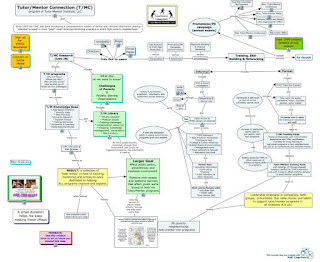
3) This concept map shows how we created events throughout the year to draw users to the information, and how we hoped the information would be used.

Read the map starting in the  upper left, with the box that says "T/MC Research (Info IN)". Across the top we show ways we share the information on an on-going basis since 1993. The columns from left to right show the type of information that's in the library and "formal" and "informal" uses of the information.  It's all intended to help well-organized volunteer-based tutor, mentor and learning programs be available to K-12 kids in more places.  That means it has to be used by donors, policy-makers, business, media, universities and more who need to take proactive, and on-going roles, to help tutor/mentor programs have the resources and talent needed to constantly improve. 

Access the library at this link. 

I started reaching out to leaders of other tutor/mentor programs in Chicago in 1974 and continued through the 1980s. I was looking for ideas to support my own efforts. This began to turn into a networking effort where each program was learning from the others. 

From my retail advertising jobs I knew how we created weekly advertising intended to draw customers to our 400 stores in 40 states, and how other corporate office teams worked to help each store have the staff and merchandise needed to serve those customers and keep them coming back.

I applied this in my leadership of a single program, and applied this strategy via the Tutor/Mentor Connection (1993-present) and Tutor/Mentor Institute, LLC (2011-present).  Since I did not have many dollars for advertising I created a strategy of quarterly annual events that would draw media attention and focused on ways business, universities and others could use their own human capital and dollars to help programs grow in different places.

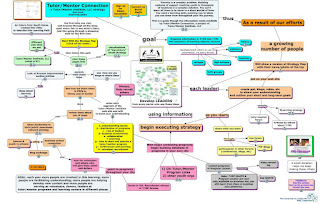
4) I created this concept map to help people understand the Tutor/Mentor Connection.

Follow the path from the left side of the concept map, downward, to understand the Tutor/Mentor Connection. Follow the path at the right, starting with "as a result of our efforts" to see ways others can use the information and ideas we've been collecting and sharing.  As you go through this learning path, begin executing the strategy, by using your own media to draw attention to tutor/mentor programs in Chicago or in other places.  

Here's a video, created in 2015 by an intern from South Korea, to guide people through this concept map.  It is an example of how anyone reading my articles can create and share their own interpretation. 

I share these graphics and articles from my blogs on Twitter, LinkedIn, Instagram and Facebook (find links here) and website and monthly eMail newsletter. 


Maintaining this library and my outreach is an on-going effort.  I keep inviting others to do the same.  

Unfortunately, the problems that we were addressing in the 1970s are still present as we move through 2022. Thus, the work I've been doing needs to continue. 

I just turned 75 so it becomes more and more important that a university or institution reach out and take ownership of my archives, blogs, websites, etc.  Student, faculty and alumni talent can do much more than I to update, analyze and share the information and draw attention and resources to area youth programs.

They can rebuild the sites that are now only archives and innovate new efforts to build public will and draw attention through the maps to EVERY neighborhood that needs Birth-to-Work support for its kids.  Reach out to me if you're interested in taking this role, or helping me find someone who will.

There were only 4 graphics in this article. There are more than 100 on this and other blogs. Take your time reading and thinking about what I'm sharing. Invite others to join you.  Create your own versions and share your interpretations, as my intern from South Korea did. 

Thanks for reading and sharing. 


Saturday, February 12, 2022

Super Bowl. Olympics. What's Involved?

Like almost everyone else around the country I'm going to be watching the Super Bowl football game tomorrow.  Many are also watching the Winter Olympics. 

Thus, I want to draw your attention to the infrastructure that is needed to build great teams.
Then I want to ask you to think of ways volunteers in business, civic and alumni groups, sports, entertainment and faith groups, etc. can take on roles of fans and team owners to build and sustain great tutor/mentor programs in every high poverty area of Chicago and other cities.

Below is a graphic I've been trying to develop for many years.


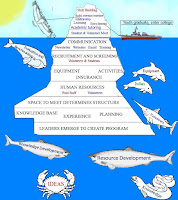
The team on the field consists of youth and volunteers who are connected via the efforts of the staff and leaders of organized tutoring, mentoring and learning programs. Youth in poverty face many obstacles, thus the defensive line in this graphic represents some of those obstacles. However, organized tutor/mentor programs in high poverty neighborhoods also face many challenges.


Unless we as a city can overcome these challenges
(visualized in this concept map) there will be too few great tutor/mentor programs in the many Chicago area neighborhoods where they are needed. Or in neighborhoods of other cities where NFL, NBA and other pro sports teams operate.

In this graphic, the fans in the stands are people who work in business, attend faith services weekly, attend local colleges, etc. These are the people who support great sports teams by their attendance, by watching on TV, or listening on the radio. They support sport teams, and sponsors, by the way they purchase sports apparel, and the way they talk about their teams on a daily basis. These are people who could be volunteering time, talent and dollars to support tutor/mentor programs.

In the sky-boxes are team owners, boosters, investors and others who pay millions of dollars to make great teams available...at the professional level, and at the major college level. Unless we find investors like this to support the growth of great tutor/mentor teams in more places, there will be too few, and there will be few who have long-term commitments to building great teams.

This next graphic shows the role of intermediaries. The articles I write and graphics I create are limited by the talent I have to do this work. The number of people who see these is limited by my own lack of personal visibility and advertising dollars. Thus, if we want more great teams we need more people doing what I do, taking on an intermediary role to help connect people they know with ideas and with programs where they can help implement these ideas.


I send out a monthly email newsletter, with graphics like these, and with links to different sections of my web library. This section points to almost 200 Chicago area youth serving organizations who need support from fans and owners to be world class at what they do.

The goal is that people use the information I'm aggregating to expand the range of ideas they have to support actions they take to help great tutor/mentor teams be available in more places. Volunteers from different places could help create a better design for this newsletter, could write articles, and could create their own versions to circulate this information to their own network of family, friends, co-workers, etc. 

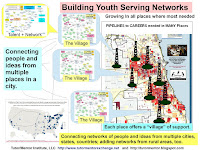
Since most of my library points to Chicago youth programs, every city needs someone duplicating my efforts and building their own library of local programs, maps and research.  

Below is an animation that illustrates a role athletes could take on a regular basis to mobilize fans and owners to support constantly improving youth programs in high poverty areas.


This animation, and other videos in my library, could be re-produced in many ways, with hundreds of different athletes, celebrities, etc. giving the message.

This isn't something that happens once a year, like the Super Bowl, or NBA AllStar game, or every 2 years like an Olympics. But if it is given the same attention, the result will be better support of hundreds, or thousands of different youth serving organizations operating in Chicago and other cities.

And ultimately, that will provide more of the support youth need to move through school and into adult lives and careers.

I'm on Twitter @tutormentorteam, which is where I'll be commenting during tomorrow's Super Bowl, and every day after that.  Join me. Follow me. Share your own game plan in blogs like mine. Feel free to use my articles for your own game plan and play book. As you share your own strategies, I and others will borrow from you.

Thanks for reading. Let's go out and help great youth tutor/mentor programs grow in more places.

Friday, February 11, 2022

Connecting seniors with K-12 youth - program design

Today I read an article from the Churchill Fellows blog about "harnessing the assets of the older people in our communities, including those living in long-term care and those living with dementia, and supporting them to build deep relationships with children and young people who are experiencing poverty and disadvantage."

This article outlines strategies for doing this,  including "overcoming silos to make the most out of resources".

This is something I've thought about for a long time. Senior citizens have been volunteers in tutor/mentor programs I led in Chicago between 1975 and 2011, but there's never been a strategy that would connect seniors systematically in youth tutor/mentor programs throughout Chicago.

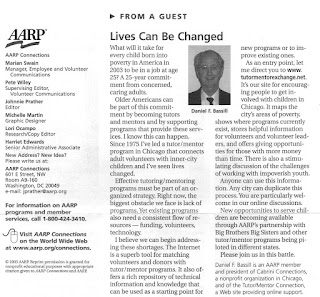
Below is a guest article I wrote for the AARP magazine in 2002.


I've followed the Churchill Fellows program for more than 20 years and hosted three different fellows between 1998 and 2006.  One was Clair Kime, who wrote this article summarizing her visit with myself and other tutor/mentor leaders in Chicago, Boston and New York in 2005.

AARP does encourage senior citizens to volunteer with youth, through programs like Experience Corps. However, I don't see a map-based strategy that connects seniors with youth the way the Churchill Fellows article envisions.  

When I say "map based" I mean leaders in different sectors should be innovating ways to make mentor-rich non-school tutor and/or mentor programs available in every high poverty area, for  many years.  

Such programs need a mix of volunteers working directly with youth, and working with program leaders to operate the program, raise needed funds, and build constant improvement.  Seniors have many work-backgrounds and a range of talents and could not only support individual programs, but lead city-wide efforts.

As you're doing your planning, take a look at the Churchill Fellowship article and think of ways you can involve seniors in many of the ways they describe. 

I'm on Twitter, LinkedIn, Facebook and Instagram. Let's connect and talk about these ideas. Find links here.


Monday, February 07, 2022

Mentoring Connections - Over Many Years

If you've read many of my articles you know I advocate for the growth of long-term volunteer-based tutor, mentor and learning programs that reach youth in high poverty neighborhoods. My passion comes from leading such a program from 1975 to 2011 and from the many long-term connections I've been part of. 

Below are a few photos that illustrate this.

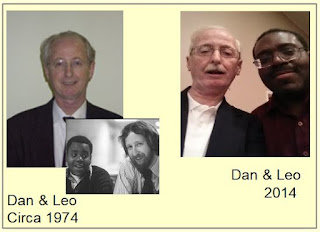
Me and Leo Hall - 1973 till 2022 - Leo and I were matched in 1973 when he was in 4th grade. We've stayed connected since then. We're now connected on Facebook.  View past articles where I've talked about Leo and myself.  Leo's now looking for a Kidney donor. If you think you can help reach out to me on Facebook. 


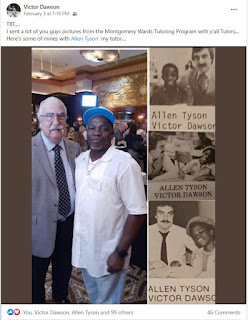
Allen Tyson and Victor Dawson - 1975 till 2022.  Below is a set of photos that Victor posted on Facebook last week.  The three on the right are from the year-end yearbooks that I created every year from 1974 to 1991.  


Allen has actually been involved a year or two longer than myself.  He has had a series of mentees, including Victor's siblings, over the past 50 years.  Here are a few articles where you can read about Allen and past mentees.  


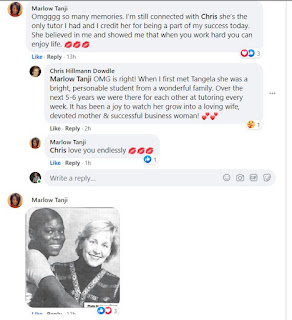
Chris Dowdle and Tangela Smith Marlow - late 1980s till 2022. Below is a Facebook interaction in February 2021 between Chris and Tangela.  They met in the original program at Montgomery Ward, then joined Cabrini Connections in 1993 when Tangela aged out of the original program. Chris's husband, Ray Dowdle, with the long-term board president of Cabrini Connections. 


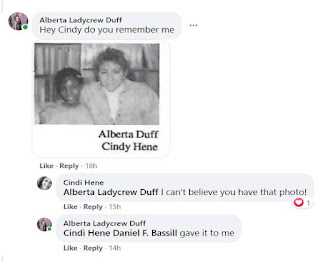
Alberta Duff and Cindy Hene.  1980s till 2022.  This is part of a Facebook conversation started by Alberta in 2021.  She asked if I knew who her past tutor was before the Cabrini Connections program.  I looked in yearbooks from the late 1980s and found the photo of her and Cindy, then looked for Cindy on Facebook. I then re-connected them.


View the yearbook archive.

Victor has had several of the yearbooks from past years and a couple of years ago I shared this link where anyone can find the entire collection from 1976 to 1991. Visit this page and you can find links to newsletters from 1993-2003 from the Cabrini Connections - Tutor/Mentor Connection, as well as annual reports from those years. 


When Victor posted some photos of him and his Cabrini-Green friends and family recently I skimmed through them and did not recognize any faces after so many years. So I suggested he look at the old yearbooks and put pictures from the past with those of the present.  He did that.

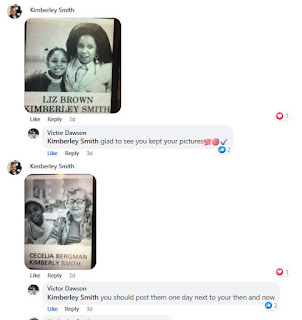
I also suggested that others look up their former tutors.  Kimberly Smith found photos of herself with two of her former tutors and posted them the the Facebook conversation.


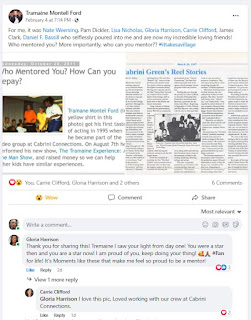
Tramaine Ford accepted the invitation too,  and posted the photos below to Facebook. He received responses from Carrie Clifford and Gloria Harrison, who he met when they launched the Innervisions Youth Productions video creation group at Cabrini Connections in 1997.  


These are just a few of the connections taking place today, in 2022, that were started through the tutor/mentor programs I led from 1973 to 2011.  They show that the work we did in past years to help build and sustain these relationships are still paying dividends today.  

I'm connected to each of these former students and many others on Facebook and delighted when I see them posting stories telling of the success of their own kids.  I'm also saddened when I hear of tragedies that continue to plague others.

There are very few organized tutor/mentor programs in Chicago that have longer histories than 20 or 30  years, but there are some.  The program I led at Montgomery Ward is now Tutoring Chicago and can probably offer many stories of these on-going connections.  The Chicago Lights program at 4th Presbyterian Church and the Custer Tutoring Program in Austin are also long-term programs. 

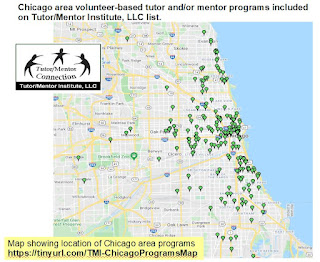
Each green icon on this map is the location of one of the tutor and/or mentor programs on a list I host. Find the map and list at this link.  Browse through the list, look at the websites, identify other long-term programs and/or unique mentoring models, then share stories of these programs with your friends, family and co-workers. Help each program attract the resources needed to build long-term connections. 


Create your own map stories.

I've plotted the location of Chicago area tutor and/or mentor programs on maps since 1993 and created overlays showing indicators of where programs are most needed, such as high poverty, poorly performing schools and/or incidents of violence.  

Use this information to create your own map-stories that draw attention, volunteers and donors to programs in different parts of Chicago.  Browse the list of map-based articles on this blog, or the MappingforJustice blog to see how I've embedded maps in stories. 

Increasing attention. Sharing information.

I hosted Tutor/Mentor Leadership and Networking Conferences in Chicago every six months from May 1994 to May 2014 to help programs learn and share from each other, and to draw media and donor attention.  I've used my newsletters, blogs, social media and websites to encourage every program to constantly learn from each other, and to share their own stories of what works, what challenges they face, and how their students and volunteers are still connecting after many years.  

I've  used articles like this to encourage programs to share more information on their websites and to create and use blogs. I feel such information would provide more evidence that donors, volunteers and parents might use to choose programs to support or get involved with.

However, more people need to encourage this than myself, especially donors.   

Add your photos. Rebuild connections.

If you're part of the tutor/mentor programs I led I encourage you to go through the old yearbooks and find photos of yourself and your tutor or mentee, then share them on Facebook with myself and each other. In doing so you show the value of these programs and encourage donors to support existing programs that are doing similar work.  And, you help re-build and strengthen the ties that bind us. 

Are you part of other programs? Tell your own stories.

If you are connected to other tutor/mentor programs in Chicago or in other cities encourage them to share stories showing the connections that still exist between former students and volunteers, or the successes alumni are having because of the help the programs provided in the past. Use Facebook, Twitter, Instagram and LinkedIn to get the largest possible attention for your posts, and for these organizations. 

Together we can draw greater attention to programs that support long-term connections and help them attract the volunteers and donors needed to help those programs operate from year-to-year.

Thanks for reading.  

I hope you'll connect with me on one of these social media platforms. 


Thursday, February 03, 2022

Wealth inequality in Chicago and Cook County

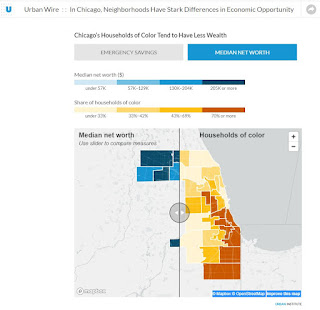
I receive the Urban Institute eMail newsletter and today there was an article about a new interactive map that visualizes Chicago's wealth inequality across the region.  You can view the article at this link.

Slide the bar to the right and you see differences in median net worth and emergency savings. Slide it to the left and you see households of color.  It's clear that wealthy areas have fewer people of color. 

The article that accompanies the map offers some suggestions of how policymakers can help Chicagoans accumulate liquid wealth,  however  it ends saying "With Chicago's significant inequity and Illinois's poor finances, closing wealth gaps will require policies at the national, state and local levels, commitment from nonprofits, and changes from the private sector."

2/12/2022 update - here's a WBEZ article about the Wealth Gap, that goes into greater detail for the Chicago region. 


Here are a few articles that I've written that focus specifically on building public will to invest consistently over many years in strategies that help more kids in poverty areas move through school and into jobs and careers out of poverty. 

Actually, everything I have done via the Tutor/Mentor Connection (1993-present) and Tutor/Mentor Institute, LLC (2011-present) for the past 30 years has had this purpose. 

I have focused on helping workplace volunteers, from many different backgrounds, become involved in the lives of inner-city youth via organized, tutor and/or mentor programs.  As volunteers grow their involvement, the kids go from being "someone else's kids, to being their own kids" and as they learn about the root causes of poverty and the challenges kids face, many will return to their networks and bring reinforcements.

They will help build public will. 

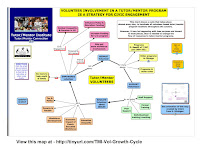
 This article shows the volunteer growth cycle that can come from within an organized tutor/mentor program. 


This graphic shows how we need to influence policy makers, business, donors, and everyone who does not live in poverty, in order to build and sustain programs in high poverty areas that help people move from poverty to opportunity.  See it described in this article.  

I added the Urban Institute article to the "poverty and crime mapping" section of the Tutor/Mentor Library where there are many similar articles to draw from. Another section to look at is a set of "poverty, race, inequality" links. 

If you are troubled by the inequality we face then start reading these articles, and invite others to join you. Start a discussion group. Start thinking of ways to get more people involved. 

Here's something else for a few of you to look at. Getting enough people involved to actually create the changes that the Urban Institute recommends is an effort in community building, movement building and political activism.  Take a look at the article I point to in this Tweet, that talks about measuring the growth of a movement, as a tool for building further growth and achieving goals. 
I added links to these articles in the 'community building and collaboration' section of the Tutor/Mentor library, where they join more than 100 other articles. 

Write about this. Help build the movement.

If you're looking at these articles and writing about some of the ideas I share, as Daniel Delmanto, from Brazil, did in this article, please share your links and connect with me on one of these social media platforms. 

Sunday, January 30, 2022

2022 National Mentoring Summit

Last week I participated in the virtual National Mentoring Summit hosted by the MENTOR, the National Mentoring Partnership.  Below are some Tweets I posted, along with comments. I encourage you to follow the links, and visit the MENTOR website throughout the year to find ideas that you can use to strengthen your own mentoring programs and do more to help kids in your community.

Part of my purpose with this blog, and each article, is to set an example that I hope many will duplicate, in Chicago, and around the country.  There were more than 1000 participants in this week's Mentoring Summit. There should be at least 100 blog articles where participants share what they learned and who they met.

Now let's look at some of the Tweets.

During one of the sessions I asked if anyone was using mapping and was told of a project being done by MENTOR Nebraska.  I looked up the website and found this PDF with the map shown in my Tweet. 

I hope many will review the PDF. By collecting information about existing mentoring programs in Nebraska and plotting locations they enabled a planning process that identified where more programs were needed. This is what I've been encouraging for the past 30 years.  It will be interesting to see if they make their mapping into a web-based platform and use it to try  to draw volunteers and donors to existing programs throughout Nebraska. 

Becoming a Better Mentor Guide

In more than one session people asked for help in training their mentors. I started building my library in the 1970s when leading a program with 100 volunteers, while holding a full time advertising job. I did not have the time to do on-going training of every volunteer so I started building a library and tried to motivate volunteers to dip into that regularly, doing their own learning.  I then created on-going social interaction events where volunteers could share what they were learning and mentor each other.  

I've continued that for over 40 years. The "Becoming a Better Mentor Guide" which I Tweeted about below, is a new resource any volunteer can use to build their skills.


Understanding benefit to youth through a social capital lens.

This is a Tweet by I Could Be, highlighting a workshop by the Christensen Institute.
I've written articles about social capital often in the past and am pleased to see this finally getting greater attention.  A few workshops emphasized the benefit to volunteers, not just kids. That's an important reason for businesses to encourage volunteer involvement and support programs with corporate dollars.   

Virtual Mentoring featured in many workshops.  

I Could Be hosted their own workshop, which I highlighted in this and other Tweets. I wrote about I Could Be and virtual tutoring/mentoring in this article last March. While thousands of youth tutoring and/or mentoring programs and almost every public school and college had to rapidly move to on-line learning in March 2020, a few organizations, including I Could Be.org had already been doing this since the mid 2000s. Thus, they had valuable experience to share with others.  

In response to the huge demand in 2020, MENTOR established a page focused on Virtual Mentoring Portals. 

I've connected with MENTOR Maryland before, but re-introduced myself with this Tweet.


Community For Youth, in Seattle, was a program that impressed me. I added their blog to the list of tutor/mentor program blogs that I include in the tutor/mentor library.  


I've included Capital Partners for Education
in the Tutor/Mentor library since the early 2000s. I connected with them in this Tweet.

GenerationHope was another program that I learned about. I posted a Tweet and started a conversation. Connect on social media.
In many of my comments during workshops and with my Tweets, I encouraged other participants to come to Twitter to share their own ideas and connect with others. These are just a few Tweets I posted. Visit #MentoringSummit and #NationalMentoringSummit and skim through the Tweets, going back to last Wednesday when mentoring leaders when to Capitol Hill to educate congressmen and senators and build support for legislation that supports mentoring programs throughout the USA.

Today marks the end of the January 2022 Mentoring Month, and the Summit seems like a great way to propel everyone forward for the work of building and sustaining mentoring and tutoring relationships  that help more kids living in high poverty areas move through school and into adult lives.  

There's lots of work to be done. Don't reinvent the wheel. Try to learn from each other.  Try to help build greater business and donor involvement that draws volunteers and operating dollars to programs in every high poverty zip code.  

Thanks for reading. I look forward to seeing your own stories. 

Monday, January 24, 2022

Elements of Effective AfterSchool Program

 I saw the Tweet below today, posted by the Afterschool Alliance.  It includes a graphic showing elements of comprehensive afterschool programs.  View the Pdf here.

In many of my own articles I've used a version of the graphic below to communicate ideal program design.


I actually think the AfterSchool Alliance graphic is more comprehensive. The only thing it's missing is a block showing "extra adult support/mentors" but maybe that's implied in the various types of activities included on their graphic.  

What they do include, more than I do, are other elements such as "wrap around family supports" and "healthy food and exercise".  


Helping youth programs get the volunteers and dollars needed to build and sustain such programs is what I've focused on since forming the Tutor/Mentor Connection in 1993 and Tutor/Mentor Institute, LLC in 2011.  

Here's one article that uses the graphic at the left. Here's a few others that focus on program design and infrastructure.  

I'd love to find more people creating their own graphics to show program design and infrastructure needed, as well as maps that show all the places where such programs are most needed. 

I encourage you to share these articles and graphics with people you know and start discussions about ways you can help comprehensive programs grow in all high poverty areas of Chicago and other places. 

Be the YOU in this graphic. 

As you look at the recommendations from the afterschool alliance here are two more resources.

8 Conditions for Student Success - developed by the Quaglia Institute for Student Aspirations (QISA)-  click here

8 dimensions of development from Afterschool Allstars Project - watch video. See chart at 9 minute mark. 

Thursday, January 20, 2022

Complex Problems - helping kids from birth to work

I've been using Wakelet to share collections from my blog and PDF library.  Here's a set that focus on the complex problems of building and sustaining youth support programs in every high poverty area of Chicago and other cities, helping more kids in poverty move from birth to work.  Take a look. 


Sunday, January 16, 2022

Celebrate Dr. King's vision by adopting this commitment

I've posted articles during the Dr. Martin Luther King, Jr. holiday many years in the past. This was from January 2021.

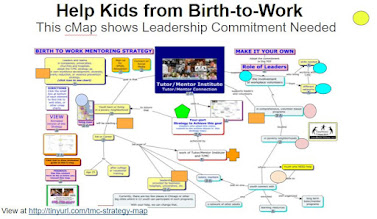
In all of these I've encouraged a day of learning, not just a day of service.  This week I created a new presentation, using Google Slides, to guide learning through a strategy map that shows commitments leaders can make to help kids in poverty grow from birth-to-work with support from business, volunteers, universities, philanthropists and more.

Open the presentation at this link.

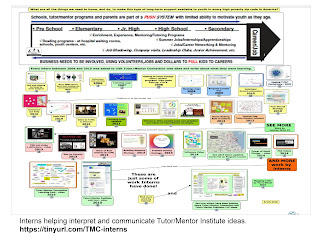
Between 2004 and 2015 interns from various universities in the Chicago region and as far away as South Korea were asked to review presentations like this, then create and share their own versions.  In the concept map shown below I point to some of their work. 

My invitation to all who celebrate Dr. Martin Luther King, Jr.  this weekend is that you and students you work with create your own version of the strategy map, showing your commitment to helping kids living in high poverty areas move safely through school and into jobs and careers which enable them to raise their own kids free of poverty.

Had people been doing this since the 1960's I feel the world would be a much different place now.


Thursday, January 13, 2022

Sharing work via Wakelet

 My #clmooc friend Terry Elliott introduced me to Wakelet a couple of years ago and recently demonstrated how you could aggregate posts in a single Wakelet. Here's one article on his blog that demonstrated it to me. 

Below are some examples you can find in my own Wakelet account. 

I've posted more than 1000 articles on this blog since starting it in 2005. They all focus on strategies and actions that help mentor-rich non-school programs grow in high poverty places and reach K-12 youth with on-going support intended to help more kids move safely through school and into work.

While I've tagged articles to help people narrow their reading focus, unless the Tutor/Mentor Connection (1993-present) is part of a formal course of instruction at the high school or college level, it's not likely that many people are going to dig through the blog to learn all that's available.

Thus, I've created a collection on Wakelet, each with 7-10 articles, that I hope will help narrow the learning path and engage more people from Chicago and around the world.

There are already many youth tutor, mentor and learning programs operating  in Chicago and around the country. However, few people are aggregating lists of programs and trying to use maps to show what area of the city the programs serve, or what age group.

Building that information base enables anyone to ask "How can we do this better?"  How can we help existing programs get the resources to operate and constantly improve by borrowing ideas from each other?

How can we help new programs form in areas where more are needed, then also get the continuous flow of resources needed to keep kids and volunteers connected from year-to-year? 

As you do your day of service to celebrate the Dr. Martin Luther King, Jr. holiday, spend some time looking at these articles and discussing them with friends, co-workers and others.  Put the ideas to work this year and next year celebrate what's been accomplished.


Wednesday, January 05, 2022

Where it began. Tutor/Mentor Connection

 When I and six other volunteers met in November 1992 and launched a new organization that would provide tutor/mentor support to 7th grade kids aging out of the program I led from 1975 to Oct 1992, we had many years of previous experience to draw upon. However, when we also decided to create a strategy that would help volunteer-based tutor/mentor programs grow in all high poverty areas of Chicago, we did not have many examples to follow. 

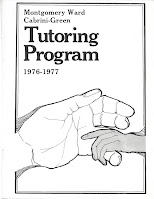
I became a volunteer with the Tutoring Program at the Montgomery Ward corporate headquarters in Chicago in the fall of 1993. Two years later I was made the leader of that program. For the next 15 years, while my retail advertising jobs at Montgomery Ward grew in responsibility, the tutoring program also grew, from 100 pairs of kids and volunteers meeting weekly in 1975 to more than 300 pairs by June 1990.  

At that point we turned the program in to a non-profit and I took a full-time job leading the program. We grew from 300 pairs in 1990 to more than 440 kids and 550 volunteers by June 1992. 


This growth was the result of building a team of volunteers, drawn from many different Chicago area companies, who helped recruit and train other volunteers and lead the weekly tutor/mentor sessions.  

However, it also was a result of my reaching out to find leaders of other tutor/mentor programs in Chicago, to learn from them and to share my own strategies.  These included programs at 4th Presbyterian Church, Continental Bank, the Blue Gargoyle at the University of Chicago, the CYCLE program at the LaSalle Street Church, a program at Quaker Oats company and a few others.

Recognizing that we all recruited and trained volunteers in August-September we decided to pool our efforts and do joint training events. As we did, we tried to reach out and invite other programs to participate. However, no one had a master list, so we had difficulty finding other programs. The only one in Chicago who seemed to be building a list was myself. 

It was this networking with other leaders, and trying to locate other programs, that planted the seed for the Tutor/Mentor Connection (which in 2011 became Tutor/Mentor Institute, LLC). 

However, it also was this constant flow of stories about violence in Chicago that inspired the T/MC.  In my advertising roles at Montgomery Ward we created weekly print ads that reached 20 million people in 40 states, telling them that we had merchandise and services at a store near them that they were looking for, and that this week, they were on sale.  This constant call to action, pointing to each of our stores, was missing from media coverage of violence.


This concept map shows the 1965-1992 growth of the tutoring program at Wards. 

The program that existed in 1992 was the result of incremental, year-to-year growth, starting in 1965 when a few employees from Montgomery Ward started meeting with elementary school kids living in the Cabrini-Green neighborhood.  By 1978 we were attracting national attention. This letter shows a confirmation for me to speak at the National Right to Read Conference.  This PDF shares a 1988 study by the Center for Early Adolescence at the University of North Carolina, that cited the Montgomery Ward/Cabrini-Green literacy program as "one of the best in the nation."

Thus, when we decided to launch the Tutor/Mentor Connection we had many years of experience to share to help other programs grow.  

While we launched the first Kids' Connection meetings with youth in January 1994 we spent all of 1993 planning the strategy for what became the Tutor/Mentor Connection.  Originally we called this "Chicago Youth Connection".  You can see from the chart below that we had people from universities, a public relations firm, and MCIC, a Chicago information research organization, involved with the planning. 


We changed the name to Tutor/Mentor Connection in the fall of 1993 after hearing from Chicago Youth Centers (CYC) that they hoped we would not use the same CYC name.  

The result of our planning was a 10-point strategy intended to build an information base, with a comprehensive list of tutor/mentor programs serving Chicago, and a public information strategy that drew more consistent attention, and resources, to every program.  That strategy is described in the graphic below, and in this Case Statement from 1994. 


We launched the strategy in January 1994 with a survey sent to 500 people in the Chicago region asking if they led a volunteer-based tutor/mentor program and, if yes, to provide details.  120 programs responded and told us that they had little contact with peers, would like more contact, and would come to a conference if offered at low, or no, cost.  So in May 1994 we organized the first Tutor/Mentor Leadership and Networking Conference. 70 people attended and feedback was positive. So we organized a second conference in November 1994 and 200 people attended.  We continued that conference every six months until May 2015.

We also published our list of programs in a printed directory.  You can now find this list of programs here. 


By 1996 we had added an August/September Chicagoland Volunteer Recruitment Campaign, a November Tutor/Mentor Week, and a partnership with the Lend A Hand Program at the Chicago Bar Foundation.  Here's an article in the 1996 CBA Report newsletter about Tutor/Mentor Week. 
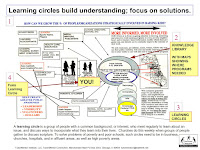
We condensed the 10 steps to four, which are visualized in this concept map.

We had no money, only a few volunteers and a vision when we launched the Tutor/Mentor Connection and the Cabrini Connections program. We had to raise the money to pay for our work each year.  We reinvested what we learned from what worked, and what did not work, and what we were learning from others, in constant year-to-year efforts that aimed at helping volunteer-based tutor/mentor programs grow in more places, and helping those programs improve their impact on the lives of kids and volunteers each year.

This concept map timeline shows 1992 to 2022 growth of the T/MC (1993 to present) and Tutor/Mentor Institute, LLC (2011-present) and milestones in this on-going growth.

Keep in mind as you view this that while we were building and leading the Tutor/Mentor Connection to help ALL programs in Chicago, we were also building our own Cabrini Connections program. Here's another concept map that shows this two-part strategy from 1993 to 2011. The first priority of our Board and volunteers was keeping the kids' program working, thus, when the Montgomery Ward company went out of business in 2000 we made a decision to rent expensive space near Cabrini-Green to continue supporting our kids, rather than move to less expensive space elsewhere, where we could continue the Tutor/Mentor Connection.  
While our timelines show consistent growth over time, the reality was that growth was inconsistent. The graphic below shows dips in funding in 2000, 2001, 2008-10 caused by man-made and natural disasters.  Each time funding was reduced we had to prioritize attention on the kids' program, yet continue to operate the Tutor/Mentor Connection.  If this graphic were extended to post 2011 it would show a decade-long dip in funding, almost down to zero.
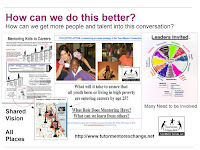

Every action taken over the past 45 years has aimed at connecting a youth from a high poverty area with an adult who would serve as a tutor, mentor, coach, friend and extended family, in an on-going effort to help each child overcome the challenges of high poverty as they move through school and into adult lives, with jobs that enable them to raise their own kids free from the grips of poverty.


For many kids it has worked. I'm connected on Facebook at many students from the 1970s till 2000s and see them posting stories showing their own kids finishing high school and college.  I see similar stories from a few other tutor/mentor programs in Chicago and around the country.

But not enough.


We started using Geographic Information Systems (GIS) to plot locations of tutor/mentor programs on maps in 1993. By 2004 we had an interactive search page on the Internet that enabled people to search for programs in specific zip codes, based on age group served and type of program. In 2008 we launched an interactive map directory that enabled leaders to look at the entire city, or specific sections.

Unfortunately, since 2011 I've not found the money, or the volunteers to keep these services available and updated and they are only available as archives in 2022.  

I urge you to view map stories on this blog, and the MappingforJustice blog. See how I've tried to use maps as part of planning and resource development to support existing programs, or help new programs form where more are needed.  

I turned 75 last December.  While I will spend this year and future years continuing to invest time, talent and ideas in this effort, every city in the US and the world would benefit from a map-based strategy based on what I've piloted since 1993.  

Thus, while I'm still available to help, why not form a team and make a commitment to build your own Tutor/Mentor Connection type strategy.  

Take a tour of the Tutor/Mentor Institute, LLC website. Use it as a text book for learning about the work done since 1993 that you and others could build on in the next decade. If you launch such a strategy, I can make my Google Drive archives fully available, to help  you learn from my own efforts. 

Remember, the goal is not one, or a few, great programs, but a city filled with great birth-to-work programs in EVERY high poverty zip code.

If you'd like my help, connect with me on Twitter, Facebook, LinkedIn or Instagram (see links here). 

If you'd like to help me pay the bills, visit this page and make a contribution.