Showing posts sorted by relevance for query 4th of july. Sort by date Show all posts

Tuesday, July 02, 2024

What will July 04, 2025 look like?

In two days American's will celebrate the July 4th holiday. But with great fear among many of us, that this will be the last celebration of a democratic America.

November's elections will determine our future.  

I've been posting articles around July 4th for many years.  Below is what I posted in 2022, with a few updates.

Today millions of Americans are celebrating the founding of this country, while millions also are wondering when freedom and full rights of this country are available to them. Even more are fearing that freedoms that have been gained are now being taken away.

Many are sharing the quote from Benjamin Franklin, who said something like "It's a democracy, if you can keep it."


I'm often reminded of the image at the left. Is the person trying to stop a boulder from rolling downhill, to destroy everything below? Or is he trying to push it uphill, to achieve some lofty goal? 
Maybe both.  As you celebrate today, which role are you taking?

I've posted several "4th of July" articles in the past.

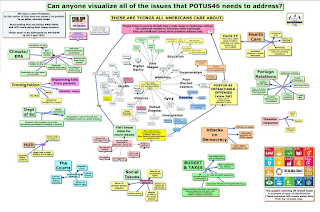
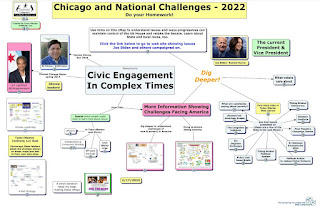
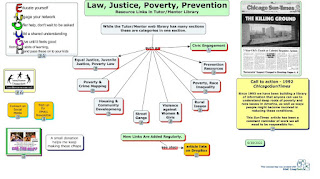
Below are a few concept maps that point to resources in my library that you and others can use to better understand the challenges we face and the opportunities that exist.

The many challenges we face: https://tinyurl.com/TMI-Potus46-to-do-list


Here's another view of challenges. http://tinyurl.com/TMI-civic-engagement


This concept map points to articles in the Tutor/Mentor library. https://tinyurl.com/Law-Justice-Poverty-Links

Since my focus for the past 30 years has been to help organized, volunteer-based tutor, mentor and learning programs grow in areas of persistent poverty, helping kids move from first grade through high school and into college and beyond, I've added another concept map from my collection.

This concept map shows challenges facing youth in high poverty areas as they move from birth to work. 


The challenges shown on this map are also shown on the  "POTUS TO-DO" list map shown above.

Getting people to vote has to be a priority over the next four months and next 40 years!  Look at the work Rev. Dr. William J. Barber II is doing to unite poor and infrequent voters of every color, not just Black and Brown Americans.    Look at the Twitter (X) feed for Dr. Barber, and see the ideas  he is sharing.  

As you gather with friends and family, or sit alone in your home, I urge you to take time bookmark these resources, then later take time to dig into the websites and articles I point to. Find ways you can help preserve and improve on what the founders created over 200 years ago.

Happy 4th of July. 


Monday, July 04, 2022

It's a Democracy, If you can Keep It.


 Today millions of Americans are celebrating the founding of this country, while millions also are wondering when freedom and full rights of this country are available to them. Even more are fearing that freedoms that have been gained are now being taken away.

Many are sharing the quote from Benjamin Franklin, who said something like "It's a democracy, if you can keep it."


I'm often reminded of the image at the left. Is the person trying to stop a boulder from rolling downhill, to destroy everything below? Or is he trying to push it uphill, to achieve some lofty goal? 
Maybe both.  As you celebrate today, which role are you taking?

I've posted several "4th of July" articles in the past.

Below are a few concept maps that point to resources in my library that you and others can use to better understand the challenges we face and the opportunities that exist.

The many challenges we face: https://tinyurl.com/TMI-Potus46-to-do-list


Here's another view of challenges. http://tinyurl.com/TMI-civic-engagement


This concept map points to articles in the Tutor/Mentor library. https://tinyurl.com/Law-Justice-Poverty-Links
As you gather with friends and family, or sit alone in your home, I urge you to take time bookmark these resources, then later take time to dig into the websites and articles I point to. Find ways you can help preserve and improve on what the founders created over 200 years ago.

Happy 4th of July. 

Sunday, July 02, 2017

Make sure Pipeline to Careers has roots in all poverty neighborhoods

See pipeline in this article
I've used graphics like this often to visualize a system of youth supports that starts at pre-school and continues until a young person is in a job and taking on adult responsibilities.  While we spend billions as a nation to help people who live in poverty many programs only focus on pieces of the problem, not the entire pipeline. If there's a gap in support, the pipe leaks. In many cases this can be life changing if kids get drawn into gangs, drugs, or other negative habits.

See article
As we enjoy this 4th of July weekend and think of the blessings that most Americans enjoy, I hope you'll take a few moments to think of ways you can use your time, talent, leadership, dollars, influence and votes to create a support system that makes more of these blessings available to everyone in America and to others around the world.

This "mentoring kids to careers" graphic is a different version of the pipeline, but emphasizes the same points. At each age group kids need specific types of support to help them move to the next age level. Most kids living outside of extreme poverty and segregated neighborhoods, and in smaller cities and towns, have more of these supports available to them than do kids living in high poverty areas of big cities.

See article
This is a third version of the same idea. In this case I use "oil well" as a symbol for the birth to work support kids need. I posted these on a map of Chicago, where the darker red areas are neighborhoods of  high poverty where this type of support systems needs to be created and sustained for many years.  One role researchers can take is to create asset maps of different zip codes to identify support programs that are available and find ways to help them do good work. Such maps can also show gaps in service that need to be filled, which are where the "pipeline" is broken.

The graphic below combines some of these elements. At the right is another graphic showing the birth to work support system, along with a map emphasizing a need for support to be available in all high poverty areas.  To the right I focus on building and sustaining public will to make this happen, and the need to influence people who don't live in poverty, as well as those who operate the schools and non-profits that need to become available to more kids and families in more places.

See complete collection of concept maps
If you open the links on the graphic above, which are the small boxes under each node, you'll find other articles that feature these graphics in more detail.

As you're enjoying the holiday, I hope you'll take some time to look at this, and bookmark the page, so in coming weeks you can dig deeper into these ideas and share them with friends, family, co-workers, alumni and others who also are celebrating this weekend.

While I've written articles like this for many years, many leaders are needed to re-frame this message and evangelize it in more places to more people.  Leaders who champion and spread these ideas could be students in middle school, high school, college and/or Phd students. They could be faith leaders, business leaders, athletes, rappers, even politicians.

Share links to articles you post with these ideas, in the comment box, or on Twitter, Facebook and Linkedin.

Wednesday, July 03, 2013

Chicago, Global Network Building

I've been participating in the Making Learning Connected MOOC this week (#CLMOOC)and the topic has been mapping. As a result of a suggestion I made over the past weekend a Google map has been launched that participants can add their name to. See it here.

2013 CLMOOC participation map

MOOCs are idea sharing events. If you can participate long enough you learn new ideas that might be applied to your own work. For instance, in last night's Google Hangout chat, I shared a post about mapping networks of Facebook and Linked in Friends, and the Mention Map that enables you to see who you're connected to on any given day on Twitter. Someone asked if there was a way to map Twitter friends by geographic location. I said, "I don't know". And then someone else said, "Try Map My Followers." I tried it and the image below is from the map of my followers.

Created in 2013 using Map My Followers (no longer active)

To use this, or the Twitter Mention Map, you need to first connect using your own Twitter username. Once you've done that you can create a map of your own followers, or you can enter the username of another person to see the distribution of their followers.

(2018 Note: the MapMyFollowers no longer works and MentionMap charges a fee to see more than a few people in your network. Bummer.)


My username is "tutormentorteam" so if you enter that in the Map My Followers site you'll get the map shown above. It's interactive so you can zoom in to any section of the world and see how many followers I have from that section and you can click on the icon to see who they are.

I use maps like this to show other organizations in Chicago who also focus on the well-being of youth and my goal is to connect with these groups in events they host, conferences I host, and on-line space where we can connect with each other on a much more frequent basis.

Unfortunately, if you look at my Twitter friends in the Chicago region, you don't see nearly as many followers as you would expect in a city as large as Chicago, nor do you see too many from among the groups shown on the concept map. If you look at the map showing participation in the last Tutor/Mentor Conference, you'll see a few intermediary organizations like Alternative Schools Network, ServeIllinois, Illinois Mentoring Partnership, but still only a small percent of those who I hope to connect during these events. My conference and network maps also show few from business, philanthropy, politics, media, faith groups, meaning THE VILLAGE it takes to raise a child is meeting some place else....or it's not meeting with any great deal of connectivity, AT ALL.

There are probably a lot of reasons for this but as we celebrate the 4th of July, and the county built by many people working together for a common purpose, I hope that anyone reading this who's not connected to me on Twitter, Facebook or Linked in will reach out and connect, and that you'll spend time over the next six weeks reaching out to others who are working to improve the futures of youth in poverty, so more people are connected to me, AND EACH OTHER, in on-line communities and in events that connect us face-to-face, while building attention and mobilizing resources for all of the organizations in the Chicago region who engage volunteers in organized tutoring, mentoring, arts, technology and learning programs.

In addition to helping me expand my network, I encourage you to challenge others to build network maps like I have shown here, and place them in their own web sites and blogs. If we're all working in silos how can we mobilize all of the people and resources needed to help solve the problems that face families in so many different parts of the Chicago region?

If you're in another city, apply this thinking and mapping to your own efforts. Share them and we can learn from you.

Tuesday, July 05, 2016

War on Poverty. A Role Anyone Can Take

The first half of 2016 is behind us and the rest of the year, and our lives, is in front of us. What will we do with that time to help America and the world overcome the complex challenges we face?

In this article I'm going to describe a role anyone, from middle school student to senior citizen, can take on a daily basis. I hope you'll read it and share with your network.

First, my work focuses on helping volunteers from different business and life backgrounds connect with economically disadvantaged young people, in well-organized, volunteer-based tutoring, mentoring and learning programs. While these can operate at schools, I point to the non-school hours as  a time frame where volunteers might make longer commitments.

This article is part of a 4-part strategy, described here. This can be applied to any cause, not just youth tutoring/mentoring.

The graphic below illustrates the need for year-round planning, and the long-term work required to help a youth grow from first grade, to first job.

In my role as a leader of a volunteer-based tutor/mentor program, from 1975-2011, I saw myself as an intermediary. I recruited youth and volunteers, provided training and learning materials, and helped them stay connected for one or more years. Some stated connected for many years. I'm still connected to the boy I started tutoring in 1973, when he was in 4th grade.

In my role as leader of the Tutor/Mentor Connection, which I formed in 1993, and continue to lead via the Tutor/Mentor Institute, LLC, I'm still a facilitator, but trying to help volunteers and donors connect with more 200 Chicago area youth serving organizations (see list and map).

At the same time I'm trying to motivate leaders, volunteers and donors to connect with each other, share ideas, borrow best practices, and constantly improve their impact on youth and volunteers.  This graphic illustrates that facilitation role and motivation to influence both sides of the solution.

I held retail advertising roles with the Montgomery Ward company from 1973-1990 and understood the power of advertising to educate and attract customers to the 400 different stores we operated in 40 states.  While I was developing my skills as a program leader I saw how inconsistent media, business or government was in maintaining consistent attention and a flow of talent and operating dollars to the different tutor/mentor programs operating in Chicago.

Thus, when I created the Tutor/Mentor Connection, a key part of the strategy was to increase the number of stories that drew attention to tutoring/mentoring programs throughout the region.  This 1994 Chicago Tribune article shows a commitment that I've sustained for over 20 years.


This is one of many news articles generated from the T/MC strategy.  They all aim to draw people to information they can use to support their own learning about where and why volunteer-based tutor/mentor programs are needed, and actions they and groups they are part of can take to support the growth of programs in different parts of the city, or throughout the city.


This graphic illustrates the goal of forming reading circles/study groups in business, universities, faith groups, schools, etc.  It includes maps, to emphasize the need to focus attention on all high poverty neighborhoods of the city and suburbs, not just a few.

From 1993 to 2000 T/MC built a year-round calendar of events, that could be supported by anyone, in an effort to draw on-going resources to existing youth serving organizations.  


If such a strategy enlists enough leaders, both high profile, and low profile, and continues for multiple years, more people will become involved, drawing and increasing flow of operating resources into every high poverty neighborhood....as long as someone is maintaining a master-list of organizations operating in the region.

This year-round strategy is described in this pdf and in many others. Leadership strategies are shown here.  Since 2011 I've not had resources or partners to organize these events, and never had much support, even in the 1990s.  However, they remain a template, and strategy that needs to be adopted in Chicago and in other cities.

We're just entering July.
 Over the next six weeks if you share this article and others in this blog and from the Tutor/Mentor Institute web site, you have time to develop a communications strategy from your church, business, political office, sports team, or recording company, that talks about how youth in high poverty neighborhoods need more non-school tutoring, mentoring and learning programs to help them stay focused on school and on college and careers.  You can point to sections of my Chicago youth programs list, or create your own list.

I've been participating in an on-line "Designing Community Engaged Research" MOOC for the past few weeks. Participants are encouraged to write blog articles, which are aggregated here.  They are also encouraged to participate in Twitter chats and interactions using #curiouscolab hashtag, which is mapped here.

A version of this could be in place in Chicago by September, or by November, engaging people from the entire region in conversation about what tutor/mentor programs are available and what they do and where they are most needed, or where more are needed. They could be talking about innovative ways businesses are supporting programs with employee time, talent and dollars or ways faith groups are engaging their congregations in study groups.

By next July we could begin to see a citywide strategy moving into its second year, if just a few people read and apply these ideas over the next six weeks.

Read more about ways you can make a difference:

* Unleash your personal power - click here.
* Rest of the Story strategy - click here
* Community Information Collection - click here

If you'd like to sponsor such a web site and forum, or support this strategy in any other way, let's connect. Here's a page showing some of my social media locations.


War on Poverty. A Role Anyone Can Take

The first half of 2016 is behind us and the rest of the year, and our lives, is in front of us. What will we do with that time to help America and the world overcome the complex challenges we face?

In this article I'm going to describe a role anyone, from middle school student to senior citizen, can take on a daily basis. I hope you'll read it and share with your network.

First, my work focuses on helping volunteers from different business and life backgrounds connect with economically disadvantaged young people, in well-organized, volunteer-based tutoring, mentoring and learning programs. While these can operate at schools, I point to the non-school hours as  a time frame where volunteers might make longer commitments.

This article is part of a 4-part strategy, described here. This can be applied to any cause, not just youth tutoring/mentoring.

The graphic below illustrates the need for year-round planning, and the long-term work required to help a youth grow from first grade, to first job.


In my role as a leader of a volunteer-based tutor/mentor program, from 1975-2011, I saw myself as an intermediary. I recruited youth and volunteers, provided training and learning materials, and helped them stay connected for one or more years. Some stayed connected for many years. I'm still connected to the boy I started tutoring in 1973, when he was in 4th grade.

In my role as leader of the Tutor/Mentor Connection, which I formed in 1993, and continue to lead via the Tutor/Mentor Institute, LLC, I'm still a facilitator, but trying to help volunteers and donors connect with more than 200 Chicago area youth serving organizations (see list and map).

At the same time I'm trying to motivate leaders, volunteers and donors to connect with each other, share ideas, borrow best practices, and constantly improve their impact on youth and volunteers.  This graphic illustrates that facilitation role and motivation to influence both sides of the solution.

I held retail advertising roles with the Montgomery Ward company from 1973-1990 and understood the power of advertising to educate and attract customers to the 400 different stores we operated in 40 states.  While I was developing my skills as a program leader I saw how inconsistent media, business or government was in maintaining consistent attention and a flow of talent and operating dollars to the different tutor/mentor programs operating in Chicago.

Thus, when I created the Tutor/Mentor Connection, a key part of the strategy was to increase the number of stories that drew attention to tutoring/mentoring programs throughout the region.  This 1994 Chicago Tribune article shows a commitment that I've sustained for over 20 years.


This is one of many news articles generated from the T/MC strategy.  They all aim to draw people to information they can use to support their own learning about where and why volunteer-based tutor/mentor programs are needed, and actions they and groups they are part of can take to support the growth of programs in different parts of the city, or throughout the city.


This graphic illustrates the goal of forming reading circles/study groups in business, universities, faith groups, schools, etc.  It includes maps, to emphasize the need to focus attention on all high poverty neighborhoods of the city and suburbs, not just a few.

From 1993 to 2000 T/MC built a year-round calendar of events, that could be supported by anyone, in an effort to draw on-going resources to existing youth serving organizations.  


If such a strategy enlists enough leaders, both high profile, and low profile, and continues for multiple years, more people will become involved, drawing and increasing flow of operating resources into every high poverty neighborhood....as long as someone is maintaining a master-list of organizations operating in the region.

This year-round strategy is described in this pdf and in many others. Leadership strategies are shown here.  Since 2011 I've not had resources or partners to organize these events, and never had much support, even in the 1990s.  However, they remain a template, and strategy that needs to be adopted in Chicago and in other cities.

We're just entering July.
 Over the next six weeks if you share this article and others in this blog and from the Tutor/Mentor Institute web site, you have time to develop a communications strategy from your church, business, political office, sports team, or recording company, that talks about how youth in high poverty neighborhoods need more non-school tutoring, mentoring and learning programs to help them stay focused on school and on college and careers.  You can point to sections of my Chicago youth programs list, or create your own list.

I've been participating in an on-line "Designing Community Engaged Research" MOOC for the past few weeks. Participants are encouraged to write blog articles, which are aggregated here.  They are also encouraged to participate in Twitter chats and interactions using #curiouscolab hashtag, which is mapped here.

A version of this could be in place in Chicago by September, or by November, engaging people from the entire region in conversation about what tutor/mentor programs are available and what they do and where they are most needed, or where more are needed. They could be talking about innovative ways businesses are supporting programs with employee time, talent and dollars or ways faith groups are engaging their congregations in study groups.

By next July we could begin to see a citywide strategy moving into its second year, if just a few people read and apply these ideas over the next six weeks.

Read more about ways you can make a difference:

* Unleash your personal power - click here.
* Rest of the Story strategy - click here
* Community Information Collection - click here

If you'd like to sponsor such a web site and forum, or support this strategy in any other way, let's connect. Here's a page showing some of my social media locations.


Wednesday, July 05, 2023

Helping Youth in High Poverty Areas

The first half of 2023 is behind us and the rest of the year, and our lives, is in front of us. What will we do with that time to help America and the world overcome the complex challenges we face?

In this article I'm going to describe a role anyone, from middle school student to senior citizen, can take on a daily basis. I hope you'll read it and share with your network.

First, my work focuses on helping volunteers from different business and life backgrounds connect with economically disadvantaged young people, in well-organized, volunteer-based tutoring, mentoring and learning programs. While these can operate at schools, I point to the non-school hours as  a time frame where volunteers might make longer commitments.

This article is part of a 4-part strategy, described here. This can be applied to any cause, not just youth tutoring/mentoring.

The graphic below illustrates the need for year-round planning, and the long-term work required to help a youth grow from first grade, to first job.


In my role as a leader of a volunteer-based tutor/mentor program, from 1975-2011, I saw myself as an intermediary. I recruited youth and volunteers, provided training and learning materials, and helped them stay connected for one or more years. Some stayed connected for many years. I'm still connected to the boy I started tutoring in 1973, when he was in 4th grade and to many other students who were part of these programs.

Below is a 'thank you' I received in 2023 from a former student.  (click to enlarge)


This is what motivates me to continue urging others to help mentor-rich non-school programs grow in more places. 

In my role as leader of the Tutor/Mentor Connection, which I formed in 1993, and continue to lead via the Tutor/Mentor Institute, LLC, I'm still a facilitator, but trying to help volunteers and donors connect with more than 200 Chicago area youth serving organizations (see list and map).

At the same time I'm trying to motivate leaders, volunteers and donors to connect with each other, share ideas, borrow best practices, and constantly improve their impact on youth and volunteers.  This graphic illustrates that facilitation role and motivation to influence both sides of the solution.

I held retail advertising roles with the Montgomery Ward company from 1973-1990 and understood the power of advertising to educate and attract customers to the 400 different stores we operated in 40 states.  While I was developing my skills as a tutor/mentor program leader from 1975 to 1990, I saw how inconsistent media, business or government was in maintaining consistent attention and a flow of talent and operating dollars to the different tutor/mentor programs operating in Chicago.

Thus, when I created the Tutor/Mentor Connection in 1993, a key part of the strategy was to increase the number of stories that drew attention to tutoring/mentoring programs throughout the region.  This 1994 Chicago Tribune article shows a commitment that I've sustained for the past 30 years.


This is one of many news articles generated from the T/MC strategy.  They all aim to draw people to information they can use to support their own learning about where and why volunteer-based tutor/mentor programs are needed, and actions they and groups they are part of can take to support the growth of programs in different parts of the city, or throughout the city.


This graphic illustrates the goal of forming reading circles/study groups in business, universities, faith groups, schools, etc.  It includes maps, to emphasize the need to focus attention on all high poverty neighborhoods of the city and suburbs, not just a few.

From 1993 to 2000 T/MC built a year-round calendar of events, that could be supported by anyone, in an effort to draw on-going resources to existing youth serving organizations.  


If such a strategy enlists enough leaders, both high profile, and low profile, and continues for multiple years, more people will become involved, drawing and increasing flow of operating resources into every high poverty neighborhood....as long as someone is maintaining a master-list of organizations operating in the region.

This year-round strategy is described in this pdf and in many others. Leadership strategies are shown here.  Since 2011 I've not had resources or partners to organize these events, and never had much support, even in the 1990s.  However, they remain a template, and strategy that needs to be adopted in Chicago and in other cities.

We're just entering July.
 Over the next six weeks if you share this article and others in this blog and from the Tutor/Mentor Institute web site, you have time to develop a communications strategy from your church, business, political office, sports team, or recording company, that talks about how youth in high poverty neighborhoods need more non-school tutoring, mentoring and learning programs to help them stay focused on school and on college and careers.  You can point to sections of my Chicago youth programs list, or create your own list.

This spring I participated in an on-line "Learning about AI and ChatGPT" MOOC for several weeks, which I wrote about in this article. Participants were encouraged to write blog articles, which are aggregated here.  They also were encouraged to participate in Twitter chats and interactions using #ETMOOC2 hashtag.

A version of this could be in place in Chicago by September, or by November, engaging people from the entire region in conversation about what tutor/mentor programs are available and what they do and where they are most needed, or where more are needed. They could be talking about innovative ways businesses are supporting programs with employee time, talent and dollars or ways faith groups are engaging their congregations in study groups.

By next July we could begin to see a citywide strategy moving into its second year, if just a few people read and apply these ideas over the next six weeks. Imagine what the future might look like if this strategy were in every major city, and continued for the next 30 years! 

Read more about ways you can make a difference:

* Unleash your personal power - click here.
* Rest of the Story strategy - click here
* Community Information Collection - click here

If you'd like to sponsor such a web site and forum, or support this strategy in any other way, let's connect. Here's a page showing some of my social media locations.

If you can help me continue to share this information please visit this page and make a small contribution. 

Or visit this page and see my vision for universities adopting the Tutor/Mentor Connection and updating it for the next few decades of work.  If you have the wealth, you could endow such a program on one or more college campuses. The strategy is needed in every urban area of the world. 


Sunday, February 26, 2006

Mentoring. A Personal Testimony. A Life Journey.

In previous messages, I've talked about what people and organizations need to do to strengthen the infrastructure of comprehensive, volunteer-based tutor/mentor programs in this country.

I draw my passion from 30 years of leading a tutor/mentor program in Chicago. I first got involved as a volunteer in a program hosted by the Montgomery Ward Corporation. That was 1973.

This morning I received an email from the boy that I first tutored back in 1973 when he was in 4th grade and I was in my first year as a volunteer. He's 43 now. I've been to every one of his graduations. Grade School. High School. College. Wedding.

He's in Nashville now. I had not heard from him for a few years, so today's message was a pleasant surprise.

He wrote, " I cannot believe that is has been over 30 years since we've met. When I look back over the years, you were always there for me. My next trip to Chicago is planned for July 2006. I will make it a top priority to find you, and tell you thanks again. You have really been a great inspiration to me. Thank you."

I wrote to him that I felt lucky to be part of his life and that my involvement with thousands of youth and volunteers in the years since has enriched my life in probably more ways than I was able to change his.

We both benefited and that's why I want to find ways to make it possible for more youth and adults to connect in this type of mentoring. That's the reason for the Tutor/Mentor Connection.

If your life has been touched by a mentor, or by a student that you have mentored, please share your story.

Dan Bassill
http://www.tutormentorconference.bigstep.com

Saturday, July 14, 2007

Connecting College, Careers, Inner City Teens and Golf


On Monday, July 16, 20 to 30 graduate students from Edgewood College in Madison, Wisconsin, will come to Chicago for a three day Chicago experience, where they will host a summer learning workshop for our Cabrini Connections teens. You can read about this on the Cabrini Blog. This connection is intended to help Edgewood students learn about working with inner city kids, while helping our teens build aspirations and habits that help them succeed in school, then move to college, and then careers.


We cannot host this connection, or keep Cabrini Connections in business each year, without donations from many different people and organizations. That's why the Jimmy Biggs Memorial Cabrini Connections Golf Benefit is so important. Jimmy was a 4th grader when he joined the tutoring program hosted by Montgomery Ward back in the late 1980s. He stayed with us through high school and then became part of the Cabrini Connections staff. His vision was that he could recruit 100 business leaders to be supporters of Cabrini Connections and the Tutor/Mentor Connection. He died in 2000, before he could make that vision a reality. Since Jimmy helped organize the 1995 to 2000 golf benefits, we've named this event in his honor, and to keep his vision alive.

Without the money raised through events like this there is no tutor/mentor program, and kids like Jimmy and the students from Edgewood, along with our many volunteers, would never connect.

If you can help support us with a donation, or by playing in the golf benefit on July 19, you're helping many lives be changed. Learn more at http://www.cabrinitmcgolf.org.