Showing posts sorted by relevance for query ecosystem. Sort by date Show all posts

Wednesday, August 11, 2021

A Look at Purpose Driven Boards

 A few days ago, Betsey (Merkel) O'Hagan, a long term supporter of Tutor/Mentor Institute, LLC, posted a message on LinkedIn, pointing to an article on the Stanford Social Innovation Review (SSIR), titled The Four Principles of Purpose Driven Boards, written by Anne Wallestad (@AnneWallestad), who is president and CEO at BoardSource.  

After reading the article, and posting a comment, I shared it on my Twitter feed. 

Below I've  posted a few screenshots from the article along with comments.

The article started by sharing some research from Board Source's recent Leading With Intent study.  I highlighted two points: Disconnected from the communities and people they serve and Ill-informed about the ecosystems in which their organization is operating  


I led two non-profit tutor/mentor programs, from their formation. The first was the Cabrini-Green Tutoring Program, Inc, which was formed in 1990 after operating for the previous 25 years as an employee led program at the Montgomery Ward corporate HQ in Chicago.  The second was started in 1992 after I left the first program. At that point we created Cabrini Connections (a direct service tutor/mentor program) and the Tutor/Mentor Connection, which I still lead via Tutor/Mentor Institute, LLC.

We always needed to focus on fund raising, yet realized that without a board that was well informed, understood our purpose, mission and history, we'd always struggle.  When forming Cabrini Connections we included in board member responsibilities a commitment to spend 2-4 hours monthly reading and learning of the organization's purpose.  

With a constant turnover of board members we constantly struggled with ill-informed and under committed board members.  Thus, I emphasized these two points in the Board Source research.

The next four graphics are from the second section of the article, titled "Respect for Ecosystem".  

The first paragraph focuses on the need for Boards to understand the ecosystem within which they operate.


This second passage follows and talks of how organizations work to address this lack of ecosystem awareness through board education and exposure to programs.
 

This is where problems with Boards really begin to surface.  NonProfits seek people with talent and influence, who have proven themselves in their careers, and who they "hope" will help access funding from their workplace and/or their personal and professional networks.  That's what my organization did. Unfortunately, most of these people had spent little time thinking of how tutor/mentor programs operate or how an intermediary like the Tutor/Mentor Connection might influence support for every tutor/mentor program in a city, including our own.  The ultimate separation of the Tutor/Mentor Connection from Cabrini Connections in 2011 was a result of this lack of understanding.

On-the-job learning is not enough because busy people don't take the time to do the in-depth reading and learning needed to bring them to even moderate understanding of the organization's purpose, history, or it's ecosystem. 

The next paragraph talks about understanding the ecosystem within the neighborhood where the organization will operate. Are there already organizations there who might be negatively impacted by adding a new organization? 


Below is the concluding part of the section on "Respect for Ecosystem".  The first bullet is what a "traditional board" would do. The second is what a "purpose driven board would do".   How does our organization impact the ecosystem and do the most good? 


There are three more sections to this article, which are equally valuable.  Each concludes with this two part summary.  Please read the article.

I'm jumping to the concluding paragraph with this next graphic.


I highlighted "Applying purpose-driven board leadership principles means leaning into the pursuit of a social good purpose at an ecosystem level and a shift away from protectionism and self-promotion at an organizational level."

I've been sharing maps on this blog since 2005, and the Mapping for Justice blog since 2008. I started using maps in 1993.  Below is a brochure we created for Manufacture's Bank (now MB Financial) in the late 1990s, to show the ecosystem surrounding one of their branch banks.  


We created three other versions of this for branch banks in other parts of Chicago, with the goal that employee volunteers within the bank would use this information to help tutor/mentor programs grow in that neighborhood.

Below is another example. It's one of the maps I shared in this story last week.


In both examples I'm encouraging business and nonprofits within a geographic area to get to know the ecosystem within which they operate, with a goal of filling the area with purpose-driven organizations working to expand the network of support for inner city kids and help those kids move more successfully, and safely, from birth to work. 

I emphasize that by trying to help every organization in the area grow, you help your own business and/or nonProfit organization grow.

In my comment on the SSIR article I emphasized how difficult it is to find volunteer Board members who fit the aspirations of this article. For some organizations, who are well connected to civic and business resources, this may be less of a problem, but for mid-size and smaller organizations it's a crisis.

I have proposed a solution. Actually, many.

You'll find this graphic in this article. It's one of several in a Tipping Points set of articles on this blog.  


Expecting board members to "learn as much as they need to know while on the job" is unrealistic. I propose growing new leaders, starting in middle school and continuing through college and then on throughout careers.  In this graphic I show two outputs from such a long-term learning system.  One group of people goes into direct service, with a wide range of skills and in-depth knowledge of the field they will devote their careers.   The second, larger group, are people who go into other careers, but continue learning, and develop a proactive habit of reaching out to offer time, dollars and talent to support non-profit organizations in their ecosystem.

In this article I point to my race-poverty concept map and the UN Sustainable Development Goals (SDGs) website. Each node on my map, and each of the 17 SDGs, represents a channel of learning that takes many years to master at the level ideal Board members should understand to guide a  purpose-driven mission.  Too few board members have spent enough time learning this. They've been building careers and raising their own families.


In this ROLE OF LEADERS presentation I offer a second, related strategy. CEOs need to encourage on-going, and long-term employee involvement in youth development programs that create future workers and customers.  

I created this volunteer-involvement concept map in the late 2000s to show how volunteers who stay involved for many years grow their understanding and involvement.  While this focuses on what non-profits do to support continued volunteer involvement, CEOs can also do much to encourage employees to give time when they are young and have extra time, and to give talent, dollars and leadership as they advance in age and in their careers...and in their knowledge of the ecosystem supported by the Boards where they volunteer.

Adoption of these ideas could dramatically increase the number of people available to serve on "purpose driven boards" and thus the positive impact that non-profit organizations and their supporters have on local and global issues.

The challenge now is getting more people from every sector to read these articles, reflect on them, and share them with others in their networks.  That's the purpose of the graphics below, which I created more than 20 years ago.


One of my former students asked me "how can I help" a few days ago. I encouraged her to read, reflect, share and help build the network.

Thank you to all who are doing this. And thank you to the small group of people who continue to support me with financial contributions.  If you'd like to join that group, visit this page and use PayPal to submit a contribution. 

August 30, 2021 update - Here's an article I posted in 2013 under the title of "Engaging Board Members, Business Leaders, in Deeper Learning".  

June 6, 2023  update - "How to Build Movements with Cyclical Patterns in Mind" is an article that should stimulate the thinking of social change organizations. - click here

Thursday, November 17, 2022

Mapping Complexity

Below is a post I saw on Twitter, showing a "Social Change Ecosystem Framework" developed by Deepa Iyer, of the SolidarityIs and Building Movement Project.  

Here's an article by Deepa Iyer that describes a use of this Social Change Map.  I love the "hub and spoke" design she uses and how this shows the range of people and networks who need to be part of any problem-solving ecosystem.  

I've used similar visualizations for more than 20 years.

You can see these in hundreds of articles on this blog.  I've posted several dozen articles since 2005 that I've tagged "complex problems".  And many more tagged "network building".  Plus a few more tagged "ecosystem". 

Below is a concept map created more than 10 years ago that shows the range of talents and networks that need to be involved in solving any complex problem.

All of these emphasize that no single person can solve the many complex problems we face locally and globally.  If you scroll through the articles tagged complex problems you'll find many visualizations showing complexity. 

I found another on my LinkedIn feed this week.

This graphic by Christian Sarkar can be viewed in an article titled "The Ecosystem of Wicked Problems".  

One of the features of this graphic is that it shows relationships and how the problems are inter-related to each other.  

What would have made it better (in my opinion) would have been links from each node, to web libraries with information about each problem.

For instance, here's my concept map showing the research section of the Tutor/Mentor Library.  At the bottom of each node is a link to a specific collection of websites.

Linking to libraries like this would expand the information anyone has to understand a problem, to connect with others who are also trying to solve the problem, and to find work being done in some places to solve the problem that might stimulate innovation and/or duplication in many other places.

The challenge, of course, is building and maintaining such libraries, and attracting people to use the information.  And, finding consistent funding to pay for the work.  I was never able to do that. 

I hypothesize that every link I point to from my library represents an ecosystem of many people working for that organization and an even greater number who that organization and its employees connect with.  

Looking at the graphics by Christian Sarkar and Deepa Iyer, imagine people from each of these nodes connecting with each other in on-going learning, innovation, resource development and problem solving.

Who are all of those people? Who are all of the organizations working in each category? 

Someone who's been doing some deep thinking about part of this is Greg Bloom, Founder of Open Referral. He was the speaker at the November 15, 2022 ChiHackNight event.  

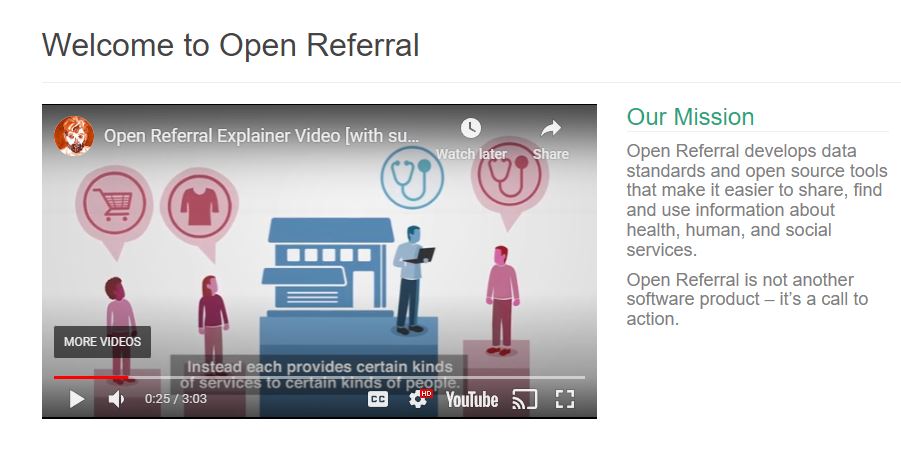
I encourage you to view the short video on the home page of the Open Referral website to understand the important work they are doing and the problems they are addressing. 


Greg's group has been bringing people together since 2012 to talk about the challenges of building and maintaining information directories and to "create a common set of data standards, that define and structure information, so that it can be readily transferred between systems".  Read through the FAQ questions and answers on the Open Referral website to understand this better. 

View Greg's Nov 15 presentation to ChiHackNight.  click here

That means many distributed directories could be connected in larger directories, making more information available to more people.

The Tutor/Mentor Connection, which I and a few others created in 1993 and launched in 1994, has been collecting information about Chicago area volunteer-based tutor/mentor programs for 30 years, along with building a library that represents the ecosystem of research, resources, funding, businesses and everyone else who needs to be involved in helping kids in poverty move more safely from birth-to-work.

We published our first printed directory of Chicago tutor and mentor programs, and the ecosystem of those who support them, in 1994 and updated it annually through 2003. After that all of our information was put on-line. 

We had others ask us to share the data, but who never offered to help pay the costs of collecting and maintaining it.  I never did this for fear of the larger organization eliminating the need for our work, and then at some point in the future, ceasing operation, so none of the data we had been collecting would remain available. 

Furthermore, if our data was owned by a national organization, the people who managed it would not have local passion, or local purpose, to use the data regularly to help existing programs constantly improve, nor to help new programs form where data analysis showed more were needed. 

That was why we were collecting the information in the first place!

Thus, I proposed there be a decentralized collection of data that was shared in a system similar to what Greg has been working on. Back in the 1990s the technology, or motivation, to do this was not available.

Thus, I fully understand the challenges Greg describes. For the past 10 years I've been a one-person army trying to maintain the library, share it, and get people to talk to myself, and each other.  If you read though this blog you can find hundreds of articles that relate to this.

Bringing people together.

When we were planning the Tutor/Mentor Connection in 1993 and talking about building a directory our PR partner from Public Communications, Inc. in Chicago, said "You've got to host a conference!".  

Using the contact information from organizations we learned about through our survey and our networking, we hosted a first Tutor/Mentor Leadership and Networking Conference in May 1994 and hosted one every six months after that until May 2015, at which time I had to stop due to lack of money.

In this article you can see a map showing participation over 20 years.  Here's a presentation showing how universities hosted these conferences and how I reached out to them for many years.  Between 1996 and 2002 attendance ranged from over 150 to over 300. Our mailing list grew from 400 to 14,000. This represented quite a large ecosystem, yet, it was not attracting business, philanthropy, government or university participants.   Thus, there were always too few of "the right people" to fully build the Tutor/Mentor Connection to what I hoped it would accomplish.

Since forming the Tutor/Mentor Institute, LLC in 2011 the range of people I've been reaching dramatically declined and conference participation dropped to around 100 per event. 

So let me sum up.

1) the world is dealing with complex problems and some people are creating great visualizations showing this complexity;

2) some people recognize the difficulty of collecting and sharing social service information and are trying to innovate new solutions;

3) knowing "who" should be included in a directory, or in an "invitation list" is part of the problem in a big city like Chicago;  getting them to come to "your event" or into "your conversation" is a huge challenge if you're not well-connected, or have a reputation that draws people to you.  Getting into "their conversations" and "being heard" is just as difficult.

4) I find very few people creating visualizations of who should be connected, or who they are bringing together via their events.

5) even if you have a list of "who" unless you do some sort of network analysis of event participation and/or social media conversations, you don't really know how well your network is connecting.

I'm sure readers might list more problems. I'd love to hear from you.

This has already been a long article, but if you've made it this far I encourage you to go one article further.  Review the 4-part strategy described in this concept map.

The "information collection" described in this article is just STEP 1. Getting people to look at the information (step 2) and helping them understand it (step 3) and use it (step 4) also need to be funded and supported as part of any problem-solving process.

Thanks for reading. I hope you'll share this.  I'm on Twitter, LinkedIn, Instagram, Facebook and Mastodon. (see links here).  Let's connect.

If you appreciate these articles please visit my FundT/MI page and send a small contribution. 


Wednesday, March 05, 2025

STEM and Networks. Share These Resources.

Last week I participated in two webinars of interest. 


One was titled “State of STEM Ecosystems”. Visit this site for the video and a written summary of the ideas that were shared by panel members.

Then, visit this page on the STEM Learning Ecosystems website to view the resources they share.  

One other resource on the site that I want to draw your attention to is the map I show below. Open the link then click into any of the dots on the map and dig deep into work being done in each community in the network. It's extensive!


If you’ve read my blog for any length of time you have seen how much I value the use of maps. When I look at the STEM Learning Ecosystem map I ask, “How are these communities sharing ideas across the network, and within their own cities?” I also ask, “Do they have maps/directories that point parents, volunteers and donors to STEM programs in their communities?”  Are they educating donors to use maps to find STEM and other youth development programs to support?  How are they drawing attention to their libraries? 

The second webinar was titled, “Exploring Multiscalar Networks” with June Holley. 


It was hosted by Socialroots as part of the Network Coordination Commons. 

The full video from this webinar can be found at this link.  A shorter, 30 minute summary video is at this link.  And, slides from June Holley's presentation can be found on this page.  The three images shown in the graphic above are from June's slide deck.   Here's another review of June's presentation. 

Visit June's LinkedIn page and review her history.  She's been weaving networks for more than 40 years.  She created Network Weaver in 2018 to offer Network Weavers a hub of free information and resources to support their systems change endeavors. Beginning in 2021, Leadership Learning Community has managed Network Weaver in partnership with One Sphere, Ltd. Their vision is to empower network leadership as a catalyst for racial equity and justice, driving collective liberation through interconnected networks.

I’ve followed June Holley since the mid 2000s, but we’ve never connected in support of work either of us was doing.  Maybe it's due to her focus on helping networks grow and my more narrow focus on helping economically disadvantaged youth via long-term tutor/mentor programs.  You can read some of my articles about ecosystems here.   I've only learned about the STEM Learning Ecosystem recently. 

One of the STEM webinar panel members was Dr. Stephanie Rodriguez – Director of the STEMM Opportunity Alliance. During her presentation she shared the graphic below, showing questions that need to be asked and answered in each of these communities and across the entire ecosystem.


I watched the introduction to the STEMM Opportunity Alliance in 2022 and wrote this article, showing strategies that can be used to build STEMM learning programs in more places.  The ideas are as valid now as they were then.

The facilitator of the STEM webinar, ended with this question: "What will be our legacy in 10 years?"  

I was asked a similar question in 2014 and wrote this article, showing where I hoped the tutor/mentor ecosystem would be in 5, 10 and 15 years. 

In 2014 I wrote the following. I think these goals could apply to the STEM Ecosystem, too:

* In five years, the map of the Chicago region should show a growing density of needed youth and family services in areas where they are needed. These programs should have web sites that show what they are trying to do, and what they are accomplishing, using this Shoppers Guide as a checklist. 

* In ten years, the map should show an even greater density of programs in areas of need. Web sites of programs operating in 2014 and started over the next five years, should begin to show participation history, and stories of youth and volunteers who have been part of these programs and who now are further toward graduation and jobs. Programs started between 2019 and 2025 would show the same start-up information as programs starting in the first five years. 

* In 15 years the density of programs should reach all areas of need, and web sites of programs in place now should show a number of stories about alumni who have gone through the program and who are now adults who are working, raising families, and in some cases, providing support for the growth of the programs that were part of their lives as young people. If this strategy is supported consistently for the next 15 years, by donors, volunteers, media, business, etc. we should begin to see significant changes of where poverty is concentrated because there should be less in places where well organized programs are helping youth grow up, move through school, and find jobs. 

It’s 2025.  We are not close to achieving these goals. Maybe 2040?

One of the member communities is the South Side STEM  Opportunity Learning Landscape, which I wrote about in this 2023 article.  This is the direct link to their site. 


Then, this week I saw a report titled, “INCREASING STEM ENGAGEMENT THROUGH OPPORTUNITY LANDSCAPING” (on this page)

This paper on Opportunity Landscaping, co-authored by Nichole Pinkard, with Sheena E., Caitlin K. Martin, Yolanda J. Majors, PhD, & Natasha Smith-Walker, explores how we can better understand and design learning ecosystems to ensure equitable access to STEM and out-of-school learning opportunities. An example of this work is the Chicago South Side STEM Opportunity Landscape.

This information is all related.  Ideally, each community on the STEM Learning Ecosystem map would have a similar landscaping strategy in place, and would be constantly sharing what works, what doesn't, and what help is needed with others in the network.  Ideally, networks in each STEM community would be connecting with other youth development networks in the same community. 

This may already be happening. Is it? 

The sites I point to in this article aggregate information that can be used by members of their ecosystems and networks.  June Holley's presentation asks, "How do we connect across networks, to create "networks of networks".  I keep asking the same questions.

If you read my "Why do I blog" article you'll see my 2005 article, showing my goal of  creating a blogging space that links to the T/MC web sites, so that as people talk about tutoring/mentoring, we can use maps, charts and other web links to show them where, why and how they can be involved. 

As I listened to these two webinars I ask, "Where are people sharing these ideas in on-line conversations?  


I’ve shared my ideas and website with these networks for many years, but finding a place to interact has been difficult. I’m not part of the “in group” and never have been. That’s been a challenge since I started leading a volunteer-based tutor/mentor program in Chicago in 1975 while holding a full time retail advertising job with the Montgomery Ward corporation.

I post ideas here, and share links in my library, with the goal that a few people will see them and take them into these networks.  I put links to the STEM Learning Ecosystem in this section of my library and the Network Building resources in this section. I shared these in the webinar.

They area available to anyone in the world.  

Please share these resources. Help STEM programs grow in more places and help people in more places connect with ideas they can use to solve complex problems facing this planet.

Thanks for reading.  I look forward to connecting with you on LinkedIn, Mastodon, BlueSky, Insatragram, Facebook and even Twitter. 

Monday, July 10, 2023

Resources to help you help kids

A few years ago I created a blog article with links to all the various resources that I've been sharing for the past 20+ years. I shared this article in these two Twitter posts. Here's the second Take time to browse the article and learn what's there. Then bookmark the site and use as an on-going reference.

Tomorrow I'll be sending out my July 2023 Tutor/Mentor eNews.  It focuses on summer planning that leads to better youth programs in the fall.  The resources in my blog article can be used in any place where leaders want to do more to help kids through school and into adult lives. 


All of the links I point to in my library represent pieces of a huge ecosystem of people and organizations and ideas that need to be connected in on-going idea-sharing, relationship-building, mutual-support, etc. that leads to more creative and effective ways to reach kids in high poverty areas with on-going support that leads them through school and into adult lives, with jobs that enable them to live where ever they want, and raise their own kids free of poverty. 

Here's one article that talks about building this ecosystem.  And, here's an article that describes the learning goals of such an ecosystem. 

I'm now 76 and every day I'm thinking about who might take ownership of this library, my archives, and the vision I've piloted over the past 25+ years.  Universities would be ideal places because of a constant flow of new students into their learning ecosystem who say for four to eight years then move on into society where (hopefully) they apply what they learned for the rest of their lives.

This article shows that vision. Please share it with people who might fund such a program at one or more universities.  

Thanks for reading. If you share my articles you're already taking a leadership role.  Connect with me on Twitter, Facebook, Instagram, LinkedIn, Mastodon (not yet on Threads).  

If you're able, please consider a small contribution to help me fund the Tutor/Mentor Institute, LLC. Visit this page

Thursday, September 09, 2021

Helping kids move from poverty to prosperity - who needs to be involved?

You've heard the phrase, "It takes a village to raise a child" haven't you?  I created the concept map in this graphic many years ago to visualize all sectors of the village who need to be involved.


The graphic can be found in this article, which shows the knowledge base we need to support our efforts to help kids in poverty areas move through school and into jobs and careers. 

If you try to define who all needs to be involved,  you're talking about an ecosystem.  Here's a definition of what that is. 

I was going to write a long article about the ecosystem and what I've been doing for the past 28 years to connect such a group with each other in an on-line learning network, but searched my blog for previous articles and found this one, from February 2018. 

Rather than repeat that article here, I hope you'll follow the link and read it. 

Actually, I've focused on the ecosystem in many articles, so visit this link and you can browse those. 


All of these articles, in fact this entire blog, is focused on supporting actions of millions of people in many places, who all are focusing on helping kids born, or living in,  high poverty areas, move safely through school and into adult lives, with decent paying jobs, that enable them to raise their own kids without so many of the challenges of living in segregated, high poverty areas.


If this is your goal, too. Let's connect on Twitter, Facebook, Instagram and/or LinkedIn.  Let's connect our networks too. That expands the ecosystem and helps people connect and learn from a wider range of sources.


Friday, October 20, 2023

Network Building - A Process

I've been building the Tutor/Mentor library since 1993 when I formed the Tutor/Mentor Connection. 

The mission of the Tutor/Mentor Institute (T/MI) is to gather and organize all that is known about successful non-school tutoring/mentoring programs and apply that knowledge to expand the availability and enhance the effectiveness of these services to children throughout the Chicago region.

My daily journey through the Internet uncovers many resources that I add to the library. I draw attention to these by my e-mail newsletter, my blogs, my posts on social media, and my website.

Last Friday, and again today, I participated in a ZOOM call hosted by the Strategic Doing community, which I've followed on LinkedIn for many years. Below is a screenshot from last week's presentation, which you can view at this link.


If you view the mission statement of the Tutor/Mentor Connection you'll see that I've been trying to build a knowledge network, or ecosystem, of people, organizations and ideas that anyone can use to help kids from birth-to-work.

In today's ZOOM call the topic was "how universities solve complex problems".  Below is one of  many visualizations I've created to show long-term support kids need to move from birth-to-work.


I think universities could play a much greater role in helping kids in high poverty areas move through school, and college, into jobs, and then spend a lifetime helping others and working to solve complex social, economic and global problems.  

The challenge has always been to find someone in the university who would devote their career to building such a support system, involving others from the university, as well as alumni, business and community assets.


The graphic above is from this page on the Tutor/Mentor Institute, LLC website, showing eLearning goals that I first began to share back in the early 2000s.   

I organized Tutor/Mentor Leadership and Networking Conferences in Chicago every six months from May 1994 to May 2015 to bring parts of this ecosystem together.  The eLearning goals were developed as IUPUI helped us host our first (and only) on-line conference in 2004. My work on social media is a continuation of this effort.

The graphic below was created by students from Indiana University, and shows participation of organizations from throughout the USA in these conferences.


You can view the map in this article, and see universities that hosted conferences in this article.  

Below is a graphic showing work interns from different universities did between 2005 and 2015 to help me communicate ideas and strategies. 


These show what's possible from university engagement, but also share my frustration for never have been able to find a long-term partner at any of these universities who would apply their own time, talent and dollars to the strategies I've shared in many articles on this blog.

This has been made even more difficult as platforms where I connected with people have constantly changed over the past 20 years.  Even the www.tutormentorconnection.org site that was my primary resource from 1998 to 2018 is no longer available.

Since 2013 Twitter has been a growing source of network building and idea sharing. But recent changes in ownership are making that site much less reliable. So I've launched myself on new platforms.


Mastodon is one place where I can now be found.  It is a decentralized network of meeting places.  I've actually set up accounts on three, and am not yet close to the number of followers I have on Twitter.

BlueSky is another where I've recently began to build a network.  As with Mastodon, I'm not yet close to the following I have on Twitter. 
I have a page on the Tutor/Mentor website with links to these platforms and others where I'm trying to connect.  That's where you can also find my monthly newsletter. 

I've a section in the Tutor/Mentor library focused on collaboration and community building.  It has more than 50 links, including one to the Strategic Doing website.

One of the many challenges we face in solving complex problems is "drawing people to engage with each other,  on OUR platform.  I've spent 30 years building a body of knowledge on MY platform and on some of my social media networks.  Going into a platform hosted by someone else, and building a network is a huge challenge. It takes time. That's time I (and others) need to be spending drawing people to our platforms, and maintaining the quality of their content.

This is one reason there are so many silos, of people and organizations not connecting strategically with each other.  

In today's ZOOM call I asked the speaker if he had done any network analysis to know who was participating in his planning groups, and who was missing.  I had in mind the network analysis maps done by an intern working for me in 2010, which you can see in this blog article.  And, in this series of blog articles. 

One way I try to connect people is by putting them in my library and sharing their links via concept maps like the one below.  

This shows intermediaries in Chicago who focus on the well-being of youth.


If you look at the map you'll see a yellow text box in the lower right corner with the heading "Help Update This".  It asks "are there other Chicago area intermediary groups that can be added to this map? And it says "I need research help to know what businesses,  universities, philanthropy orgs, etc. support volunteer based tutor/mentor programs in Chicago."

If someone is hosting that information on their website I can add them to my library and my maps and help them connect those organizations to each other.  

This is work students at any high school or university could be doing....to help me update my Chicago area information, and to build similar maps and libraries for other communities.

One of the comments on today's Strategic Doing call came from someone in the business community who talked of how there is a need to achieve results through short term involvement. That's one of the problems.  Look at the graphic below, which you can view in this article.


This visualizes a goal of pulling youth through school and into adult lives, with support starting as early as preschool and lasting each year for 20-30 year....for each youth! Just building a network of stakeholders who understand and support this goal would take several years. Building such a network at many universities would take even longer.  Getting agreement on goals and setting up programs that engage students, faculty, alumni and community would take even longer. Then comes the year-to-year work, evaluation and constant improvement that improves what the university community does, and fills high poverty areas surrounding a university with a pipeline of birth-to-college-to-work programs.

Note that the far right part of this graphic focuses on helping some students graduate and take life-time careers in direct service programs while others graduate who make life-long commitments to support these alumni with time, talent and dollars.

Show me a university with a visualization that communicates this goal.  Or that is connecting the ecosystem of the university in efforts to achieve the goal.


There's no way I can communicate this with an introduction on a new platform, or a social media post, or a comment during a ZOOM call.  I need to motivate people to read my blog articles and study the information on my website, then share what they are learning via their own blogs and videos, just as interns did between 2005 and 2015.

However, this needs to be a multi-year learning process, perhaps part of a Masters or PhD program, not a short term internship.

Who can help make that happen?  

Thanks for reading. And thank you to those who visit this page and send contributions to help me do this work.  

Wednesday, February 21, 2018

Bringing Youth Tutor/Mentor Learning Ecosystem Together on the Internet

This screenshot is from a Tweet posted a few days ago, showing how more than 300 people from around the world have been connected to each other since February 10 via an on-line "Engagement in a time of Polarization" EdX course and via Twitter, YouTube and Facebook. The hashtag is #EngageMOOC

I've been participating in various cMOOCs since 2011 and wrote about them here, here and here.

I'm fascinated by their potential for bringing people together in ways that's not possible face-to-face. I've wanted to build this capacity into the Tutor/Mentor Connection for more than 15 years. 

I and six other volunteers created the Tutor/Mentor Connection in 1993 to "gather and organize all that is known about successful non-school tutoring/mentoring programs and apply that knowledge to expand the availability and enhance the effectiveness of these services to children throughout the Chicago region."

It's 2018. I'm still leading that effort, via the Tutor/Mentor Institute, LLC


1998 Crain's Chicago Business

I'd been leading a tutor/mentor program in Chicago since 1975 when we formed the T/MC. So I already had an extensive database of other programs in Chicago, as well as of foundations, businesses, volunteers and media. We did our research and planning, and developed a 4-part strategy in 1993. Then, we launched our first Chicago tutor/mentor program survey in January 1994 to systematically learn who else was offering non-school tutor and/or mentor services.

As we started reaching out to learn about programs we began sharing what we were learning with other programs, and with resource providers and other stakeholders, via printed newsletters. We began drawing stakeholders together to share and learn from each other via organized conferences in May 1994 and started organizing an annual Aug/Sept Chicagoland Tutor/Mentor Volunteer Recruitment Campaign in 1995.  You can view the goals of the conference here. See recruitment campaign history here.

We began sharing our list of Chicago tutor/mentor programs in a printed directory in 1994, but never circulated more than 500 copies a year. As we put our library on line in 1998, we also put our list of programs on line.

In 2004 we were able to launch an on-line portal where people could search for information about Chicago area tutor and mentor programs by zip code, type of program and age group served. In 2008 we launched a map based version of this.

With the maps we could show all the places where programs were needed, as well as what places already had service from existing programs.  Thus, our conversations were focused on a) helping existing programs get a more consistent flow of resources needed to constantly improve, while b) helping new program start where more are needed, borrowing ideas from existing programs, rather than starting from scratch.

The conferences and annual recruiting events we organized helped us generate a flow of print news stories, drawing attention to tutor/mentor programs throughout Chicago, not just to our own program. While we stopped our printed newsletter in 2002 we've been sending email newsletters every month since 2000. With our maps we crated map-stories following negative news, in an effort to draw more attention and resources to neighborhoods where help was needed.

While we hosted Tutor/Mentor conferences for 20 years, the goals never changed.

However, we were only reaching a small fraction of those in Chicago who needed to be involved in building and sustaining mentor-rich programs in all high poverty neighborhoods.  And even when we had 250 to 300 people at a 2-day conference, we and every other participant could only really talk and engage with a few other participants. Even in small groups of 10 to 20 people only a few people were able to share much from their own depth of experiences. It was almost impossible to get all of those who need to be involved into the same space, and keep them coming back, month after month and year after year.

In addition, we were not getting participation from business, foundations, media, political leaders and many others who need to be engaged in efforts to fill city neighborhoods with great programs helping kids move safely from birth to work.

Thus when the Internet became available as an on-line library and meeting place in the late 1990s, I fully embraced this potential.  We held our first on-line conference in 2004 with the aid of IUPUI in Indianapolis.  I've been sharing information on web sites since 1998 and on blogs since 2005. I've been on Facebook, Twitter and LinkedIn since the late 2000s.

I outlined our eLearning goals in 2004 and you can read them here.  I described them again in this blog article (and many others)

In 2011 I created a "Mentoring Kids to Careers" discussion outline on Debategraph's platform (see graphic at left).

As I participate in cMOOCs, I look at the structure and how they are organized. I created a sub section of the Tutor/Mentor library that others can  use to learn about cMOOCs and that I can refer back to when describing them to others. As I share ideas on Twitter, using the #engageMOOC or the #clmooc hashtag, I'm also using #tutor #mentor to connect organizations I network with to people throughout the world.

As I do this I'm also envisioning an #engageTutorMentorMOOC or a #Tutor/MentorCLMOOC or a Tutor/Mentor Google+ community (similar to this CLMOOC group)  where we're connecting all those who need to be involved in building and sustaining constantly improving tutor, mentor and learning programs in on-going on-line learning, conversation, brainstorming, training and resource development.

What does this mean?
Talent needed

I've used cMaps to visualize "all who need to be involved".  This map shows skills and talents. A similar map shows networks that need to be involved. A social network analysis map of participation could put names of people in each of these nodes and help us understand "who is participating, and who's missing".

Another cMap visualizes "who needs to be involved" under the "It takes a village" heading.

In another cMap I show how information we were collected was intended to support the learning of many different groups of stakeholders.

Knowledge Flow cMap


Ultimately my goal is that people from different sectors and different places are forming study and learning groups which draw from information libraries they find on line. While these groups engage in on-going face-to-face learning, they also engage in on-line conversations, with each other, and with people in other groups, expanding their  understanding of problems and solutions and building relationships with people who who might help...

....all with the goal of filling high poverty areas with needed programs and services that help kids move safely through school and into adult lives, jobs and careers  (see strategy map).

As I was writing this article my #engageMOOC feed included the response shown below response to one of my Tweets.


I was asking for examples of using network analysis tools to understand participation in conferences or organized Twitter events.  The links provided pointed to two fascinating articles on the #ScotPublicHealth blog.  Click the links. You can read the articles yourself.  I'm adding this link to the Tutor/Mentor web library so that I and others who want to build an on-line engagement connecting people and organizations in the youth development, tutor, mentor, education, etc. ecosystem, can learn from this model.

However, by putting the link in my library and posting it here and re-tweeting it, anyone else can find and use this information to do better work in their own problem solving efforts.

If you've read this far, thank you! I hope you'll visit some of the links and build your own understanding of the different cMOOCs  and Twitter chats I've pointed to.  I hope you understand how this supports my own on-going learning and efforts to do "better today than I was able to do yesterday". 

I don't yet see this type of on-line engagement connecting the ecosystem of youth tutor/mentor and learning programs and the businesses, foundations, policy makers and others who need to support the growth of such programs.

If you'd like to help make such a community a reality, let's connect.